
The Economic Reality of the U.S.-Iran Peace Deal: Reopening the Strait of Hormuz
The interim agreement between Washington and Tehran has averted a global energy crisis, but insurers and economists warn that untangling the maritime backlog and stabilizing prices will take months.
By Factlen Editorial Team
- Global Energy Consumers
- Focuses on the relief from falling oil prices and the easing of inflation pressures on households and central banks.
- Maritime & Insurance Industry
- Emphasizes the severe logistical, safety, and financial hurdles of reopening a mined waterway and processing a massive backlog of stranded ships.
- Oil Producers & Traders
- Notes that while the immediate supply shock is over, depleted global inventories will keep a floor under oil prices for the foreseeable future.
- Iranian Policymakers
- Views the agreement as an opportunity to extract long-term economic concessions, including potential transit tolls for the Strait of Hormuz, rather than just temporary relief.
What's not represented
- · Seafarers and maritime labor unions representing the 11,000 crew members trapped in the war zone.
- · Developing nations in the Global South that absorbed the brunt of the $120/bbl energy shock.
Why this matters
The reopening of the world's most critical energy chokepoint directly impacts global inflation, dictating the price you pay at the pump and influencing whether central banks will finally lower interest rates.
Key points
- The U.S. and Iran signed a 14-point memorandum of understanding to end hostilities and reopen the Strait of Hormuz.
- Global oil prices plunged more than 15 percent, with Brent crude falling below $80 a barrel.
- The maritime industry warns that clearing mines and processing the backlog of 750 stranded ships could take up to 60 days.
- Iranian officials have indicated they may seek to impose transit tolls on commercial shipping once a 60-day grace period expires.
After more than three months of a conflict that effectively severed the world’s most critical energy artery, the United States and Iran have signed a sweeping memorandum of understanding aimed at ending hostilities. The 14-point interim agreement, formally acknowledged following diplomatic maneuvers in Versailles and Switzerland, establishes an immediate ceasefire across all fronts and initiates a 60-day negotiation window for a permanent treaty. For the global economy, the diplomatic breakthrough represents a massive, collective exhalation. The war had systematically dismantled supply chains, trapped billions of dollars in maritime cargo, and threatened to tip fragile Western economies into a deep recession. Now, with the stroke of a pen, the immediate threat of a global depression has been averted, and the grueling work of untangling the economic wreckage can begin.[1][4]
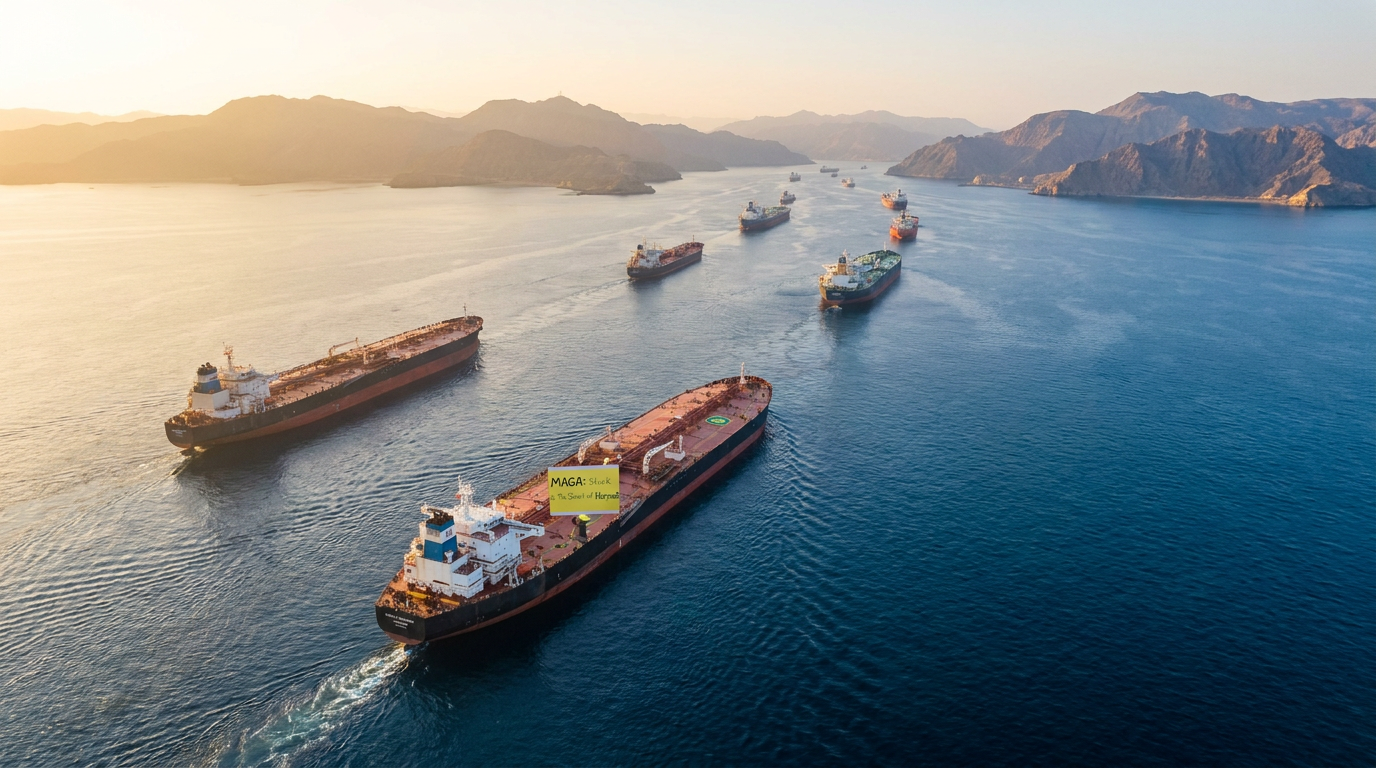
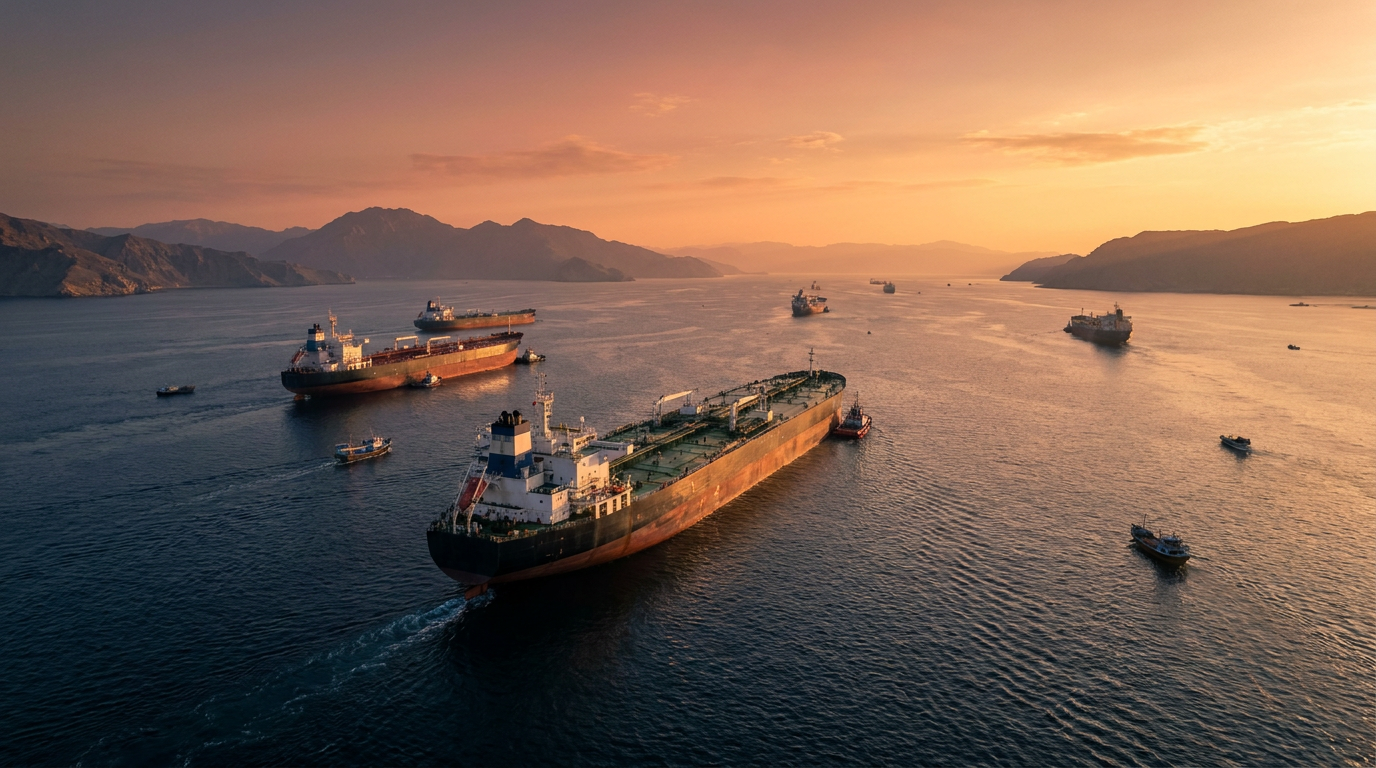
The centerpiece of the Islamabad Declaration—the framework underpinning the peace deal—is the phased reopening of the Strait of Hormuz. As a 21-nautical-mile chokepoint connecting the Persian Gulf to the open ocean, the strait historically facilitated the transit of roughly 20 percent of the world’s crude oil and liquefied natural gas. When the conflict erupted in late February 2026, that vital flow was abruptly choked off. Daily commercial traffic plummeted by more than 90 percent, dropping from an average of 130 vessels a day to barely a dozen. The resulting bottleneck trapped approximately 750 commercial ships on either side of the waterway, stranding an estimated $15.3 billion worth of energy cargo and leaving 11,000 seafarers caught in a volatile war zone with no clear exit strategy.[6][10]
Early signs of a cautious maritime recovery are already visible. Data analytics firms tracking satellite transponders noted that at least a dozen major tankers have begun transiting the strait in recent days. Among the first to move were three Saudi Arabian supertankers—each capable of carrying two million barrels of crude—which reappeared outside the Gulf after being sheltered for two months. Qatar also dispatched an empty liquefied natural gas carrier through the waterway, signaling that the world’s premier LNG exporter is preparing to ramp its operations back up to full capacity. Yet, while the political blockade has been lifted, the physical and administrative barriers to free navigation remain formidable.[1][10]

The maritime insurance industry is warning that a return to pre-war shipping volumes will be neither swift nor simple. The Lloyd’s Market Association has publicly cautioned that severe practical, legal, and safety hurdles stand between the diplomatic agreement and normalized trade. Chief among these concerns is the physical security of the waterway. Security contractors estimate that comprehensive mine-sweeping operations to ensure the strait is entirely clear of explosive hazards could take anywhere from 30 to 60 days. Furthermore, insurers are raising alarms about the seaworthiness of the hundreds of vessels that have been sitting at anchor for months. Issues ranging from severe hull fouling and depleted fuel stores to degraded navigation systems and extreme crew fatigue must be addressed before these massive ships can safely navigate one of the world’s most congested maritime corridors.[7]
The financial shockwaves of the 100-day closure fundamentally rewired global energy markets. When the strait was shuttered, traders immediately priced in a massive war risk premium, sending benchmark Brent crude soaring from its pre-war baseline of roughly $60 a barrel to a peak above $120. This artificial scarcity created a lucrative vacuum that producers outside the conflict zone rushed to fill. According to industry analysts, oil companies in the United States reaped an extraordinary windfall during the crisis. By exporting crude at heavily inflated prices, U.S. producers generated an estimated $38 billion in excess revenue this year alone. A significant portion of this wealth transfer originated from energy-dependent nations in the Global South, with countries like India absorbing billions in unexpected energy costs just to keep their electrical grids functioning.[9]
The financial shockwaves of the 100-day closure fundamentally rewired global energy markets.
With the ink drying on the peace agreement, that war risk premium is rapidly evaporating. Financial markets reacted decisively to the news, with both Brent and West Texas Intermediate crude plunging more than 15 percent to settle below $80 a barrel. The sell-off reflects a broad consensus among energy traders that the worst-case supply disruption scenarios have been permanently taken off the table. However, analysts at major financial institutions like Goldman Sachs warn against expecting a return to the cheap energy era of 2025. While prices are expected to "grind lower" as Iranian barrels re-enter the market, the global energy complex has been severely depleted. Commercial and strategic oil inventories worldwide were drawn down aggressively to survive the Hormuz closure, and the imperative to rebuild those stockpiles will likely establish a firm price floor in the $70 to $75 range for the foreseeable future.[4][5]

The sudden drop in wholesale energy costs provides a crucial pressure valve for central banks around the world. Throughout the first half of 2026, the fuel price shock acted as a pervasive, supply-side driver of global inflation, bleeding into the cost of manufacturing, transportation, and consumer goods. This forced institutions like the U.S. Federal Reserve to maintain a hawkish stance on interest rates, suffocating credit markets in an attempt to cool prices. The stabilization of the oil market effectively removes the primary engine of that inflationary spike. While gold prices took a hit as investors unwound their safe-haven bets, equity markets have steadied on the optimism that lower energy costs will eventually translate to relief at the consumer level, easing the cost-of-living crisis that has dominated domestic politics across multiple continents.[2][3]
Despite the macroeconomic relief, the era of frictionless, toll-free transit through the Persian Gulf may be permanently over. The interim agreement stipulates a 60-day window during which commercial vessels can pass through the Strait of Hormuz without interference or fees. However, Iranian officials have made it explicitly clear that they view the waterway's future administration differently. Mohammad Bagher Ghalibaf, Iran’s parliamentary speaker, stated on state television that the strait "will not return to pre-war conditions" once the 60-day grace period expires. Tehran is pushing for a joint administrative framework with Oman that would allow it to levy transit fees or service charges on passing ships. During the height of the conflict, some vessels reportedly paid up to $2 million per transit for specialized security and navigational permits—a precedent that has shipowners deeply concerned about the long-term operating costs in the region.[4][6][8]

The economic rehabilitation of Iran itself remains one of the most contentious elements of the diplomatic framework. Early reports of the memorandum referenced a $300 billion reconstruction and economic development plan, sparking immediate political backlash in Washington. U.S. officials have since clarified that the figure does not represent a direct injection of American taxpayer funds into Tehran's coffers. Instead, it outlines a theoretical framework for future foreign direct investment and third-party financing that would only materialize if all sanctions are lifted. For Iran's battered economy, which has suffered under years of isolation, rapid money-supply growth, and the immediate costs of the war, temporary oil waivers are a necessary but insufficient lifeline. Economists warn that without deep structural reforms and a permanent lifting of the banking blockade, the country will struggle to escape chronic inflation.[8]
The durability of this economic reset now hinges entirely on the next 60 days of high-stakes diplomacy. The interim agreement requires Iran to begin down-blending its stockpile of enriched uranium while negotiators in Geneva attempt to hammer out a comprehensive treaty covering ballistic missiles, regional proxies, and permanent sanctions relief. The threat of renewed hostilities continues to cast a long shadow over the proceedings, with political leaders in Washington threatening to resume military operations if Tehran fails to meet its compliance benchmarks. For now, the global economy has stepped back from the precipice, but the intricate web of maritime logistics, energy security, and geopolitical leverage ensures that the financial aftershocks of the 2026 Iran war will be felt for years to come.[4][8]
How we got here
Late Feb 2026
Conflict erupts, effectively closing the Strait of Hormuz to commercial traffic.
March–May 2026
Global oil prices surge past $120 a barrel as 750 vessels become stranded in the Persian Gulf.
June 17, 2026
U.S. and Iran agree to a 14-point memorandum of understanding to halt hostilities.
June 19, 2026
Formal signing ceremony scheduled in Switzerland, initiating a 60-day negotiation window.
Viewpoints in depth
The Maritime Industry's View
Shipowners and insurers warn that the diplomatic agreement does not instantly erase the physical and financial risks of navigating the Persian Gulf.
For the shipping sector, the signing of a memorandum is only the first step in a grueling logistical marathon. Insurers represented by the Lloyd's Market Association emphasize that the Strait of Hormuz remains a high-risk zone requiring extensive mine-sweeping operations that could take up to two months. Furthermore, the industry is deeply concerned about Iran's stated intention to implement a toll system after the 60-day grace period. If transit fees approach the $2 million mark seen during the conflict, shipowners argue it may remain more economical to route cargo around the Cape of Good Hope, permanently altering global freight dynamics.
Energy Traders' View
Commodity analysts believe the worst price spikes are over, but structural deficits will prevent a return to pre-war cheap oil.
While the immediate evaporation of the war risk premium sent crude prices tumbling below $80 a barrel, energy traders are cautioning against irrational exuberance. Analysts at institutions like Goldman Sachs point out that the 100-day conflict forced nations to aggressively draw down their commercial and strategic petroleum reserves. The impending need to rebuild those global stockpiles, combined with a seasonal uptick in summer demand, creates a massive baseline requirement for crude. Consequently, traders expect prices to 'grind lower' but ultimately find a firm floor in the $70 to $75 range, ensuring that energy costs remain elevated compared to the 2025 baseline.
Tehran's Economic View
Iranian officials view the deal as a necessary lifeline but are pushing for structural financial concessions rather than temporary waivers.
Within Iran, the diplomatic breakthrough is being met with a mixture of relief and deep skepticism. While the temporary waiving of U.S. sanctions allows for the immediate export of crude oil, economists and central bank officials argue this is insufficient to heal an economy battered by rapid money-supply growth and chronic inflation. Hardline factions within the government are insisting that the Strait of Hormuz must not return to its pre-war status as a free-transit corridor, viewing maritime tolls as a legitimate mechanism to extract ongoing economic value. Furthermore, Tehran is demanding that the proposed $300 billion reconstruction framework translate into tangible, enforceable asset releases rather than vague promises of future private investment.
What we don't know
- Whether Iran will successfully implement a permanent toll system for vessels transiting the Strait of Hormuz after the 60-day grace period.
- How long it will actually take to clear the waterway of naval mines and process the backlog of 750 stranded commercial ships.
- If the proposed $300 billion economic rehabilitation framework will ever materialize into actual foreign investment in Iran.
Key terms
- Strait of Hormuz
- A narrow waterway between the Persian Gulf and the Gulf of Oman, through which approximately 20% of the world's oil flows.
- War Risk Premium
- The additional price factored into commodities or insurance to account for the potential disruption of supply due to armed conflict.
- Memorandum of Understanding (MoU)
- A formal, written agreement between two or more parties that establishes a framework for future negotiations, though often not legally binding in its entirety.
- Down-blending
- The process of diluting highly enriched uranium with natural or depleted uranium to reduce its concentration, making it unsuitable for weapons use.
Frequently asked
Will gas prices drop immediately?
Wholesale oil prices have already fallen by over 15%, which will gradually translate to lower prices at the pump over the coming weeks, though they are unlikely to return to pre-war lows.
Is the Strait of Hormuz fully open to all ships?
Not yet. While a 60-day toll-free window has been agreed upon, insurers warn that mine-clearing and logistical backlogs will delay a return to normal traffic.
Did the U.S. agree to pay Iran $300 billion?
No. The $300 billion figure represents a proposed framework for future international and private investment in Iran's economy, contingent on a final nuclear agreement.
Sources
Source coverage
10 outlets
4 viewpoints surfaced









[1]CNBC
U.S.-Iran deal in photos: ships in the Strait of Hormuz, daily life in Tehran
Read on CNBC →[2]Bloomberg
Gold Set for Weekly Loss as Hawkish Fed Outweighs Peace Deal
Read on Bloomberg →[3]BBCGlobal Energy Consumers
Five ways the Iran peace deal could affect you and your money
Read on BBC →[4]The GuardianGlobal Energy Consumers
Oil prices fall and stocks steady after US-Iran deal signed
Read on The Guardian →[5]Goldman SachsOil Producers & Traders
Why Oil Prices Could 'Grind Lower' Amid the US-Iran Deal
Read on Goldman Sachs →[6]gCaptainMaritime & Insurance Industry
The Strait of Hormuz Will Reopen, But The Era of Free Transit May Be Over
Read on gCaptain →[7]Seatrade MaritimeMaritime & Insurance Industry
Sanctions clarity needed before Hormuz trade resumes, says LMA
Read on Seatrade Maritime →[8]Iran InternationalIranian Policymakers
Hope meets caution as Tehran weighs economic impact of US deal
Read on Iran International →[9]Oil Change InternationalOil Producers & Traders
U.S. Oil Companies Reap $38 Billion Windfall from Iran War
Read on Oil Change International →[10]Yeni ŞafakIranian Policymakers
Strait of Hormuz reopening gradually as tanker traffic resumes after US-Iran deal
Read on Yeni Şafak →

Every angle. Every day.
Get business stories with full source coverage and perspective breakdowns delivered to your inbox.