
UK to Ban Social Media for Under-16s in Sweeping Online Safety Overhaul
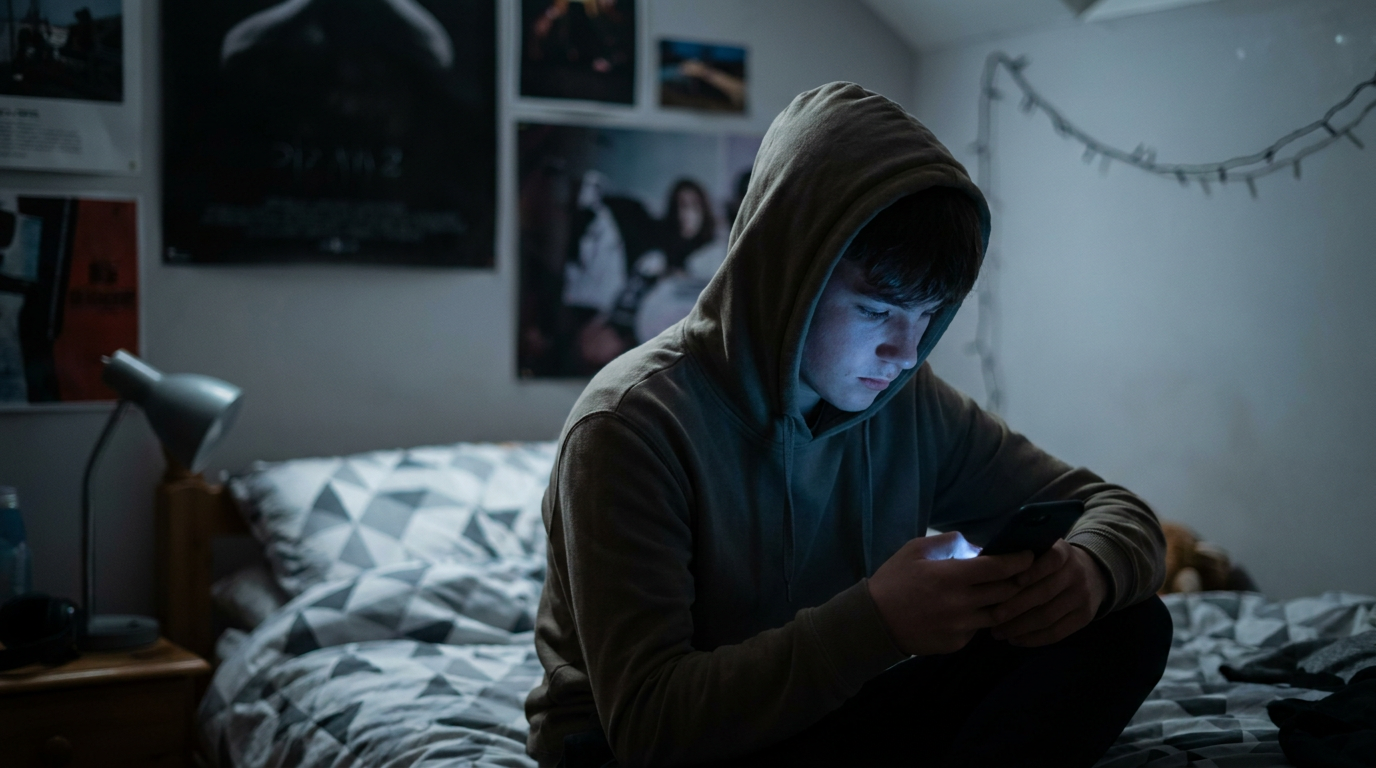
Prime Minister Keir Starmer has announced a total ban on major social media platforms for children under 16, effective Spring 2027. The policy, which also restricts stranger-chat on gaming sites, sets up a major clash with US tech giants over age verification and compliance.
By Factlen Editorial Team
- The UK Government & Parents
- Advocates argue the ban is a necessary intervention to protect children's mental health and restore traditional childhood.
- The US Tech Industry
- Technology companies and US officials warn the ban is a blunt instrument that will create massive compliance burdens.
- Digital Rights & Safety Researchers
- Academic experts caution that bans are easily circumvented and fail to address the root causes of online harm.
What's not represented
- · Teenagers and youth advocates who argue the ban isolates them from digital communities and support networks.
- · Privacy advocates concerned about the mass collection of biometric data required for age verification.
Why this matters
The ban represents one of the most aggressive regulatory interventions into the tech industry by a Western democracy, fundamentally altering how millions of teenagers interact with the internet. For parents, it shifts the burden of policing screen time from individual households to national law, while forcing tech giants to build robust age-verification systems or face massive penalties.
Key points
- The UK will ban children under 16 from accessing major social media platforms starting in Spring 2027.
- The legislation covers TikTok, Instagram, YouTube, and Snapchat, but exempts messaging apps like WhatsApp.
- The ban extends to gaming platforms, blocking under-16s from livestreaming or chatting with adult strangers.
- The policy follows a massive public consultation where 90% of participating parents supported the age restriction.
- The US tech industry and diplomatic officials have warned the ban relies on invasive age-verification methods.
- Experts caution that teenagers may easily bypass the restrictions using VPNs and fake accounts.
British Prime Minister Keir Starmer has announced a sweeping national ban on social media for children under the age of 16, declaring the move a "line in the sand" against the technology industry. In a major policy address from Downing Street, Starmer framed the legislation as a necessary intervention to protect youth mental health and shield children from algorithmic addiction, cyberbullying, and harmful content [1][4]. The government plans to introduce the legislation to Parliament before Christmas, with the restrictions slated to take effect in the spring of 2027 [4]. The announcement marks one of the most aggressive regulatory actions taken by a Western democracy against Silicon Valley, shifting the burden of policing adolescent screen time from individual households directly onto the platforms themselves [3].[1][3][4]
The forthcoming ban will apply to all major user-to-user platforms that rely on algorithm-driven feeds to distribute content. This encompasses a broad swath of the modern internet, explicitly targeting TikTok, Instagram, Snapchat, Facebook, YouTube, X, and Reddit [2][4]. However, the government has carved out specific exemptions for private, end-to-end encrypted messaging services. Applications like WhatsApp and Signal will not be subject to the under-16 prohibition, as regulators distinguish between private communication tools and public broadcasting networks designed to maximize user engagement [4][7].[2][4][7]
While the UK's approach is heavily inspired by a similar ban recently passed in Australia, British regulators are pushing the boundaries of the legislation significantly further. The new rules will extend beyond traditional social media to encompass online gaming environments, explicitly blocking children under 16 from utilizing livestreaming features or communicating with adult strangers in multiplayer lobbies [2][6]. Furthermore, the legislation will prohibit minors from accessing romantic or sexual artificial intelligence chatbots, addressing a rapidly growing sector of the tech industry that child safety advocates warn is uniquely manipulative [6].[2][6]

The political momentum for the ban accelerated following a massive public consultation period earlier this year, which generated more than 116,000 responses—the second-largest public feedback exercise in UK history [3]. According to the government's data, nine out of ten parents who participated supported a minimum age requirement of 16 [4]. Starmer leaned heavily into this parental mandate during his announcement, arguing that the government had a moral obligation to side with families over technology conglomerates. "Tech giants had their chance and failed, but we're stepping in to protect children, back parents and set a new normal for future generations," he stated [2][4].[2][3][4]
According to the government's data, nine out of ten parents who participated supported a minimum age requirement of 16 [4].
To prevent what child psychologists described as a "cliff edge"—where teenagers are suddenly exposed to the unfiltered internet on their sixteenth birthday—the government is also developing secondary restrictions for older adolescents. For 16- and 17-year-olds, platforms will be required to disable certain high-risk functionalities by default [4]. Ministers are also exploring the implementation of overnight curfews and mandatory breaks in "infinite scrolling" feeds for all users under 18, with further details expected to be published in July [7].[4][7]
The aggressive regulatory posture has already triggered friction with the United States technology sector and the incoming Trump administration. In a formal submission to the UK's consultation, the US Embassy in London warned against "prescribed one-size-fits-all government restrictions" and "blunt regulatory instruments" [6]. American officials cautioned that the ban could impose disproportionate compliance burdens on US companies and argued that technical methods used to distinguish adults from minors cannot be easily repurposed for a 16-year-old threshold [6]. A spokesperson for YouTube echoed these concerns, warning that a blanket ban could inadvertently push children toward less regulated, and potentially more dangerous, corners of the internet [7].[6][7]

The most significant hurdle facing the UK government is the practical enforcement of the ban, which hinges entirely on the development of robust age-verification technology. Currently, most platforms rely on self-declaration, allowing users to simply input a false birth year to bypass the 13-year-old minimum age requirement [1]. To enforce a strict under-16 ban, platforms will likely need to implement biometric facial age estimation, digital ID verification, or one-time photo matching [5]. Privacy advocates have raised alarms about the mass collection of biometric data, while industry experts question whether such systems can be deployed at scale without locking out legitimate adult users who lack formal identification.[1][5]
Academic researchers and digital rights experts have also expressed skepticism about the efficacy of a blanket prohibition. Professor Andy Phippen, a specialist in IT ethics at Bournemouth University, cautioned that the evidence does not support the idea that banning access will substantially reduce harm [5]. Phippen noted that tech-savvy teenagers are highly likely to circumvent the restrictions using virtual private networks (VPNs) or by creating false accounts [5]. He argued that the real danger stems from platform design features—such as recommendation algorithms and commercial incentives—rather than mere access, suggesting that the government's focus on gaming lobbies and livestreaming might ultimately prove more effective than the broader social media ban [5].[5]
Despite the logistical challenges and international pushback, the UK's decision cements a growing global consensus that the era of unregulated adolescent internet access is ending. With Australia's ban set to take effect in late 2025 and the UK following suit in early 2027, other nations are closely monitoring the implementation process [3]. Countries including France, Spain, and South Korea are currently studying similar age-based restrictions [3]. For Starmer's government, the policy represents a high-stakes gamble that the technical and legal hurdles can be overcome to deliver on a promise that has resonated deeply with the British electorate.[3]
How we got here
October 2023
The UK passes the Online Safety Act, laying the groundwork for stricter internet regulation.
January 2026
The UK government launches the 'Growing up in the online world' public consultation.
May 2026
The consultation closes with over 116,000 responses, showing overwhelming parental support for a ban.
June 15, 2026
Prime Minister Keir Starmer officially announces the under-16 social media ban.
Late 2026
The government expects to pass the final legislation through Parliament before Christmas.
Spring 2027
The ban and associated age-verification requirements are scheduled to take effect.
Viewpoints in depth
The UK Government & Parents
Advocates argue the ban is a necessary intervention to protect children's mental health and restore traditional childhood.
Proponents of the ban, led by Prime Minister Keir Starmer and backed by 90% of parents in public consultations, view social media as a fundamental threat to youth wellbeing. They argue that tech companies have repeatedly failed to self-regulate, prioritizing algorithmic engagement and advertising revenue over child safety. For this camp, a blanket ban is the only way to break the cycle of online bullying, addictive scrolling, and exposure to harmful content, effectively shifting the burden of enforcement from exhausted parents to the platforms themselves.
The US Tech Industry
Technology companies and US officials warn the ban is a blunt instrument that will create massive compliance burdens.
The technology sector, supported by diplomatic pressure from the United States, argues that a blanket ban is both technologically unfeasible and disproportionately burdensome. They contend that enforcing a strict 16-year-old age gate will require invasive verification methods, such as biometric scanning or government ID checks, which compromise the privacy of all users. Furthermore, platforms like YouTube warn that outright prohibition will not stop teenagers from seeking out digital communities; instead, it will drive them toward unregulated, encrypted, or offshore platforms where safety tools and moderation do not exist.
Digital Rights & Safety Researchers
Academic experts caution that bans are easily circumvented and fail to address the root causes of online harm.
Many child safety researchers and digital ethics experts view the ban as a politically popular but practically flawed solution. They point out that tech-savvy teenagers will easily bypass the restrictions using Virtual Private Networks (VPNs) or by falsifying credentials. More importantly, this camp argues that focusing solely on 'access' ignores the structural issues of the internet. They advocate for regulating the underlying design of these platforms—such as banning infinite scroll, disabling algorithmic recommendations for minors, and enforcing strict data privacy laws—rather than attempting to build an unworkable digital wall around teenagers.
What we don't know
- How tech companies will implement age verification without requiring government IDs or biometric scans from all users.
- Whether the UK government will face formal legal challenges or trade disputes from the US tech sector.
- How effectively the ban can be enforced against teenagers using VPNs to mask their location.
Key terms
- Age Verification
- Technological methods used to confirm a user's age, ranging from self-declaration to biometric facial scanning or digital ID checks.
- User-to-User Platform
- An online service whose primary purpose is to enable social interaction and allow users to post material alongside algorithmic feeds.
- Infinite Scrolling
- A design feature that continuously loads new content as a user scrolls down a page, designed to keep users engaged for longer periods.
- Virtual Private Network (VPN)
- A service that encrypts internet traffic and masks a user's physical location, often used to bypass regional internet restrictions.
Frequently asked
Which apps are included in the ban?
The ban covers major algorithm-driven platforms including TikTok, Instagram, Snapchat, Facebook, YouTube, X, and Reddit. It also restricts stranger-chat features on gaming platforms.
Will messaging apps be banned?
No. Private, end-to-end encrypted messaging services like WhatsApp and Signal are exempt from the ban, as they are not considered public broadcasting networks.
When does the ban actually start?
The UK government aims to pass the legislation by the end of 2026, with the rules officially taking effect and being enforced in the spring of 2027.
How will platforms know a user's age?
The exact technical requirements are still being finalized, but platforms will likely have to use facial age estimation, digital ID checks, or photo matching rather than relying on self-declaration.
Sources
Source coverage
7 outlets
3 viewpoints surfaced







[1]The GuardianThe US Tech Industry
Access to social media will be banned in the UK for users under 16
Read on The Guardian →[2]EngadgetDigital Rights & Safety Researchers
UK will ban social media for children under 16
Read on Engadget →[3]The Washington PostThe UK Government & Parents
Starmer says Britain will ban under-16s from using a range of social media apps
Read on The Washington Post →[4]UK GovernmentThe UK Government & Parents
Social media to be banned for under-16s in landmark government move
Read on UK Government →[5]Science Media CentreDigital Rights & Safety Researchers
Expert reaction to UK social media ban for under-16s
Read on Science Media Centre →[6]The National NewsThe UK Government & Parents
Keir Starmer announces under-16s social media ban
Read on The National News →[7]EuractivThe US Tech Industry
British Prime Minister Keir Starmer announces total ban on social media for children under 16
Read on Euractiv →
Every angle. Every day.
Get technology stories with full source coverage and perspective breakdowns delivered to your inbox.