
U.S. and Iran Sign Memorandum of Understanding to End 110-Day War
President Trump and Iranian President Pezeshkian have signed a 14-point framework agreement to halt military operations, reopen the Strait of Hormuz, and begin 60 days of negotiations on a final nuclear settlement.
By Factlen Editorial Team
- Trump Administration
- Argues the agreement is a decisive victory achieved through military strength, forcing Iran to dismantle its nuclear program in exchange for economic survival.
- Congressional Skeptics
- Fears the proposed $300 billion reconstruction fund and sanctions relief will prematurely enrich Tehran without ironclad, permanent nuclear guarantees.
- Iranian Leadership
- Views the ceasefire as a necessary diplomatic step to end the blockade, but maintains deep distrust of the U.S. and threatens immediate retaliation if terms are breached.
- Regional & Global Observers
- Focuses on the immediate economic relief of reopening the Strait of Hormuz while warning of the fragility of the 60-day negotiation window and unresolved tensions in Lebanon.
What's not represented
- · Commercial shipping companies navigating the newly reopened Strait of Hormuz.
- · Israeli officials managing the ongoing security situation in Lebanon.
- · European allies who rely heavily on the stabilization of global energy markets.
Why this matters
The agreement pauses a major global conflict that has choked off international shipping and spiked energy prices. However, the proposed $300 billion reconstruction fund and the fragile 60-day window to secure Iran's nuclear compliance mean the hardest diplomatic hurdles still lie ahead.
Key points
- The U.S. and Iran signed a 14-point MOU to end their 110-day military conflict.
- The agreement immediately reopens the Strait of Hormuz to commercial shipping and ends the U.S. naval blockade within 30 days.
- Both sides have a 60-day window to negotiate a final deal regarding Iran's nuclear program and sanctions relief.
- The U.S. and regional partners proposed a $300 billion reconstruction fund for Iran, conditional on strict nuclear compliance.
- President Trump called the deal an 'unconditional surrender,' while GOP senators expressed concern over the massive financial incentives.
- Iran's Supreme National Security Council endorsed the ceasefire but warned of 'reciprocal action' if the U.S. violates the terms.
The United States and Iran have officially signed a 14-point Memorandum of Understanding (MOU), establishing a framework to end a costly 110-day war that has disrupted global energy markets and destabilized the Middle East. The agreement imposes an immediate halt to military operations on all fronts and initiates a 60-day window for technical negotiations aimed at reaching a comprehensive nuclear and economic settlement.[4][5]
The document was signed remotely, with President Donald Trump affixing his signature during a G7 summit dinner at the Palace of Versailles in France, and Iranian President Masoud Pezeshkian signing in Tehran. Brokered heavily by Pakistani mediators, the MOU serves as a preliminary ceasefire rather than a finalized treaty, leaving the most contentious details regarding sanctions relief and nuclear inspections to be hammered out in upcoming talks in Switzerland.[4][5]
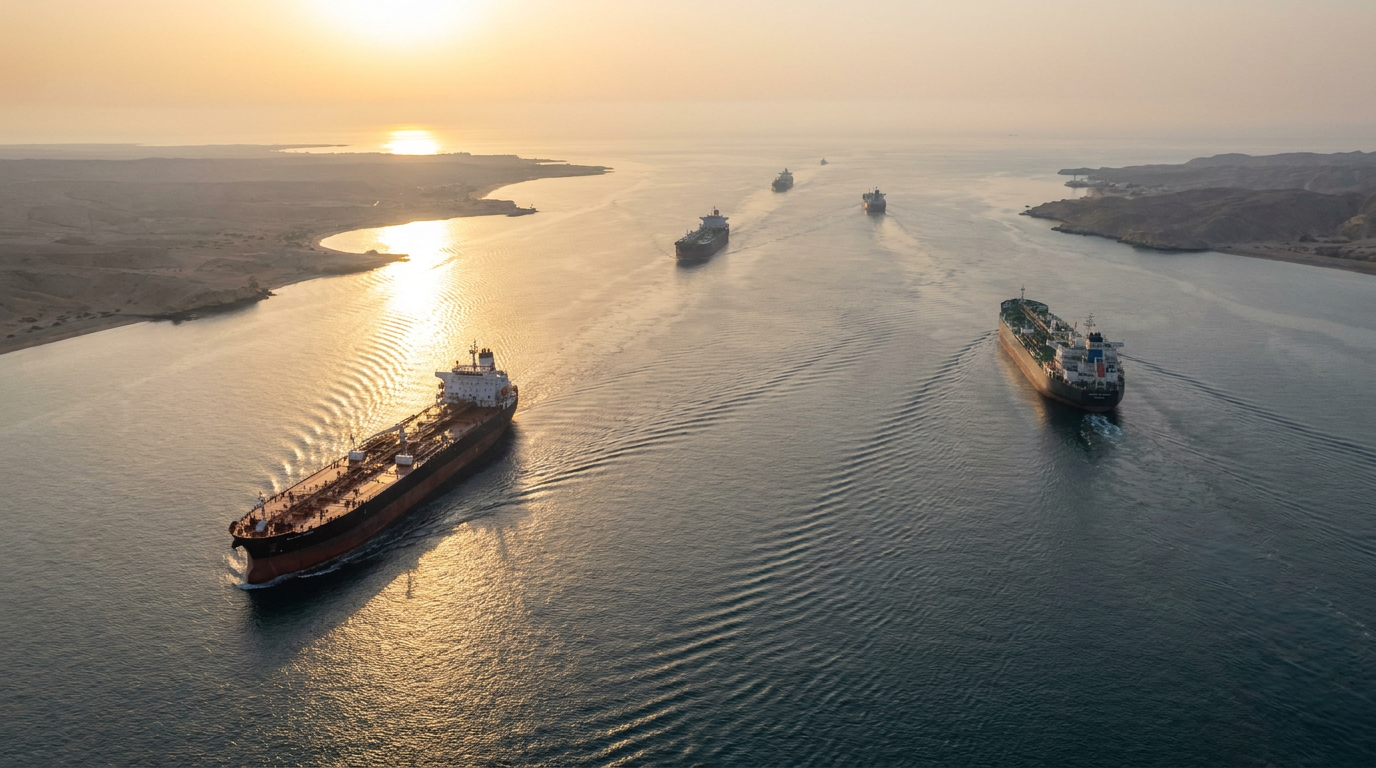
Under the immediate military terms of the agreement, the United States will begin lifting its naval blockade of Iranian ports, with a commitment to fully remove impediments within 30 days. In exchange, Iran has agreed to reopen the Strait of Hormuz—a critical artery for global oil supplies—to commercial shipping toll-free for the duration of the 60-day negotiation period. The text also explicitly calls for the termination of military operations in Lebanon, a clause that effectively requires Tehran to rein in Hezbollah forces.[4][5]

The economic and nuclear provisions outline a high-stakes roadmap. The MOU stipulates that international inspectors from the International Atomic Energy Agency (IAEA) will be granted access to oversee the destruction or removal of Iran's highly enriched uranium stockpile. If Tehran meets these nuclear compliance benchmarks, the U.S. and its regional partners have pledged to develop a reconstruction and economic development plan for Iran worth at least $300 billion, alongside a scheduled lifting of sanctions.[4][5]
President Trump has aggressively touted the agreement as a decisive American victory, characterizing it as an "unconditional surrender" by Tehran. Speaking to reporters, Trump emphasized the devastating toll the U.S. military campaign took on Iranian forces, claiming that 159 Iranian naval ships were destroyed and sent to the "bottom of the sea" during the conflict.[1]
President Trump has aggressively touted the agreement as a decisive American victory, characterizing it as an "unconditional surrender" by Tehran.
Vice President JD Vance has also defended the framework, pushing back against domestic critics by arguing that the U.S. "wins either way." Vance emphasized that the immediate reopening of the Strait of Hormuz provides vital relief to the global economy, while the 60-day window places the burden of proof squarely on Iran to dismantle its nuclear capabilities before any substantial financial relief is delivered.[2]

Despite the administration's assurances, the MOU has faced intense skepticism from Republican lawmakers on Capitol Hill. Senators including Tom Cotton and Rick Scott have voiced alarm over the proposed $300 billion reconstruction fund and the prospect of unfreezing Iranian assets. Critics argue that offering massive financial incentives mirrors the flaws they saw in the 2015 Obama-era nuclear pact, warning that Tehran could use the funds to rebuild its military and fund proxy networks once the immediate crisis passes.[6]
In Tehran, the agreement has been met with a mixture of pragmatic acceptance and hostile rhetoric. Supreme Leader Ayatollah Ali Khamenei authorized the signing, but Iran's Supreme National Security Council (SNSC) quickly issued a statement declaring "complete distrust" of the United States. The SNSC warned that Iranian forces are closely monitoring the implementation of the deal and have a predetermined plan for "reciprocal action" if Washington fails to honor its commitments or attempts to alter the terms during the 60-day window.[3][7]

Regional observers note that the inclusion of Lebanon in the ceasefire terms introduces a significant layer of fragility. While the MOU dictates an end to hostilities on that front, Israeli officials have maintained that they will not withdraw their troops from Lebanese territory until their own security objectives are met. This discrepancy leaves a dangerous flashpoint unresolved, as Hezbollah and Israeli forces continue to eye each other warily despite the broader U.S.-Iran pause.[4][8]
The focus now shifts to Bürgenstock, Switzerland, where technical delegations are set to begin the arduous process of translating the 14-point framework into a binding final treaty. With both sides retaining the right to walk away at any time, the next two months will test whether the immediate economic relief of an open Strait of Hormuz can provide enough momentum to solve a deeply entrenched geopolitical standoff.[5][8]
How we got here
April 2026
The U.S. imposes a strict naval blockade on Iran following the collapse of earlier peace talks.
May 2026
Military operations escalate, with the U.S. targeting Iranian naval vessels in the Strait of Hormuz.
June 14, 2026
Pakistani mediators help finalize the draft text of a 14-point framework agreement.
June 17, 2026
President Trump and President Pezeshkian remotely sign the Memorandum of Understanding, pausing hostilities.
June 21, 2026
Technical delegations are scheduled to begin 60 days of final negotiations in Switzerland.
Viewpoints in depth
The U.S. Administration's View
The White House frames the MOU as a total capitulation by Iran following a devastating military campaign.
President Trump and Vice President Vance argue that the U.S. achieved its primary objectives—crippling Iran's naval capabilities and forcing them to the negotiating table—without committing to endless war. By structuring the deal as a 60-day window, the administration insists it retains all leverage; if Iran fails to allow IAEA inspectors to dismantle its highly enriched uranium, the U.S. can simply walk away and resume military pressure. They view the proposed $300 billion reconstruction fund not as a concession, but as a performance-based incentive that Iran will only see if it permanently abandons its nuclear ambitions.
The Congressional Skeptics' View
Republican lawmakers warn that the framework offers too much financial relief for too few immediate guarantees.
Many GOP senators, including Tom Cotton and Rick Scott, are deeply uneasy with the economic provisions of the MOU. They draw direct parallels to the 2015 JCPOA, arguing that dangling a $300 billion reconstruction fund and unfreezing assets will inevitably enrich a regime that sponsors terrorism. These critics worry that the 60-day negotiation window gives Tehran time to regroup, and that the promise of sanctions relief surrenders the primary economic leverage the U.S. holds before the nuclear stockpile is actually destroyed.
Iran's View
Tehran frames the agreement as a defense of its national rights, approaching the 60-day window with intense suspicion.
Approved by Supreme Leader Ayatollah Ali Khamenei, the MOU is presented domestically not as a surrender, but as a diplomatic maneuver to end a punishing blockade. Iran's Supreme National Security Council has explicitly stated its 'complete distrust' of Washington, warning that any deviation from the agreed-upon sanctions relief or reconstruction funding will trigger immediate 'reciprocal action.' For Tehran, the reopening of the Strait of Hormuz is a mutual concession, and they maintain that their nuclear program remains a point of leverage until the U.S. proves it will honor the financial terms.
What we don't know
- Whether Iran will fully comply with IAEA demands to destroy its highly enriched uranium stockpile within the 60-day window.
- How the proposed $300 billion reconstruction fund will be financed and managed if a final deal is reached.
- Whether the ceasefire in Lebanon will hold, given Israel's stated refusal to withdraw its troops from Lebanese territory.
Key terms
- Memorandum of Understanding (MOU)
- A formal agreement between two or more parties that establishes a framework for cooperation, often serving as a stepping stone to a binding treaty.
- Strait of Hormuz
- A narrow, strategically critical waterway between the Persian Gulf and the Gulf of Oman through which a significant portion of the world's oil supply passes.
- IAEA
- The International Atomic Energy Agency, the United Nations watchdog responsible for monitoring and verifying nuclear programs.
- Joint Comprehensive Plan of Action (JCPOA)
- The 2015 nuclear agreement between Iran and world powers, which the Trump administration withdrew from during his first term.
Frequently asked
Does this agreement permanently end the war?
Not yet. The MOU is a preliminary framework that pauses hostilities and establishes a 60-day window to negotiate a final, binding peace treaty.
What happens to the Strait of Hormuz?
Under the agreement, Iran will reopen the Strait of Hormuz to commercial shipping toll-free for the duration of the 60-day negotiation period.
Is the U.S. giving Iran $300 billion?
No money has been transferred. The MOU proposes developing a $300 billion reconstruction plan funded by the U.S. and regional partners, but it is strictly conditional on Iran dismantling its nuclear capabilities in a final deal.
How did Congress react?
While the administration defends the deal, several Republican senators have expressed deep skepticism, warning that the promise of sanctions relief and reconstruction funds could prematurely enrich Tehran.
Sources
Source coverage
8 outlets
4 viewpoints surfaced







[1]Fox NewsTrump Administration
Trump says Iran deal 'probably is unconditional surrender,' reveals details of covert maritime operation
Read on Fox News →Vance says 'United States wins either way' as he defends Trump's Iran deal against GOP skeptics
Read on Fox News →[3]Al JazeeraIranian Leadership
Iran warns of ‘reciprocal action’ if US doesn’t honour MOU commitments
Read on Al Jazeera →[4]The GuardianRegional & Global Observers
US-Iran deal takeaways: reopening the strait of Hormuz, waived oil sanctions and Lebanon
Read on The Guardian →[5]CBS NewsRegional & Global Observers
What's in the U.S.-Iran memorandum of understanding (MOU)
Read on CBS News →[6]The Washington PostCongressional Skeptics
GOP senators criticized provisions including a plan to set up a $300 billion fund meant to rebuild Iran
Read on The Washington Post →[7]Tasnim News AgencyIranian Leadership
SNSC Warns of Reciprocal Action if US Violates Iran-US MoU
Read on Tasnim News Agency →[8]Atlantic CouncilRegional & Global Observers
It's bigger than the both of them: Assessing the US-Iran MOU
Read on Atlantic Council →
More in news politics
See all 8 stories →Gun Rights
Supreme Court Strikes Down Federal Gun Ban for Marijuana Users
7 sources
Strait of Hormuz
Iran Threatens to Close Strait of Hormuz Following Israeli Strikes in Lebanon
7 sources

Cognitive Security
Evidence Pack: Does 'Pre-Bunking' Actually Protect Voters From Misinformation?
6 sources

Strait of Hormuz
Iran Threatens to Re-Close Strait of Hormuz as Lebanon Ceasefire Collapses
8 sources
Every angle. Every day.
Get news politics stories with full source coverage and perspective breakdowns delivered to your inbox.