
Iran Threatens to Close Strait of Hormuz Following Israeli Strikes in Lebanon
Tehran claims renewed Israeli military operations in Lebanon violate a US-brokered ceasefire agreement, prompting threats to block the world's most critical oil chokepoint. Global energy markets have immediately reacted, with crude oil prices surging amid fears of a broader regional escalation.
By Factlen Editorial Team

- Iranian Leadership
- Argues that Israeli strikes in Lebanon violate the US-brokered MoU, justifying asymmetric retaliation via the Strait of Hormuz.
- Israeli Defense Establishment
- Maintains that the MoU does not grant Hezbollah immunity and that preemptive strikes are necessary for national survival.
- US & Western Allies
- Focused on maintaining freedom of navigation, salvaging the diplomatic framework, and preventing a global economic shock.
- Energy Importers
- Deeply concerned about the inflationary impact of a blocked chokepoint and the resulting surge in crude prices.
What's not represented
- · Lebanese Civilians
- · Commercial Shipping Crews
Why this matters
The Strait of Hormuz facilitates nearly 20% of the world's global oil consumption. A sustained closure would trigger an immediate spike in global energy prices, driving up inflation and gasoline costs while risking a direct military confrontation between the US and Iran.
Key points
- Iran threatened to close the Strait of Hormuz in response to Israeli strikes in Lebanon.
- Tehran claims the Israeli operations violate a US-brokered Memorandum of Understanding.
- Israel maintains the strikes were preemptive and necessary for border security.
- Global oil prices surged past $112 per barrel following the announcement.
- The US Navy is repositioning assets to ensure freedom of navigation in the region.
Iran has announced its intention to close the Strait of Hormuz, the world's most vital maritime oil chokepoint, in direct retaliation for recent Israeli military strikes in Lebanon. Tehran asserts that the Israeli operations fundamentally breach a recently negotiated Memorandum of Understanding (MoU) brokered by the United States aimed at ending regional hostilities. The threat marks a severe escalation in Middle Eastern geopolitics, directly linking the ongoing conflict in the Levant to global energy security.[1][2]
The crisis ignited over the weekend when the Israel Defense Forces (IDF) launched a series of targeted strikes against Hezbollah positions in southern Lebanon. Israeli officials maintain the strikes were preemptive and necessary to neutralize imminent threats to their northern communities, firmly denying that the operations violate the terms of the US-brokered ceasefire framework. However, Iranian leadership views the continued bombardment of its primary regional ally as a red line and a collapse of the diplomatic off-ramp negotiated with Washington.[1][6]
The situation places immense pressure on the Trump administration, which had championed the recent MoU as a landmark diplomatic achievement. In Israel, public anger has mounted against the US deal, with critics arguing the agreement emboldened Tehran without sufficiently defanging proxy groups like Hezbollah. The White House is now scrambling to salvage the fragile framework while simultaneously deterring Iran from executing its maritime blockade, dispatching emergency diplomatic envoys to the region.[3][7]

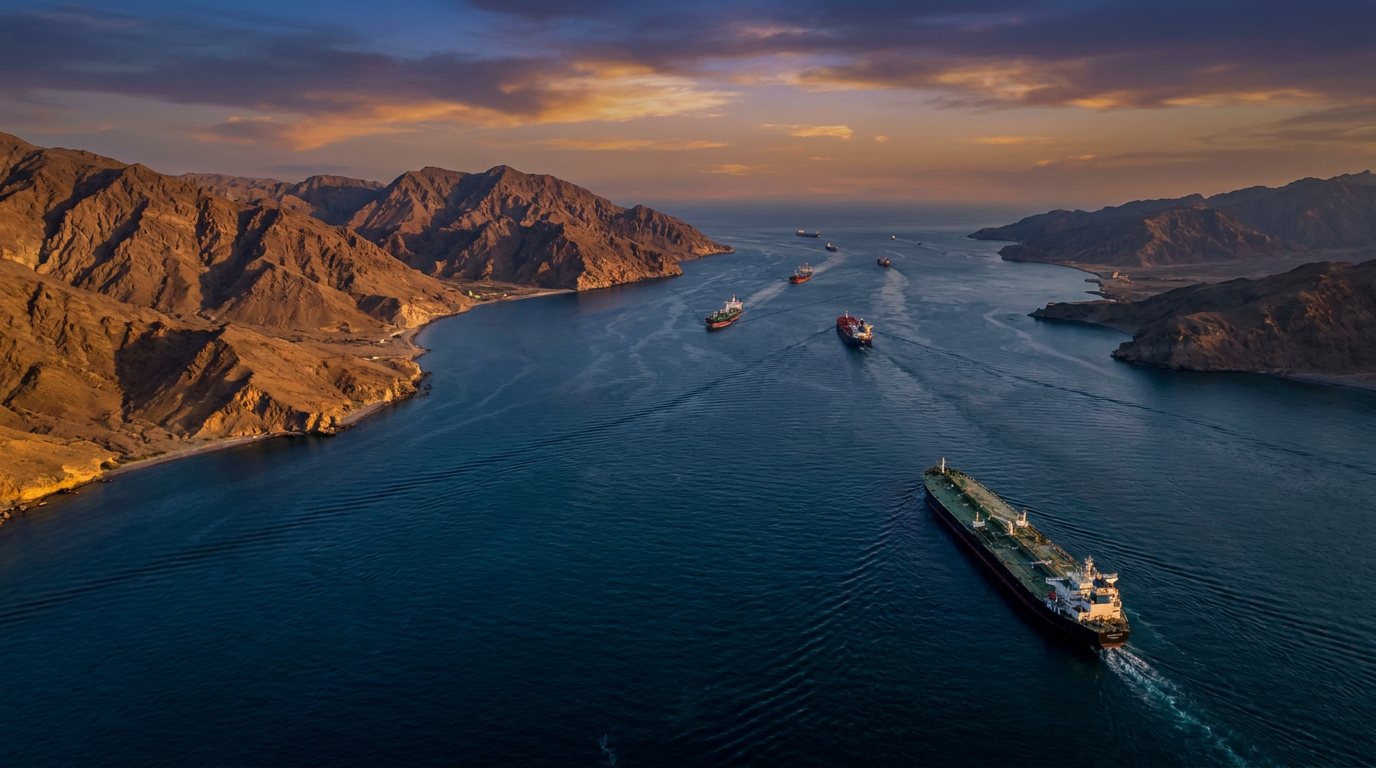
The immediate fallout has been felt across global energy markets. Brent crude prices surged past $112 per barrel within hours of Tehran's announcement, reflecting deep anxiety among commodity traders. Approximately 20% of the world's total oil consumption—roughly 21 million barrels per day—transits through the narrow waterway connecting the Persian Gulf to the Gulf of Oman. Any disruption in this flow has immediate, cascading effects on global inflation and consumer fuel prices.[4]
The immediate fallout has been felt across global energy markets.
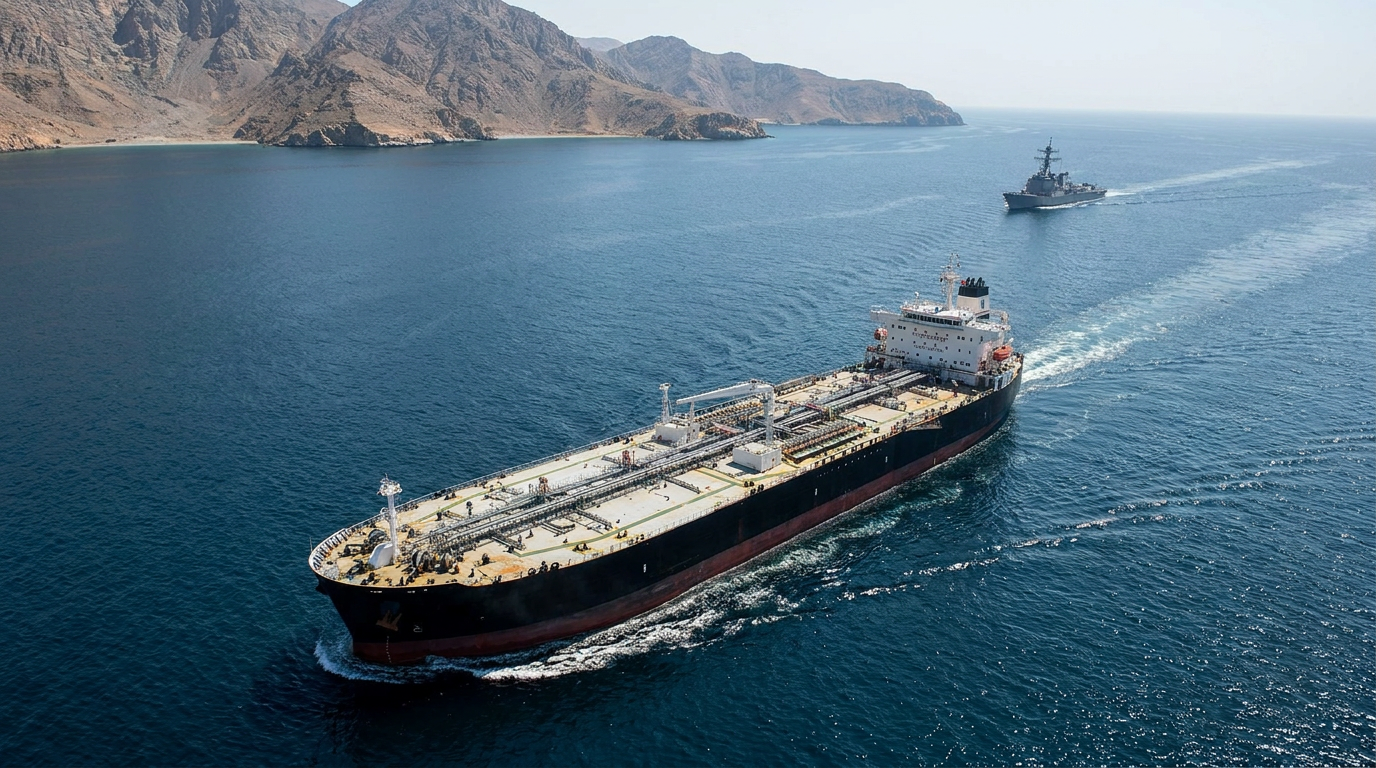
Closing the 21-mile-wide strait is a formidable logistical and military challenge, but Iran possesses a vast arsenal of anti-ship missiles, fast-attack craft, and naval mines capable of severely disrupting commercial shipping. Even the credible threat of closure typically sends maritime insurance premiums skyrocketing, forcing shipping conglomerates to reroute vessels or halt operations entirely rather than risk their multi-million dollar cargoes and crews.[4][5]

In response to the escalating rhetoric, the United States Navy has reportedly begun repositioning assets within the US Central Command (CENTCOM) area of responsibility. Freedom of navigation in the Persian Gulf has long been a core pillar of American foreign policy, and US defense officials have repeatedly warned that any attempt to blockade the strait would cross a definitive red line, likely resulting in overwhelming military force to reopen the shipping lanes.[5]
The crisis also traps Gulf Arab states in a precarious position. Nations like Saudi Arabia, the United Arab Emirates, and Kuwait rely almost exclusively on the Strait of Hormuz to export their crude oil and liquefied natural gas (LNG) to global markets, particularly in Asia. These nations have spent the past two years attempting to diplomatically engage with Tehran to prevent exactly this type of economic disruption, and are now leaning heavily on backchannel diplomacy to cool tensions.[2][4]

Diplomatic intermediaries in Oman and Qatar are currently operating in overdrive, attempting to de-escalate the standoff before commercial vessels are actively intercepted or fired upon. For now, the global economy watches the narrow waters of the Persian Gulf, waiting to see if the rhetoric translates into a physical blockade that could trigger a global energy crisis and a broader regional war.[1][7]
How we got here
Early 2026
The US brokers a fragile Memorandum of Understanding (MoU) to de-escalate regional conflicts.
June 18, 2026
Israel launches targeted strikes against Hezbollah positions in southern Lebanon, citing imminent threats.
June 19, 2026
Israeli public expresses frustration over the US-brokered Iran deal, arguing it failed to secure Israel's borders.
June 20, 2026
Iran announces intentions to close the Strait of Hormuz, declaring the MoU breached.
Viewpoints in depth
Tehran's Position
Views the MoU as violated by Israel's actions in Lebanon and uses the Strait as its primary asymmetric leverage.
Iranian leadership views the US-brokered MoU as a holistic regional agreement. From Tehran's perspective, continued Israeli military operations against Hezbollah in Lebanon represent a bad-faith violation of the ceasefire framework. Lacking the conventional military strength to confront Israel or the US directly, Iran relies on its geographic control over the Strait of Hormuz as its ultimate asymmetric deterrent, calculating that the threat of global economic pain will force Washington to rein in Israeli operations.
Israeli Security Establishment
Argues the MoU cannot mean impunity for Hezbollah and views preemptive strikes as non-negotiable.
For Israel, the MoU brokered by the US was viewed with deep skepticism from the start. The Israeli defense establishment argues that the agreement cannot serve as a shield for Hezbollah to rebuild its military infrastructure or prepare cross-border attacks. Consequently, Israel views its strikes in Lebanon not as a violation of the MoU, but as essential, preemptive self-defense measures required to protect its northern citizens, regardless of the diplomatic fallout.
Global Energy Markets
Primarily concerned with transit security and the catastrophic inflationary impact of a blocked chokepoint.
Commodity traders and energy importers view the geopolitics as secondary to the physical flow of oil. The Strait of Hormuz has no viable alternative for the sheer volume of crude it handles daily. Market analysts warn that even a partial or temporary closure would trigger a massive supply shock, instantly driving up global inflation, stalling economic growth, and forcing central banks to rethink interest rate policies.
What we don't know
- Whether Iran will actually deploy naval mines or physically intercept vessels, or if the threat is purely rhetorical leverage.
- How the US military will respond if a commercial vessel is fired upon in the Strait.
- If backchannel diplomacy can successfully establish a new red line before an incident occurs.
Key terms
- Strait of Hormuz
- A narrow waterway between the Persian Gulf and the Gulf of Oman, through which roughly 20% of the world's oil passes.
- Memorandum of Understanding (MoU)
- A formal agreement between two or more parties, in this case referring to the US-brokered de-escalation framework intended to pause regional hostilities.
- Brent Crude
- The primary pricing benchmark for Atlantic basin crude oils, used to price two-thirds of the world's internationally traded crude oil supplies.
Frequently asked
Can Iran actually close the Strait of Hormuz?
Yes, Iran has the military capability—including naval mines, drones, and anti-ship missiles—to severely disrupt or halt commercial shipping, though doing so would likely trigger a massive US military response.
How would a closure affect gas prices?
A sustained disruption would cause an immediate and severe spike in global crude oil prices, which would quickly translate to significantly higher prices at the gas pump worldwide.
Why is Israel striking Lebanon?
Israel states it is conducting preemptive strikes against Hezbollah infrastructure to prevent imminent attacks on northern Israel, maintaining this does not violate broader regional agreements.
Sources
Source coverage
7 outlets
4 viewpoints surfaced






[1]BBCIranian Leadership
Iran says Strait of Hormuz will be closed over Israel attacks on Lebanon
Read on BBC →[2]Al JazeeraIranian Leadership
Iran shuts Strait of Hormuz as Israel tests MOU with Lebanon strikes
Read on Al Jazeera →‘You could’ve been the greatest’: Trump faces Israeli anger over Iran deal
Read on Al Jazeera →[4]ReutersEnergy Importers
Oil surges past $112 as Iran threatens Strait of Hormuz closure
Read on Reuters →[5]Fox NewsUS & Western Allies
US Navy deploys additional assets to Gulf as Iran threatens global shipping
Read on Fox News →[6]The Times of IsraelIsraeli Defense Establishment
IDF strikes Hezbollah targets in Lebanon, denies violating US-brokered ceasefire
Read on The Times of Israel →[7]CNNUS & Western Allies
White House scrambles to salvage Middle East peace deal amid Hormuz crisis
Read on CNN →

Every angle. Every day.
Get news politics stories with full source coverage and perspective breakdowns delivered to your inbox.