
How Formula 1's 2026 Regulations Are Rewriting the Rules of Racing
Formula 1's sweeping 2026 regulations have introduced lighter cars, active aerodynamics, and a 50/50 hybrid power split. The historic reset aims to deliver closer racing and pioneer 100 percent sustainable fuels.
By Factlen Editorial Team
- FIA & Rulemakers
- Focused on improving the racing spectacle while aligning the sport with global environmental goals.
- Team Engineers
- Focused on the immense technical challenge of energy management, software optimization, and packaging.
- Drivers & Fans
- Focused on the on-track product, agility, and the shift from pure speed to tactical energy deployment.
- Environmental Advocates
- Focused on the 100 percent sustainable fuel milestone and its potential for everyday mobility.
What's not represented
- · Lower-budget teams struggling with the immense R&D costs of the new hybrid systems.
- · Traditional motorsport purists who prefer mechanical grip and V10 engines over software-driven hybrid racing.
Why this matters
Formula 1 serves as a high-speed research laboratory for the global automotive industry. The sport's successful transition to 100 percent sustainable synthetic fuels and advanced hybrid energy management could accelerate the development of carbon-neutral technologies for everyday road cars.
Key points
- The 2026 regulations mandate a 'Nimble Car' concept, reducing overall weight by 30 kilograms and narrowing the chassis to improve agility.
- Power units now feature a 50/50 split between a 400kW internal combustion engine and a massively upgraded 350kW electrical system.
- The combustion engines run entirely on 100 percent sustainable, drop-in synthetic fuels, aligning with the sport's net-zero carbon goals.
- Traditional DRS has been replaced by active aerodynamics and a 'Manual Override' electrical boost to facilitate strategic overtaking.
The 2026 Formula 1 season is well underway, and the sport is currently navigating the most radical technical transformation in its 76-year history. For years, drivers and fans alike lamented the swelling silhouette of Grand Prix cars, which had grown into heavy, cumbersome machines that struggled to follow each other closely. In response, the FIA introduced a sweeping set of regulations that fundamentally reimagined what a Formula 1 car should be. Now that these machines have hit the track, the theoretical blueprints have become a high-speed reality, fundamentally altering the mechanics of racing, overtaking, and engineering strategy.[1][5]
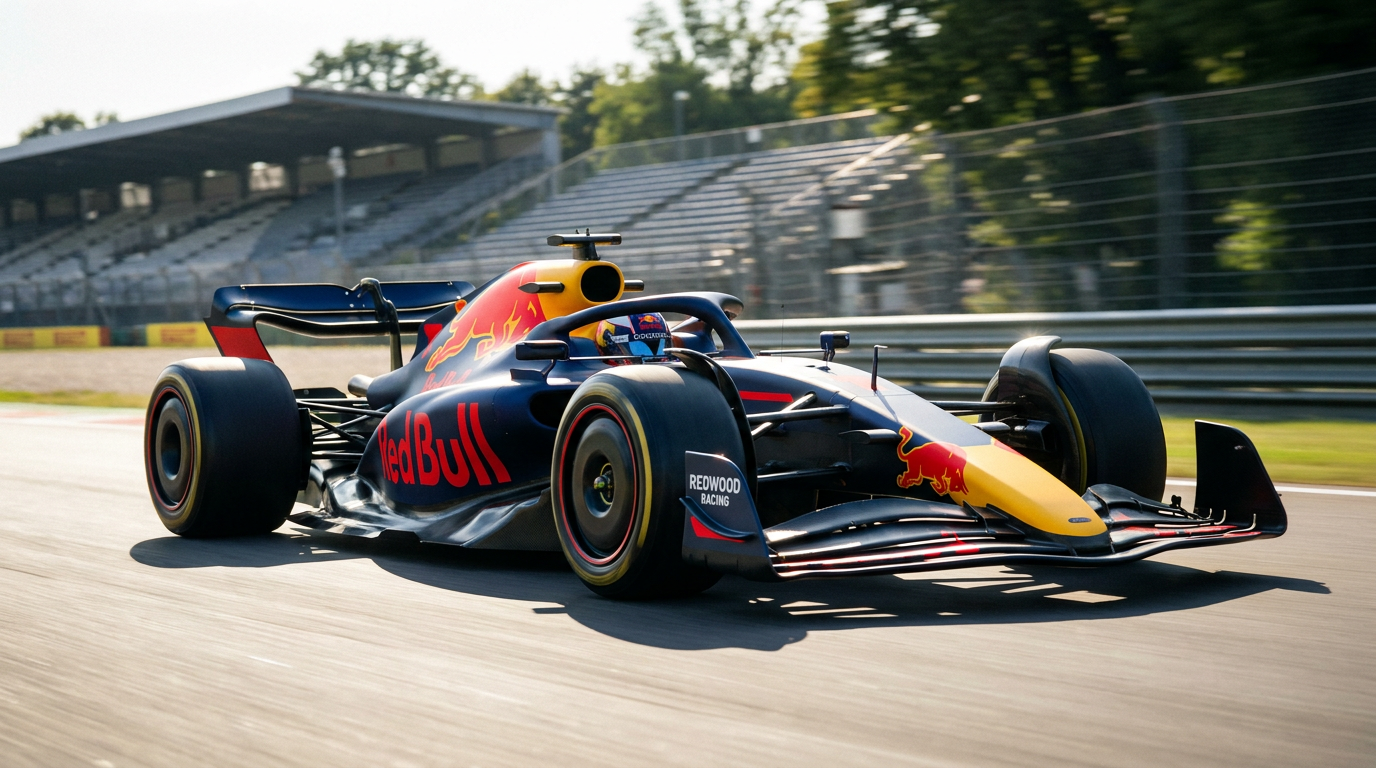
At the heart of this reset is the "Nimble Car" concept. The governing body recognized that to improve the on-track spectacle, the cars simply had to shrink. The 2026 specifications mandate a maximum wheelbase of 3,400 millimeters—a 200-millimeter reduction from the previous generation—and a chassis that is 100 millimeters narrower. Crucially, the cars have been put on a strict diet, shedding 30 kilograms to bring the minimum weight down to 768 kilograms.[1][2]
This reduction in size and mass is not merely an aesthetic choice; it is a vital physics equation. A shorter, narrower, and lighter car inherently possesses a lower polar moment of inertia, making it significantly more responsive when changing direction. While the 18-inch wheels remain, the tires themselves are narrower, reducing the overall footprint. The result is a machine designed to dance through tight street circuits and sweeping corners with an agility that had been lost in the turbo-hybrid era.[1][2]

However, the most profound shift lies beneath the engine cover. The 2026 regulations introduce a revolutionary "Power Unit 2.0," characterized by a near 50/50 power split between the internal combustion engine (ICE) and the electrical system. The complex and expensive Motor Generator Unit-Heat (MGU-H), which recovered energy from the exhaust, has been entirely eliminated. In its place, the sport has leaned heavily into kinetic recovery.[3][7]
The output of the Motor Generator Unit-Kinetic (MGU-K) has been nearly tripled, jumping from 120 kilowatts to a staggering 350 kilowatts. Meanwhile, the 1.6-liter turbocharged V6 combustion engine has been dialed back from roughly 550 kilowatts to 400 kilowatts. This massive electrification push means that energy management is no longer a background task; it is the defining factor of a driver's lap time and a team's race strategy.[2][7]
Fueling the combustion side of this equation is another historic milestone: the mandate of 100 percent sustainable fuels. These are not traditional biofuels mixed with petrol, but advanced synthetic drop-in fuels designed to be entirely carbon-neutral over their lifecycle. Created by capturing atmospheric carbon and utilizing non-food biological waste, this fuel represents Formula 1's commitment to achieving a net-zero carbon profile by 2030.[4][5]
Formula 1 has long positioned itself as a "moonshot laboratory" for the global automotive industry, and the 2026 fuel regulations are the ultimate test of that philosophy. While early estimates suggest these synthetic fuels are currently vastly more expensive to produce than conventional petrol, the intense development war among the six registered power unit manufacturers is expected to drive down costs and accelerate commercial viability for everyday road cars.[4][5]

To compensate for the massive increase in electrical deployment and the reduction in overall downforce—which has been slashed by 30 percent—aerodynamic efficiency has become paramount. If the 2026 cars retained the drag profiles of their predecessors, they would rapidly deplete their batteries and suffer severe top-speed deficits. The solution is the introduction of active aerodynamics, a shape-shifting system that operates on both the front and rear wings simultaneously.[1][3]
If the 2026 cars retained the drag profiles of their predecessors, they would rapidly deplete their batteries and suffer severe top-speed deficits.
The traditional Drag Reduction System (DRS), which served as a lopsided overtaking aid for over a decade, is dead. In its place are two dynamic aerodynamic states used by every driver on every lap. "Z-Mode" is the default high-downforce configuration, keeping the wing elements closed to push the car into the tarmac for maximum grip during cornering and heavy braking.[1][3]
As the car exits a corner and accelerates onto a straight, the driver switches to "X-Mode." The active elements on both the front and rear wings open up, shedding a massive 55 percent of the car's aerodynamic drag. This synchronization is critical; if only the rear wing opened, the aerodynamic balance would shift violently, making the front end uncontrollably twitchy at speeds exceeding 300 kilometers per hour.[1][3]
With DRS gone, the mechanics of overtaking have been entirely rewritten through a new electrical system known as "Manual Override." Because the 2026 cars rely so heavily on battery power, a leading car's energy deployment naturally tapers off as it approaches 290 kilometers per hour, eventually reaching zero at 355 kilometers per hour to conserve the battery.[2][4]

The chasing car, however, is granted a tactical advantage. If a driver is within one second of the car ahead, they can activate the Manual Override button. This grants them an extra 0.5 megajoules of energy and allows them to sustain a full 350-kilowatt electrical boost up to 337 kilometers per hour. This speed differential replaces the artificial breeze of DRS with a strategic deployment of raw horsepower.[2][4]
Early races in the 2026 season have provided a fascinating glimpse into how these rules play out in combat. At the Australian Grand Prix, battles at the front of the pack looked fundamentally different than in years past. Rather than one car simply being faster, drivers were seen alternating between phases of aggressive energy depletion and tactical recharging.[4]
This ebb and flow of electrical power has turned wheel-to-wheel combat into a high-speed chess match. Drivers are frequently adjusting their braking points and racing lines to regenerate electricity more efficiently, saving their Manual Override boosts for the perfect tactical strike. Software optimization and real-time predictive modeling from the pit wall have never been more critical to securing a podium finish.[4][7]

As the 2026 season progresses, the engineering war will only intensify. Teams are constantly refining the complex software that dictates energy harvesting and deployment, searching for the radical innovations that define Formula 1's greatest eras. The unveiling of radically different chassis concepts—such as Mercedes' striking W17—proves that the grid is still finding its footing. While the ultimate success of the regulations will be judged over years, the initial verdict is clear: the sport has successfully executed a hard reboot, delivering a greener, smarter, and fiercely strategic new chapter of racing.[3][5][6]
How we got here
August 2022
The FIA officially approves the 2026 Power Unit regulations, confirming the removal of the MGU-H and the shift to 100 percent sustainable fuels.
June 2024
The FIA unveils the comprehensive 2026 chassis regulations, introducing the 'Nimble Car' concept and active aerodynamics.
January 2026
Formula 1 teams begin unveiling their 2026-spec cars, showcasing the radical new aerodynamic packages to the public.
March 2026
The 2026 regulations make their competitive debut at the season-opening Australian Grand Prix, ushering in the new era of energy-management racing.
Viewpoints in depth
FIA & Rulemakers
The governing body's focus is on improving the racing spectacle while aligning the sport with global environmental goals.
The FIA designed the 2026 regulations to solve two existential problems: cars that had become too heavy to race closely, and a powertrain formula that lacked relevance to the future of the automotive industry. By mandating smaller dimensions and active aerodynamics, regulators aim to reduce the 'dirty air' that prevents overtaking. Simultaneously, the shift to 100 percent sustainable fuels and a 50/50 electrical split is intended to keep major automotive manufacturers invested in the sport as a research and development platform.
Team Engineers
For the technical teams, 2026 represents a monumental packaging and software optimization challenge.
Engineers are grappling with the reality of fitting a massively upgraded 350kW electrical system into a chassis that is 30 kilograms lighter and significantly narrower. Because aerodynamic drag has been slashed by 55 percent, the traditional pursuit of peak downforce has been replaced by a quest for extreme aerodynamic efficiency. Furthermore, the removal of the MGU-H means teams must rely entirely on kinetic harvesting and highly complex software algorithms to ensure drivers do not run out of electrical power at critical moments.
Drivers & Fans
The primary concern for those behind the wheel and in the grandstands is the quality of the on-track combat.
Drivers have largely welcomed the 'Nimble Car' concept, noting that the lighter, shorter chassis feels much more responsive through low-speed corners compared to the cumbersome previous generation. However, the new energy management requirements have fundamentally changed racecraft. Instead of pure flat-out pushing, drivers must engage in tactical 'lift and coast' maneuvers to regenerate the battery, saving their Manual Override boosts for strategic attacks. For fans, this replaces the predictable highway passes of the DRS era with complex, multi-lap chess matches.
What we don't know
- Whether the immense cost of developing 100 percent sustainable synthetic fuels will drop enough to make them viable for everyday consumer vehicles.
- How quickly the competitive order will stabilize, as major regulation resets historically lead to large performance gaps between teams in the first year.
- If the new 'Manual Override' system will consistently produce organic, exciting overtakes, or if it will heavily favor teams with superior software algorithms.
Key terms
- Active Aerodynamics
- A system where the car's front and rear wing elements physically move while driving to either reduce drag on straights or increase grip in corners.
- MGU-K (Motor Generator Unit-Kinetic)
- An electrical component that recovers kinetic energy generated under braking and converts it into electrical power to boost acceleration.
- Manual Override
- A tactical electrical boost system that allows a chasing driver to deploy extra battery power to help overtake the car ahead.
- X-Mode and Z-Mode
- The two active aerodynamic states; X-Mode opens the wings for low drag on straights, while Z-Mode closes them for high downforce in corners.
- Sustainable Synthetic Fuel
- A carbon-neutral alternative to traditional petrol, manufactured by combining captured atmospheric carbon dioxide with green hydrogen.
Frequently asked
What happened to the DRS system in 2026?
The traditional Drag Reduction System (DRS) has been eliminated. It is replaced by active aerodynamics, where both the front and rear wings open up on straights (X-Mode) to reduce drag for all cars on every lap.
How do drivers overtake without DRS?
Drivers now use a 'Manual Override' button. When within one second of the car ahead, the chasing driver gets a sustained 350kW electrical boost up to 337 km/h, while the leading car's electrical deployment naturally tapers off.
Are the 2026 Formula 1 cars slower?
Top speeds remain similar due to a massive 55 percent reduction in aerodynamic drag, but lap times may initially be slightly slower as teams adapt to the 30 percent reduction in overall downforce and the new energy management requirements.
What kind of fuel do the 2026 cars use?
The internal combustion engines run on 100 percent sustainable, drop-in synthetic fuels. These are created by capturing atmospheric carbon and using non-food biological waste, making them carbon-neutral over their lifecycle.
Sources
Source coverage
7 outlets
4 viewpoints surfaced







[1]SilverstoneFIA & Rulemakers
The five biggest changes coming with the F1 2026 regulations
Read on Silverstone →[2]Red Bull RacingTeam Engineers
Bulls' Guide To: The F1 2026 Regulations
Read on Red Bull Racing →[3]RaceTeqFIA & Rulemakers
F1 2026 regulations: Everything you need to know including DRS and active aero changes
Read on RaceTeq →[4]Infinity Sport AsiaEnvironmental Advocates
Formula 1's 2026 rules: new sustainability rules are changing the way races are won
Read on Infinity Sport Asia →[5]GrandPrix247Drivers & Fans
Formula 1 2026 rules reset and the new battle for power
Read on GrandPrix247 →[6]HypebeastTeam Engineers
Mercedes-AMG PETRONAS Reveals W17 for F1's 2026 Rules Reset
Read on Hypebeast →[7]RecrewitTeam Engineers
How F1 2026 Regulations Will Redefine Motorsport Engineering
Read on Recrewit →

More in sports
See all 6 stories →Sudanese Soccer
Sudan's U-17 Women's Soccer Team Makes Historic Return to International Play Amidst Civil War
7 sources

Injury
Post-Stanley Cup Injury Reveals Highlight the Staggering Physical Toll of the 2026 Final
6 sources

Standings
Carolina Hurricanes Capture 2026 Stanley Cup, Ending 20-Year Championship Drought
7 sources

Exercise Science
The Science of Zone 2: New Evidence Refines the Longevity Sweet Spot
7 sources

Every angle. Every day.
Get sports stories with full source coverage and perspective breakdowns delivered to your inbox.