
Post-Stanley Cup Injury Reveals Highlight the Staggering Physical Toll of the 2026 Final
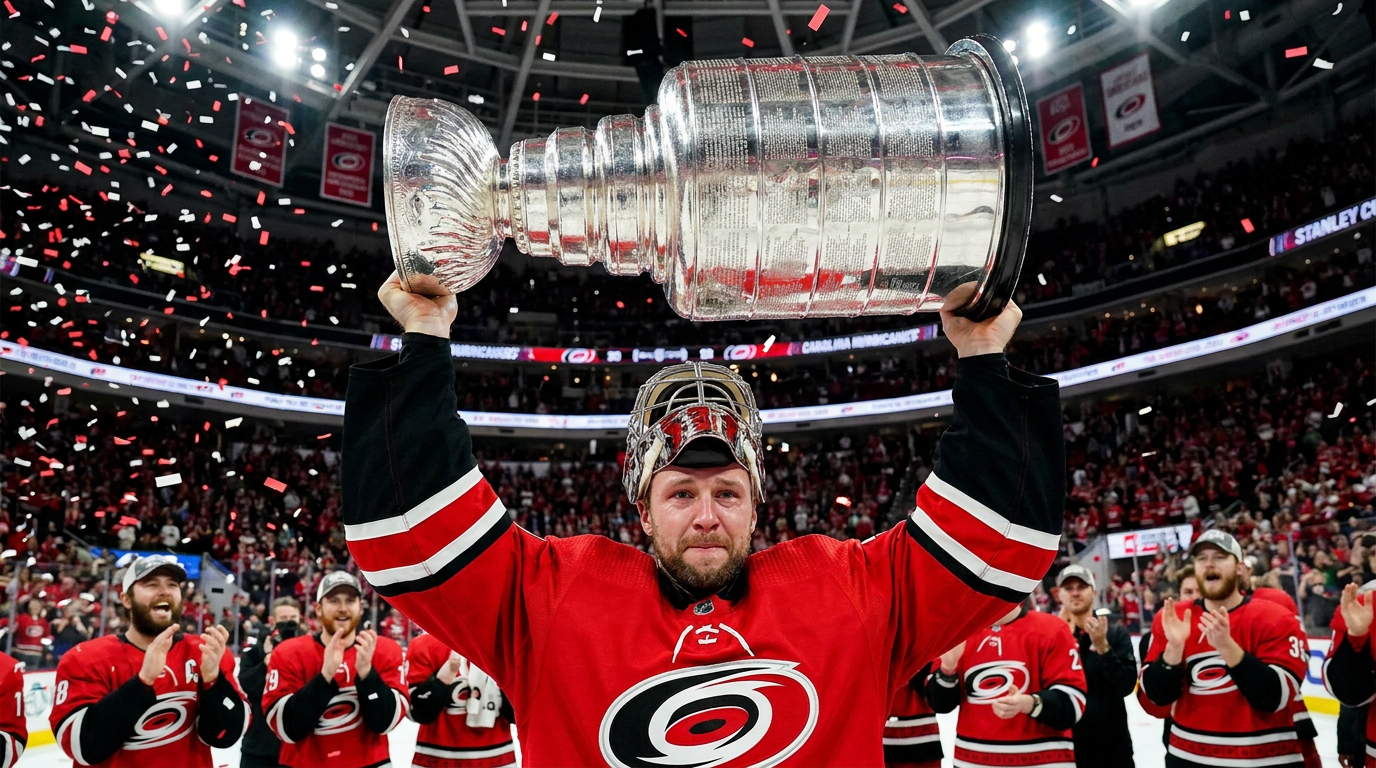
Following the Carolina Hurricanes' 2026 Stanley Cup victory, the traditional release of playoff injury reports has revealed the extreme physical sacrifices made by players on both sides. The revelations underscore the sport's deep-rooted culture of resilience, culminating in an emotional Cup handoff to injured Hurricanes goaltender Frederik Andersen.
By Factlen Editorial Team
- Team Management & Coaches
- Focuses on managing the roster's health and commends the resilience of players who battle through severe injuries to keep the team competitive.
- Players & Teammates
- Views playing through pain as a shared sacrifice and a necessary bond that fuels a championship run.
- Sports Media & Analysts
- Chronicles the physical toll and the dramatic shifts in momentum caused by these injuries, analyzing their impact on the series outcome.
What's not represented
- · Medical professionals treating the long-term effects of playing through structural damage.
- · The families of players who witness the physical toll firsthand.
Why this matters
The annual post-Stanley Cup injury reveals pull back the curtain on the extreme physical sacrifices professional hockey players make for a championship. Understanding this toll highlights the intense 'warrior culture' of the sport and sparks ongoing debates about the balance between athletic glory and long-term player health.
Key points
- Vegas Golden Knights management revealed a staggering list of severe injuries played through during the 2026 Stanley Cup Final.
- Brayden McNabb played 35 minutes in Game 3 just days after receiving over 30 facial stitches.
- Mark Stone played through a torn adductor, while William Karlsson suffered a broken wrist in Game 5.
- Carolina goaltender Frederik Andersen tweaked his knee in Game 2 and missed the remainder of the series.
- Hurricanes captain Jordan Staal honored Andersen's resilience by handing him the Stanley Cup first.
The Carolina Hurricanes have hoisted the 2026 Stanley Cup, but as the champagne dries and the parade routes are drawn, the NHL's annual tradition of the "injury reveal" has taken center stage.[3]
During the grueling two-month postseason grind, hockey teams famously guard the health status of their rosters, classifying severe trauma under the vague umbrella of "upper-body" or "lower-body" ailments to prevent opponents from targeting physical vulnerabilities.[3]
Once the final horn sounds, however, the truth filters out. On Wednesday, Vegas Golden Knights general manager Kelly McCrimmon detailed a staggering list of structural injuries his runner-up squad endured to push the Final to six games.[5]
Captain Mark Stone battled through a torn adductor, while defenseman Noah Hanifin anchored the blue line with an upper-body injury that would have required a six-to-eight-week absence during the regular season.[5]

The most visceral display of resilience came from Vegas defenseman Brayden McNabb. In Game 2, McNabb took an 87 mph slap shot directly to the face, requiring more than 30 stitches to close the gash.[3][5]
Rather than sitting out, McNabb returned for Game 3 wearing a full protective cage and logged a massive 35 minutes and 47 seconds of ice time in a double-overtime thriller.[3]
The physical toll eventually caught up to the Golden Knights in Game 5, when center William Karlsson suffered a broken wrist after a heavy hit along the boards by Carolina's Sean Walker. The fracture required surgery and forced Karlsson out of the deciding Game 6.[5]
The fracture required surgery and forced Karlsson out of the deciding Game 6.
The victorious Hurricanes were not immune to the war of attrition. Defenseman Alexander Nikishin played through the lingering effects of a first-round concussion, while forward William Carrier exited Game 3 with an upper-body injury and did not return.[1][3]

Yet the emotional core of the 2026 injury reveals centered on Carolina goaltender Frederik Andersen. After a stellar postseason run, Andersen quietly tweaked his knee during a 4-3 overtime victory in Game 2.[2]
Andersen attempted to play through the joint issue in Game 3 but was pulled after two periods. He spent the remainder of the series as a "stressed spectator" while rookie Brandon Bussi took over the crease and eventually secured the Game 6 shutout.[2]
Despite not playing the final three games, Andersen's resilience and veteran leadership were honored in the ultimate hockey tradition. When NHL Commissioner Gary Bettman handed the Stanley Cup to Carolina captain Jordan Staal, Staal immediately passed it to the 36-year-old Andersen.[4]
For Andersen—a veteran of 101 career playoff games who had endured years of postseason heartbreak and recently lost his close friend and agent, Claude Lemieux—the handoff was a moment of pure disbelief that transcended his physical pain.[4]

While medical professionals frequently debate the long-term wisdom of playing through torn muscles and broken bones, within the locker room, it is viewed as the necessary price of admission for hockey's ultimate prize.[3]
How we got here
April 2026
The grueling two-month, four-round grind of the Stanley Cup playoffs begins.
June 4, 2026
Vegas defenseman Brayden McNabb takes a puck to the face in Game 2, requiring over 30 stitches.
June 6, 2026
Carolina goaltender Frederik Andersen attempts to play Game 3 with a knee injury but is pulled; McNabb plays 36 minutes in a full cage.
June 11, 2026
Vegas forward William Karlsson suffers a broken wrist in Game 5, ruling him out for the rest of the series.
June 14, 2026
The Hurricanes win the Stanley Cup in Game 6; Captain Jordan Staal hands the Cup first to the injured Andersen.
June 17, 2026
Vegas management officially reveals the severe injuries their roster played through during the Final.
Viewpoints in depth
Team Management & Coaches
Focuses on managing the roster's health and commends the resilience of players who battle through severe injuries.
For general managers and head coaches, the post-season injury reveal is a moment to publicly validate the sacrifices their players made behind closed doors. Executives like Kelly McCrimmon highlight these injuries not as excuses for losing, but as testaments to the character of the locker room. Coaches rely on this shared suffering to build a culture of accountability, knowing that seeing a teammate play through a broken bone or torn muscle motivates the rest of the roster to elevate their own performance.
Players & Teammates
Views playing through pain as a shared sacrifice and a necessary bond that fuels a championship run.
Inside the locker room, playing through pain is the ultimate currency of respect. Players view the grueling two-month tournament as a war of attrition where everyone is dealing with some level of physical trauma. The willingness to block an 87 mph slap shot, receive 30 stitches, and return for the next shift is celebrated as the defining trait of a champion. This camaraderie culminates in traditions like the Cup handoff, which specifically honors the veterans who have endured the most physical and emotional heartbreak.
Medical & Player Safety Advocates
Expresses concern over the long-term health implications of the sport's warrior culture.
While the hockey world celebrates these injury reveals as badges of honor, sports medicine professionals often view them with deep concern. Playing through structural damage—such as torn adductors, broken wrists, or the lingering effects of concussions—can lead to chronic pain, accelerated joint degeneration, and long-term neurological issues. Safety advocates argue that the romanticization of this 'warrior culture' places immense pressure on athletes to prioritize a trophy over their long-term quality of life.
What we don't know
- The exact timeline for William Karlsson's return following his wrist surgery.
- Whether the NHL will eventually mandate more transparent injury reporting during the playoffs.
Key terms
- Upper/Lower-Body Injury
- The notoriously vague terminology used by NHL teams to describe injuries without revealing the exact body part affected.
- Adductor
- A group of muscles in the thigh; a torn adductor is a painful groin injury that severely limits a skater's mobility.
- Stanley Cup Handoff
- The tradition where the team captain receives the Cup from the commissioner and immediately passes it to a respected veteran teammate.
Frequently asked
Why do NHL teams hide injuries during the playoffs?
Teams classify injuries vaguely as "upper-body" or "lower-body" to prevent opponents from intentionally targeting a player's specific physical vulnerability.
What injury did Frederik Andersen sustain?
The Carolina Hurricanes goaltender tweaked his knee in Game 2 of the Final and was forced to sit out the remainder of the series.
How long would Noah Hanifin's injury have kept him out normally?
Vegas management revealed Hanifin played through an upper-body injury that would have required a six-to-eight-week recovery during the regular season.
Sources
Source coverage
6 outlets
3 viewpoints surfaced






[1]NHL.comTeam Management & Coaches
Carrier injured for Hurricanes in Game 3 of Stanley Cup Final
Read on NHL.com →[2]Daily FaceoffSports Media & Analysts
Hurricanes' Andersen injured knee in Game 2
Read on Daily Faceoff →[3]Raleigh News & ObserverPlayers & Teammates
How the Canes, Golden Knights handle playoff pain: 'Everybody's dealing with it'
Read on Raleigh News & Observer →[4]Florida Hockey NowPlayers & Teammates
Carolina Hurricanes Enjoyed Stanley Cup Traditions After Win in Vegas
Read on Florida Hockey Now →[5]SinBin.vegasTeam Management & Coaches
Golden Knights reveal injury updates for four players following Stanley Cup Final loss
Read on SinBin.vegas →[6]MarkerzoneSports Media & Analysts
Photos reveal the severe damage the Hurricanes have done to the Stanley Cup early on
Read on Markerzone →
Every angle. Every day.
Get sports stories with full source coverage and perspective breakdowns delivered to your inbox.