
The Science of Clarified Cocktails: How Fat-Washing and Milk-Washing Transform Spirits
By manipulating proteins and lipids, bartenders are using centuries-old chemistry to strip bitterness, extract savory flavors, and create crystal-clear cocktails with silky textures.
By Factlen Editorial Team
- Culinary Mixologists
- Argue that clarification elevates cocktails into culinary experiences by prioritizing mouthfeel and the extraction of savory, unexpected flavors.
- Beverage Historians
- Emphasize that these modern trends are actually centuries-old preservation methods developed before refrigeration.
- Chemical Engineers
- View the bar as a laboratory, focusing on ethanol's unique properties as an amphiphilic solvent and the precise protein-binding mechanics of casein.
What's not represented
- · Commercial Ready-to-Drink Manufacturers
- · Dairy-Free/Vegan Advocates
Why this matters
Understanding the chemistry behind these techniques demystifies high-end mixology, allowing home enthusiasts to replicate complex, velvety drinks while extending the shelf life of fresh ingredients indefinitely.
Key points
- Milk clarification uses the curdling of casein proteins to trap bitter polyphenols and impurities, resulting in a crystal-clear drink.
- The whey proteins left behind after milk clarification give cocktails a luxurious, silky mouthfeel.
- Fat-washing utilizes ethanol's ability to dissolve both water-soluble and fat-soluble compounds to extract savory flavors from fats like butter or bacon.
- Freezing a fat-washed spirit allows the solid lipids to be easily removed, leaving the flavor without a greasy texture.
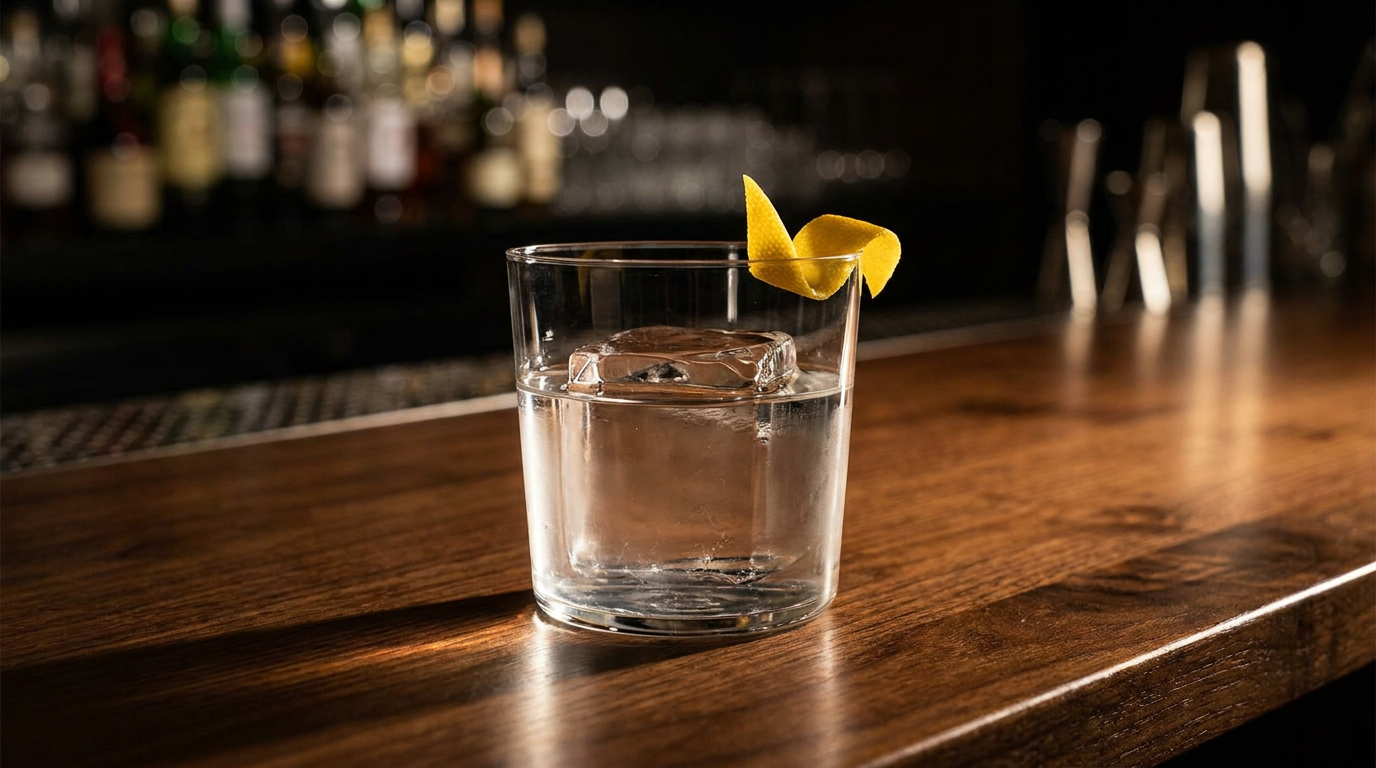
The modern craft cocktail landscape is increasingly defined by a visual paradox. A patron might order a drink that tastes exactly like a rich, creamy piña colada or a savory bacon-infused bourbon, yet the liquid arriving in their glass is entirely translucent. This sleight of hand is not the result of artificial flavorings, but rather the application of two distinct, chemistry-driven techniques: milk clarification and fat-washing. By manipulating the molecular properties of proteins and lipids, bartenders are transforming the texture, flavor, and shelf life of mixed drinks.[1]
While these methods appear cutting-edge, they are deeply rooted in historical preservation and industrial chemistry. Milk punch, the predecessor to modern clarification, dates back to at least 1711 with Mary Rockett’s recorded recipe, and was famously championed in a letter by Benjamin Franklin in 1763. Before the advent of refrigeration and advanced distillation, harsh, unrefined spirits needed to be softened, and perishable citrus needed to be preserved for long journeys.[2][7]
The science of milk clarification relies on a controlled chemical reaction between acid and dairy. When a highly acidic cocktail—typically containing citrus—is poured into milk, the sudden drop in pH causes the milk's primary protein, casein, to denature and coagulate. This curdling effect, which might seem disastrous to the untrained eye, is the exact mechanism that makes clarification possible.[2]
As the casein proteins clump together, they act as a microscopic dragnet. They bind to polyphenols—the chemical compounds responsible for the bitter, astringent tastes found in oak-aged spirits, teas, and citrus pith. The curds also trap color pigments and cloudy particulate matter. When the entire curdled mixture is slowly poured through a fine filter, the curds themselves form a dense filtration bed, stripping the liquid of its impurities and leaving behind a crystal-clear cocktail.[2]

The resulting liquid is fundamentally altered in both taste and texture. Because the bitter tannins have been chemically bound and removed, the drink's flavor profile becomes remarkably rounded and homogenous. Furthermore, while the casein proteins are filtered out, the milk's whey proteins remain dissolved in the clear liquid. These whey proteins contribute a luxurious, silky mouthfeel that coats the palate, and when shaken, they produce a voluminous, stable foam.[2]
The resulting liquid is fundamentally altered in both taste and texture.
Beyond texture and taste, milk clarification serves a highly practical function in modern bar operations: indefinite preservation. By stripping out the organic compounds that cause citrus juice to oxidize and spoil, a milk-washed cocktail becomes shelf-stable. Bartenders can batch massive quantities of complex drinks in advance, storing them in refrigerators for months without any degradation in quality, thereby vastly increasing service speed.[7]
If milk clarification is about removing harshness and adding silkiness, its sister technique—fat-washing—is about injecting rich, savory flavors into a spirit without leaving a greasy residue. Fat-washing borrows heavily from "enfleurage," an 18th-century perfume industry technique where odorless animal fats were used to extract delicate essential oils from flower petals before being separated by alcohol.[4][5]
The mechanism of fat-washing hinges on the unique chemical nature of ethanol. Alcohol is an amphiphilic solvent, meaning it has the rare ability to dissolve both hydrophilic (water-soluble) and hydrophobic (fat-soluble) compounds. When a melted fat—such as brown butter, bacon grease, or coconut oil—is vigorously mixed with a high-proof spirit, the ethanol acts as a chemical bridge, extracting the fat's aromatic and flavor molecules.[3]

After the spirit and fat have infused at room temperature for two to six hours, the mixture is subjected to extreme cold. Placed in a freezer, the lipid molecules solidify into a hard disc, while the alcohol—which has a much lower freezing point—remains entirely liquid. The bartender can then simply lift the solid puck of fat off the top and strain the remaining spirit through a fine filter.[4][5]
What remains is a spirit that carries the exact aromatic profile and a hint of the rich mouthfeel of the original fat, but with none of the actual lipid structure. A bacon-washed bourbon will smell intensely of woodsmoke and cured meat, and a blue-cheese-washed gin will carry a distinct umami funk, yet both will pour as cleanly as they did straight from the bottle.[1][5]

Despite its versatility, fat-washing has distinct culinary rules. Mixologists generally agree that fat-washed spirits are best deployed in stirred, spirit-forward applications like the Old Fashioned or the Manhattan. Shaking a fat-washed cocktail over ice introduces excessive dilution and aeration, which can shatter the delicate, velvety texture that the infusion process worked so hard to build.[6]
The frontier of these techniques is now moving toward industrial scaling and vegan alternatives. While bacon and butter dominated the early 2000s cocktail renaissance, modern bars are increasingly experimenting with olive oils, cacao butter, and nut oils to achieve similar textures for plant-based diets. Meanwhile, chemical engineers are exploring how industrial centrifuges and advanced settling basins could replicate these time-intensive, small-batch processes for the commercial ready-to-drink market.[3][4]
How we got here
1711
Mary Rockett records the earliest known recipe for milk punch, using the technique to soften harsh spirits.
1763
Benjamin Franklin writes a letter detailing his own recipe for milk punch, popularizing the preservation method.
Early 2000s
Modern craft bartenders adapt the perfume industry technique of enfleurage to create the first fat-washed cocktails.
2007
The Benton's Old Fashioned, featuring bacon fat-washed bourbon, debuts in New York, sparking a global mixology trend.
Viewpoints in depth
Culinary Mixologists
Focusing on flavor extraction and textural manipulation.
For modern bartenders, clarification is less about preservation and entirely about sensory manipulation. By stripping away the harsh, astringent tannins of oak-aged spirits or the bitter pith of citrus, mixologists can create drinks that are aggressively flavorful yet remarkably smooth. They view fat-washing as a bridge between the kitchen and the bar, allowing savory elements like brown butter, sesame oil, or wagyu beef fat to be integrated into beverages without leaving an unappetizing oil slick on the surface of the drink.
Beverage Historians
Tracing the roots of clarification to 18th-century survival techniques.
Historians are quick to point out that while a clarified piña colada feels distinctly modern, the underlying science is older than the United States. In the 1700s, spirits were often rough, unaged, and harsh on the stomach. Adding milk and citrus not only smoothed out these rough edges but also acted as a vital preservative. Before refrigeration, a batch of milk punch could survive in a cellar for months—or even years, as evidenced by bottles found perfectly preserved in Charles Dickens's estate long after his death.
Chemical Engineers
Analyzing the molecular interactions of proteins and solvents.
From a scientific perspective, the bar is simply a small-scale chemical plant. Engineers focus on the specific mechanics of these techniques: the way casein proteins denature in low-pH environments to form a microscopic filtration matrix, and the amphiphilic nature of ethanol that allows it to bond with both water and lipids. They are currently looking at how these small-batch, time-intensive processes—which rely on gravity filtration and standard freezers—can be optimized using industrial centrifuges and advanced settling basins for mass production.
What we don't know
- How efficiently these time-intensive, small-batch clarification processes can be scaled up for the mass commercial ready-to-drink market without losing quality.
- The long-term chemical stability of certain plant-based fat washes compared to traditional animal fats over extended periods.
Key terms
- Fat-washing
- A technique where liquid fat is infused into a spirit, frozen to solidify the lipids, and strained, leaving behind the fat's flavor and aroma.
- Milk clarification
- A process of adding an acidic cocktail to milk, causing it to curdle and trap impurities, resulting in a clear, smooth drink.
- Casein
- The primary protein in milk that coagulates in the presence of acid, forming curds that act as a microscopic filter during clarification.
- Whey
- The liquid remaining after milk has been curdled and strained, which imparts a silky mouthfeel to clarified cocktails.
- Enfleurage
- A historical perfume-making technique using odorless fats to capture the fragrant compounds of botanicals, which inspired modern fat-washing.
- Polyphenols
- Chemical compounds found in plants (like oak tannins or tea) that contribute to bitterness and astringency, which are stripped away during milk clarification.
Frequently asked
Does a milk-clarified cocktail taste like milk?
No. The curdling process removes the opaque casein proteins, leaving behind only the whey, which adds a silky texture without a milky flavor.
Are fat-washed cocktails greasy?
When done correctly, no. The mixture is frozen so the fat solidifies and is completely filtered out, leaving only the fat-soluble flavor compounds in the alcohol.
Can you fat-wash with vegan ingredients?
Yes. Coconut oil, olive oil, and cocoa butter are highly effective plant-based fats frequently used for washing spirits.
Why do bartenders clarify cocktails?
Clarification removes bitter tannins, extends the shelf life of citrus-based drinks indefinitely, and provides a visually striking, crystal-clear appearance.
Sources
Source coverage
7 outlets
3 viewpoints surfaced







[1]Factlen Editorial TeamChemical Engineers
Synthesis by Factlen editorial team
Read on Factlen Editorial Team →[2]SevenFifty DailyBeverage Historians
The Science of Clarified Cocktails
Read on SevenFifty Daily →[3]COMSOLChemical Engineers
Fat-Washing Cocktails: Ethanol's Ability to Release Flavors
Read on COMSOL →[4]Alcohol ProfessorCulinary Mixologists
Pros and Cons of Fat-Washing Cocktails
Read on Alcohol Professor →[5]Food & Hotel AsiaChemical Engineers
Fat Washing Cocktails: Process, Uses & Cocktail Tips
Read on Food & Hotel Asia →[6]Tasting TableCulinary Mixologists
The Best Types Of Cocktails To Make With Fat-Washed Spirits
Read on Tasting Table →[7]StirBeverage Historians
Clarified milk punches bring crystal-clear magic to Vancouver cocktail menus
Read on Stir →
More in food drink
See all 5 stories →Food Tech
How Predictive AI is Solving Fast Food's $100 Billion Waste Problem
6 sources

Beanless Coffee
How Beanless and Lab-Grown Coffee Are Engineering a Climate-Resilient Morning Brew
7 sources
Grilling Science
The Science of the Reverse Sear: Why Low-and-Slow Before High-Heat is the Ultimate Grilling Technique
6 sources
Every angle. Every day.
Get food drink stories with full source coverage and perspective breakdowns delivered to your inbox.