
How Smart Electrical Panels Are Solving the Home Electrification Bottleneck
Smart electrical panels are replacing traditional breaker boxes with internet-connected hubs that monitor and automatically manage a home's power usage. By intelligently shedding heavy loads, these devices allow homeowners to add EVs and heat pumps without requiring expensive utility service upgrades.
By Factlen Editorial Team
- Electrification Advocates
- View smart panels as the essential bridge to a clean energy grid without requiring massive infrastructure overhauls.
- Home Energy Installers
- Focus on the immediate return on investment and the ability to bypass months of utility permitting delays.
- Budget-Conscious Homeowners
- Caution against over-engineering simple electrical systems when cheaper monitoring alternatives exist.
What's not represented
- · Traditional Electricians
- · Utility Grid Operators
Why this matters
As homes transition to electric vehicles and heat pumps, traditional electrical panels are maxing out, triggering $10,000 utility upgrades. Smart panels use software to manage power demand, allowing homeowners to fully electrify their properties and integrate solar batteries without massive infrastructure costs.
Key points
- Smart electrical panels replace traditional breaker boxes with internet-connected, software-driven energy hubs.
- They allow homes to add EVs and heat pumps without requiring a $10,000 utility service upgrade.
- The panels use automated load shedding to temporarily pause heavy draws, keeping total usage under a 200-amp limit.
- During power outages, they intelligently ration battery storage by automatically shutting off non-essential circuits.
- The Inflation Reduction Act provides up to $4,000 in rebates and a 30% tax credit to offset installation costs.
The humble circuit breaker box has remained virtually unchanged since the 1950s—a passive metal cabinet designed for a simpler era of energy consumption. But as the modern home undergoes a massive energy transition, that analog box is becoming a critical bottleneck. Homeowners are increasingly swapping gas-powered appliances for electric alternatives, adding induction stoves, high-efficiency heat pumps, and multiple electric vehicles to their garages. This surge in demand is pushing the standard 200-amp residential electrical service to its absolute limit, forcing a reckoning in how houses manage power.[1][4]
Historically, the only solution to an overloaded panel was a physical service upgrade. This involves trenching new, thicker wires from the utility pole to the house to bring 400 amps of capacity to the property. It is a brute-force solution that comes with a staggering price tag—often ranging from $5,000 to $15,000 depending on the complexity of the excavation. Worse, it requires extensive coordination with local utility companies, leading to permitting delays that can stall a home renovation or solar installation for months.[4][5]
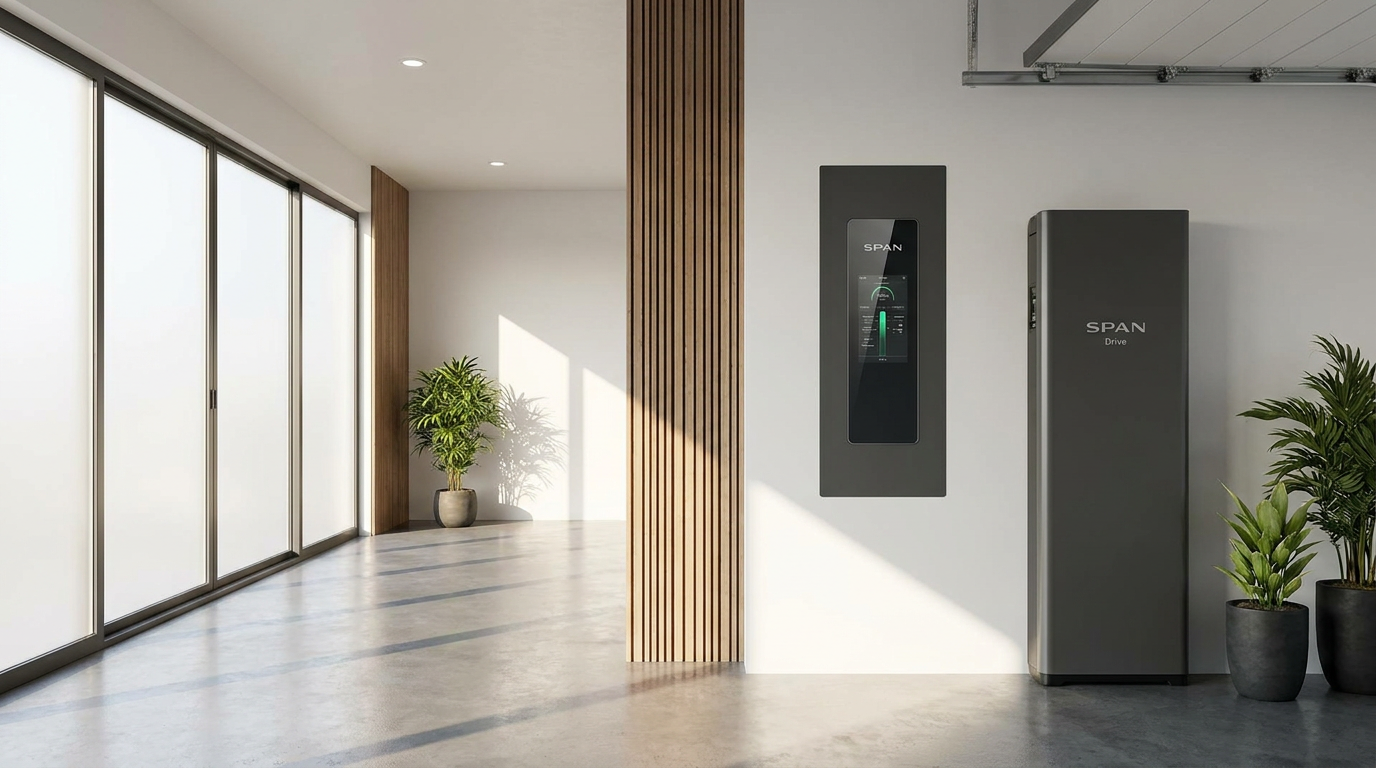
Enter the smart electrical panel. Companies like SPAN, Lumin, and Schneider Electric have completely reimagined the residential load center, transforming it from a dumb distribution box into an internet-connected, software-driven energy hub. By integrating advanced computing directly into the home's electrical nervous system, these modern panels offer a sophisticated technological workaround to a stubborn physical infrastructure problem. They allow homeowners to aggressively electrify their properties—adding high-draw appliances and chargers—without ever needing to dig up their front yards or wait on sluggish utility grid upgrades.[1][4]
The mechanism behind a smart panel is elegantly simple but profoundly effective. The hardware places a highly sensitive digital sensor on every individual circuit in the house. Connected to the home's Wi-Fi network, the panel continuously monitors the exact flow of electricity in real time. Through a companion smartphone app, homeowners can see precisely how many watts their dryer, air conditioner, or living room lights are pulling at any given second, providing unprecedented visibility into their daily energy consumption and identifying wasteful phantom loads.[1][4]

But real-time visibility is only half of the equation; the true breakthrough lies in automated load management. Because the panel's software knows the total capacity of the home's electrical service, it can actively intervene to prevent overloads. If a home's total power draw begins to approach its 200-amp limit, the smart panel does not simply trip a main breaker and plunge the house into darkness. Instead, it uses pre-programmed logic to dynamically manage the demand, ensuring the most critical systems remain online.[1][4][5]
Consider a common evening scenario in an electrified home: the air conditioning is running, dinner is cooking on the induction range, and the homeowner plugs in two electric vehicles to charge. In a traditional setup, this simultaneous draw would overload the panel. A smart panel, however, instantly recognizes the strain. It can automatically throttle the EV chargers down to a slower speed or temporarily pause the electric water heater. Once the oven is turned off or the AC cycles down, the panel instantly restores full power to the cars.[4][5]
This dynamic load shedding is the killer feature that justifies the technology's existence. By intelligently pausing and resuming heavy electrical draws in the background—without the homeowner ever noticing a disruption—a smart panel allows a standard 200-amp service to safely handle the workload of a 400-amp home. For thousands of homeowners, this software-based load management entirely bypasses the need for a costly utility upgrade, effectively paying for the smart panel on day one through avoided infrastructure costs.[4][5]
Beyond avoiding service upgrades, smart panels fundamentally change how homes handle power outages and integrate with renewable energy systems. Traditional home battery backups, such as the Tesla Powerwall, require installers to hardwire a rigid 'critical loads' sub-panel. Homeowners must decide during the initial installation which specific circuits—usually the refrigerator, internet router, and a few essential lights—will receive battery power during a blackout. The rest of the house is left permanently disconnected from the backup system until the municipal grid is fully restored, limiting the battery's utility.[1][4]
Beyond avoiding service upgrades, smart panels fundamentally change how homes handle power outages and integrate with renewable energy systems.
With a smart panel, the entire house remains connected to the battery, but the software intelligently rations the stored energy. If the grid goes down, the panel instantly detects the outage and automatically cuts power to massive energy drains like the EV charger, the electric oven, and the hot tub. It prioritizes the essential circuits, but allows the homeowner to dynamically change those priorities from their phone. If they need to run the microwave for five minutes, they can simply toggle the circuit on, use the appliance, and turn it back off, extending the battery's life by hours or even days.[4][5]
The hardware landscape for this technology is currently split into two distinct approaches: full panel replacements and retrofit modules. SPAN offers a complete panel replacement and is widely considered the most polished consumer product on the market. It replaces the entire metal box on the wall, offering native integration with major solar and battery platforms, and providing individual control over 32 or more smart breakers. It is the ideal solution for new construction or homes that desperately need an aging panel replaced anyway.[4][5]
However, that premium integration and sleek aesthetic come with a steep price tag. A fully installed SPAN panel typically ranges from $7,500 to $11,000, depending heavily on local labor rates, municipal permitting fees, and the physical complexity of migrating the home's existing circuits into the new enclosure. While this high upfront cost is easily justified if it successfully avoids a $10,000 utility service upgrade, it represents a massive premium over a standard $2,000 breaker box replacement for homeowners who simply want better energy data without the advanced load-shedding capabilities.[4][5]

For those looking for a more budget-friendly middle ground, companies like Lumin offer a retrofit load center. Instead of tearing out and replacing a perfectly functional existing breaker box, the Lumin module is installed alongside it. It intercepts only the specific high-draw circuits that need to be managed—like the EV charger, AC, and water heater—leaving the smaller lighting and outlet circuits alone. This targeted approach brings the total installed cost down to roughly $4,500 to $6,500, making it a highly attractive option for retrofits.[4][5]
To help offset these substantial upfront costs and accelerate the nationwide transition away from residential fossil fuels, the U.S. federal government has heavily incentivized smart panel adoption through the Inflation Reduction Act (IRA). The landmark legislation recognizes that upgrading the electrical panel is the necessary first step before a home can safely adopt heat pumps, induction stoves, or solar arrays. Consequently, the government has provided multiple avenues for financial relief, utilizing both tax credits and point-of-sale rebates to ease the financial burden on homeowners making the switch.[2][3][6]
Under Section 25C of the federal tax code, homeowners can claim a 30 percent tax credit, up to a maximum of $600, for a standalone electrical panel upgrade that enables other energy-efficient improvements. The economics become even more favorable if the smart panel is installed concurrently with a new rooftop solar array or home battery system. In that scenario, the panel upgrade qualifies for the uncapped 30 percent Residential Clean Energy Credit under Section 25D, potentially shaving thousands of dollars off the final invoice.[2][3][6]
For low- and moderate-income households, the incentives are even stronger, designed to ensure that the clean energy transition is accessible across all economic brackets. The Home Electrification and Appliance Rebate (HEAR) program offers up to $4,000 in upfront point-of-sale discounts specifically for electrical panel upgrades. When combined with additional rebates for the heat pumps and induction stoves that the panel enables, eligible households can receive up to $14,000 in total federal support to modernize their home's energy infrastructure.[2][3]

Despite the generous subsidies and undeniable technological benefits, smart panels are not strictly necessary for everyone. If a homeowner's primary goal is simply to monitor their energy usage and identify power-hungry appliances, a $200 clip-on energy monitor like the Sense or Emporia Vue provides 80 percent of the visibility at a fraction of the cost. These simple devices clip onto the main power lines of a traditional panel and use machine learning to estimate circuit-level usage, requiring no major electrical work or permitting.[5][7]
Furthermore, because smart panels rely heavily on cloud connectivity and proprietary software, some traditional electricians caution about the risks of long-term obsolescence. A standard metal breaker box is a nearly indestructible piece of hardware that will safely protect a home for 50 years without ever needing a software update. While the physical breakers in a smart panel will continue to function indefinitely even if the Wi-Fi drops, the advanced load-shedding features and remote app control depend entirely on the manufacturer continuing to maintain their servers and support the software.[5][7]
Ultimately, the math heavily favors homes undergoing major energy transitions. For households installing solar panels and battery storage, or those facing a five-figure utility upgrade just to charge their cars and heat their living rooms, the smart panel is rapidly transitioning from a luxury gadget to a mandatory piece of infrastructure. By giving the 1950s breaker box a digital brain, this technology is quietly empowering homeowners to take total control of their energy footprint, proving that the smartest grid upgrades are happening inside the house.[4][7]
How we got here
1950s
The modern circuit breaker panel becomes the standard in residential construction, remaining largely unchanged for 70 years.
2018
SPAN is founded by former Tesla Energy executives to modernize the residential electrical panel with software.
August 2022
The Inflation Reduction Act is signed into law, introducing major tax credits and rebates for home electrification.
2024–2025
State energy offices begin rolling out HEAR rebate programs, offering up to $4,000 for smart panel installations.
2026
Smart panels become a standard recommendation for homes adding multiple EVs and heat pumps to avoid utility upgrades.
Viewpoints in depth
Electrification Advocates
View smart panels as the essential bridge to a clean energy grid without requiring massive infrastructure overhauls.
Government agencies and climate organizations argue that the U.S. power grid and residential infrastructure cannot handle the simultaneous electrification of heating, cooking, and transportation without intelligent load management. They emphasize that subsidizing smart panels through the IRA is far cheaper and faster than trenching new, higher-capacity utility lines to millions of individual homes.
Home Energy Installers
Focus on the immediate return on investment and the ability to bypass months of utility permitting delays.
Electrical contractors highlight the sheer logistical relief of smart panels. Upgrading a home to a 400-amp service often involves months of permitting delays, utility coordination, and tearing up landscaping. Installers view smart panels as a premium but highly practical workaround that allows them to complete complex solar, battery, and EV installations in a matter of days rather than months.
Budget-Conscious Homeowners
Caution against over-engineering simple electrical systems when cheaper monitoring alternatives exist.
Skeptics and budget-focused analysts point out that a traditional breaker box is a nearly indestructible piece of hardware that lasts 50 years without software updates. They argue that spending $8,000 on a Wi-Fi-connected panel is overkill for households that simply want to track their energy usage, noting that $200 clip-on monitors can provide the same visibility without the risk of software obsolescence.
What we don't know
- How long manufacturers will provide software updates and cloud support for panels installed today.
- Whether local utility companies will eventually require smart panels to help manage neighborhood-level grid strain.
- If all local municipal inspectors will universally accept software-based load management in lieu of physical service upgrades.
Key terms
- Load Shedding
- The automatic process of temporarily turning off or reducing power to certain circuits to prevent the total electrical demand from exceeding the home's capacity.
- Service Upgrade
- The physical process of bringing more electrical capacity from the utility grid to a home, typically upgrading from 100 or 200 amps to 400 amps.
- Phantom Load
- Electricity consumed by appliances and electronics even when they are turned off or in standby mode.
- Critical Loads
- The specific essential circuits, such as refrigeration and internet, chosen to remain powered during a blackout when running on a traditional home battery.
Frequently asked
Do I need an internet connection for a smart panel to work?
No. If your Wi-Fi goes down, the panel still functions safely as a standard breaker box, and local load-shedding logic continues to operate. You only lose remote app control.
Can a smart panel completely replace a service upgrade?
In most cases, yes. By automatically pausing heavy loads like an EV charger when other appliances are running, a smart panel keeps a fully electrified home safely under a standard 200-amp limit.
Do these panels qualify for federal tax credits?
Yes. Under the Inflation Reduction Act, standalone panel upgrades qualify for a 30% tax credit up to $600, while panels installed alongside solar qualify for an uncapped 30% credit.
What happens if the manufacturer goes out of business?
The physical breakers will continue to protect your home's circuits indefinitely. However, cloud-based features, remote app control, and future software updates could be lost if the company's servers shut down.
Sources
Source coverage
7 outlets
3 viewpoints surfaced






[1]The ElectriciansHome Energy Installers
What Is a Smart Electrical Panel? | Home Energy Upgrade 2025
Read on The Electricians →[2]Rewiring AmericaElectrification Advocates
IRA fact sheets: Home Electrification and Efficiency Opportunities
Read on Rewiring America →[3]Department of EnergyElectrification Advocates
Home Upgrades: Tax Credits and Rebates
Read on Department of Energy →[4]SolarTechHome Energy Installers
Smart Electrical Panel Guide 2025: Complete Comparison & Installation
Read on SolarTech →[5]AmpMyHomeHome Energy Installers
Electrical panels - Upgrade or replace? Smart or not?
Read on AmpMyHome →[6]ENERGY STARElectrification Advocates
Electric Panel Upgrade Tax Credit
Read on ENERGY STAR →[7]Factlen Editorial TeamBudget-Conscious Homeowners
Synthesis by Factlen editorial team
Read on Factlen Editorial Team →


Every angle. Every day.
Get home stories with full source coverage and perspective breakdowns delivered to your inbox.