
Iran Threatens to Re-Close the Strait of Hormuz, Reigniting Global Economic Fears
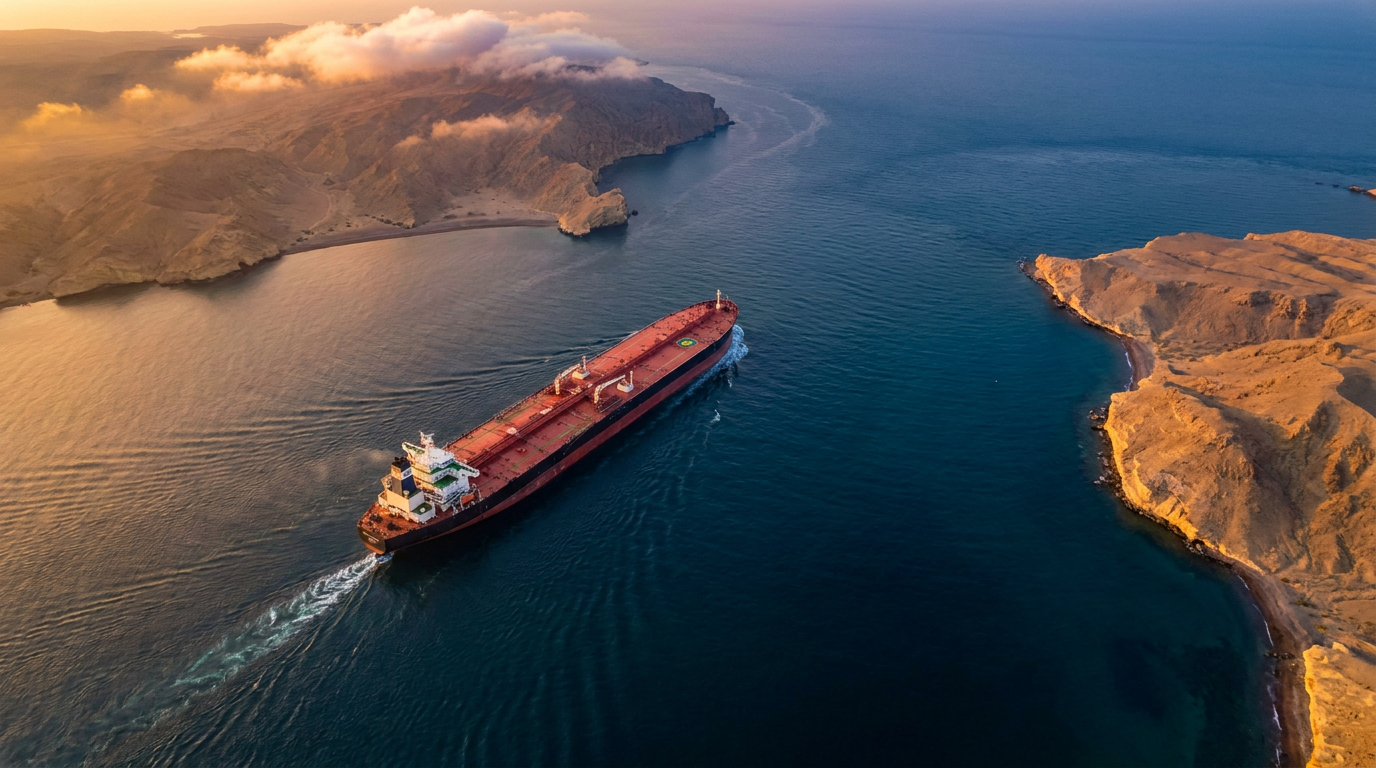
Iran's military command announced it is closing the world's most critical energy chokepoint over alleged ceasefire violations, though the U.S. denies the strait is shut.
By Factlen Editorial Team
- Security & Diplomatic Watchers
- Focuses on the military standoff, the fragile MoU, and the US-Iran-Israel geopolitical triangle.
- Market & Economic Analysts
- Focuses on the immediate financial fallout, oil price volatility, and the threat of renewed global inflation.
- Long-Term Strategic Forecasters
- Focuses on the structural vulnerability of global supply chains and the permanent shifts in energy security.
What's not represented
- · Commercial shipping companies and maritime insurers who must decide whether to risk sending vessels through the contested waters.
- · Energy-importing developing nations in Asia and Africa that are disproportionately devastated by sudden spikes in oil and food prices.
Why this matters
The Strait of Hormuz is the world's most critical energy chokepoint. If Iran successfully re-imposes a blockade, the resulting surge in oil and natural gas prices will reignite global inflation, forcing central banks to keep interest rates high and threatening a worldwide economic slowdown.
Key points
- Iran's military command announced the re-closure of the Strait of Hormuz, citing US and Israeli violations of a recent ceasefire agreement.
- Tehran specifically pointed to continued Israeli military operations against Hezbollah in southern Lebanon as the catalyst for the blockade.
- The US military strongly denied the closure, reporting that 55 merchant ships carrying 17 million barrels of oil successfully transited the strait on Saturday.
- The Strait of Hormuz is the world's most critical energy chokepoint, handling roughly 20% of global seaborne crude oil and significant LNG exports.
- A renewed blockade threatens to reverse recent drops in oil prices, reigniting global inflation and complicating central bank interest rate decisions.
Less than a week after a fragile 14-point Memorandum of Understanding (MoU) brought a halt to the US-Iran war, the global economy is facing a renewed shock. On Saturday, Iran's central military command announced it was re-closing the Strait of Hormuz to all maritime traffic.[4][5]
Tehran cited "bad faith" and explicit breaches of the ceasefire agreement, specifically pointing to continued Israeli military operations against Hezbollah in southern Lebanon. Iranian state media warned that any commercial vessels approaching the waterway would be putting their security at risk.[1][4][6]
The United States immediately disputed the closure. US Central Command (CENTCOM) stated that Iran "does not control" the strait and that American forces remain vigilant to ensure freedom of navigation.[2][3]
According to CENTCOM, commercial traffic actually rose on Saturday, with 55 merchant ships carrying 17 million barrels of oil successfully transiting the corridor. Vice President JD Vance publicly denied the shutdown, stating the US had seen no evidence of a blockade and that the straits remain open.[2][3]

To understand the panic this standoff induces, one must look at the geography of global energy. The Strait of Hormuz is a narrow chokepoint between the Persian Gulf and the Gulf of Oman, serving as the world's most critical energy artery.[7]
Before the conflict erupted in late February, roughly 20% of the world's seaborne crude oil—about 15 million barrels per day—and 5 million barrels of refined products passed through this corridor. It is also a vital route for liquefied natural gas (LNG), particularly from Qatar.[5][7]
The global economy is still recovering from Iran's initial wartime blockade of the strait. That months-long closure stranded exports, causing Brent crude to surge past $120 per barrel and forcing QatarEnergy to declare force majeure on shipments.[7]
The global economy is still recovering from Iran's initial wartime blockade of the strait.
The International Energy Agency characterized the initial blockade as the largest supply disruption in the history of the oil market. The resulting energy shock echoed the 1970s, driving up gasoline prices, spiking inflation across Europe and Asia, and threatening a global recession.[8]
Analysts note that energy prices are the central variable shaping overall global inflation. The sustained collapse in energy prices in late 2023 paved the way for central banks to consider rate cuts, but the Hormuz shock reversed that trend entirely, forcing policymakers to keep borrowing costs elevated.[8]

When the US-Iran MoU was announced earlier this week, markets breathed a sigh of relief. Brent crude tumbled toward $80 a barrel, and wholesale gas prices dropped, pulling a massive "panic premium" out of the global economy.[5][6]
Now, the conflicting reports between Tehran and Washington have plunged energy markets back into uncertainty. While ships may currently be moving under US watch, the insurance premiums and risk assessments for vessels transiting the strait are expected to skyrocket if the Islamic Revolutionary Guard Corps (IRGC) resumes harassment.[3][7]
Furthermore, Gulf Cooperation Council (GCC) states rely on the Strait for over 80% of their caloric intake. The maritime blockade triggered a concurrent grocery supply emergency across the region, demonstrating that the chokepoint is as vital for food security as it is for energy.[7]

The core of the dispute lies in the interconnected nature of Middle Eastern conflicts. The MoU required a halt to hostilities on all fronts, including Lebanon. However, Israel—which is not a signatory to the US-Iran deal—has vowed to maintain forces in southern Lebanon until the threat from Hezbollah is eliminated.[4][5]
This leaves the US in a difficult position: attempting to salvage a historic peace deal with Iran while managing its alliance with Israel. US intelligence reportedly doubts that Israeli Prime Minister Benjamin Netanyahu will halt operations in Lebanon, a posture that undermines the broader peace effort.[3][6]
How we got here
Late Feb 2026
Conflict erupts between the US, Israel, and Iran, leading to the initial blockade of the Strait of Hormuz.
March–April 2026
The blockade causes a historic energy shock, sending Brent crude past $120 per barrel and spiking global inflation.
Mid-June 2026
The US and Iran sign a 14-point MoU, agreeing to a ceasefire and the reopening of the Strait, causing oil prices to drop.
June 20, 2026
Iran's military command announces the re-closure of the Strait, citing continued Israeli strikes in Lebanon.
June 20, 2026
US Central Command denies the closure, reporting that 55 merchant ships successfully transited the waterway.
Viewpoints in depth
Tehran's Strategic Leverage
Iran views the Strait of Hormuz as its ultimate geopolitical trump card to force compliance with the ceasefire.
By threatening the world's most critical energy artery, Tehran aims to force the United States to pressure Israel into halting its operations in southern Lebanon. Iranian officials argue that the 14-point MoU explicitly required a cessation of hostilities on all fronts, and they consider the continued strikes against Hezbollah a direct violation of the pact. For Iran, the strait is the primary mechanism to inflict economic pain on the West when diplomatic agreements falter.
Washington's Freedom of Navigation
The US military and political leadership are projecting a business-as-usual stance to prevent market panic.
By releasing specific transit data—such as the 55 merchant ships that passed on Saturday—CENTCOM is attempting to demonstrate that Iran does not have the operational control to enforce its declared blockade. The US strategy relies on maintaining a highly visible naval presence to reassure commercial shippers, keep energy flowing, and deny Iran the psychological victory of dictating terms in international waters.
The Economic Fallout
Energy analysts and economists view the standoff with deep alarm, fearing a return to stagflation.
Market watchers argue that the physical closure of the strait is only part of the problem; the mere threat of IRGC harassment is enough to make maritime insurance prohibitively expensive. This perspective emphasizes that a prolonged disruption will reignite the inflationary fires of early 2026, forcing central banks to abandon planned interest rate cuts and risking a global stagflation scenario where economic growth stalls while prices soar.
What we don't know
- Whether the Islamic Revolutionary Guard Corps (IRGC) will actively attempt to board, mine, or fire upon commercial vessels in the coming days.
- How maritime insurance markets will price the risk of transiting the strait given the conflicting declarations from Washington and Tehran.
- Whether the scheduled technical-level peace talks in Switzerland will proceed or collapse entirely.
Key terms
- Strait of Hormuz
- A narrow, strategically vital waterway between the Persian Gulf and the Gulf of Oman, serving as the primary export route for Middle Eastern oil and gas.
- Memorandum of Understanding (MoU)
- A preliminary diplomatic agreement outlining the terms of a ceasefire and a framework for broader peace talks between the US and Iran.
- Brent Crude
- The primary international benchmark price for purchasing crude oil worldwide.
- Liquefied Natural Gas (LNG)
- Natural gas that has been cooled to a liquid state for easier and safer storage and transport, heavily exported by Qatar through the Strait.
- Stagflation
- An economic condition characterized by slow growth, high unemployment, and rising prices (inflation), which economists fear could result from a prolonged energy shock.
Frequently asked
Why did Iran announce the closure of the Strait of Hormuz?
Iran cited violations of a recent US-Iran ceasefire agreement, specifically pointing to continued Israeli military strikes against Hezbollah in southern Lebanon.
Is the Strait of Hormuz actually closed to ships right now?
The US military denies the closure, stating that commercial traffic—including 55 merchant ships carrying 17 million barrels of oil—successfully transited the strait on Saturday under US observation.
How much of the world's oil passes through the Strait?
Roughly 20% of the global seaborne crude oil supply, or about 15 million barrels per day, passes through the chokepoint, along with significant volumes of liquefied natural gas (LNG).
What happens to the global economy if the Strait is blocked?
A blockade strands millions of barrels of oil, causing crude prices to skyrocket. This triggers a massive inflationary shock, driving up the cost of gasoline, groceries, and consumer goods worldwide.
Sources
Source coverage
8 outlets
3 viewpoints surfaced








[1]CNBCMarket & Economic Analysts
Iran reportedly closes Strait of Hormuz again, casting shadow over nuclear talks
Read on CNBC →[2]ForbesSecurity & Diplomatic Watchers
Iran Says Strait Of Hormuz Is Closed After Lebanon Attacks—U.S. Denies It's Shut
Read on Forbes →[3]The Washington PostSecurity & Diplomatic Watchers
Iran says it is closing Strait of Hormuz, testing fragile agreement with U.S.
Read on The Washington Post →[4]CBS NewsSecurity & Diplomatic Watchers
Iran recloses Strait of Hormuz over alleged violations in Lebanon: Iranian state TV
Read on CBS News →[5]The GuardianSecurity & Diplomatic Watchers
Iran closes Strait of Hormuz after waves of Israeli strikes in Lebanon
Read on The Guardian →[6]Investing.comMarket & Economic Analysts
Iran closes Strait of Hormuz, US denies move amid Lebanon tensions
Read on Investing.com →[7]Brookings InstitutionLong-Term Strategic Forecasters
Blowback: How the Iran war may change the world
Read on Brookings Institution →[8]Chatham HouseMarket & Economic Analysts
The Hormuz inflation shock is only just beginning
Read on Chatham House →


Every angle. Every day.
Get business stories with full source coverage and perspective breakdowns delivered to your inbox.