
The Password Era Ends: Global Passkey Adoption Crosses 5 Billion Milestone
Cybersecurity authorities are officially advising users to abandon passwords as passkey adoption reaches 5 billion worldwide. The cryptographic standard is eliminating phishing risks while streamlining the login experience.
By Factlen Editorial Team
- Cybersecurity Authorities
- Government agencies prioritizing the deprecation of passwords to eliminate phishing and credential theft at a national level.
- Identity Standards Bodies
- Consortiums focused on establishing interoperable, open standards to drive global passwordless adoption.
- Credential Managers
- Software providers emphasizing cross-platform portability, credential exchange, and seamless user experiences.
- Enterprise IT & Security
- Corporate decision-makers balancing the security benefits of passkeys against the operational challenges of account recovery and legacy system integration.
What's not represented
- · Legacy system developers
- · Users without modern smartphones
Why this matters
Passwords are the root cause of most data breaches, identity theft, and corporate hacks. The mainstream deployment of passkeys means everyday users can finally secure their accounts with military-grade cryptography simply by looking at their phones, rendering traditional phishing attacks obsolete.
Key points
- The UK's National Cyber Security Centre has officially advised consumers to abandon passwords in favor of passkeys.
- The FIDO Alliance reports that 5 billion passkeys are now in active use worldwide, with 75% of internet users adopting at least one.
- Passkeys utilize public-key cryptography stored locally on a device, making them mathematically immune to traditional phishing and credential stuffing.
- New interoperability standards are solving early vendor lock-in issues, allowing users to transfer passkeys between different password managers and operating systems.
For decades, the foundational advice of digital security was to create a complex, unique password for every account. In 2026, that era is officially drawing to a close. The cybersecurity industry has crossed a critical threshold in the transition to "passwordless" authentication, driven by the rapid proliferation of passkeys. Unlike traditional passwords, which rely on shared secrets that can be guessed, stolen, or phished, passkeys utilize public-key cryptography bound directly to a user's device. This shift is no longer a theoretical roadmap for early adopters; it has become the default security posture recommended by global cybersecurity authorities and implemented by the world's largest technology platforms.[1][7]
The most definitive signal of this transition came in April 2026, when the United Kingdom's National Cyber Security Centre (NCSC) overhauled its long-standing security guidance. In a decisive move, the agency urged consumers to abandon passwords entirely in favor of passkeys wherever they are available. The NCSC explicitly stated that it will no longer recommend passwords as a primary defense, citing their inherent vulnerability to modern cyber threats. "Passkeys should become consumers' first choice for logging into digital services," the agency noted, emphasizing that the decision was based on extensive technical research and engagement with the FIDO Alliance.[1][5]
The underlying evidence driving this policy shift is the persistent failure of the password model. The vast majority of data breaches begin with stolen or compromised login credentials. Employees and consumers routinely recycle the same credentials across email accounts, corporate virtual private networks, and software-as-a-service platforms. Attackers exploit this human behavioral flaw relentlessly through automated credential-stuffing attacks and sophisticated phishing campaigns. Because passwords are fundamentally a "shared secret" between the user and the server, any compromise of the server or deception of the user results in a total breach of the account.[2][3][4]
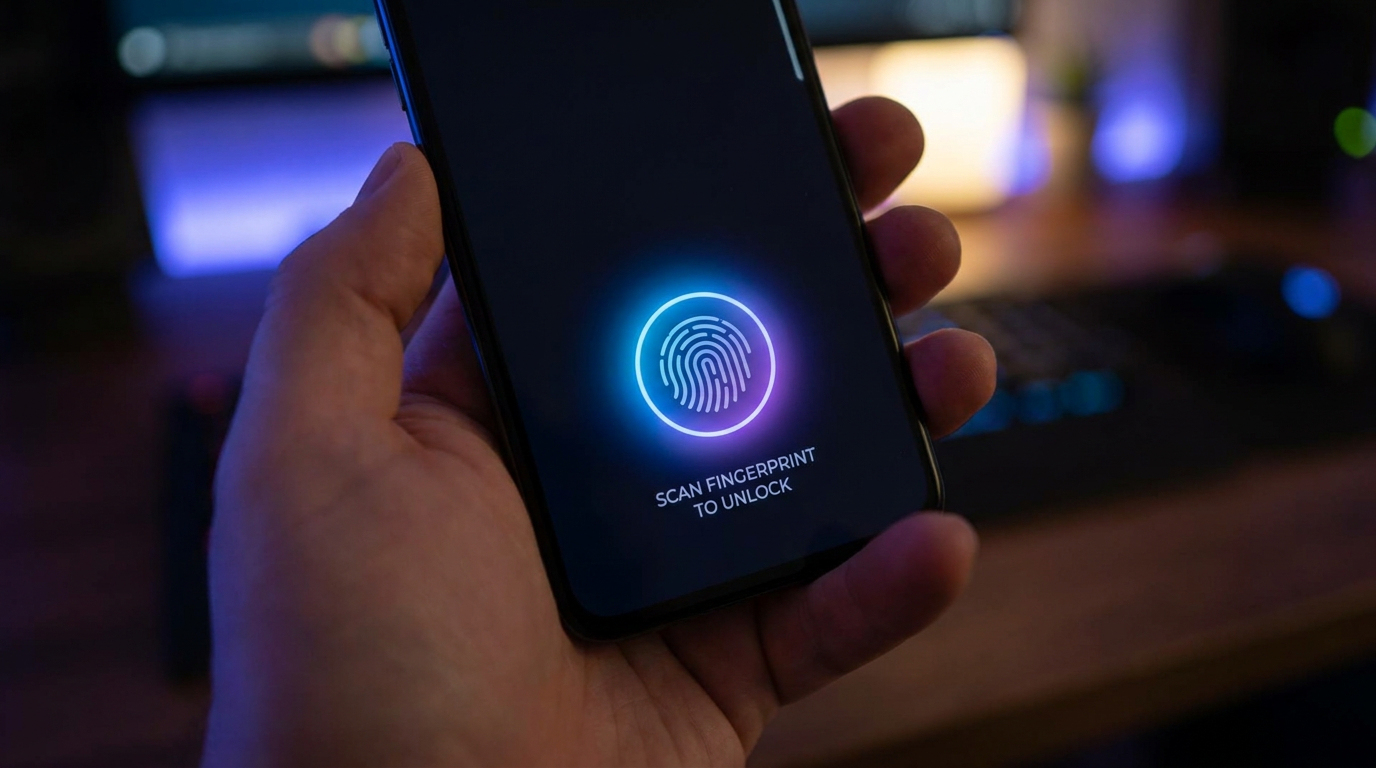
Passkeys neutralize these attack vectors at the architectural level. Built on the WebAuthn and FIDO2 standards, a passkey consists of a cryptographic key pair. The public key is registered with the website or service, while the private key remains securely stored on the user's device—such as a smartphone's secure enclave or a dedicated hardware token. When a user attempts to log in, the server sends a cryptographic challenge that can only be solved by the private key, which is unlocked locally via a biometric check like Face ID, Touch ID, or a device PIN. Because the private key never leaves the device, there is nothing for a phishing site to intercept and nothing for a database hacker to steal.[2][3][5]

The adoption metrics for this new architecture have accelerated dramatically. In May 2026, the FIDO Alliance reported that an estimated five billion passkeys are now in active use worldwide. This milestone represents a massive behavioral shift across the global internet. According to the Alliance's comprehensive global research, 75 percent of internet users have now enabled a passkey on at least one account, and nearly half use them regularly when the option is presented. The awareness of the technology has reached near-universal levels, moving passkeys from a niche security feature to a mainstream consumer expectation.[4]
Enterprise adoption is mirroring this consumer trend, driven by the dual promises of heightened security and reduced friction. Approximately 68 percent of organizations are currently deploying or actively rolling out passkeys for their employee sign-in systems. IT departments report measurable operational benefits from this transition, including a 45 percent increase in login speeds and a 35 percent reduction in password reset tickets—a historically massive drain on helpdesk resources. More importantly, organizations utilizing passkeys report a 32 percent drop in phishing-related security incidents, validating the core cryptographic claims of the FIDO2 standard.[4]
Enterprise adoption is mirroring this consumer trend, driven by the dual promises of heightened security and reduced friction.
Despite these clear security advantages, the initial rollout of passkeys faced significant usability hurdles, primarily concerning ecosystem lock-in. Early implementations often tethered a user's passkeys to a specific platform, such as Apple's iCloud Keychain or Google's Password Manager. This created friction for users who operated across multiple operating systems or wished to use third-party credential managers. If a user created a passkey on an iPhone, utilizing it on a Windows desktop often required a cumbersome cross-device Bluetooth handshake, which hindered seamless adoption.[6][7]

By 2026, the industry has largely resolved these interoperability challenges through new technical extensions. The introduction of Credential Exchange protocols allows users to securely transfer their passkeys between different password managers and operating systems. Providers like Dashlane and 1Password have integrated these standards, giving users the freedom to choose where their cryptographic keys reside rather than being locked into a hardware vendor's walled garden. This openness is critical for enterprise environments, where IT administrators require platform-agnostic security solutions that work uniformly across diverse fleets of devices.[4][6]
Another major innovation driving seamless adoption is the implementation of "automatic passkey upgrades." This feature eliminates the manual setup process, which historically served as the biggest friction point for users transitioning to passwordless systems. When a user logs into a supported website using their legacy password, the browser or password manager negotiates a background handshake with the site to automatically generate and store a passkey. The next time the user logs in, the system defaults to the biometric passkey prompt, making the security upgrade nearly invisible to the end user.[6]
The technology is also expanding beyond simple authentication into broader data protection. The WebAuthn Pseudo-Random Function (PRF) extension allows a passkey to deterministically derive unique, symmetric encryption keys. This means a passkey can be used not just to log into a cloud service, but to locally encrypt sensitive data—such as a password vault or a secure backup—before it ever leaves the device. This "zero-knowledge" architecture ensures that even if the cloud provider is compromised, the stored data remains mathematically inaccessible without the user's physical device and biometric signature.[6][7]

However, the transition to a fully passwordless internet is not without its vulnerabilities and uncertainties. The most pressing challenge remains account recovery. Because passkeys are tied to physical devices or specific cloud accounts, the loss, theft, or corruption of a device can potentially lock a user out of their digital life. The NCSC's technical guidance explicitly warns that services must provide clear, secure ways for users to manage their credentials and establish robust recovery options. If the recovery mechanism relies on a weak fallback—such as an SMS text message or an emailed link—the entire cryptographic strength of the passkey is undermined.[1][2][5]
Furthermore, the ecosystem is currently in a prolonged hybrid phase. While 82 percent of organizations state that fully passwordless authentication is their ultimate goal, only 28 percent have achieved it. The majority of enterprises still maintain passwords as a fallback mechanism for legacy systems or specific user groups. As long as a password exists as an alternative entry point to an account, attackers will continue to target that weaker vector. True security will only be realized when platforms feel confident enough in their recovery protocols to disable password-based logins entirely.[3][4][7]
Ultimately, the consensus among cybersecurity professionals is that the password is a fundamentally flawed concept that has outlived its utility. The human brain was never designed to generate and memorize dozens of high-entropy cryptographic strings, and the attempt to force it to do so created the very vulnerabilities that fuel the modern cybercrime economy. The widespread deployment of passkeys in 2026 represents a rare alignment of improved security and enhanced user experience, signaling that the digital world is finally ready to move beyond the shared secret.[2][3][7]

How we got here
2022
The FIDO Alliance, Apple, Google, and Microsoft announce expanded support for cross-platform FIDO sign-in standards.
2023
Major consumer platforms like Google and Amazon begin prompting users to create passkeys for their primary accounts.
April 2026
The UK National Cyber Security Centre officially advises consumers to abandon passwords in favor of passkeys.
May 2026
The FIDO Alliance reports that global passkey adoption has crossed the 5 billion mark.
Viewpoints in depth
Cybersecurity Authorities
Government agencies prioritizing the deprecation of passwords to eliminate phishing.
Agencies like the UK's NCSC and the US's CISA view passwords as a systemic vulnerability that cannot be fixed with user education. They argue that shifting to passkeys fundamentally alters the economics of cybercrime by rendering automated credential stuffing and mass phishing campaigns mathematically ineffective. Their primary focus is pushing platforms to make passkeys the default, rather than an opt-in feature.
Identity Standards Bodies
Consortiums focused on establishing interoperable, open standards to drive global adoption.
The FIDO Alliance and the W3C emphasize that security must be frictionless to achieve mass adoption. They argue that the success of passkeys relies on open standards like WebAuthn, which prevent vendor lock-in and ensure that a passkey created on an Android device can eventually authenticate a session on a Windows desktop. Their current focus is expanding credential exchange protocols to make passkeys fully portable.
Enterprise IT Administrators
Corporate decision-makers balancing security benefits against operational challenges.
While IT leaders recognize the massive security upgrades and the reduction in helpdesk tickets associated with passkeys, they remain cautious about account recovery and legacy system integration. They argue that until every internal application supports modern authentication, organizations are forced to maintain hybrid environments. Their primary concern is ensuring that fallback recovery methods do not inadvertently create new vulnerabilities.
What we don't know
- How quickly legacy enterprise software and smaller websites will upgrade their infrastructure to support WebAuthn standards.
- Whether the industry will standardize a universal, secure account recovery process for users who lose all their physical devices.
- How long the 'hybrid phase' will last, during which passwords remain active as fallback options and continue to present a vulnerability.
Key terms
- Passkey
- A digital credential tied to a user's device that uses public-key cryptography to log into accounts without a password.
- Public-Key Cryptography
- A cryptographic system that uses pairs of keys: public keys which may be disseminated widely, and private keys which are known only to the owner.
- WebAuthn
- A web standard published by the W3C that allows servers to register and authenticate users using public key cryptography instead of a password.
- Credential Stuffing
- A cyberattack where stolen account credentials from one breach are automatically injected into other websites to gain unauthorized access.
Frequently asked
What happens if I lose the device that holds my passkey?
Most platforms sync passkeys to a cloud account (like iCloud or Google Account) or a third-party password manager, allowing you to recover them on a new device. Services also provide fallback recovery methods.
Can a passkey be stolen in a data breach?
No. The private key that proves your identity never leaves your device. If a website's servers are breached, hackers only obtain public keys, which are useless for logging into your account.
Do I still need a password manager?
Yes. Password managers are evolving into "credential managers" that store and sync your passkeys across different operating systems, while still holding legacy passwords for sites that haven't upgraded.
Are passkeys tied to my biometrics?
Your biometric data (fingerprint or face scan) never leaves your device. It is simply used locally to unlock the secure enclave that holds the passkey.
Sources
Source coverage
7 outlets
4 viewpoints surfaced







[1]Help Net SecurityCybersecurity Authorities
Users advised to drop passwords and make room for passkeys
Read on Help Net Security →[2]Cyber LevelingEnterprise IT & Security
Passkeys Are Changing Online Security. Here's What You Need to Know.
Read on Cyber Leveling →[3]AZ CompEnterprise IT & Security
The Future of Authentication: What to Expect in 2026
Read on AZ Comp →[4]FIDO AllianceIdentity Standards Bodies
Five Billion Passkeys: FIDO Alliance Reports Mainstream Global Usage on World Passkey Day 2026
Read on FIDO Alliance →[5]UK National Cyber Security CentreCybersecurity Authorities
NCSC guidance on passkeys and passwordless authentication
Read on UK National Cyber Security Centre →[6]DashlaneCredential Managers
Five passkey innovations driving passwordless adoption
Read on Dashlane →[7]Factlen Editorial TeamEnterprise IT & Security
Synthesis by Factlen editorial team
Read on Factlen Editorial Team →


Every angle. Every day.
Get technology stories with full source coverage and perspective breakdowns delivered to your inbox.