
Northwestern Engineers Print Artificial Neurons That Communicate Directly With Living Brain Cells
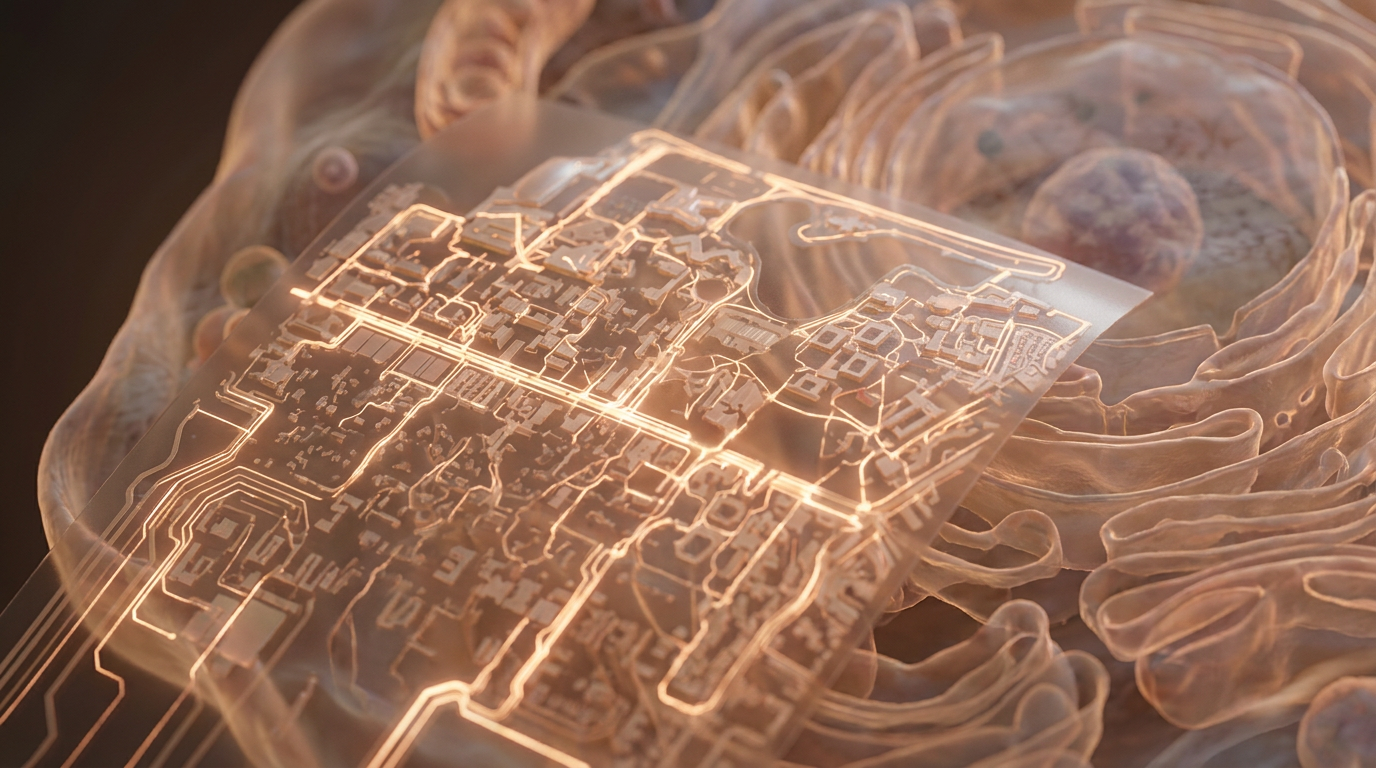
Researchers have developed flexible, 3D-printed artificial neurons capable of generating lifelike electrical signals that successfully activate biological brain tissue. The breakthrough paves the way for advanced neuroprosthetics and ultra-low-power, brain-inspired computing hardware.
By Factlen Editorial Team
- Bioelectronics Researchers
- Emphasize the material science breakthrough of using flexible polymers to achieve biocompatibility.
- Neuromorphic Computing Advocates
- Focus on the technology's potential to solve the escalating energy consumption crisis in artificial intelligence.
- Neurobiologists
- Highlight the significance of achieving the precise temporal range and spike shape required to activate living neural circuits.
What's not represented
- · Medical ethicists evaluating the long-term implications of seamless brain-machine integration.
- · Commercial AI hardware manufacturers assessing the timeline and cost for scaling this technology.
Why this matters
This milestone bridges the gap between synthetic hardware and organic neural pathways. It opens the door to next-generation brain-machine interfaces that could restore lost sensory or motor functions, while simultaneously offering a blueprint for AI hardware that operates with the extreme energy efficiency of the human brain.
Key points
- Northwestern engineers used 3D printing to create artificial neurons that communicate with living brain tissue.
- The devices use electronic inks made of molybdenum disulfide and graphene on flexible polymers.
- A unique manufacturing technique allows the devices to generate complex, lifelike electrical spikes.
- In lab tests, the artificial signals successfully activated Purkinje neurons in mouse cerebellum slices.
- The technology could lead to advanced neuroprosthetics that restore sensory or motor functions.
- The breakthrough also provides a blueprint for ultra-low-power, brain-inspired AI computing hardware.
Engineers at Northwestern University have successfully printed artificial neurons that do not just mimic the behavior of biological brain cells—they actively and directly communicate with them. The research, recently published in the journal Nature Nanotechnology, demonstrates that flexible, low-cost electronic devices can generate electrical spikes realistic enough to trigger measurable responses in living mouse brain tissue. This achievement marks a significant leap toward merging synthetic hardware with organic neural pathways, moving the scientific community beyond simple digital simulation and into the realm of direct, functional biological interaction. By proving that lab-built hardware can produce electrical responses indistinguishable enough from biological signals that actual neurons react to them, the Northwestern team has opened a highly promising new frontier in both medical bioelectronics and advanced computing.[1][2][3][8]
The project, led by Mark C. Hersam and Vinod K. Sangwan at Northwestern's McCormick School of Engineering, relied on advanced manufacturing techniques to bridge the gap between rigid electronics and soft biological tissue. The team utilized aerosol jet 3D printing to deposit specialized electronic inks onto flexible polymer substrates. These custom inks were formulated from nanoscale flakes of two critical materials: molybdenum disulfide, which acts as a semiconductor, and graphene, which serves as a highly reliable electrical conductor. Selecting graphene ensured that the electrical signals would remain consistent even when the flexible device was subjected to mechanical stress, a crucial requirement for any hardware intended to interface with the moving, dynamic environment of a living body.[1][4][5]
The core breakthrough of the research ultimately hinged on turning a persistent manufacturing flaw into a defining feature. In previous bioelectronic experiments, researchers routinely attempted to completely burn off the stabilizing polymer contained within these electronic inks, as the residual material was widely considered a contaminant that interfered with electrical performance and caused signal degradation. Instead of fully removing the polymer, Hersam's team took a counterintuitive approach and intentionally left a portion of it intact. They discovered that partially decomposing the polymer fundamentally altered how the printed material handled electrical currents, unlocking a new level of signaling complexity that rigid silicon chips struggle to achieve.[1][6][7]
By leaving the polymer partially decomposed, the researchers found that passing an initial current through the device drove further decomposition in a spatially uneven manner. This process naturally formed a narrow conductive filament that constricted the electrical flow into a highly localized pathway. Because of this unique structural quirk, the printed artificial neuron can produce a rich and diverse repertoire of electrical spikes—including isolated single spikes, continuous sustained firing, and sophisticated bursting patterns. This represents a massive functional upgrade over standard silicon computer chips, which typically only generate simple, uniform, one-dimensional pulses that require millions of identical transistors to process complex information.[1][6][7]

This process naturally formed a narrow conductive filament that constricted the electrical flow into a highly localized pathway.
To rigorously test whether this newfound signaling diversity could truly interface with living biology, the engineering team collaborated with Northwestern neurobiologist Indira M. Raman. The researchers set up a controlled laboratory environment where they applied the artificial voltage spikes generated by the printed devices directly to slices of mouse cerebellum. The cerebellum is a region of the brain that is critical for coordinating physical movement and contains neurons with well-documented, highly specific electrical behaviors. The goal was to see if the synthetic hardware could do more than just match numerical patterns on a computer screen, and instead provoke a genuine biological reaction from organic tissue.[1][4][5]
The laboratory results provided unprecedented validation for the printed devices. The synthetic signals generated by the artificial neurons matched the exact biological timing, duration, and shape of natural neuron spikes. When applied to the cerebellar tissue slices, these artificial signals successfully and reliably activated living Purkinje neurons. Purkinje cells are large, complex nerve cells known for their distinctive firing patterns and central role in motor control. By successfully stimulating these specific cells, the researchers proved that their synthetic devices could reliably drive measurable, predictable responses in biological neural circuits, confirming a two-way communication bridge that previous organic material approaches could not reliably achieve.[2][3][5]
The first major implication of this two-way bioelectronic communication is a potential revolution in the field of neuroprosthetics. Because the artificial neurons are printed on soft, flexible polymers rather than rigid silicon wafers, they offer a remarkably high degree of biocompatibility and mechanical flexibility. This physical flexibility makes the approach highly viable for long-term medical applications, paving the way for advanced brain-machine interfaces. Future iterations of this technology could be used to design sophisticated implants capable of restoring hearing, vision, or motor function without causing the severe tissue scarring and immune rejection often associated with traditional, rigid metallic brain implants.[2][4][6]
Beyond life-changing medical implants, the Northwestern breakthrough directly addresses the escalating, unsustainable energy crisis currently gripping the artificial intelligence industry. Modern AI models require massive, power-hungry data centers to process information and train algorithms. In stark contrast, the human brain is estimated to be five orders of magnitude more energy-efficient than a state-of-the-art digital computer, managing complex reasoning and motor skills powered by little more than daily food intake. Standard silicon architecture achieves its computational complexity by stringing together billions of identical, rigid devices that consume vast amounts of electricity to perform even basic tasks.[3][6][7]

By successfully replicating the heterogeneous, dynamic, and highly efficient signaling of biological brains, this printable neuromorphic hardware offers a blueprint for drastically reducing the total number of components needed to handle heavy computational loads. Because each printed artificial neuron can encode significantly more information through its varied spiking patterns, the overall system requires far less power to operate. Researchers envision a near future where this brain-inspired computing architecture allows AI systems to perform highly complex, data-heavy tasks using a mere fraction of the electricity currently required, pointing toward a new era of sustainable, bio-integrated electronics that could fundamentally reshape both medicine and global computing infrastructure.[3][4][6][7]
How we got here
April 15, 2026
The Northwestern University engineering team publishes their breakthrough findings in the journal Nature Nanotechnology.
Late April 2026
The scientific community highlights the dual implications of the research for both neuroprosthetics and energy-efficient AI.
June 2026
The development is widely recognized across the tech industry as a major milestone in bioelectronics and neuromorphic engineering.
Viewpoints in depth
Bioelectronics Researchers
Emphasize the material science breakthrough of using flexible polymers to achieve biocompatibility.
For bioelectronics researchers, the most significant aspect of the Northwestern study is the departure from rigid silicon. Traditional brain implants rely on stiff materials that can cause tissue scarring and immune rejection over time. By successfully utilizing aerosol jet printing to deposit graphene and molybdenum disulfide onto soft polymers, researchers have proven that high-performance electronics can match the mechanical flexibility of biological tissue. This material science breakthrough is viewed as the foundational step required to make long-term, non-damaging neuroprosthetics a clinical reality.
Neuromorphic Computing Advocates
Focus on the technology's potential to solve the escalating energy consumption crisis in artificial intelligence.
Advocates for neuromorphic computing view this development through the lens of the AI industry's unsustainable power demands. Training and running large language models currently requires massive data centers that consume vast amounts of electricity. Because the human brain operates with five orders of magnitude greater efficiency than digital computers, neuromorphic engineers argue that mimicking biological signaling is the only viable path forward. The ability of these printed neurons to encode more information per spike means future AI hardware could theoretically handle complex workloads with a fraction of the energy footprint.
Neurobiologists
Highlight the significance of achieving the precise temporal range and spike shape required to activate living neural circuits.
From a neurobiological perspective, the triumph of the printed neurons lies in their signaling fidelity. Previous attempts to create artificial neurons using organic materials often resulted in spikes that were either too slow or too fast to be recognized by living cells. By successfully matching the exact timing, duration, and shape of natural voltage spikes, the Northwestern team managed to reliably activate Purkinje cells in mouse cerebellum slices. Neurobiologists emphasize that this precise two-way communication proves that synthetic devices can genuinely integrate into and drive organic neural networks.
What we don't know
- How the printed artificial neurons will perform long-term when implanted in a living, moving organism rather than isolated tissue slices.
- Whether the aerosol jet printing manufacturing process can be scaled up to produce the millions of interconnected artificial neurons required for complex AI computing.
- How the biological immune system might react to the specific electronic inks and polymers over extended periods of exposure.
Key terms
- Neuromorphic computing
- A method of computer engineering in which the hardware is modeled after the highly efficient neural systems found in the human brain.
- Purkinje neurons
- Large, complex nerve cells located in the cerebellum that play a central role in controlling motor movement.
- Molybdenum disulfide
- A semiconductor material used in the specialized electronic inks to help generate the artificial electrical spikes.
- Aerosol jet printing
- A specialized 3D printing technique used to deposit extremely fine electronic inks onto flexible surfaces.
Frequently asked
How do these artificial neurons differ from standard computer chips?
Standard silicon chips are rigid and produce simple, uniform electrical pulses. These printed neurons are flexible and can generate complex, varied signaling patterns that closely mimic real brain activity.
What are the medical applications of this technology?
Because they are flexible and can communicate directly with living cells, these devices could eventually be used in brain-machine interfaces to restore lost vision, hearing, or movement without damaging tissue.
How does this breakthrough help artificial intelligence?
Current AI requires massive amounts of electricity. By mimicking the extreme energy efficiency of the human brain, this neuromorphic hardware could allow AI systems to perform complex tasks using a fraction of the power.
Sources
Source coverage
8 outlets
3 viewpoints surfaced







[1]Northwestern UniversityBioelectronics Researchers
Printed artificial neurons generate realistic brain-like signals that activate living neurons
Read on Northwestern University →[2]ScienceDailyNeurobiologists
Artificial Neurons Trigger Brain Activity
Read on ScienceDaily →[3]SciTechDailyNeuromorphic Computing Advocates
Printed artificial neurons can now send lifelike signals that activate real brain cells
Read on SciTechDaily →[4]3D Printing IndustryBioelectronics Researchers
Northwestern University develops 3D printed artificial neurons that trigger real brain activity
Read on 3D Printing Industry →[5]ZME ScienceNeuromorphic Computing Advocates
Researchers Print Artificial Neurons That Can Talk to Living Brain Cells
Read on ZME Science →[6]Labmate OnlineBioelectronics Researchers
Artificial neurons interface directly with brain tissue to improve AI efficiency
Read on Labmate Online →[7]Futura SciencesNeuromorphic Computing Advocates
Artificial neurons inspired by the brain
Read on Futura Sciences →[8]Nature NanotechnologyNeurobiologists
Printed artificial neurons for biological interfacing
Read on Nature Nanotechnology →

More in ai
See all 7 stories →Local AI
The Local AI Revolution: How Open-Weight Models Are Moving From the Cloud to Your Laptop
7 sources

On-Device AI
How Small Language Models Are Bringing AI Directly to Your Phone
6 sources

Medical AI
Medical AI Crosses Clinical Thresholds: New Diagnostic Models Achieve 96% Accuracy and Slash Wait Times
7 sources

US AI Regulation
The Constitutional Collision Over AI: Federal Deregulation Meets State-Level Crackdowns
7 sources

Every angle. Every day.
Get ai stories with full source coverage and perspective breakdowns delivered to your inbox.