
Sudan's U-17 Women's Soccer Team Makes Historic Return to International Play Amidst Civil War
Despite heavy defeats, Sudan's U-17 women's national team marked a profound milestone by competing in Olympic qualifiers and regional championships, defying ongoing conflict and historical taboos.
By Factlen Editorial Team
- The Players and Coaches
- Focuses on the personal achievement, resilience, and the foundational step of returning to the pitch.
- Regional Football Authorities
- Views the debut as a crucial milestone for the development of women's sports across Africa.
- Women's Rights Advocates
- Emphasizes the team's existence as a defiance of historical taboos and the ongoing civil war.
What's not represented
- · Families of the players who remained in conflict zones
- · Critics within Sudan who still oppose women's participation in sports
Why this matters
This story demonstrates how sports can serve as a powerful vehicle for resilience and human rights in the face of devastating conflict. It challenges readers to recognize the profound social victories that often lie hidden behind lopsided scorelines.
Key points
- Sudan's U-17 women's national team competed internationally for the first time since the 2023 civil war.
- The squad participated in 2028 Olympic qualifiers in Morocco and the CECAFA U17 Championship in Tanzania.
- Despite heavy defeats, the team scored two historic goals in Tanzania.
- The team was fielded to avoid forfeiting Sudan's place in international competitions.
- Women's soccer in Sudan was only officially legalized following the 2018-2019 revolution.
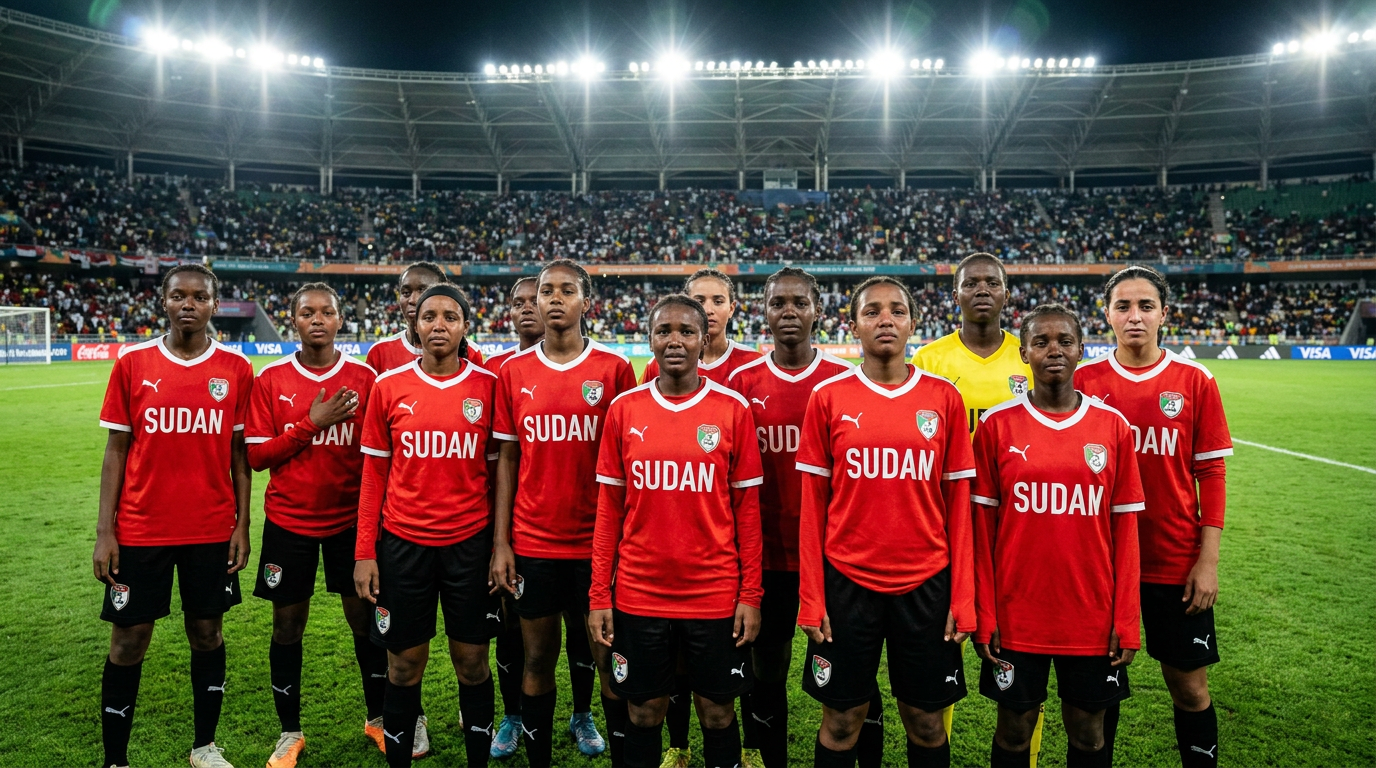
While the men's World Cup dominates global sports headlines this month, a profoundly different soccer milestone unfolded on a quiet pitch in Casablanca. Sudan's Under-17 women's national team stepped onto the grass at Larbi Zaouli Stadium, their bright red jerseys contrasting sharply with the green field. It marked the country's first appearance in international women's soccer since a devastating civil war erupted in 2023.[1][2]
The young squad traveled to Morocco to participate in the qualifying rounds for the 2028 Los Angeles Olympics. They faced Comoros, an older, fitter, and vastly more experienced opponent featuring players who compete in European leagues. The results were lopsided, with Sudan conceding 30 goals over two matches.[1][4]
Yet, the heavy defeats entirely missed the point of the victory. For a team composed mostly of teenage schoolgirls—some of whom had recently fled active conflict zones—simply arriving at the stadium was a triumph of logistics, courage, and resilience. Many of the players broke down in tears at the final whistle, overwhelmed by the sheer magnitude of the moment.[1][6]
"My goal is to lift up soccer in my country," seventeen-year-old team captain Nura Mohamed explained following the matches. "It's a beautiful, unique feeling because, at the end of the day, I just love playing." Her words captured the essence of a squad that was assembled not to conquer the scoreboard, but to keep a fragile dream alive.[1][2]

The decision to field an Under-17 team for Olympic qualifiers was born of necessity. Unable to safely assemble a senior women's squad in time due to the ongoing war, the Sudanese soccer federation entered the younger team to avoid forfeiting their hard-won place in the international qualifiers.[1][2]
Veteran Sudanese soccer coach Burhan Tia, who oversees the women's national teams, acknowledged the massive gap in experience. The squad had only been able to train together for a few weeks prior to the tournament. "The difference between us and the others is huge," Tia noted, emphasizing that their opponents had years of structural support that Sudan's schoolgirls simply lacked.[1][6]
To understand the weight of this moment requires looking back at the immense hurdles women's soccer has faced in Sudan. For decades, under the rule of former President Omar al-Bashir, restrictive public order laws strictly regulated women's behavior in public spaces and effectively banned them from participating in official, organized sports.[5][7]
To understand the weight of this moment requires looking back at the immense hurdles women's soccer has faced in Sudan.
That paradigm shifted dramatically following the Sudanese revolution of 2018 and 2019. The transitional government abolished the restrictive laws, and in September 2019, Sudan established its first official women's soccer league, featuring 21 teams from various cities. It was heralded as a new era for women's rights and athletic development in the country.[5][7]
The momentum continued to build over the next few years. By August 2021, the senior women's national team had gained recognition from the Confederation of African Football and made its international debut at the Arab Women's Cup in Egypt. For a brief window, the infrastructure of women's sports was rapidly expanding.[5]
Then, in April 2023, civil war erupted across Sudan. The conflict collapsed the domestic women's league, destroyed infrastructure, and scattered players and coaches. All organized sporting events were indefinitely halted, threatening to erase the progress made since the revolution.[1][5]

Resurrecting the national team for the 2026 qualifiers was a logistical miracle. Manal Ali Bushra, head of the women's soccer committee, detailed how girls traveled immense distances just to attend the abbreviated training camps. Many were separated from their families, risking their safety to pursue the opportunity to represent their country.[1][2]
The team's return to the pitch was not limited to Morocco. Simultaneously, Sudan fielded a squad at the 2026 CECAFA U-17 Women's Championship in Dar es Salaam, Tanzania. There, they faced regional opponents including Kenya, Tanzania, and fellow debutant Somalia.[3][4]
While they struggled defensively in Tanzania, the tournament provided a historic breakthrough. During the competition, players Fatin Fadol and Naswa Abbas found the back of the net, scoring Sudan's first two international goals of the U-17 campaign. The strikes were celebrated wildly by the bench, symbolizing tangible progress on the field.[3]

Regional football authorities praised the effort. CECAFA officials highlighted that providing a competitive platform for debutant nations like Sudan and Somalia is essential for the long-term growth of the women's game in East and Central Africa, regardless of the initial growing pains.[3]
Beyond the pitch, the existence of the team serves as a powerful defiance of lingering social taboos. While some critics within the country still oppose women's participation in sports, the sight of these young athletes competing internationally proves that the cultural shifts achieved in 2019 cannot be easily undone.[2][7]
As the players return from their June campaigns, the future of the domestic league remains uncertain. Yet, the tears shed in Casablanca and the goals scored in Dar es Salaam have cemented a legacy. Against the backdrop of war, a new generation of Sudanese women has firmly claimed their right to play.[1][7]
How we got here
2018–2019
A national revolution abolishes restrictive public order laws, legally allowing women to participate in official sports.
September 2019
Sudan establishes its first official women's soccer league, featuring 21 teams from across the country.
August 2021
The senior women's national team makes its international debut at the Arab Women's Cup in Egypt.
April 2023
Civil war erupts in Sudan, collapsing the domestic women's league and halting all organized sporting events.
June 2026
The U-17 women's team returns to the international stage, competing in Morocco and Tanzania.
Viewpoints in depth
The Players and Coaches
For the squad, the tournament was about survival, passion, and claiming their right to play.
Captain Nura Mohamed and Head Coach Burhan Tia emphasized that the scorelines were irrelevant compared to the achievement of fielding a team. For a squad composed mostly of schoolgirls with mere weeks of training, simply stepping onto the pitch in Morocco and Tanzania was a victory. They view this as the foundational step to rebuilding the sport in their country.
Regional Football Authorities
Governing bodies view the inclusion of debutant nations as vital for the growth of women's football in Africa.
Organizations like CECAFA celebrated the participation of Sudan and Somalia in the U-17 Championship as a historic milestone. Regional officials argue that providing international platforms for young women from conflict-affected or developing nations is essential for long-term athletic development, regardless of early heavy defeats.
Women's Rights Advocates
Activists see the team's return as a crucial defiance of both armed conflict and historical social taboos.
For decades, restrictive public order laws banned Sudanese women from participating in official sports. Advocates highlight that fielding a women's team in 2026 is a powerful political and social statement. It proves that the gains made during the 2019 revolution—such as the right to play—cannot be entirely erased, even by the devastating 2023 civil war.
What we don't know
- When the domestic women's soccer league in Sudan will be able to safely resume operations.
- How the federation will secure long-term funding to support the development of these young players.
Key terms
- CECAFA
- The Council for East and Central Africa Football Associations, which organizes regional tournaments to develop football in the area.
- Public Order Laws
- Restrictive legislation under Sudan's former government that heavily regulated women's behavior and banned them from official sports until 2019.
- Larbi Zaouli Stadium
- A multi-purpose stadium in Casablanca, Morocco, which hosted the 2028 Olympic qualifying matches.
Frequently asked
Why did Sudan field an Under-17 team for Olympic qualifiers?
Unable to assemble a senior squad in time due to the ongoing civil war, the federation entered the U-17 team to avoid forfeiting their place in the qualifiers.
When were women first allowed to play organized soccer in Sudan?
Women were officially allowed to participate in sports following the 2018-2019 revolution, which abolished decades-old restrictive public order laws.
Did the team score any goals during their June 2026 matches?
Yes, while they suffered heavy defeats, players Fatin Fadol and Naswa Abbas scored two historic goals during the CECAFA U17 Championship in Tanzania.
How did the 2023 civil war affect women's sports in the country?
The conflict collapsed the domestic women's league, destroyed infrastructure, and indefinitely halted all organized sporting events until the U-17 team was assembled in 2026.
Sources
Source coverage
7 outlets
3 viewpoints surfaced






[1]Associated PressThe Players and Coaches
Far from the World Cup, a girls team tries to revive soccer dreams for war-ravaged Sudan
Read on Associated Press →[2]AfricanewsThe Players and Coaches
Sudan's young women return to international soccer as war and taboos linger
Read on Africanews →[3]CECAFA OnlineRegional Football Authorities
A First Step into History: Sudan & Somalia at CECAFA U17 Women's Championship 2026
Read on CECAFA Online →[4]WikipediaWomen's Rights Advocates
Sudan women's national under-17 football team
Read on Wikipedia →Sudan women's national football team
Read on Wikipedia →[6]Winnipeg Free PressThe Players and Coaches
Far from the World Cup, a girls team tries to revive soccer dreams for war-ravaged Sudan
Read on Winnipeg Free Press →[7]Factlen Editorial TeamWomen's Rights Advocates
Synthesis by Factlen editorial team
Read on Factlen Editorial Team →


Every angle. Every day.
Get sports stories with full source coverage and perspective breakdowns delivered to your inbox.