
The Science of the Room: How Neuroaesthetics is Rewiring Interior Design
Advances in brain-scanning technology are proving that interior design directly alters our heart rate and stress hormones. The emerging field of neuroaesthetics is transforming how architects build spaces for human biology.
By Factlen Editorial Team
- Applied Designers
- Focus on translating scientific data into practical spatial planning, lighting, and material choices.
- Clinical Researchers
- Focus on measurable biometrics, fMRI data, and the biological mechanisms of sensory processing.
- Editorial Synthesis
- Focus on synthesizing the broader societal shift toward wellness-centric living spaces.
What's not represented
- · Neurodivergent individuals
- · Low-income housing developers
Why this matters
We spend the vast majority of our lives indoors, yet rarely consider how our walls, lighting, and furniture affect our nervous systems. Understanding neuroaesthetics empowers you to design a home that actively lowers your stress, improves your sleep, and supports your daily cognitive function.
Key points
- Neuroaesthetics uses brain-scanning technology to measure how interior design affects human biology.
- Harsh lighting and sharp angles can trigger the body's 'fight or flight' stress response.
- Curvilinear forms and natural textures activate the parasympathetic nervous system, promoting calm.
- Viewing representations of nature, like wood grain, can measurably lower heart rates.
- Hospitals and offices are using these principles to speed recovery and boost employee focus.
Everyone has experienced the sensation of walking into a room and feeling an immediate, inexplicable shift in mood. For decades, interior designers and homeowners alike have relied on intuition to explain why a cramped, windowless office induces anxiety, or why a sunlit, wood-paneled living room feels like a deep exhale. We call it the 'vibe' of a space, treating it as an intangible, subjective feeling. But modern science is proving that this sensation is neither magic nor mere preference. It is a measurable, biological reflex.[6]
Welcome to the emerging field of neuroaesthetics—the intersection of neuroscience, psychology, and architecture. By utilizing advanced brain-scanning technology like functional magnetic resonance imaging (fMRI) and biometric trackers, researchers are documenting exactly what happens to the human body when it encounters different spatial environments. The findings are transforming interior design from a purely aesthetic discipline into a rigorous wellness practice.[1][2]
The premise of neuroaesthetics is that our brains are constantly, subconsciously scanning our surroundings for signals of safety or danger. The human nervous system receives an estimated 11 million bits of sensory information every second, yet we are only consciously aware of about 50 bits. The vast majority of a room’s impact—its lighting, acoustics, geometry, and texture—is processed subliminally, triggering biological responses before we even have time to form an opinion about the decor.[4]
At the center of this process is the autonomic nervous system, the body’s unconscious control center. When a space is visually chaotic, filled with sharp angles, or illuminated by harsh fluorescent lighting, the brain interprets these stimuli as minor threats. This activates the sympathetic nervous system—the 'fight or flight' response—elevating cortisol levels, increasing heart rate, and keeping the body in a state of low-level, chronic alertness.[4]

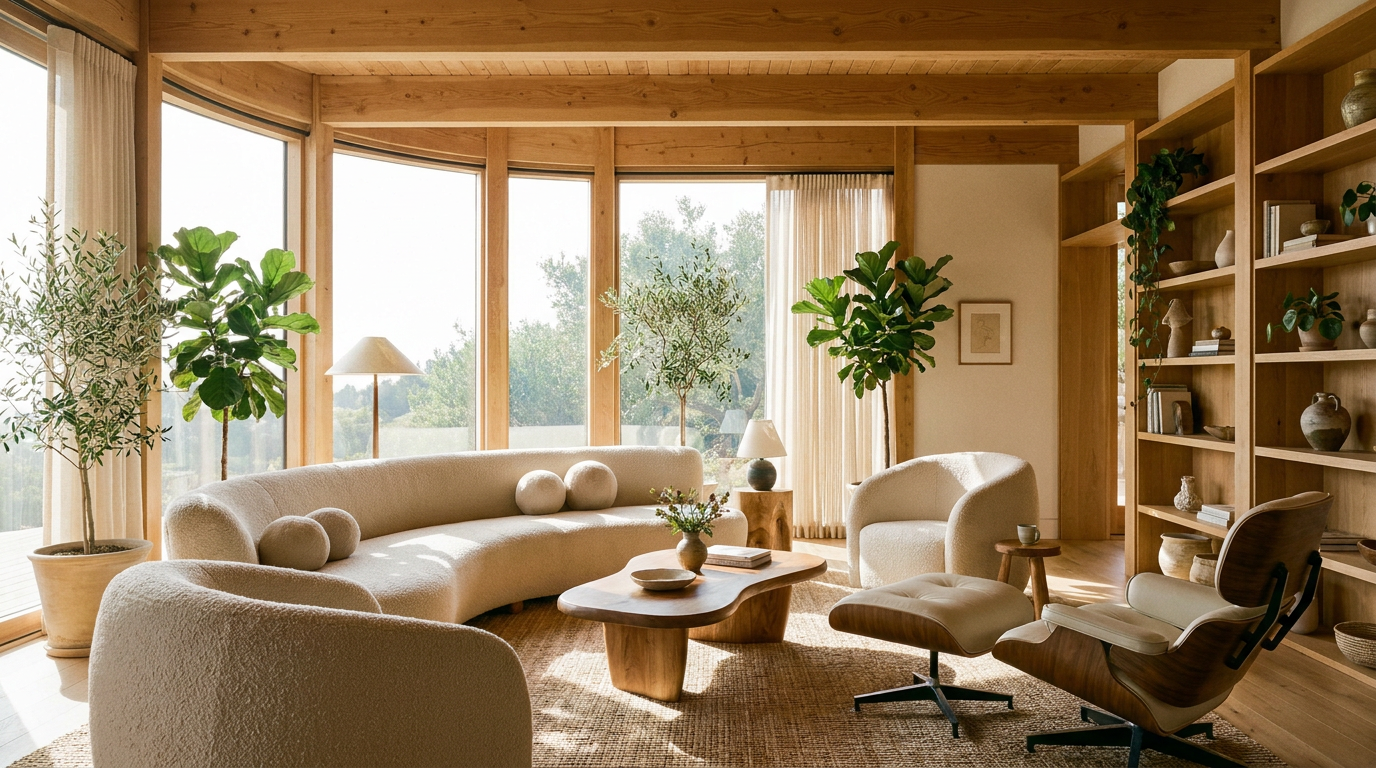
Conversely, environments that mimic the natural world trigger the parasympathetic nervous system, responsible for 'rest and digest' functions. When the brain encounters smooth curves, natural light, and organic textures, it releases a cascade of positive neurochemicals, including serotonin and dopamine. Heart rates slow, blood pressure drops, and the mind is freed from the cognitive load of scanning for threats, allowing for deep focus and regeneration.[2][5]
Lighting is perhaps the most immediate trigger for these neurological shifts. For millions of years, human biology was synchronized strictly to the sun. Today, neuroarchitects prioritize circadian lighting—systems that mimic the natural progression of daylight. Exposure to bright, cool-toned light in the morning halts the production of melatonin and boosts serotonin, enhancing alertness. In the evening, transitioning to warm, amber-toned, and dimmable lighting signals the brain to prepare for sleep.[3][5]
The geometry of a room also plays a profound role in emotional regulation. Studies in neuroaesthetics reveal that the human brain has a strong, primal preference for curvilinear forms. Smooth, flowing lines and rounded furniture are processed effortlessly by the visual cortex and are perceived as nurturing and safe. In contrast, sharp edges and jagged forms can subtly activate the amygdala, the brain's fear center, as they subconsciously mimic the shapes of thorns, teeth, or weapons.[1][5]
The geometry of a room also plays a profound role in emotional regulation.
This preference for organic shapes is closely tied to biophilic design, the practice of bringing elements of the natural world indoors. The brain is uniquely wired to recognize and relax in the presence of nature. Incorporating natural materials like wood, stone, and woven fibers provides a tactile landscape that grounds the nervous system. Remarkably, the brain does not always require these elements to be living; simply viewing wood grain or representations of nature can lower a person's heart rate by an average of five beats per minute.[2][5]

Fractal patterns—the complex, repeating geometric shapes found in snowflakes, ferns, and tree branches—are another powerful tool in the neuroaesthetic arsenal. Because the human eye evolved to process these specific patterns, viewing them requires almost zero cognitive effort. Integrating fractal motifs into wallpapers, rugs, or architectural details provides visual interest without causing sensory fatigue, striking the perfect balance between order and complexity that the brain craves.[1][3]
Beyond what we see, what we hear is equally critical. In the modern world, urban environments subject the body to a permanent state of sensory overload. Unpredictable noise is a major driver of elevated stress hormones. Neuro-optimized spaces prioritize 'sensory silence' through high-performance windows, acoustic panels, and sound-absorbing textiles like velvet or thick wool. By dampening chaotic noise, the brain is allowed to stop listening for threats and enter a state of neural recovery.[1][4]
The applications of neuroaesthetics extend far beyond luxury residential design. In commercial spaces, companies are utilizing these principles to boost employee focus and collaboration. By designing offices with clear wayfinding, varied textures, and abundant natural light, employers can reduce cognitive fatigue and foster creativity. The goal is no longer just to pack desks into a floorplan, but to create an environment that actively supports the brain economy.[1][3]

The healthcare sector is also seeing dramatic benefits from neuroarchitecture. Hospitals designed with patient biology in mind—featuring views of nature, soothing color palettes, and optimized acoustics—report faster recovery times, reduced need for pain medication, and lower rates of staff burnout. When a patient's nervous system is calm, the body can redirect its energy from managing stress to healing tissue.[1][2]
Similarly, the 'living in place' movement for older adults is being revolutionized by this science. Traditionally, designing homes for the elderly focused solely on physical safety and mobility. Now, designers are incorporating neuroaesthetics to ensure these spaces also uplift the spirit. By creating environments that trigger the release of oxytocin and dopamine, architects can help combat the depression and cognitive decline often associated with aging in isolated settings.[5]
Despite these advancements, there is still much to learn about individual neurological differences. What we don't fully know is how neurodivergent individuals—such as those with ADHD or autism—process these spatial cues compared to neurotypical brains. While a minimalist, low-stimulus environment might calm one person, it could feel under-stimulating or sterile to another. The next frontier of neuroaesthetics will involve highly personalized, adaptive environments that can shift their sensory inputs in real-time based on the specific user.[6]

Ultimately, the rise of neuroaesthetics represents a profound shift in how we value our built environments. A thoughtfully designed room is no longer a luxury or a superficial indulgence; it is a biological necessity. By translating the language of the brain into light, texture, and geometry, we have the power to build spaces that don't just house us, but actively heal us.[6]
Viewpoints in depth
The Clinical Perspective
Neuroscientists emphasize the measurable biological impact of our surroundings.
For researchers, interior design is no longer a subjective art form but a measurable science. By utilizing fMRI scans and biometric trackers, this camp focuses on hard data: how specific wavelengths of light alter melatonin production, or how acoustic chaos elevates cortisol. Their primary argument is that human biology has not evolved to thrive in the harsh, angular, and artificially lit environments of the modern world, making neuro-optimized spaces a public health necessity.
The Designer's Perspective
Architects and interior designers focus on practical implementation and client well-being.
For the practitioners building these spaces, the challenge lies in translating clinical data into livable, beautiful environments. This camp advocates for a holistic approach, blending aesthetic intuition with evidence-based principles like biophilia and circadian lighting. They argue that a home or office must function as a 'sensory sanctuary,' intentionally designed to counteract the chronic sensory overload of modern urban life without sacrificing personal style or functionality.
What we don't know
- How neurodivergent individuals process specific neuroaesthetic cues compared to neurotypical brains.
- The long-term, generational health impacts of living entirely in neuro-optimized environments.
- How to effectively scale these high-end design principles for affordable and low-income housing.
Key terms
- Neuroaesthetics
- The scientific study of how the brain perceives and responds to beauty, art, and spatial environments.
- Autonomic Nervous System
- The body's unconscious control center that regulates heart rate, blood pressure, and stress responses based on environmental stimuli.
- Biophilic Design
- An architectural approach that connects building occupants more closely to nature through direct and indirect natural elements.
- Fractal Patterns
- Complex, repeating geometric shapes found in nature (like leaves or snowflakes) that the human brain processes with extreme ease.
- Circadian Lighting
- Artificial lighting systems designed to mimic the natural progression of daylight, supporting the body's internal biological clock.
Frequently asked
Do I need to buy expensive furniture to apply neuroaesthetics?
No. Simple changes like maximizing natural light, incorporating houseplants, and reducing visual clutter can significantly improve a room's neurological impact.
Does neuroaesthetics mean I can't use bright colors?
Not at all. While muted tones are calming, bright colors like yellow or blue can be used strategically in active spaces like offices or kitchens to boost energy and focus.
How does neuroaesthetics differ from Feng Shui?
While both aim to create harmonious spaces, neuroaesthetics relies on empirical biometric data—such as fMRI brain scans and heart rate monitors—to measure exactly how environments affect human biology.
Sources
Source coverage
6 outlets
3 viewpoints surfaced





[1]RISEClinical Researchers
Neuroarchitecture and neurodesign – how built environments affect the brain
Read on RISE →[2]Science in DesignClinical Researchers
What is Neuroaesthetics?
Read on Science in Design →[3]JD Institute of Fashion TechnologyApplied Designers
Neuroarchitecture: How Interior Design Affects the Brain
Read on JD Institute of Fashion Technology →[4]Pippin Home DesignsApplied Designers
The Autonomic Nervous System and its Effect on Mental Health
Read on Pippin Home Designs →[5]AltroApplied Designers
Neuroarchitecture in Interior Design: How Spaces Transform Emotions
Read on Altro →[6]Factlen Editorial TeamEditorial Synthesis
Synthesis by Factlen editorial team
Read on Factlen Editorial Team →
Every angle. Every day.
Get lifestyle stories with full source coverage and perspective breakdowns delivered to your inbox.