
Iran Threatens to Re-Close Strait of Hormuz as Lebanon Ceasefire Collapses
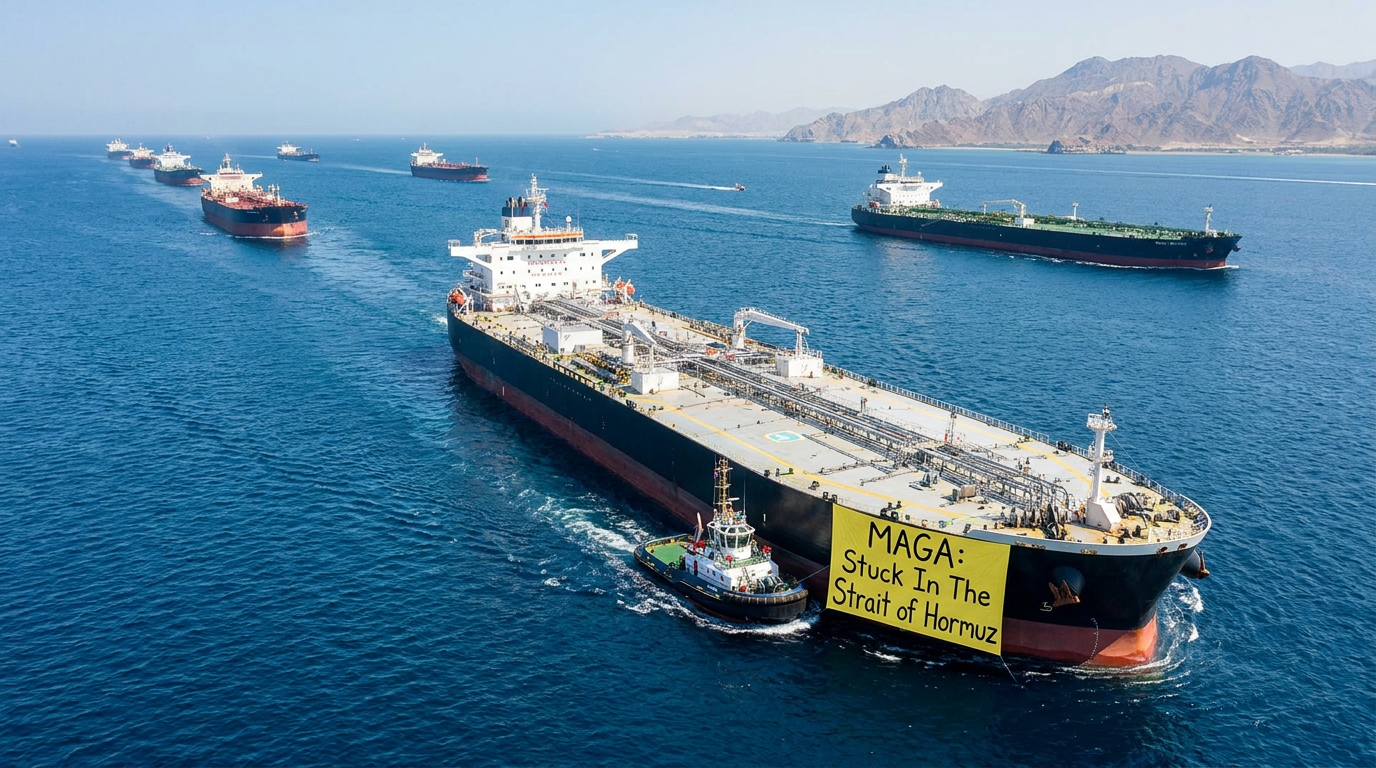
Iran's military command announced it is closing the vital Strait of Hormuz just days after reopening it, citing ongoing Israeli strikes in Lebanon as a breach of the new US-Iran peace agreement.
By Factlen Editorial Team
- Iranian Military Command
- Argues the US breached the MoU by failing to stop Israeli strikes in Lebanon, making the Strait closure a necessary enforcement mechanism.
- US Administration
- Maintains the peace process is alive, denies the Strait is fully closed, and seeks to compartmentalize the Lebanon clashes from the broader diplomatic track.
- Israeli Government
- Prioritizes neutralizing Hezbollah's threat to northern Israel over the US-Iran MoU timeline, refusing to withdraw from southern Lebanon.
- Global Energy Markets
- Highly sensitive to the physical flow of oil, reacting violently to the whiplash between the MoU's promise of supply and renewed chokepoint threats.
What's not represented
- · Lebanese Civilians
- · Commercial Shipping Insurers
Why this matters
The Strait of Hormuz handles roughly 20% of the world's seaborne oil trade. If the US-Iran peace agreement collapses and the waterway is fully blockaded again, global energy markets will face a massive supply shock, driving up fuel costs and inflation worldwide.
Key points
- Iran's military announced the re-closure of the Strait of Hormuz to commercial traffic.
- Tehran cited ongoing Israeli strikes in Lebanon as a breach of the new US-Iran peace agreement.
- US Central Command denied the closure, stating 55 ships safely transited the strait on Saturday.
- The diplomatic crisis delayed planned US-Iran technical negotiations in Switzerland.
- Oil prices spiked on futures markets in response to the renewed threat to global supply.
- Israel maintains it will not withdraw from southern Lebanon until Hezbollah is neutralized.
Just days after a landmark diplomatic breakthrough promised to end months of conflict, the Middle East is once again teetering on the edge of a major economic and military crisis. On Saturday, Iran's military command announced it was re-closing the Strait of Hormuz to commercial vessel traffic, effectively tearing up the most critical economic concession of the newly signed US-Iran Memorandum of Understanding (MoU).[1][4]
The sudden reversal was triggered not by direct US-Iran hostilities, but by the collapse of a fragile ceasefire in Lebanon. Iran's Khatam al-Anbiya Central Headquarters cited "continuous and relentless violations" by Israel in southern Lebanon as a direct breach of the 14-point MoU signed earlier in the week by US President Donald Trump and Iranian President Masoud Pezeshkian.[4][6]
The first clause of that agreement explicitly called for an immediate and permanent termination of military operations on all fronts, "including in Lebanon." However, neither Israel nor the Iran-backed militant group Hezbollah were direct signatories to the pact, leaving the US responsible for reining in its ally while Iran was expected to control its proxy.[5][6]
That proxy control failed almost immediately. Over the past 48 hours, Hezbollah and Israeli forces traded heavy fire. After Hezbollah killed four Israeli soldiers, Israel launched a wave of retaliatory airstrikes across southern Lebanon and the Bekaa Valley, killing dozens of people. Israeli Prime Minister Benjamin Netanyahu's government has firmly stated it will not withdraw its troops from the security zone it established in southern Lebanon until the threat to Israel's northern communities is eliminated.[5][7]

In response, the Islamic Revolutionary Guard Corps (IRGC) issued a stark warning to international shipping companies, declaring that the Strait of Hormuz is closed and that any vessels approaching the waterway would have their "security jeopardized." The Iranian military command framed the closure as a "first step" to force the US to uphold its end of the bargain.[4][6]
Despite Tehran's declarations, the actual status of the waterway remains highly contested. US Central Command (CENTCOM) forcefully pushed back on Saturday, stating that "Iran does not control the Strait of Hormuz." According to the US military, 55 merchant ships carrying roughly 17 million barrels of oil successfully transited the strait on Saturday, with US forces remaining "present and vigilant" to ensure safe passage.[2][6]
Despite Tehran's declarations, the actual status of the waterway remains highly contested.
US Vice President JD Vance, who is expected to lead the American negotiating team, echoed this sentiment in a Saturday morning television interview, insisting that "the straits are now open" and that the US had successfully extracted 16 million barrels of oil from the region the previous day.[2][6]
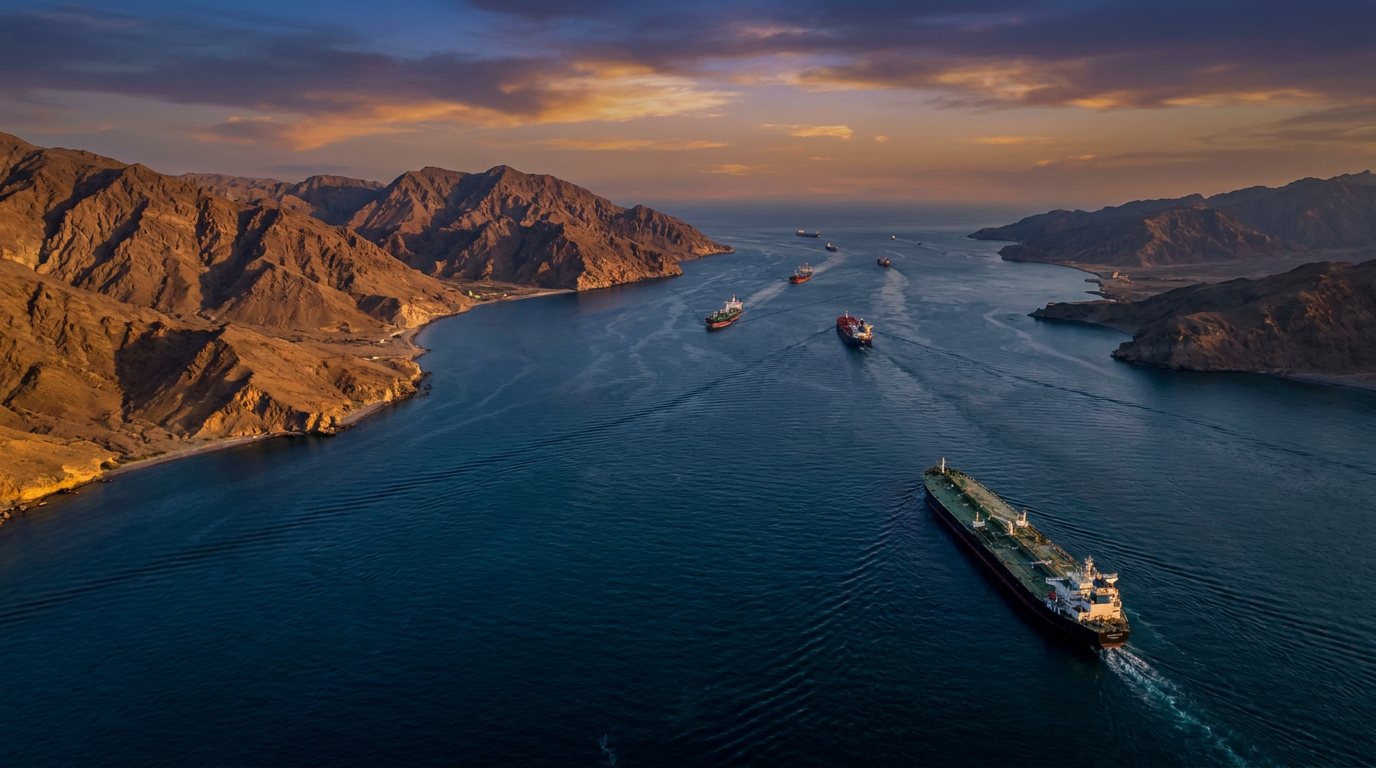
The confusion over the strait's physical status has sent shockwaves through global energy markets. The waterway, which is only two miles wide at its narrowest navigable point, is a structural necessity for the global economy, handling roughly one-fifth of the world's total oil trade and a substantial portion of liquefied natural gas (LNG) shipments.[3][8]

When the MoU was signed earlier in the week, Brent crude prices tumbled to around $80 a barrel as traders anticipated the release of millions of barrels of stranded oil that had been trapped in the Persian Gulf since the war began in February. But following Iran's Saturday announcement, crude prices popped on perpetual futures markets, threatening to reintroduce a massive war-risk premium to global energy costs.[8]
The diplomatic fallout has been equally swift. The signing of the MoU was supposed to trigger a 60-day window for direct, technical negotiations in Switzerland to hammer out a permanent peace deal, including resolutions on Iran's nuclear program and postwar reconstruction funds. Those talks, originally scheduled to begin Friday, were abruptly postponed as the violence in Lebanon escalated.[5][7]
Dozens of US officials and advance staff had already gathered in Switzerland, and Vice President Vance delayed his departure from Joint Base Andrews. A US diplomat familiar with the back-channel communications noted that Tehran is now demanding an ironclad guarantee that the Israel-Hezbollah truce will hold before they proceed with the broader nuclear negotiations.[5][7]
By Saturday evening, there were faint signs that diplomacy might survive the weekend. Pakistan and Qatar, acting as mediators, announced that technical talks were being rescheduled for Sunday in Geneva. Iran's foreign ministry confirmed its delegation would travel to Switzerland, but explicitly stated the trip was to "demand the implementation of the other side's commitments" regarding Lebanon, rather than to negotiate new terms.[4][6]

The crisis exposes the fundamental fragility of the US-Iran MoU. By linking the reopening of the global economy's most vital energy artery to the complex, decades-old conflict between Israel and Hezbollah, the agreement has given both Israeli hardliners and Iranian military factions effective veto power over global oil prices.[2][5]
How we got here
February 2026
War breaks out, leading to the initial closure of the Strait of Hormuz and a global energy shock.
Mid-June 2026
The US and Iran sign a 14-point Memorandum of Understanding to end hostilities and reopen the strait.
June 19, 2026
Heavy fighting resumes between Israel and Hezbollah in Lebanon, killing dozens.
June 20, 2026
Iran announces the re-closure of the Strait of Hormuz in retaliation for the Lebanon strikes.
June 21, 2026
Delayed technical talks between the US and Iran are scheduled to resume in Switzerland.
Viewpoints in depth
Iran's Enforcement View
Tehran views the Strait closure as the only leverage it has to force the US to rein in Israel.
From the perspective of Iran's Khatam al-Anbiya Central Headquarters, the 14-point Memorandum of Understanding is a package deal. The first clause explicitly demanded a ceasefire on all fronts, including Lebanon. Because the US brokered the deal, Tehran holds Washington responsible for the actions of its ally, Israel. When Israeli forces launched deadly strikes in southern Lebanon on Friday, Iranian military leaders interpreted it as a fundamental breach of trust. By threatening the Strait of Hormuz—the single most sensitive pressure point for the global economy—Iran is attempting to force the Trump administration to exert maximum pressure on Israeli Prime Minister Benjamin Netanyahu to halt operations.
The US Compartmentalization Strategy
Washington is attempting to keep the broader US-Iran peace track alive despite the localized violence in Lebanon.
The US administration is walking a diplomatic tightrope. By publicly denying that the Strait of Hormuz is closed and highlighting the successful transit of 55 vessels, CENTCOM and Vice President JD Vance are projecting stability to calm panicked energy markets. Diplomatically, the US is trying to compartmentalize the conflict. Washington wants to proceed with the 60-day negotiation window in Switzerland to secure a permanent nuclear and regional peace deal with Iran, treating the Israel-Hezbollah clashes as a separate, albeit highly volatile, issue that mediators from Qatar and Pakistan can help manage.
Israel's Security Imperative
Israel refuses to subordinate its northern security needs to the timeline of the US-Iran diplomatic agreement.
The Israeli government, which was not a signatory to the US-Iran MoU, views the agreement's Lebanon clause as an unacceptable constraint on its national security. Following Hezbollah rocket attacks that killed four Israeli soldiers, Prime Minister Benjamin Netanyahu's cabinet authorized severe retaliatory strikes. Israeli leadership maintains that they will not withdraw from the security buffer zone in southern Lebanon until Hezbollah's military infrastructure is degraded enough to allow displaced Israeli citizens to safely return to their homes in the north. For Israel, neutralizing the immediate border threat supersedes the broader geopolitical goals of the US-Iran pact.
What we don't know
- Whether commercial shipping companies will continue to risk transiting the Strait of Hormuz despite IRGC threats.
- If the US has the political leverage to force Israel into a ceasefire in Lebanon.
- Whether the delayed technical talks in Switzerland will result in Iran walking away from the MoU entirely.
Key terms
- Strait of Hormuz
- A narrow maritime chokepoint between Iran and Oman that connects the Persian Gulf to the open ocean, serving as the transit route for a fifth of global oil.
- Memorandum of Understanding (MoU)
- A preliminary 14-point diplomatic agreement signed by the US and Iran to end hostilities, reopen shipping lanes, and begin a 60-day negotiation period.
- CENTCOM
- United States Central Command, the unified military command responsible for US forces and operations in the Middle East.
- War-Risk Premium
- The extra cost added to the price of oil and shipping insurance to account for the danger of military conflict disrupting supply.
Frequently asked
Why did Iran close the Strait of Hormuz?
Iran's military cited ongoing Israeli military operations against Hezbollah in Lebanon, which Tehran views as a violation of the ceasefire clause in the recently signed US-Iran Memorandum of Understanding.
Is the Strait of Hormuz actually closed right now?
It is heavily contested. While Iran declared the waterway closed and warned ships away, US Central Command stated that 55 commercial vessels successfully passed through on Saturday under US monitoring.
How does this affect global oil prices?
The Strait handles roughly 20% of the world's seaborne oil. Threats to close it introduce a 'war-risk premium,' causing crude oil prices to spike due to fears of a massive supply shortage.
Are the US and Iran still negotiating?
Yes, though the timeline is delayed. Technical talks in Switzerland were postponed from Friday to Sunday, with Iranian delegates stating they are attending primarily to demand the US enforce the Lebanon ceasefire.
Sources
Source coverage
8 outlets
4 viewpoints surfaced








[1]BBCIranian Military Command
Iran says Strait of Hormuz will be closed over Israel attacks on Lebanon
Read on BBC →[2]The Washington PostUS Administration
Iran says it is closing Strait of Hormuz over Israeli strikes on Lebanon
Read on The Washington Post →[3]AxiosUS Administration
Iran says it is closing Strait of Hormuz over Israeli attacks on Lebanon
Read on Axios →[4]CBS NewsGlobal Energy Markets
Iran recloses Strait of Hormuz over alleged violations in Lebanon
Read on CBS News →[5]The GuardianIsraeli Government
Israel and Hezbollah agree to renew fragile ceasefire after intense violence
Read on The Guardian →[6]The HinduIranian Military Command
Iran's military announces Strait of Hormuz closure over ceasefire violations by U.S., Israel
Read on The Hindu →[7]Times of IsraelIsraeli Government
Iran seeks 'guarantee' of Israel-Hezbollah truce, mediators working on issue
Read on Times of Israel →[8]BenzingaGlobal Energy Markets
Crude Oil Price Pops As Iran Closes Strait Of Hormuz
Read on Benzinga →

Every angle. Every day.
Get news politics stories with full source coverage and perspective breakdowns delivered to your inbox.