
The Strait of Hormuz Standoff: Why Iran's Re-Closure Threatens Global Oil Markets
Just days after a fragile U.S.-Iran ceasefire allowed tankers to resume transit, Tehran announced it is re-closing the critical Strait of Hormuz over ongoing Israeli strikes in Lebanon. The U.S. military denies the waterway is shut, creating a high-stakes standoff over a corridor that handles 20% of the world's oil supply.
By Factlen Editorial Team
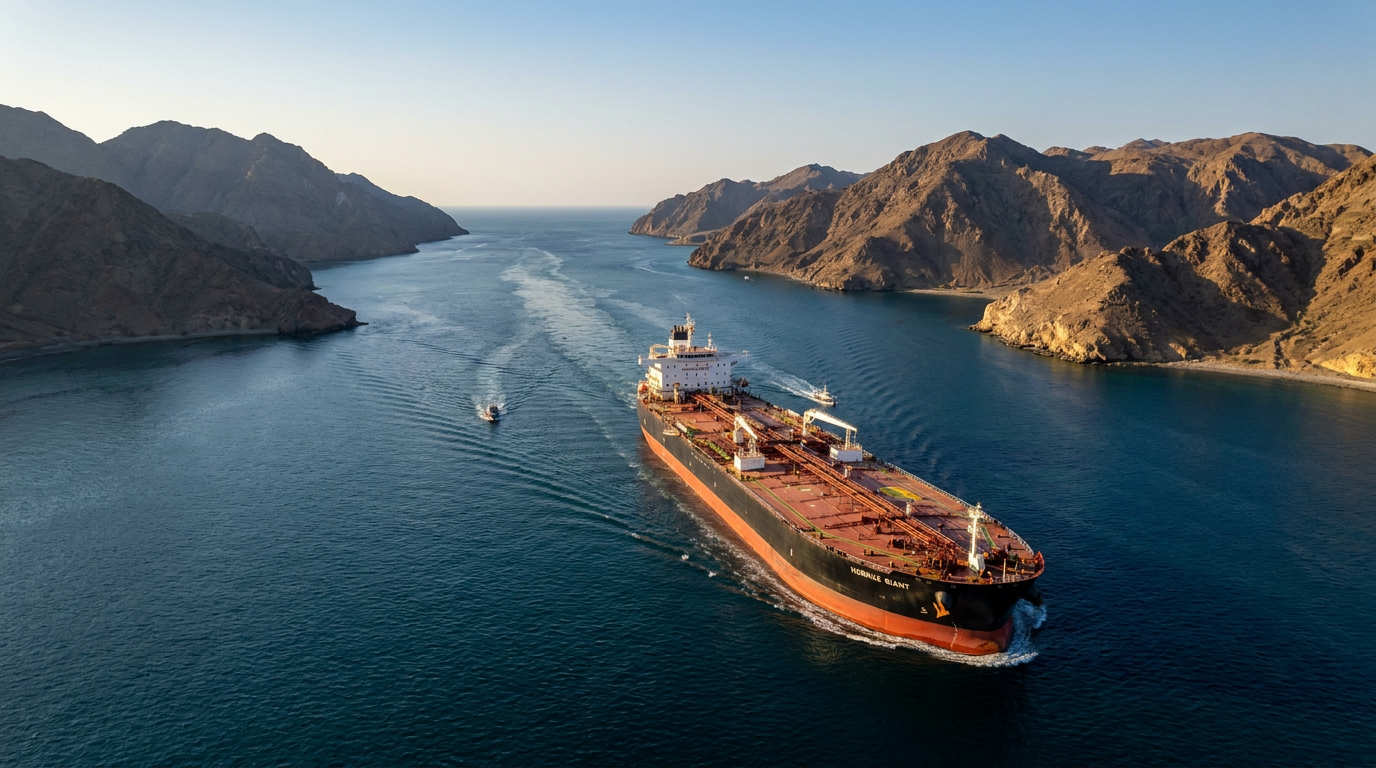
- Global Energy Markets
- Focused on the physical flow of oil; highly sensitive to war-risk premiums and the logistical backlog of stranded supertankers.
- Iranian Military Command
- Argues the U.S. and Israel breached the ceasefire by continuing operations in Lebanon, justifying the strait's closure as a retaliatory first step.
- U.S. & Coalition Forces
- Asserts that Iran does not control the strait and maintains that freedom of navigation is actively being protected and utilized by commercial shipping.
What's not represented
- · Commercial Shipping Insurers
- · Oman and UAE Port Authorities
- · Asian Energy Importers (China, India, Japan)
Why this matters
The Strait of Hormuz is the world's most critical energy chokepoint, handling a fifth of global oil trade. Even a partial disruption threatens to trap millions of barrels of crude, spike global energy prices, and reignite inflation just as markets were beginning to stabilize from a months-long war.
Key points
- Iran announced the re-closure of the Strait of Hormuz on Saturday, citing ongoing Israeli military operations in Lebanon as a violation of a recent ceasefire.
- The U.S. military strongly denied the closure, reporting that 55 merchant ships carrying 17 million barrels of oil successfully transited the corridor on Saturday.
- The Strait of Hormuz is a critical global chokepoint, handling roughly 20% of the world's total oil trade and significant LNG shipments.
- A previous months-long closure of the strait earlier in 2026 created a massive logistical supply shock, stranding dozens of supertankers in the Persian Gulf.
- Diplomatic talks between the U.S. and Iran are scheduled to continue in Switzerland, though Iran has threatened to abandon the negotiations if fighting in Lebanon persists.
The fragile peace that briefly reopened the world's most critical energy artery is already fracturing. On Saturday, Iran's military command announced it was re-closing the Strait of Hormuz, shattering the brief optimism that followed a mid-June ceasefire. The announcement cited continued Israeli military operations in Lebanon as a "blatant breach" of the newly signed memorandum of understanding (MoU) with the United States. For global markets, the declaration immediately resurrected the specter of a massive logistical supply shock.[1][3][4][5]
The catalyst for this renewed maritime standoff lies hundreds of miles away in the Levant. According to Iranian state media and military officials, the 14-point MoU signed between Washington and Tehran included a core clause mandating the termination of military operations on all fronts, explicitly including Lebanon. Iran argues that Israel's refusal to withdraw forces from southern Lebanon, coupled with ongoing airstrikes against Hezbollah, constitutes a fundamental violation of the agreement.[3][5][7]
In response, Iran's Khatam al-Anbiya Central Headquarters declared the strait's closure as the "first step of response to the enemy's breach of trust." The Islamic Revolutionary Guard Corps (IRGC) Navy quickly followed with stark warnings, broadcasting that the shipping lane was shut and that any commercial vessels approaching the corridor would be putting their security at risk.[4][5][7]
However, the physical reality on the water is fiercely contested. The United States military and political leadership flatly denied that the waterway had been severed. Vice President JD Vance pushed back aggressively during a Saturday morning interview, stating there was "no evidence" that Iran had successfully closed the strait.[2][3]
U.S. Central Command (CENTCOM) provided concrete data to support the administration's claims. According to CENTCOM, commercial ship traffic actually increased on Saturday, with 55 merchant ships successfully navigating the corridor. The military reported that these vessels moved more than 17 million barrels of oil out of the Persian Gulf, operating under the watchful eye of U.S. forces. "Iran does not control the Strait of Hormuz," a Navy spokesperson stated, emphasizing that traffic continues to flow.[3][4][6]

To understand why these conflicting claims have the global economy on edge, one must look at the geography of the chokepoint. The Strait of Hormuz is a narrow waterway separating the Arabian Peninsula from Iran, connecting the Persian Gulf to the Gulf of Oman and the broader Indian Ocean. At its narrowest navigable point, the shipping lanes are just two miles wide in each direction, making them highly vulnerable to asymmetric naval tactics, mines, or coastal missile batteries.[8]
Despite this physical constriction, the strait is the irreplaceable jugular of the global energy system. Roughly one-fifth of the world's total oil trade passes through it every single day. It is also the primary exit route for a substantial portion of global liquefied natural gas (LNG) shipments, particularly those originating from Qatar.[5][8]
Despite this physical constriction, the strait is the irreplaceable jugular of the global energy system.
Crucially, there is no realistic alternative to the Strait of Hormuz. While overland pipelines exist—such as the Petroline across Saudi Arabia or the Habshan-Fujairah pipeline in the UAE—their combined throughput capacity falls far short of replacing the massive volumes that move by sea. When the strait closes, the oil simply cannot reach the global market.[9]
The global economy is already intimately familiar with the consequences of such a closure. During the height of the U.S.-Israel coalition war with Iran, which began in late February 2026, the strait was effectively shut down for months. This created what analysts at Fitch Ratings described as a massive "logistical supply shock"—a scenario where the oil exists and production facilities are intact, but the physical product is trapped behind a blockade.[8][9]
The sheer scale of the resulting backlog was staggering. By the time the mid-June MoU was signed, dozens of supertankers, each capable of carrying over 1.5 million barrels of crude, were stranded inside the Gulf. The aggregate volume of trapped oil approached the equivalent of a full month of U.S. crude imports, forcing consuming nations to tap into strategic reserves to prevent a total energy crisis.[8][9]
Markets had just begun to price in a return to normalcy. Following the signing of the ceasefire, Brent crude prices dropped to around $78.24 per barrel, unwinding the steep "war-risk premium" that had previously spiked prices well above $80. Traders were anticipating the gradual release of more than 85 million barrels of stranded Middle Eastern oil into the global market.[8]

Iran's Saturday announcement threatens to reverse that fragile recovery instantly. If the IRGC actively enforces the closure, the war-risk premium will likely surge back into crude pricing. Financial analysts warn that the risk to oil prices is binary: if the strait remains open, the market faces an oversupply and lower prices; if it closes, the logistical shock will drive prices sharply higher.[9]
The maritime standoff is now inextricably linked to a frantic diplomatic scramble. Technical talks between the U.S. and Iran, mediated by Pakistan and Qatar, are scheduled to begin Sunday in Burgenstock, Switzerland. Iran's state broadcaster confirmed that its negotiating team, including the Foreign Minister and central bank officials, was traveling to the talks to demand the implementation of the MoU's commitments.[3][6][7]

Yet, the success of these diplomatic efforts appears entirely dependent on the situation in Lebanon. A Hezbollah official told reporters that Iran has informed the militant group that the Strait of Hormuz will not permanently reopen until Israel publicly commits to a comprehensive ceasefire and an end to military operations in Lebanese territory. This creates a complex feedback loop where land warfare dictates the flow of global maritime trade.[6]
For now, the global energy market is trapped in a high-stakes staring contest. Energy traders, military analysts, and shipping insurers are closely monitoring satellite Automatic Identification System (AIS) data to verify if the 55 ships cited by CENTCOM represent a sustainable flow, or merely a temporary window before the IRGC physically interdicts traffic. Until the physical reality on the water aligns with the diplomatic agreements on paper, the threat of a renewed global inflation shock remains acutely real.[8][9]
How we got here
Late Feb 2026
Outbreak of the U.S.-Israel coalition war with Iran leads to the initial closure of the Strait of Hormuz.
June 15-17, 2026
The U.S. and Iran sign a 14-point Memorandum of Understanding (MoU) to end hostilities, briefly reopening the strait.
June 19, 2026
Oil prices drop to $78 per barrel as stranded supertankers begin moving through the corridor.
June 20, 2026
Iran announces the re-closure of the strait, citing Israeli airstrikes in Lebanon as a violation of the ceasefire.
Viewpoints in depth
Iranian Military Command
Argues the U.S. and Israel breached the ceasefire by continuing operations in Lebanon, justifying the strait's closure as a retaliatory first step.
From Tehran's perspective, the 14-point Memorandum of Understanding signed with the United States is a holistic agreement that cannot be selectively enforced. Iranian military officials point specifically to the first clause, which mandates a comprehensive ceasefire on all fronts, explicitly including Lebanon. Because Israeli forces have not withdrawn from southern Lebanon and continue to conduct airstrikes against Hezbollah, Iran views the U.S. as failing to uphold its end of the bargain. Consequently, the Khatam al-Anbiya Central Headquarters framed the re-closure of the strait not as an act of unprovoked aggression, but as a necessary, reciprocal response to a 'blatant breach' of trust.
U.S. Central Command
Asserts that Iran does not control the strait and maintains that freedom of navigation is actively being protected and utilized by commercial shipping.
The United States military views Iran's declarations as political posturing rather than a physical reality on the water. U.S. Central Command (CENTCOM) emphasizes empirical tracking data, noting that 55 merchant vessels carrying 17 million barrels of oil successfully transited the corridor on the very day Iran claimed it was closed. By maintaining a robust naval presence in the region, the U.S. aims to reassure global shipping insurers and energy markets that freedom of navigation will be enforced. Vice President JD Vance and military spokespeople have consistently reiterated that Iran lacks the unilateral authority or current physical control to sever the waterway.
Global Energy Markets
Focused on the physical flow of oil; highly sensitive to war-risk premiums and the logistical backlog of stranded supertankers.
For energy traders and economic analysts, the political rhetoric is secondary to the physical movement of crude. The market is still recovering from the massive 'logistical supply shock' that occurred between February and June, which stranded dozens of supertankers and trapped millions of barrels of oil inside the Persian Gulf. Analysts at Fitch Ratings note that the risk to the global economy is binary: if the strait remains open, the market will likely see an oversupply and falling prices. However, if Iran's IRGC Navy begins physically interdicting ships, the war-risk premium will instantly return, threatening to drive Brent crude prices back toward $100 per barrel and reigniting global inflation.
What we don't know
- Whether Iran's IRGC Navy will actually attempt to physically interdict or attack commercial vessels that ignore their warnings to stay away from the strait.
- How global shipping insurers will react to the conflicting claims, and whether they will refuse to cover vessels attempting the transit.
- If the upcoming technical talks in Switzerland can salvage the broader U.S.-Iran ceasefire agreement despite the ongoing hostilities in Lebanon.
Key terms
- Strait of Hormuz
- A narrow, strategically vital waterway between the Persian Gulf and the Gulf of Oman, through which 20% of global oil trade passes.
- Memorandum of Understanding (MoU)
- The fragile 14-point ceasefire agreement signed between the U.S. and Iran in mid-June 2026 to end their months-long conflict.
- War-Risk Premium
- The additional cost embedded in oil prices by traders to account for the risk of supply disruptions caused by geopolitical conflict.
- Logistical Supply Shock
- An economic disruption caused not by a lack of production, but by the physical inability to transport goods—in this case, oil—to the global market.
- Chokepoint
- A narrow geographical feature, such as a strait or canal, that forces maritime traffic into a confined space, making it highly vulnerable to blockades.
Frequently asked
Why did Iran close the Strait of Hormuz again?
Iran claims that ongoing Israeli military operations against Hezbollah in Lebanon violate the first clause of the recently signed U.S.-Iran ceasefire agreement.
Is the Strait of Hormuz actually closed right now?
The situation is highly contested. Iran's military says it is closed and warned ships away, while the U.S. military reports that dozens of commercial vessels successfully transited the waterway on Saturday.
How much oil passes through the Strait of Hormuz?
Roughly 20% of the world's total oil trade and a significant portion of global liquefied natural gas (LNG) shipments pass through the strait daily.
What happens to oil prices if the strait remains closed?
A prolonged closure would likely cause a severe 'logistical supply shock,' trapping millions of barrels of oil in the Persian Gulf and driving global energy prices significantly higher.
Sources
Source coverage
9 outlets
3 viewpoints surfaced









[1]CNBCU.S. & Coalition Forces
Iran reportedly closes Strait of Hormuz again, casting shadow over nuclear talks
Read on CNBC →[2]ForbesU.S. & Coalition Forces
Iran Says Strait Of Hormuz Is Closed After Lebanon Attacks—U.S. Denies It's Shut
Read on Forbes →[3]The Washington PostU.S. & Coalition Forces
Iran says it is closing Strait of Hormuz, testing fragile agreement with U.S.
Read on The Washington Post →[4]The Jerusalem PostIranian Military Command
Iran closes Strait of Hormuz, blames US for breaching deal
Read on The Jerusalem Post →[5]The HinduIranian Military Command
Iran's military on Saturday said it had once again closed the Strait of Hormuz...
Read on The Hindu →[6]CTV NewsU.S. & Coalition Forces
US-Iran talks begin Sunday in Switzerland as Tehran closes the strait over Lebanon fighting
Read on CTV News →[7]CBS NewsIranian Military Command
Iran recloses Strait of Hormuz over alleged violations in Lebanon
Read on CBS News →[8]Al JazeeraGlobal Energy Markets
Oil prices continue slide amid hopes for peace, opening of Strait of Hormuz
Read on Al Jazeera →[9]Fitch RatingsGlobal Energy Markets
The Hormuz strait closure created a logistical supply shock
Read on Fitch Ratings →


Every angle. Every day.
Get business stories with full source coverage and perspective breakdowns delivered to your inbox.