
The Science of PIWI Grapes: How Fungus-Resistant Vines Are Reshaping Sustainable Wine
Bred to naturally resist devastating fungal diseases, PIWI grape varieties are allowing winemakers to drastically reduce pesticide use and adapt to a changing climate.
By Factlen Editorial Team
- Sustainable Viticulturists
- Advocate for PIWI adoption to drastically reduce chemical spraying, lower carbon emissions, and restore soil health.
- Traditional Appellations
- Express caution over changing historic wine profiles and worry that consumers will not recognize or buy unfamiliar grape names.
- Cool-Climate Winemakers
- Embrace PIWI varieties for their economic viability, frost resistance, and reduced labor requirements in difficult terrains.
- Agricultural Geneticists
- Focus on the long-term evolutionary arms race with fungi, advocating for stacked resistance genes and exploring new genomic techniques.
What's not represented
- · Chemical Pesticide Manufacturers
- · Casual Wine Consumers
Why this matters
Viticulture is one of the most pesticide-heavy forms of agriculture. By adopting naturally resistant vines, the wine industry can drastically cut chemical runoff, lower its carbon footprint, and ensure sustainable production even as climate change makes traditional farming harder.
Key points
- PIWI grapes are naturally bred to resist devastating fungal diseases like powdery and downy mildew.
- Planting PIWIs allows vineyards to reduce chemical fungicide spraying by up to 90 percent.
- Modern PIWI varieties retain up to 95 percent European DNA, ensuring classic, high-quality wine flavors.
- Adoption is growing rapidly in Germany, Austria, and Italy, though consumer unfamiliarity remains a hurdle.
- Reduced spraying lowers carbon emissions, prevents soil compaction, and saves winemakers significant labor costs.
The romantic image of winemaking often obscures a chemical reality. Viticulture is one of the most pesticide-intensive forms of agriculture in the world. To protect delicate European vines from devastating fungal diseases like powdery and downy mildew, conventional vineyards require frequent chemical spraying throughout the growing season.[4][5]
This reliance on fungicides presents a growing crisis for the industry. As climate change brings erratic weather patterns, unseasonal rains, and rising humidity to traditional wine regions, fungal pressure is intensifying. Winemakers are caught in a costly, labor-intensive cycle of spraying that compacts soil, burns tractor fuel, and disrupts local ecosystems.[2][4]
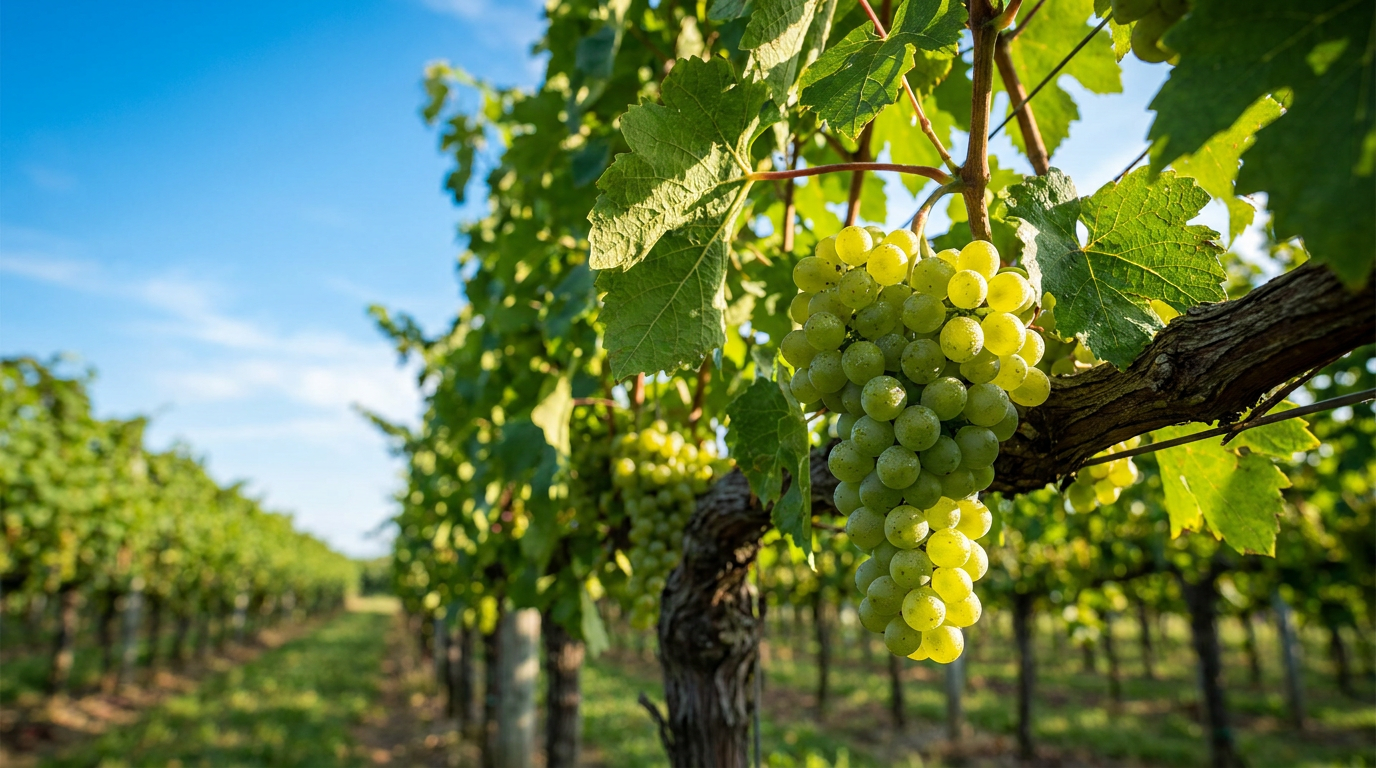
Enter PIWI grapes. The term is an acronym for the German word Pilzwiderstandsfähige, which translates directly to fungus-resistant vine varieties. These innovative grapes are quietly revolutionizing sustainable viticulture by offering a biological solution to a chemical problem, allowing farmers to step off the pesticide treadmill.[1][3]
PIWIs are not genetically modified organisms. Instead, they are the result of painstaking, traditional crossbreeding. Agricultural scientists manually cross classic European Vitis vinifera vines, which are prized for their complex flavors, with wild American or Asian Vitis species that have naturally evolved resistance to fungal pathogens over thousands of years.[1][7]

The concept was born out of necessity. In the late nineteenth century, the phylloxera epidemic devastated European vineyards, prompting the first wave of transatlantic vine crossings. However, those early hybrids often yielded wines with a harsh, foxy aroma that European palates firmly rejected, stigmatizing hybrid vines for decades.[3]
Modern PIWI breeding has solved this flavor problem. Today's varieties undergo multiple generations of backcrossing, resulting in vines that possess up to 95 percent European DNA for organoleptic quality, retaining just enough wild genetic material to fight off disease. The breeding process is a massive commitment, often taking twenty years and tens of thousands of seedlings to produce a single viable new grape variety.[2][7]
The environmental impact of planting PIWIs is profound. Because the vines naturally resist mildew, vineyards can reduce their fungicide applications by 80 to 90 percent. In some dry years, chemical treatments can be eliminated entirely, allowing the vineyard to function as a more natural, self-sustaining ecosystem.[1][6]
Because the vines naturally resist mildew, vineyards can reduce their fungicide applications by 80 to 90 percent.
This drastic reduction in chemical use triggers a cascade of ecological benefits. Fewer tractor passes mean less soil compaction and significantly lower carbon emissions. Without heavy fungicide loads, vineyard soils regenerate, fostering healthier microbiomes, returning pollinating insects, and allowing natural cover crops to thrive between the vines.[5][6]

Beyond ecology, the economic incentives for winemakers are compelling. Fungicide treatments are expensive and labor-intensive. By transitioning to PIWI varieties, vineyards can save up to 1,000 euros per hectare annually in chemical, fuel, and labor costs, fundamentally altering the financial viability of small farms.[5][6]
These savings are particularly vital for small, mountain-region wineries. In steep terrains like Italy's South Tyrol, where tractors cannot operate and all spraying must be done by hand, the reduced maintenance of PIWI vines makes viticulture economically viable amid severe agricultural labor shortages.[5]
Despite the clear agricultural benefits, the wine industry is notoriously traditional, and PIWIs face significant hurdles in the market. The biggest challenge is consumer recognition. Wine drinkers buy what they know, reaching for familiar names like Chardonnay or Sauvignon Blanc. PIWI names like Souvignier Gris, Muscaris, Solaris, and Regent remain largely unfamiliar on restaurant wine lists.[6]
Furthermore, strict appellation rules in historic European wine regions often prohibit the use of non-traditional grapes. A winemaker in a classic region cannot legally plant a PIWI variety and still use the area's prestigious geographic label, forcing many PIWI pioneers to sell their premium wines under generic table wine classifications.[6][7]

Yet, the tide is turning. PIWI varieties now account for roughly 3.5 percent of all vineyards in Germany and are expanding rapidly across Austria, Switzerland, and Northern Italy. Even highly regulated regions are beginning to adapt, with historic appellations slowly approving specific PIWI varieties for limited use to combat climate stress.[3][6][7]
In the glass, modern PIWIs are proving their worth. Varieties like Cabernet Blanc and Johanniter are winning international blind-tasting competitions, producing everything from crisp, tropical whites to complex sparkling wines and highly sought-after skin-contact orange wines that appeal to the natural wine movement.[2][7]
The science of resistance is also evolving. Plant geneticists caution that fungi are highly adaptable, and some first-generation PIWI vines have seen their resistance break down after a decade as pathogens mutate. To stay ahead in this evolutionary arms race, breeders are now stacking multiple resistance genes into new varieties to ensure long-term durability.[4]

Looking ahead, European researchers are exploring New Genomic Techniques, such as CRISPR, to precisely edit susceptibility genes in classic varieties without the twenty-year crossbreeding cycle. Until those methods gain regulatory approval and public acceptance, however, PIWIs remain the most effective, natural tool available to growers.[4]
Ultimately, the rise of PIWI grapes represents a necessary paradigm shift. As the wine industry grapples with the realities of a warming planet and the demand for zero-impact agriculture, these resilient vines offer a blueprint for a future where great wine works in harmony with nature, rather than fighting it with chemicals.[8]
How we got here
Late 19th Century
The phylloxera epidemic devastates European vineyards, forcing the first wave of crude transatlantic vine crossings.
1975
The highly successful PIWI variety Solaris is bred in Germany, proving that resistant grapes can produce quality wine.
1999
PIWI International is founded in Switzerland to promote fungus-resistant varieties globally.
Recent Years
Highly regulated historic regions, including Champagne, begin approving specific PIWI varieties for limited use to combat climate stress.
Viewpoints in depth
Sustainable Viticulturists
Advocates who view PIWI grapes as the ultimate biological solution to viticulture's chemical dependency.
For sustainable farmers and ecologists, PIWI grapes represent a fundamental shift from treating symptoms to solving the root cause of vineyard disease. By eliminating the need for constant fungicide applications, these growers argue that vineyards can finally function as true ecosystems. The reduction in tractor use not only slashes carbon emissions but also prevents the severe soil compaction that plagues conventional farming, allowing cover crops and beneficial insects to return to the land.
Traditional Appellations
Historic wine regions and classicists who worry about losing regional typicity and consumer trust.
Traditionalists acknowledge the environmental benefits of PIWIs but remain deeply concerned about market realities and heritage. They argue that centuries of regional identity are tied to specific Vitis vinifera grapes like Pinot Noir or Sangiovese. Replacing these with unfamiliar laboratory crosses, they warn, risks alienating consumers who buy wine based on recognizable names. Consequently, many strict appellations still legally bar PIWI varieties from carrying prestigious geographic labels.
Cool-Climate Winemakers
Growers in challenging environments who rely on PIWIs for economic survival and climate resilience.
In regions with high rainfall, steep mountain terrains, or short growing seasons—such as Denmark, Poland, and the Italian Alps—PIWIs are often the difference between a profitable harvest and total crop failure. These winemakers emphasize the practical economics: when tractors cannot be used on steep slopes and labor is scarce, a vine that requires little manual spraying is a financial necessity. For them, PIWIs are not just an ecological choice, but a lifeline.
Agricultural Geneticists
Scientists focused on the evolutionary arms race between resistant vines and adaptable fungal pathogens.
Researchers point out that nature always finds a way. They caution that fungi mutate rapidly, and relying on a single resistance gene can lead to a breakdown in a vine's defenses within a decade. To counter this, geneticists are working on stacking multiple resistance genes into newer PIWI generations. They also advocate for the eventual use of New Genomic Techniques (NGTs) like CRISPR, which could edit susceptibility out of classic vines in a fraction of the time it takes to crossbreed.
What we don't know
- How quickly consumer demand will shift to embrace unfamiliar PIWI grape names on restaurant menus and retail shelves.
- Whether first-generation PIWI vines will maintain their fungal resistance over the coming decades as pathogens naturally mutate.
- If and when the European Union will approve New Genomic Techniques (NGTs) to speed up the creation of resistant classic varieties.
Key terms
- PIWI
- An acronym for the German word Pilzwiderstandsfähige, meaning fungus-resistant vine varieties.
- Vitis vinifera
- The classic European grapevine species responsible for almost all well-known quality wines, such as Chardonnay and Cabernet Sauvignon.
- Powdery and Downy Mildew
- Two devastating fungal diseases that attack grapevines, traditionally requiring heavy chemical spraying to control.
- Crossbreeding
- The traditional agricultural method of pollinating one plant species with another to combine their traits, distinct from genetic modification.
- Organoleptic
- The sensory properties of a food or wine, including its taste, color, odor, and feel.
Frequently asked
Are PIWI grapes genetically modified (GMO)?
No. PIWI varieties are created through traditional, manual crossbreeding of different vine species, not through laboratory genetic engineering.
Do PIWI wines taste different from traditional wines?
Early hybrids had a distinct foxy taste, but modern PIWIs contain a high percentage of European vine DNA, making their flavor profiles nearly indistinguishable from classic varieties.
Can PIWI vines get sick at all?
Yes. They are highly resistant, not completely immune. In years with extreme weather, they may still require mild treatments, though far fewer than conventional vines.
Why aren't all vineyards planting PIWI grapes?
Regulatory restrictions in historic wine regions, consumer unfamiliarity with new grape names, and the slow twenty-year breeding cycle limit rapid adoption.
Sources
Source coverage
8 outlets
4 viewpoints surfaced








[1]PIWI InternationalSustainable Viticulturists
PIWI wines: Innovative, robust and attractive
Read on PIWI International →[2]International Wine ChallengeCool-Climate Winemakers
The rise of PIWI grapes in sustainable viticulture
Read on International Wine Challenge →[3]Austrian WineCool-Climate Winemakers
PIWI varieties: Fungus-resistant grape varieties
Read on Austrian Wine →[4]European CommissionAgricultural Geneticists
What are PIWI varieties, and how do they contribute to reducing pesticide use?
Read on European Commission →[5]IVES Technical ReviewsSustainable Viticulturists
Sustainable Wine Production with Innovative Resistant Varieties
Read on IVES Technical Reviews →[6]ProWeinTraditional Appellations
Fungus-resistant grape varieties: Are Piwis on the rise?
Read on ProWein →[7]Vitis MagazineTraditional Appellations
PIWI grapes: Fungus-resistant varieties
Read on Vitis Magazine →[8]Factlen Editorial TeamSustainable Viticulturists
Synthesis by Factlen editorial team
Read on Factlen Editorial Team →
Every angle. Every day.
Get food drink stories with full source coverage and perspective breakdowns delivered to your inbox.