
Transpacific Ocean Freight Rates Surge Over 100% as Shippers Frontload Cargo Ahead of New Tariffs
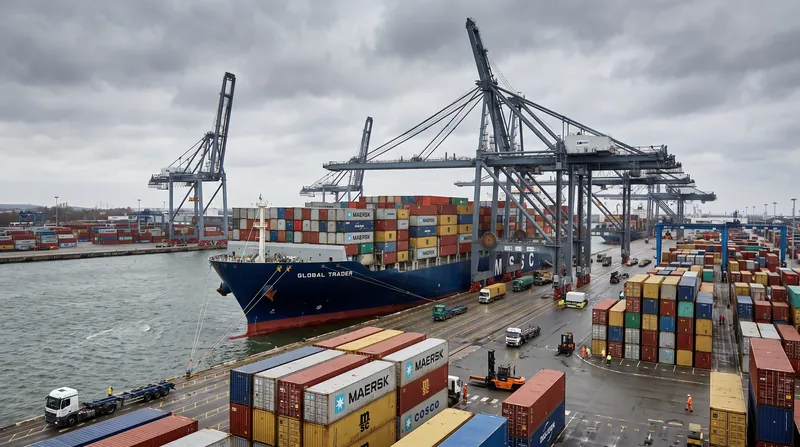
Ocean freight rates from Asia to the U.S. have doubled since mid-May as retailers rush to import holiday inventory early to outrun expected federal trade tariffs. The massive pull-forward of cargo has compressed the traditional peak shipping season into early summer, forcing carriers to tightly manage vessel capacity.

- Global Importers & Retailers
- Prioritizing inventory security and cost predictability over immediate freight savings.
- Ocean Carriers
- Utilizing capacity management to maintain pricing power and offset operational friction.
- Supply Chain Analysts
- Observing a maturing, highly adaptable logistics network that absorbs shocks without breaking.
Perspectives this story doesn't cover
- Warehouse Operators
- End Consumers
Common questions
What is frontloading in shipping?
Frontloading is the practice of importing goods months ahead of their normal schedule to avoid upcoming tariffs, price increases, or peak season bottlenecks.
Why are ocean freight rates rising in 2026?
Rates are surging due to a combination of tariff-driven frontloading, early peak season demand, carrier capacity management, and ongoing vessel rerouting away from the Red Sea.
What is a blank sailing?
A blank sailing occurs when an ocean carrier deliberately cancels a scheduled voyage to keep vessel space tight and maintain higher freight rates.
How does the Red Sea disruption affect transpacific shipping?
While the Red Sea primarily impacts Asia-Europe routes, it absorbs millions of containers of global capacity, preventing those ships from being moved to the Pacific to relieve demand.
The short answer
- Transpacific ocean freight rates have surged over 100% since mid-May, driven by a rush to import goods early.
- Retailers are 'frontloading' their inventory to outrun expected federal trade tariffs and upcoming fuel surcharges.
- Ocean carriers are actively managing capacity through 'blank sailings' to keep vessel space tight and maintain pricing power.
- Ongoing vessel rerouting around the Red Sea prevents the global fleet from shifting spare ships to the Pacific to relieve the pressure.
- Despite the elevated costs, the strategy successfully shields consumer goods from late-year regulatory volatility.
When ocean freight rates double in a matter of weeks, the immediate assumption is a catastrophic breakdown in the global supply chain, reminiscent of the gridlock seen in recent years. But the mid-2026 surge in transpacific shipping costs is not a malfunction—it is a deliberate, highly coordinated defensive maneuver by global retailers. Spot rates from Asia to the U.S. West Coast have climbed past $6,200 per forty-foot equivalent unit (FEU), representing a staggering 120% increase since mid-May, while East Coast rates have pushed firmly into the $8,000 to $9,500 range. Rather than a sign of systemic failure, this pricing spike reflects a proactive strategy by importers to secure their supply lines before external pressures make shipping even more unpredictable.[1][2]
The primary catalyst for this sudden and dramatic spike is a logistics strategy known across the industry as 'frontloading.' Anticipating a new regime of federal trade tariffs and expected July bunker fuel surcharges, major importers are rushing to bring their autumn and winter inventory into the United States months ahead of their normal schedules. By pulling these shipments forward, procurement teams are effectively buying insurance against the unknown, trading higher immediate freight costs for long-term inventory security and price predictability.[1][5]
By compressing the traditional third-quarter peak shipping season into the early weeks of summer, shippers are attempting to outrun the regulatory clock before new trade policies take effect. This massive pull-forward activity has fundamentally altered the supply-and-demand calculus on the transpacific trade lane. What is normally a steady, predictable ramp-up in cargo volume has been transformed into an immediate, high-stakes scramble for vessel space, forcing companies to compete aggressively for limited container slots on outbound ships from Asia.[5][6]
The mechanics of this surge reveal the deeply interconnected nature of modern maritime infrastructure. As demand for cargo slots spikes, ocean carriers have actively managed their available capacity to maintain their newfound pricing power. Rather than flooding the market with extra vessels to absorb the sudden volume, major shipping alliances have executed a series of 'blank sailings'—deliberately canceling scheduled voyages to keep space tight, ensure ships depart fully loaded, and guarantee that general rate increases hold firm across the market.[3][5]
In a single week in late May, carriers announced eight blank sailings on the transpacific route, signaling a disciplined approach to capacity management. This strategy ensures that vessels operate at maximum profitability for the shipping lines, while simultaneously forcing shippers to accept premium spot rates just to guarantee their cargo makes it onto the water. The dynamic creates a highly competitive booking environment where standard contracts are frequently bypassed in favor of immediate, higher-paying spot market transactions.[3][5]
This aggressive capacity management has led to a sharp increase in what the industry calls 'rollover' rates. When a vessel is overbooked, lower-paying or later-booked containers are systematically rolled to the next available departure. Depending on the carrier and the specific service lane, rollover levels have recently reached between 30% and 60%. This high degree of uncertainty requires procurement teams to build significant buffer time into their transit schedules, further incentivizing them to ship goods as early as possible.[5]
This localized capacity management is heavily compounded by external geographic pressures affecting the broader maritime network. The ongoing security-driven rerouting of commercial vessels away from the Red Sea and around the Cape of Good Hope has absorbed roughly 2.5 million twenty-foot equivalent units (TEU) of global shipping capacity. The extended transit times required to navigate around the African continent tie up vessels and equipment for weeks longer than traditional Suez Canal routings would demand, effectively shrinking the active global fleet.[6]
This localized capacity management is heavily compounded by external geographic pressures affecting the broader maritime network.
While that massive diversion primarily affects the Asia-to-Europe trade lane, the global shipping fleet operates as a closed, highly interconnected system. Ships that are tied up on longer African routes cannot be easily or quickly repositioned to the Pacific Ocean to relieve the frontloading pressure. This lack of fungible capacity leaves the transpacific lane highly sensitive to sudden demand shocks, as carriers simply do not have the spare vessels required to deploy extra loaders and ease the current bottleneck.[6]
Regional weather events have further constrained the logistics system right at the point of origin. A series of severe mid-summer typhoons in the Yangtze and Pearl River deltas forced temporary closures and operational slowdowns at some of China's largest export hubs. These weather-related delays created localized backlogs, disrupting the delicate choreography of port operations and preventing empty containers from cycling back into the loading rotation at the exact moment demand was peaking, adding physical friction to an already strained network.[3][4]
The resulting equipment shortages meant that even when vessel space was technically available, shippers occasionally struggled to find the physical steel boxes needed to move their goods. This mismatch between available cargo, available containers, and available ship slots highlights the fragility of the physical supply chain, where a disruption in one node—such as a storm in the South China Sea—cascades rapidly into pricing premiums and delayed departures for importers halfway across the globe, forcing logistics managers to constantly adapt.[3][4]
The cargo mix itself is also shifting in response to these broader economic trends. While traditional retail goods and seasonal apparel make up the bulk of the frontloaded volume, analysts note that a surge in high-value technology shipments has fundamentally altered the baseline demand. Specifically, the rapid export of hardware supporting the global expansion of artificial intelligence infrastructure has provided a high-margin, consistent baseline of demand that keeps container floors full even when consumer goods shipments fluctuate.[4]
Once the cargo finally arrives in North America, the domestic infrastructure must immediately absorb the early influx of goods. Ports in Los Angeles and Long Beach have reported double-digit year-over-year volume increases, successfully processing the advanced shipments as they arrive. Unlike the crippling vessel queues and offshore parking lots seen during previous supply chain crises, the current port operations remain remarkably fluid, demonstrating that the coastal infrastructure has matured and adapted to handle sudden volume spikes without breaking down.[1]
With the ports functioning smoothly, the primary logistical challenge has instead shifted inland. Because the inventory is arriving months before it is actually needed for the holiday shopping season, retailers must secure massive amounts of warehouse space to store the goods. Companies are willingly trading higher domestic storage costs for lower international tariff exposure, viewing the expense of holding inventory in the United States for an extra three to four months as a necessary cost of doing business in a volatile trade environment.[1][5]
Environmental regulations are also playing a quiet but substantial role in the elevated rate environment. Stricter maritime fuel standards and international carbon levies have permanently increased the baseline cost of operating a modern container ship. Carriers pass these mandatory compliance costs directly to shippers through 'Green Shipping' surcharges and elevated Bunker Adjustment Factors, ensuring that the absolute cost floor of ocean freight remains high regardless of underlying consumer demand, seasonal fluctuations, or temporary dips in cargo volume.[6]
For the broader economy, this massive frontloading wave acts as a critical shock absorber. By securing their inventory now at elevated but known freight rates, retailers are locking in their landed costs before the new tariff structures and late-year surcharges take effect. This proactive approach allows businesses to finalize their pricing models for the upcoming holiday season with a high degree of certainty, insulating their profit margins from the unpredictable swings of international trade policy and geopolitical instability.[1][6]
While shipping a container across the Pacific is currently much more expensive than it was in the spring, the strategy successfully shields consumer goods from the compounding volatility of late-year regulatory changes. It demonstrates the proactive resilience of the modern supply chain: companies are willingly absorbing a short-term pricing hit to guarantee long-term inventory stability, ensuring that the products consumers rely on will be waiting on the shelves when they are needed most, regardless of what happens on the global stage.[5][6]
Why it matters
By pulling holiday inventory into the summer months, retailers are locking in their costs before new tariffs hit—meaning the prices consumers pay this winter are being decided by the shipping maneuvers happening right now.
Jargon, explained
- Frontloading
- The strategic acceleration of orders and shipments to bring inventory into a country before a specific deadline, such as a new tariff implementation.
- Blank Sailing
- The deliberate cancellation of a scheduled port call or entire voyage by an ocean carrier to manage capacity and support freight rates.
- FEU
- Forty-foot Equivalent Unit; a standard measure of volume in ocean shipping, representing one 40-foot shipping container.
- Rollover Rate
- The percentage of cargo that is bumped from its scheduled vessel to a later departure due to overbooking or capacity constraints.
- Bunker Adjustment Factor (BAF)
- A floating surcharge added to ocean freight rates to compensate carriers for fluctuations in fuel prices.
Sources
Source coverage
6 outlets
3 viewpoints surfaced




- [1]Supply Chain DiveGlobal Importers & Retailers
Transpacific ocean rates fueled by early peak, frontloading
Read on Supply Chain Dive → - [2]FreightRightSupply Chain Analysts
China-US Ocean Freight Market: Rates Push Past $6,000
Read on FreightRight → - [3]The LoadstarOcean Carriers
Transpacific rates rebounded as shipping lines succeeded in implementing rate hikes
Read on The Loadstar → - [4]Seatrade MaritimeOcean Carriers
Typhoons and AI boost transpacific container rates
Read on Seatrade Maritime → - [5]AverittGlobal Importers & Retailers
June 2026 Transpacific Freight Market Update: Rising Rates, Tight Capacity
Read on Averitt → - [6]Shipmate PlusSupply Chain Analysts
Ocean Freight Rates in 2026: Trends & Pricing
Read on Shipmate Plus →
Comments
More in Transportation
See all →Space Megaprojects
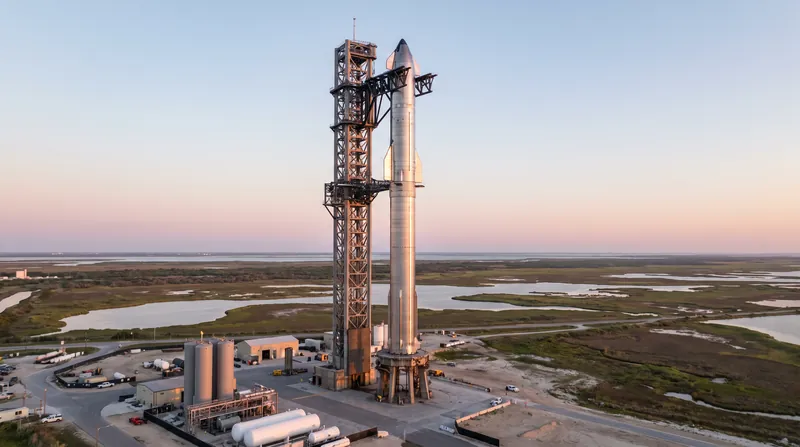
SpaceX Stacks Starship and Completes Wet Dress Rehearsal Ahead of First Orbital Flight Attempt
5 sources
Aerodynamics
The Equivalent Body of Revolution and the Area Rule That Minimize Transonic Drag
6 sources

Freight Electrification
Germany Begins Construction on €1 Billion National Fast-Charging Network for Electric Trucks
4 sources

Aviation Infrastructure
East Coast Flights Resume After Dual Telecom Failures Ground Thousands of Aircraft
4 sources
Every angle. Every day.
Get Transportation stories with full source coverage and perspective breakdowns delivered to your inbox.