
DOT Announces $5.3 Billion Investment in Rail Safety Upgrades and New Amtrak Train Sets
The U.S. Department of Transportation has redirected $5.3 billion toward national rail safety and infrastructure, funding 43 new Amtrak trainsets and eliminating high-risk grade crossings.

Share this story
For years, federal transportation policy has been caught in a structural tug-of-war between funding ambitious, decades-long high-speed rail projects and addressing the immediate, unglamorous need to fix the existing conventional network.
That tension broke decisively on Friday when the U.S. Department of Transportation redirected $5.3 billion toward immediate safety and equipment upgrades, explicitly pulling roughly $2 billion of that total from canceled funding for California's high-speed rail project. The move signals a hard pivot in federal strategy, prioritizing the state of good repair across the national network over localized, high-cost passenger rail development.[1][4]
Transportation Secretary Sean P. Duffy announced the funding package in the rotunda of Cincinnati's historic Union Terminal, framing the shift as a transition from "boondoggles" to practical safety and reliability. Distributed through the Federal Railroad Administration's National Railroad Partnership Program, the grants will fund 41 distinct projects across 23 states. The allocations are heavily weighted toward eliminating dangerous highway-rail grade crossings and modernizing Amtrak's aging passenger fleet, which has struggled with capacity constraints and mechanical failures.[1][2]
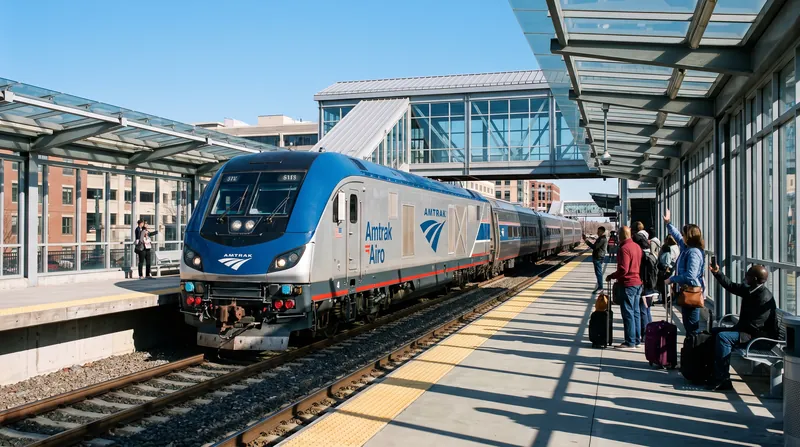
The centerpiece of the passenger rail investment is a $2.05 billion allocation for Amtrak to purchase 43 new, domestically manufactured trainsets. These units will replace 40- to 50-year-old equipment currently operating on state-supported and regional routes, including the Wolverine, Lincoln Service, and various East Coast corridors. An additional $140 million will fund the overhaul of 41 locomotives serving Midwest and Pacific routes, directly addressing the mechanical reliability issues that have plagued the network's regional operators and caused cascading schedule disruptions.[1][3]
Beyond rolling stock, the grants target the physical infrastructure that dictates network fluidity. A $572 million award will fund a new Chicago-area maintenance facility, while $87 million is earmarked to rehabilitate 17 bridges around the critical Chicago hub, including a 110-year-old lift bridge over the South Branch of the Chicago River. Because Chicago serves as the operational chokepoint for more than half of Amtrak's long-distance network, these localized upgrades are expected to reduce downstream delays nationwide and improve overall system resilience.[3][5]
The safety component of the package focuses heavily on highway-rail grade crossings, which represent the second leading cause of rail-related fatalities in the United States, accounting for roughly 2,000 incidents and 200 deaths annually. The DOT is directing funds to close more than 30 high-risk crossings—defined as those with a history of multiple accidents—and upgrade over 1,000 others with modern signaling and physical barriers. Florida received $356 million to improve up to 910 crossings statewide, while Texas secured $189 million to eliminate nine crossings in the Dallas-Fort Worth area.[1][2][4]
By shifting capital away from localized high-speed rail development and distributing it across 23 states, the administration is effectively decentralizing its infrastructure spending. This approach requires a minimum 20 percent matching fund contribution from state and local recipients, forcing regional transportation departments to coordinate closely with Amtrak and private contractors to execute the upgrades. The geographic diversity of the awards ensures that the economic impact of the construction and manufacturing contracts will be spread across multiple regional economies.[5][6]
For the broader supply chain, the injection of federal capital signals a sustained demand for domestic rail manufacturing and heavy civil construction. Procurement professionals and industry analysts anticipate significant contracting opportunities for rolling stock production, bridge rehabilitation, and the installation of advanced crossing technologies, cementing a multi-year pipeline of infrastructure modernization. The strict requirement for "Made-in-America" trainsets further anchors the manufacturing benefits within the domestic industrial base, ensuring that the capital expenditure supports local jobs while upgrading the physical network.[1][5]
Ultimately, the $5.3 billion package represents a systemic recalibration of U.S. rail priorities. By prioritizing the state of good repair over new high-speed corridors, the DOT is betting that incremental, widespread improvements to safety and reliability will yield a higher immediate return on investment for the national transportation network. For passengers and freight operators alike, the focus now shifts to the execution phase, as state agencies and Amtrak begin deploying the capital to modernize a system that has long suffered from deferred maintenance.[1][3][4]
Perspectives explored
Federal Transportation Officials
Prioritizing immediate safety and conventional network reliability over high-speed rail.
Federal officials argue that the national rail network cannot support futuristic high-speed corridors while its foundational infrastructure is crumbling. By redirecting funds from the California high-speed rail project, the administration is making a calculated bet that eliminating dangerous grade crossings and replacing 50-year-old trainsets will deliver a more immediate and tangible benefit to the American public. This perspective views the $5.3 billion package as a necessary correction to years of deferred maintenance, focusing on the state of good repair rather than speculative expansion.
Passenger Rail Advocates
Welcoming the fleet upgrades while mourning the loss of high-speed rail funding.
Advocates for passenger rail are largely supportive of the massive capital injection for Amtrak, noting that new trainsets and Chicago-area chokepoint fixes are desperately needed to maintain current service levels. However, this camp remains highly critical of the decision to strip funding from California's high-speed rail initiative. They argue that while fixing conventional rail is essential, abandoning high-speed projects cedes American leadership in advanced transportation technology and leaves the U.S. decades behind European and Asian rail networks.
State Infrastructure Planners
Focusing on localized economic impacts and the logistics of matching funds.
For state and municipal transportation departments, the grant package represents a generational opportunity to fix localized safety hazards, such as the 910 grade crossings targeted in Florida. However, local planners are also bracing for the logistical challenge of securing the required 20 percent matching funds to unlock the federal dollars. This perspective is highly focused on the procurement process, supply chain readiness, and the complex coordination required between state agencies, Amtrak, and private contractors to execute the heavy civil construction on time.
Key points
- The U.S. Department of Transportation announced $5.3 billion in federal grants for 41 rail projects across 23 states.
- Amtrak will receive $2.05 billion to purchase 43 new, domestically manufactured trainsets for state-supported and regional routes.
- Roughly $2 billion of the funding was redirected from canceled federal support for California's high-speed rail project.
- The package includes $572 million for a new Chicago-area maintenance facility and $87 million for regional bridge repairs.
Timeline
2021
The Infrastructure Investment and Jobs Act is signed, creating the framework for the National Railroad Partnership Program.
2024
Amtrak's maintenance backlog reaches critical levels, with regional operators reporting increased delays due to aging locomotives.
Early 2026
The federal government cancels roughly $2 billion in funding for California's high-speed rail project, citing cost overruns.
August 14, 2026
The DOT announces the $5.3 billion grant package, redirecting the high-speed rail savings into conventional network upgrades.
- Federal Transportation Officials
- Prioritizing immediate safety and conventional network reliability over high-speed rail.
- Passenger Rail Advocates
- Welcoming the fleet upgrades while mourning the loss of high-speed rail funding.
- State Infrastructure Planners
- Focusing on localized economic impacts and the logistics of matching funds.
Perspectives this story doesn't cover
- California High-Speed Rail Authority
- Freight Rail Operators
Sources
Source coverage
6 outlets
3 viewpoints surfaced






- [1]U.S. Department of TransportationFederal Transportation Officials
GOLDEN AGE OF RAIL: Trump's Transportation Secretary Sean P. Duffy Announces Massive $5.3 Billion Investment in Rail Safety Upgrades
Read on U.S. Department of Transportation → - [2]WVXUState Infrastructure Planners
U.S. DOT in Cincinnati to announce $5.3B investment in nationwide rail projects
Read on WVXU → - [3]TrainsPassenger Rail Advocates
New trainsets for Amtrak among projects receiving $5.3 billion in federal rail grants
Read on Trains → - [4]Railway-NewsState Infrastructure Planners
US Invests $5.3 Billion Into Rail Safety and Infrastructure Upgrades
Read on Railway-News → - [5]GovlyState Infrastructure Planners
USDOT Awards $5.3B Rail Infrastructure Grants
Read on Govly → - [6]PlanetizenPassenger Rail Advocates
Amtrak recieves $5.3 billion for new trains, new tracks and infrastructure improvement
Read on Planetizen →
More in Transportation
See all →Fleet Strategy
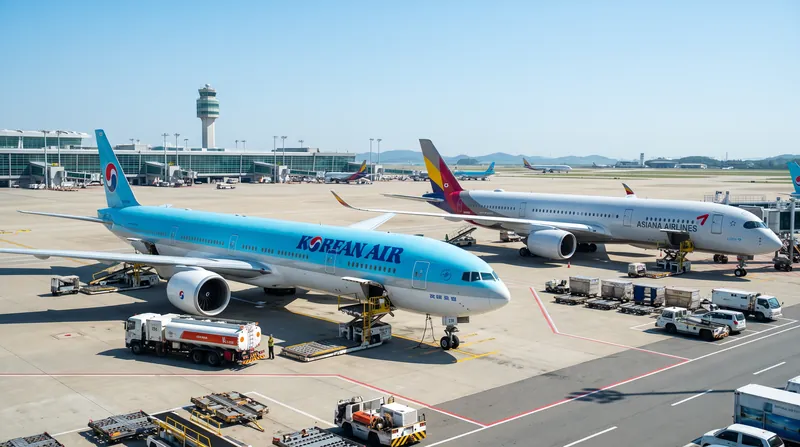
Korean Air Finalizes Record $44.8 Billion Order for 103 Boeing Aircraft Ahead of Asiana Merger
5 sources

Aviation Safety
NTSB Rejects One-Third of FAA Safety Responses to Washington National Airport Crash
6 sources
Airline Mergers
Korea FTC Approves Korean Air-Asiana Mileage Integration Plan, Finalizing Merger Terms
6 sources
Aviation Engineering
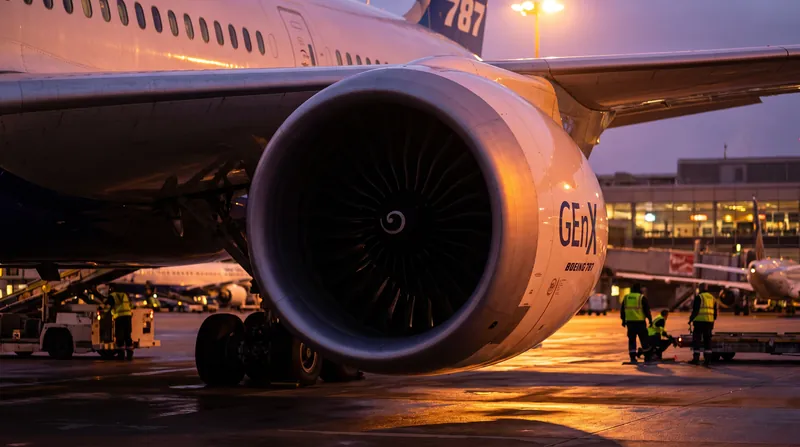
The No-Bleed Architecture: How the Boeing 787 Replaced Pneumatic Systems with Megawatt Electrical Grids
6 sources
Comments
Every angle. Every day.
Get Transportation stories with full source coverage and perspective breakdowns, free every day.