
Global Hunger Falls for Third Consecutive Year, But High Costs Keep Healthy Diets Out of Reach for 2.7 Billion
A new UN report reveals that global hunger declined to 645 million people in 2025, marking three years of progress. However, rising food costs mean nearly a third of the world's population still cannot afford a nutritious diet, with Africa bearing the heaviest burden.

The cost of a healthy diet now sits at exactly $4.28 per day. For a family of four walking through a local market, that translates to over $17 daily just to secure the vibrant, crisp vegetables, fresh dairy, and lean proteins that form the basic building blocks of human health.[1][3]
That specific number, calculated in the 2026 State of Food Security and Nutrition in the World (SOFI) report, represents a 25 percent surge over the past five years. It illustrates the central paradox of our modern food system: the world is successfully producing enough grain to drive down raw, aching hunger, yet it is failing to make genuine, colorful nutrition accessible to everyone.[1][4]
Released jointly by five United Nations agencies—including the Food and Agriculture Organization (FAO) and the World Health Organization (WHO)—the report delivers a complex but ultimately hopeful message. For the third consecutive year, the absolute number of people facing chronic hunger has fallen.[4]
In 2025, an estimated 645 million people experienced hunger, representing 7.8 percent of the global population. This marks a reduction of 14 million people compared to the previous year, and a significant drop of 43 million since the peak of 2022.[4][5]
Maximo Torero, the Chief Economist for the FAO, noted that this downward trend is visible across almost all regions, a surprising and positive development that proves targeted agricultural and economic interventions can reverse the tide of food insecurity.
Yet, the mechanics of this progress reveal a stark divide between simply surviving and actually thriving. While basic caloric intake is improving, the SOFI report highlights that 2.69 billion people—nearly one-third of the global population—cannot afford a diverse, healthy diet.[1][3]
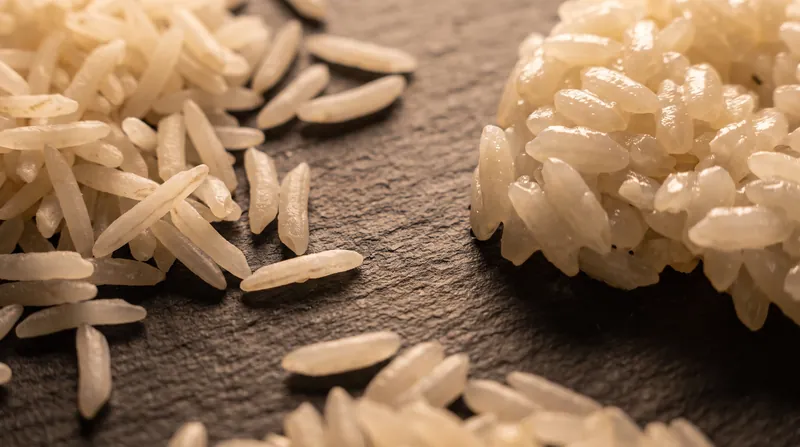
The mechanism driving this disparity lies in the fields and the ledgers of global subsidies. For decades, agricultural policies have heavily favored starchy staples like wheat, corn, and rice. These crops are resilient, easy to store in massive silos, and cheap to ship across oceans, effectively flooding the market with inexpensive, filling calories.[1]
However, the nutrient-dense foods that make a plate vibrant—leafy greens, fragile berries, and fresh animal proteins—lack that same systemic safety net. They demand specialized farming, immediate refrigeration, and rapid transport to avoid spoiling in the heat, making them significantly more expensive to cultivate and purchase.[1][3]
This structural imbalance means that while a shopper might easily afford enough rice to stave off an empty stomach, the fresh produce necessary to build strong bones and prevent diet-related diseases remains financially out of reach. With the extreme poverty line set at $3.00 per day, finding $4.28 for a balanced diet is a mathematical impossibility for billions.[1]
The consequences of this nutritional deficit are profound and measurable. The WHO reports that adult obesity has risen sharply, climbing from 12.1 percent in 2012 to 16.2 percent in 2024, as populations rely on cheap, ultra-processed calories rather than unaffordable whole foods.[1][4]
Regional disparities further complicate the global picture. Asia and Latin America have driven much of the recent progress in hunger reduction, utilizing improved supply chains and targeted social protection programs to stabilize their food systems.[3][4]
Conversely, Africa remains the epicenter of the crisis. For the first time, the continent is home to the highest absolute number of hungry people, with 309 million individuals affected. A staggering 66.6 percent of the African population cannot afford a healthy diet, more than double the rate seen in Asia.[1][2]
Agricultural analysts point to a combination of severe cuts to development aid, ongoing armed conflicts, and relentless climate shocks that have battered African food production over the past decade.[2]
To build long-term resilience, experts argue that African governments must pivot away from agricultural models that rely heavily on imported synthetic fertilizers and pesticides. Instead, the focus must shift toward practices that strengthen soil fertility and diversify the crops available to local communities.[2]
Looking ahead, the UN projects that the global number of undernourished people will continue to fall, potentially dropping by another 20 percent by 2030. However, achieving the Sustainable Development Goal of 'Zero Hunger' by the end of the decade appears increasingly unlikely.[5]
The path forward requires a fundamental rewiring of how we value and distribute food. By improving storage infrastructure, expanding rural road networks, and shifting subsidies toward nutrient-rich crops, the global community can begin to close the gap between cheap calories and genuine nourishment.[1]
Key points
- Global hunger declined to 645 million people in 2025, marking the third consecutive year of improvement.
- Despite this progress, 2.69 billion people globally cannot afford the $4.28 daily cost of a healthy diet.
- Africa remains the hardest-hit region, with 309 million people facing hunger and 66.6 percent unable to afford nutritious food.
- Agricultural subsidies historically favor cheap, starchy staples, making fresh fruits and vegetables comparatively expensive.
Unanswered questions
- How escalating regional conflicts and climate shocks will impact food production targets for the remainder of the decade.
- Whether major agricultural nations will successfully pivot their subsidy programs from starchy staples to nutrient-dense crops.
- The exact long-term economic toll that rising adult obesity and childhood stunting will place on developing healthcare systems.
How we got here
2022
Global hunger peaks at 8.6 percent of the population following the economic shocks of the COVID-19 pandemic.
2024
Hunger rates begin to ease, dropping to 8.1 percent as global supply chains slowly recover.
2025
The number of hungry people falls to 645 million (7.8 percent), marking the third consecutive year of decline.
July 2026
The UN releases the SOFI 2026 report, highlighting that while hunger is down, 2.69 billion people still cannot afford a healthy diet.
- Global Health Agencies
- Focuses on the urgent need to transition from simply providing calories to ensuring nutritional security.
- Agricultural Economists
- Emphasizes supply chain efficiency and infrastructure as the primary levers for reducing food costs.
- Sustainable Farming Advocates
- Argues for localized, diversified agriculture over reliance on imported synthetic inputs.
Perspectives this story doesn't cover
- Smallholder farmers struggling with the transition to diversified crops
- Urban consumers in developing nations facing food inflation
Sources
Source coverage
5 outlets
3 viewpoints surfaced





- [1]The GuardianAgricultural Economists
Healthy diet too expensive for one in three people globally, UN report finds
Read on The Guardian → - [2]MongabaySustainable Farming Advocates
Global hunger levels fall but Africa still lags behind, UN report finds
Read on Mongabay → - [3]DevexAgricultural Economists
Global hunger falls but 2.7B people can't afford a healthy diet, UN says
Read on Devex → - [4]WHOGlobal Health Agencies
UN report: Global hunger levels ease for third consecutive year as regional disparities persist
Read on WHO → - [5]IISDGlobal Health Agencies
Hunger, Food Insecurity Down, But Regional Progress Uneven: SOFI 2026
Read on IISD →

More in Food & Drink
See all →Fermentation Science
The 1.0 to 1.5 pH Drop: How Lactic Acid Bacteria Convert Sugars to Acid to Define the Texture and Safety of Sauerkraut and Kimchi
6 sources

Altitude Cooking
The 1°C Drop Per 1,000 Feet: How Barometric Pressure Dictates Boiling Point and Recipe Adjustment
7 sources

Koji Fermentation
The 5°C Enzyme Shift: How Koji Temperature Controls the Amylase-Protease Balance for Sake vs. Soy Sauce
5 sources

Starch Chemistry
The Amylose-Amylopectin Ratio: How Starch Composition Dictates the Texture of Global Rice Varieties
6 sources
Comments
Every angle. Every day.
Get Food & Drink stories with full source coverage and perspective breakdowns, free every day.