
The Science of Sweet Proteins: How Precision Fermentation is Rewriting the Rules of Sugar-Free Desserts
A new class of proteins that taste up to 3,000 times sweeter than sugar is moving from the lab to commercial scale, offering a zero-calorie, zero-glycemic solution for the future of sweets.
By Factlen Editorial Team
- Metabolic Health Advocates
- Championing sweet proteins as a breakthrough for diabetes management and the GLP-1 demographic.
- Biotech & Fermentation Industry
- Emphasizing the scalability and environmental sustainability of brewing ingredients.
- Food Technologists & Formulators
- Focused on the functional challenges of replacing sugar's physical bulk in recipes.
What's not represented
- · Traditional Sugarcane Farmers
- · Artificial Sweetener Manufacturers
Why this matters
As metabolic diseases rise and GLP-1 medications reshape dietary habits, sweet proteins offer a way to enjoy desserts without the insulin spikes of sugar or the digestive distress of artificial sweeteners.
Key points
- Sweet proteins taste up to 3,000 times sweeter than sugar but digest as standard amino acids.
- They cause zero blood glucose spike, zero insulin response, and no gut microbiome disruption.
- Precision fermentation allows these proteins to be brewed in tanks, bypassing the need to farm rare tropical fruits.
- Recent FDA GRAS notices and international regulatory approvals are clearing the path for commercial scale.
- Food scientists are blending sweet proteins with bulking agents like allulose to replicate the texture of traditional desserts.
The holy grail of pastry chefs and food scientists has long been a dessert that delivers the rich, uncompromised joy of sugar without the metabolic consequences. For decades, the industry has relied on a carousel of compromises. Sugar alcohols like erythritol can cause severe gastrointestinal distress, while high-intensity plant extracts like stevia and monk fruit often carry a lingering, bitter licorice aftertaste. Artificial sweeteners, meanwhile, face increasing consumer skepticism and regulatory scrutiny. But a fundamental shift is underway in the architecture of sweetness, driven not by carbohydrates or synthetic chemicals, but by proteins.[1]
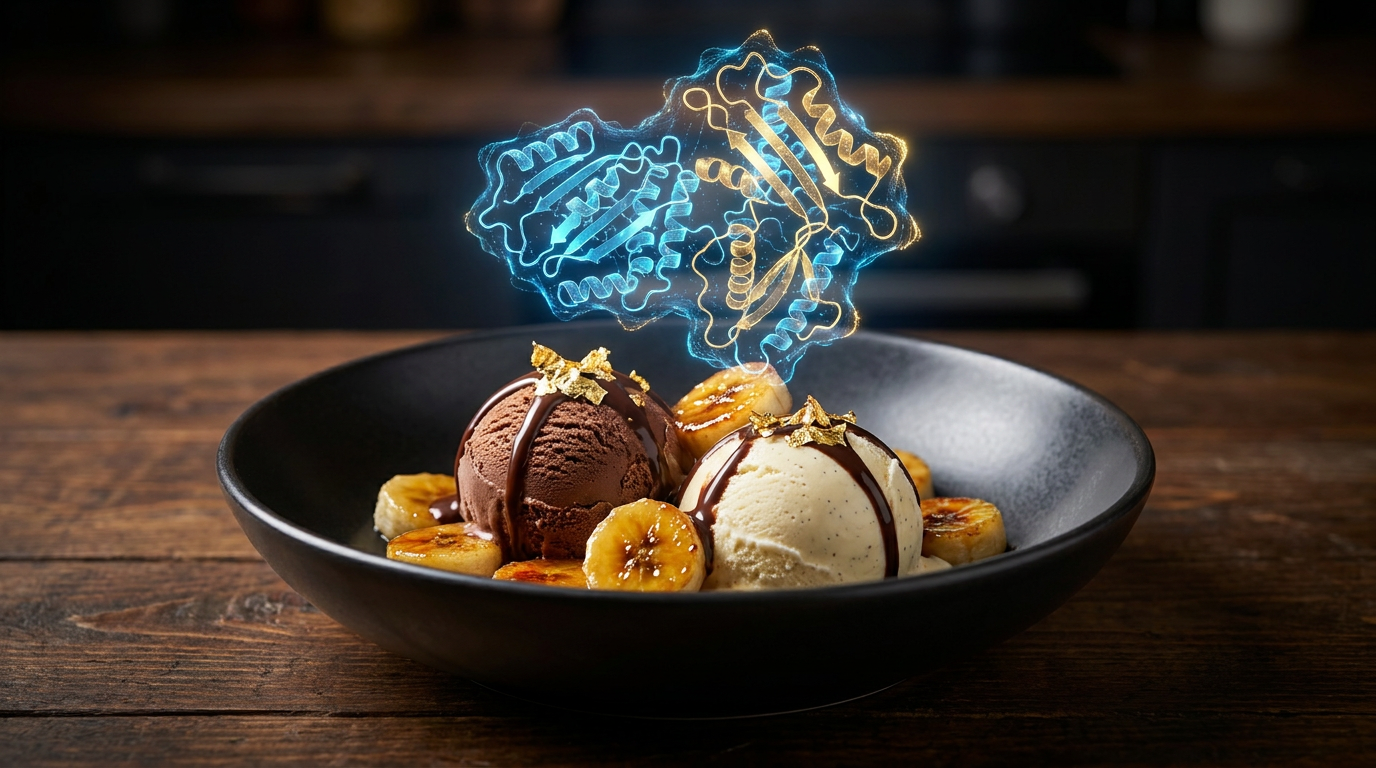
Enter "sweet proteins," a novel class of biological molecules that are poised to revolutionize the dessert and beverage industries. Unlike sugar, which is a simple carbohydrate, these are complex chains of amino acids. Yet, through a quirk of evolutionary biology, they fit perfectly into the human tongue's sweet taste receptors. The result is a sensory experience that mimics sugar, but with a potency that borders on the unbelievable: certain sweet proteins are up to 3,000 times sweeter than sucrose by weight.[2][3]
The commercialization of these proteins hit a critical inflection point in early 2026. Amai Proteins, an Israel-based food-tech company, received a Generally Recognized as Safe (GRAS) notice from the US Food and Drug Administration for its monellin-based sweetener, Sweelin. Shortly after, the ingredient secured regulatory approval in Singapore, a major hub for food innovation in the Asia-Pacific region. Concurrently, California-based Oobli has secured multiple FDA "No Questions" letters for its own sweet proteins, including brazzein, signaling that regulatory bodies are fully comfortable with this new paradigm of sweetening.[2][3][8]
To understand why sweet proteins are so disruptive, one must look at their metabolic pathway. When a person consumes traditional sugar, it rapidly enters the bloodstream, causing a spike in blood glucose. The pancreas responds by pumping out insulin to shuttle that glucose into cells, a cycle that, when repeated excessively, leads to insulin resistance and type 2 diabetes. Sweet proteins bypass this system entirely. Because they are proteins, they are denatured by the acidic environment of the stomach and broken down into standard amino acids by digestive enzymes.[1][2]

The clinical implications of this digestive pathway are profound. Recent randomized controlled trials have demonstrated that consuming sweet proteins results in absolute metabolic neutrality. There is no blood glucose spike, no insulin response, and no alteration to the secretion of GLP-1, the body's natural satiety hormone. Furthermore, unlike sugar alcohols or artificial sweeteners, sweet proteins do not ferment in the lower intestine, meaning they cause zero disruption to the gut microbiome and zero digestive discomfort.[2]
This metabolic profile arrives at a moment of unprecedented shift in consumer dietary habits. By 2025, the share of American adults actively using GLP-1 receptor agonist medications—such as Ozempic and Mounjaro—for weight loss and diabetes management had surged to 18%. This demographic is actively seeking out high-protein, low-sugar foods that align with their medication's appetite-suppressing effects. For food manufacturers, sweet proteins offer a way to cater to this massive, highly motivated consumer base without sacrificing the indulgent profile of premium desserts.[4][7]
The origins of these remarkable molecules lie in the equatorial rainforests of West Africa. For centuries, indigenous populations have consumed rare fruits like the serendipity berry (the source of monellin) and the oubli fruit (the source of brazzein) to sweeten their foods. However, commercializing these fruits through traditional agriculture was always a non-starter. The plants are notoriously difficult to cultivate outside their native microclimates, and extracting the proteins from the raw fruit is highly resource-intensive, making the final product far too expensive for mass-market food production.[2][3]
The origins of these remarkable molecules lie in the equatorial rainforests of West Africa.
The solution to this supply chain bottleneck is a technology called precision fermentation. Rather than growing the fruit, scientists isolate the specific genetic sequence responsible for producing the sweet protein. This DNA is then inserted into a host microorganism, typically a common strain of yeast or fungi. When placed in large, stainless-steel fermentation tanks and fed a simple diet of plant sugars and nutrients, these microbes act as microscopic factories, brewing the exact same sweet proteins found in the rare tropical fruits.[2][5]

Precision fermentation is not a new concept—it is the exact same process that has been used for decades to produce human insulin for diabetics and rennet for cheese making. However, its application to bulk food ingredients is a recent breakthrough. By decoupling the production of sweet proteins from traditional agriculture, companies can manufacture them anywhere in the world, immune to the disruptions of climate change, crop failures, or geographic limitations.[1][3][6]
The environmental mathematics of this process are highly favorable. Traditional sugarcane farming is incredibly land- and water-intensive, and is a major driver of deforestation and biodiversity loss in tropical regions. Precision fermentation requires a fraction of the arable land and water, and generates significantly lower greenhouse gas emissions. As multinational food conglomerates face mounting pressure to reduce their Scope 3 carbon emissions, shifting from agricultural sugar to fermented proteins offers a powerful sustainability lever.[5][6]
Despite their advantages, formulating desserts with sweet proteins presents unique challenges for food scientists. In a traditional cake or pint of ice cream, sugar does much more than just provide sweetness. It provides bulk, dictates the freezing point depression in frozen desserts, and contributes to the Maillard reaction that gives baked goods their golden-brown crust. Because sweet proteins are so potent—requiring just 300 grams to replace 1,000 kilograms of sugar—removing the sugar leaves a massive structural void in the recipe.[2][3]
To solve this, formulators are developing sophisticated blended systems. Sweet proteins are being paired with low-calorie bulking agents like allulose, which provides the necessary volume and browning characteristics but lacks the intense sweetness of sugar. In the ice cream sector, companies are combining sweet proteins with another marvel of precision fermentation: animal-free dairy. Companies like Perfect Day are using microbes to brew real whey and casein proteins without cows, creating a rich, creamy base that pairs perfectly with the clean sweetness of brazzein or monellin.[3][6]

The economics of sweet proteins are also rapidly improving. Historically, the high cost of precision fermentation restricted these ingredients to premium, niche products. However, as bioreactor capacities expand and fermentation yields improve, the cost curve is bending downward. Industry analysts project that as production scales throughout the late 2020s, the cost-in-use of sweet proteins will reach parity with traditional high-intensity sweeteners, opening the door for their inclusion in everyday supermarket staples.[5][6]
Regulatory momentum is accelerating this market penetration. The FDA's GRAS framework requires rigorous safety data, including toxicology and allergenicity studies. The fact that multiple sweet proteins have now cleared this hurdle provides a massive de-risking signal to global food and beverage giants. With Singapore also granting approval, the pathway into the lucrative Asia-Pacific market—where diabetes rates are rising sharply—is now wide open for companies like Amai Proteins.[2][8]
Looking ahead, the flavor industry is already exploring the next generation of engineered sweet proteins. Researchers are utilizing artificial intelligence and computational protein design to tweak the amino acid sequences of natural proteins, optimizing them for better heat stability during baking or a more rapid onset of sweetness on the tongue. These bespoke molecules could eventually be tailored for specific applications, from acidic fruit juices to rich, high-fat chocolates.[2][4][7]

The transition away from sugar is no longer just a public health imperative; it is a technological reality. By harnessing the ancient biology of tropical fruits and the modern engineering of precision fermentation, the food industry is finally breaking the compromise between health and indulgence. Sweet proteins represent a rare win-win in the modern food system: a triumph of biotechnology that promises to make the world's desserts both sweeter and significantly better for us.[1]
How we got here
1969
Monellin is first isolated from the serendipity berry by researchers.
1994
Brazzein is discovered in the West African oubli fruit.
2020
Advances in synthetic biology make precision fermentation of sweet proteins viable at lab scale.
2024
Oobli receives its first FDA "No Questions" letter for precision-fermented brazzein.
Early 2026
Amai Proteins secures FDA GRAS and Singapore regulatory approval for its monellin-based Sweelin.
Mid 2026
Multinational food conglomerates begin integrating sweet proteins into commercial ice cream and beverage formulations.
Viewpoints in depth
Food Technologists & Formulators
Focused on the functional challenges of replacing sugar's physical bulk in recipes.
For food scientists, sweetness is only one fraction of sugar's role in a dessert. Sugar provides essential volume, dictates how ice cream freezes, and creates the golden crust on baked goods. Formulators argue that sweet proteins are not a standalone magic bullet, but rather the most critical component of a new "blended system." By pairing sweet proteins with low-calorie bulking agents like allulose or precision-fermented dairy, they can finally rebuild the architecture of a dessert without the metabolic penalty.
Metabolic Health Advocates
Championing sweet proteins as a breakthrough for diabetes management and the GLP-1 demographic.
Endocrinologists and nutritionists view the transition away from carbohydrates and artificial sweeteners as a public health imperative. They emphasize that sweet proteins solve the two major flaws of legacy sugar substitutes: they do not trigger insulin resistance, and they do not ferment in the gut to cause microbiome disruption. For the growing population of patients on GLP-1 medications who require high-protein, low-glycemic diets, these advocates see sweet proteins as the ultimate tool for sustainable dietary adherence.
Biotech & Fermentation Industry
Emphasizing the scalability and environmental sustainability of brewing ingredients.
The biotechnology sector views sweet proteins as a proof-of-concept for the broader decoupling of food production from traditional agriculture. Industry leaders point out that precision fermentation uses a fraction of the land and water required for sugarcane farming, while generating significantly lower carbon emissions. They argue that as bioreactor capacity scales globally, fermented proteins will not only reach price parity with agricultural sugar but will eventually become the more economically stable choice, immune to climate shocks and crop failures.
What we don't know
- How quickly consumer perception will shift from skepticism of "lab-grown" ingredients to acceptance of precision fermentation.
- Whether the cost of precision fermentation will drop fast enough to compete with heavily subsidized agricultural sugar in developing markets.
- How legacy sugar conglomerates will respond as fermented proteins begin to capture significant market share.
Key terms
- Sweet Proteins
- A class of proteins derived from tropical fruits that bind to sweet taste receptors but digest as amino acids.
- Precision Fermentation
- A technology that uses programmed microorganisms, like yeast, to brew specific complex molecules in tanks.
- Brazzein
- A sweet protein originally found in the West African oubli fruit, now produced via fermentation.
- Monellin
- A highly potent sweet protein originally discovered in the serendipity berry.
- GRAS (Generally Recognized as Safe)
- An FDA designation indicating that an ingredient is safe for consumption based on expert consensus and scientific data.
Frequently asked
Do sweet proteins spike blood sugar?
No. Because they are proteins, they do not trigger a glycemic response or insulin spike, making them safe for diabetics.
Do they have a bitter aftertaste like stevia?
No. Sweet proteins bind differently to the tongue's taste receptors, offering a clean sweetness profile without the metallic or licorice aftertaste common in plant extracts.
Are these proteins genetically modified?
The yeast used to brew the proteins is genetically programmed, but the final sweet protein is filtered and purified, containing no modified genetic material.
Why can't we just grow the fruits they come from?
The tropical fruits that naturally produce these proteins are incredibly rare and difficult to cultivate at a global scale, making agricultural extraction economically unviable.
Sources
Source coverage
8 outlets
3 viewpoints surfaced








[1]Factlen Editorial TeamBiotech & Fermentation Industry
Synthesis by Factlen editorial team
Read on Factlen Editorial Team →[2]FoodNavigator-USABiotech & Fermentation Industry
Amai Protein wins Singapore approval for sweet protein sweelin
Read on FoodNavigator-USA →[3]OobliFood Technologists & Formulators
Emerging sweeteners for reformulation: where sweet proteins fit
Read on Oobli →[4]Prodalim GroupMetabolic Health Advocates
Prodalim Acquires Better Juice to Drive Sugar Reduction in GLP-1 Era
Read on Prodalim Group →[5]Fact.MRBiotech & Fermentation Industry
Precision Fermentation Market Analysis Report - 2036
Read on Fact.MR →[6]NatureTech MemosBiotech & Fermentation Industry
Top 10 Alternative Protein Companies in 2026
Read on NatureTech Memos →[7]Food Business NewsFood Technologists & Formulators
Major News for This Week in the Food, Flavor, and Ingredient Industry
Read on Food Business News →[8]US Food and Drug AdministrationMetabolic Health Advocates
GRAS Notice Inventory: Sweet Proteins
Read on US Food and Drug Administration →
Every angle. Every day.
Get food drink stories with full source coverage and perspective breakdowns delivered to your inbox.