
The Rise of the 'Cozy Web': How Internet Users Are Reclaiming Their Digital Lives in 2026
Exhausted by algorithmic feeds and performative social media, a growing movement of internet users is retreating to private group chats, personal 'digital gardens,' and intentional offline time.
By Factlen Editorial Team
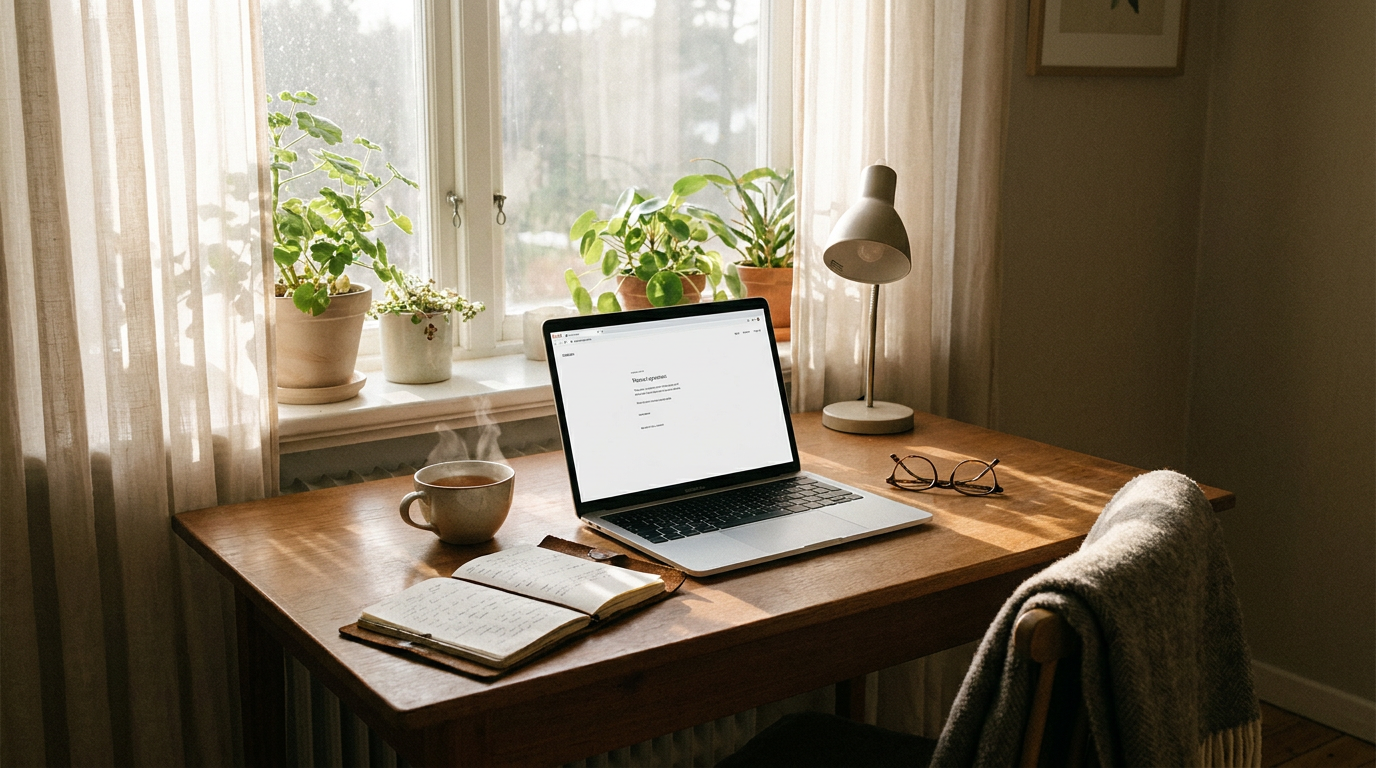
- Digital Homesteaders
- Advocates for the IndieWeb and digital gardens who believe users must own their domains and data to escape algorithmic control.
- Digital Wellness Advocates
- Psychologists and trend analysts focused on the mental health benefits of reintroducing friction and reducing performative screen time.
- Hybrid Pragmatists
- Everyday users who balance the 'loud web' for discovery with the 'cozy web' for genuine community, without fully unplugging.
What's not represented
- · Social media platform executives
- · Digital advertisers reliant on public feeds
Why this matters
The way we interact with the internet is fundamentally shifting from passive, anxiety-inducing consumption to intentional, human-scale connection. Understanding this shift offers a practical roadmap for anyone looking to reduce screen time, protect their mental health, and find genuine community online.
Key points
- Internet users are experiencing profound algorithmic fatigue, leading to a retreat from public, performative social media.
- The 'Cozy Web' offers private, human-scale digital spaces like group chats and Discord servers that prioritize trust over reach.
- The IndieWeb movement is reviving personal websites and 'digital gardens' to help users reclaim ownership of their data.
- A growing number of Gen Z users are adopting a 'two-phone lifestyle,' using basic flip phones to enforce boundaries and reduce screen time.
- Digital wellness tools are shifting away from strict app blockers toward empathetic 'friendly interruptions' that build self-awareness.
The era of the "loud internet" is quietly drawing to a close. For over a decade, digital culture was defined by algorithmic feeds, viral outrage, and the relentless pressure to perform for an invisible, infinite audience. But in 2026, a profound cultural exhaustion has set in. Users across demographics, led notably by Gen Z, are fundamentally renegotiating their relationship with connectivity. They are not logging off entirely; instead, they are migrating. The destination is a softer, slower, and significantly more private digital landscape that cultural analysts have dubbed the "Cozy Web."[1][7]
This migration represents the most significant architectural shift in internet culture since the rise of the smartphone. The public squares of the 2010s—platforms built on infinite scrolling and engagement metrics—are increasingly viewed as hostile environments. In response, internet users are retreating into gated, human-scale communities. They are building "digital gardens," reviving the "IndieWeb," and even altering their physical hardware to enforce boundaries. It is a movement defined by intentionality, friction, and a desperate craving for sincerity over performance.[2][3]
The data behind this retreat is striking. According to recent polling, nearly a third of all social media users now post less frequently on public feeds than they did just a year ago. Platforms that were once designed for personal updates and peer-to-peer connection have been overtaken by algorithmic brand content, artificial intelligence slop, and hyper-optimized influencer media. Faced with a web that feels more like a crowded shopping mall than a neighborhood, everyday users are quietly packing up their digital belongings and moving to the suburbs.[1][3]

To understand this shift, one must look at the psychological toll of the previous era. The "performative web" demanded constant self-surveillance and irony. Every thought had to be optimized for reach; every photograph had to fit an aesthetic. Over time, this hyper-visibility triggered a widespread mental health crisis, characterized by emotional burnout and social comparison. The awareness of this invisible cost has finally reached a tipping point, transforming digital wellness from a niche tech-industry buzzword into a mainstream lifestyle priority.[2][7]
The primary refuge from this exhaustion is the "Cozy Web." Originally coined by technology theorist Venkatesh Rao, the term describes the private, gatekeeper-bounded spaces of the internet that algorithms cannot easily penetrate. This includes group chats, Discord servers, private Slack channels, intimate Substack communities, and encrypted messaging apps. In these spaces, the currency is not viral reach or follower counts, but context, trust, and shared interests.[1][7]
The appeal of the Cozy Web lies in its inherent friction. Because these spaces are not indexed by search engines and do not feature algorithmic discovery feeds, finding them requires an actual invitation or a deliberate search. This high-gatekeeping environment filters out the performative outrage that fuels the broader internet. Inside the Cozy Web, users report feeling safe enough to be messy, unpolished, and sincere. It is an untracked, human-scale environment that mirrors the early days of the internet, before centralization turned every interaction into a data point.[1][3]

Alongside the retreat into private chats, there is a growing renaissance of personal digital ownership, heavily championed by the "IndieWeb" movement. For years, users rented their online identities from massive tech conglomerates, building their audiences on platforms they did not control. The IndieWeb proposes a radical alternative: own your domain, own your content, and control your identity. It is a push to make personal websites the primary hub of a person's digital life, relegating corporate social media to a mere distribution channel.[3][6]
The core principles of the IndieWeb are deeply pragmatic. They advocate for using open standards, building tools for humans rather than machines, and prioritizing longevity over fleeting engagement. By hosting their own writing, photography, and data, creators insulate themselves from the whims of algorithmic changes or platform bankruptcies. It is a digital homesteading movement, driven by the realization that building a life on rented digital land is inherently precarious.[3][6]
They advocate for using open standards, building tools for humans rather than machines, and prioritizing longevity over fleeting engagement.
Within this movement, the concept of the "Digital Garden" has flourished. Unlike a traditional blog, which presents thoughts in a strict chronological feed of polished, finalized posts, a digital garden is a non-linear, evolving web of interconnected ideas. It is a space where users can plant "seeds" of thought, cultivate them over time, and allow visitors to wander through their notes via hyperlinks.[7]
Digital gardens reject the tyranny of the perpetual draft. They embrace the idea that work is never truly finished, only abandoned or iterated upon. Visitors to a digital garden might find half-written essays, collections of bookmarks, or deeply researched manifestos, all coexisting in a state of public imperfection. This format actively discourages the rapid-fire consumption of the "feed" and instead invites slow, contemplative reading. It is the architectural embodiment of the "slow web."[7]
This desire for a slower, more intentional digital life is also manifesting in physical hardware choices. One of the most surprising trends of 2026 is the rising popularity of "friction-maxxing"—the intentional reintroduction of inconvenience into daily life. In a world where every service is optimized for frictionless delivery, people are discovering that a lack of friction often leads to a lack of presence.[1][2]
This has led to a measurable resurgence of the "dumb phone." Market research indicates that 28 percent of Gen Z consumers are now actively interested in acquiring a basic feature phone. Rather than abandoning smartphones entirely, many are adopting a "two-phone lifestyle." A smartphone is kept for work, navigation, and essential utilities, while a flip phone is used for weekends, evenings, and socializing. This physical separation of identities allows users to maintain contact with loved ones without the constant, looming temptation of the doomscroll.[5]

The two-phone lifestyle is a blunt-force boundary in an era where work and leisure have violently collided. By physically turning off the device that houses their email and social feeds, users are reclaiming their attention as a form of self-respect. It is a tangible rejection of the idea that one must be perpetually available to the demands of the digital economy.[2][5]
Software developers are also adapting to this cultural shift. The digital wellness tools of the early 2020s—which relied on strict app blockers and guilt-inducing screen-time reports—are being replaced by more empathetic, behavioral insight platforms. Rather than simply locking a user out of an app, the software of 2026 utilizes "friendly interruptions."[4]
These new tools might prompt a user with a gentle mood check-in after thirty minutes of scrolling, or automatically shift a phone's interface to a grayscale "calm mode" during evening hours. The goal is no longer to enforce a rigid digital diet, but to cultivate self-awareness. By inserting reflective pauses into the user experience, these platforms help individuals understand the emotional motivations behind their compulsive media consumption, addressing the root cause of digital fatigue rather than just the symptom.[4]
Perhaps the most profound philosophical shift in 2026 is the cultural rebranding of boredom. For over a decade, silence and stillness were viewed as problems to be solved by a screen. Constant stimulation was the baseline. Now, there is a quiet but powerful movement that views boredom not as a void to be filled, but as a necessary canvas for creativity and emotional regulation.[2][7]

People are taking intentional pauses—spending weekends without Wi-Fi, engaging in silent reading sessions, or simply sitting on a train without a podcast playing in their ears. This return to reality is deeply intertwined with a broader rejection of optimization culture. The realization has dawned that the human nervous system is not a machine to be endlessly hacked and upgraded, but a living system that requires time, safety, and quiet to recalibrate.[2][7]
The future of internet culture is not a total rejection of technology, but a hybrid model of integration. The "loud web" will likely remain a necessary tool for broad discovery, news gathering, and professional networking. But it is no longer the place where people actually live their digital lives.[2][7]
Instead, the internet of the late 2020s is fracturing into a constellation of cozy, curated spaces. By reclaiming ownership of their data, embracing the friction of analog tools, and retreating into digital gardens, users are slowly rebuilding a web that feels human again. It is a quiet revolution, fought not with viral hashtags, but with the simple, radical act of logging off the feed and tending to one's own corner of the internet.[3][7]
How we got here
Early 2000s
The internet is largely decentralized, defined by personal blogs, web rings, and niche forums.
2010s
Tech giants consolidate the web into massive, algorithmic social media feeds optimized for engagement.
2020–2023
Algorithmic fatigue peaks as users report widespread burnout from performative posting and doomscrolling.
2024–2025
A quiet migration begins as users shift their primary online interactions to private group chats and Discord servers.
2026
Digital wellness goes mainstream, marked by the rise of digital gardens, the two-phone lifestyle, and the intentional 'Cozy Web.'
Viewpoints in depth
Digital Homesteaders
Advocates who believe true digital wellness requires owning your own platform.
For the digital homesteader, the problem with the modern internet isn't just that it's distracting; it's that it's built on rented land. This camp, heavily populated by IndieWeb developers and digital gardeners, argues that corporate platforms will always eventually optimize for profit over user well-being. Their solution is structural: buy a domain, learn basic web hosting, and build a personal site that operates on open standards. By taking control of the infrastructure, they believe users can permanently insulate themselves from the psychological manipulation of algorithmic feeds.
Digital Wellness Advocates
Professionals focused on the psychological impact of connectivity and the necessity of friction.
Psychologists and digital wellness experts view the retreat to the Cozy Web through the lens of nervous system regulation. They argue that the human brain was not evolved to process the sheer volume of context-switching and social comparison demanded by the 'loud web.' This perspective champions the concept of 'friction-maxxing'—the idea that inconvenience is actually a feature, not a bug. By adopting dumb phones or utilizing software that gently interrupts scrolling, they believe individuals can break compulsive loops and reclaim their attention spans.
Hybrid Pragmatists
Everyday users seeking a realistic balance between staying informed and staying sane.
The hybrid pragmatist acknowledges that completely unplugging from the mainstream internet is often a privilege that ignores the realities of modern work and social life. Instead of burning their digital footprint, this camp advocates for strict compartmentalization. They use the 'loud web'—platforms like LinkedIn or X—strictly for professional networking or breaking news, but conduct their actual social lives in the Cozy Web. For them, digital wellness isn't about ideological purity; it's about treating public social media as a utility rather than a home.
What we don't know
- Whether the 'Cozy Web' will eventually be commercialized and infiltrated by AI agents or stealth marketing.
- If the 'two-phone lifestyle' is a lasting behavioral shift or a temporary trend among younger demographics.
- How the decline in public social media posting will impact independent creators who rely on algorithmic discovery for their livelihoods.
Key terms
- Cozy Web
- The private, un-indexed spaces of the internet, such as group chats and private servers, where users retreat to escape algorithmic public feeds.
- Digital Garden
- A personal website structured as an interconnected, evolving web of notes and ideas, rather than a chronological feed of finished articles.
- IndieWeb
- A movement advocating for individuals to own their own domains and host their own content, reducing reliance on centralized tech platforms.
- Friction-maxxing
- The intentional choice to use less convenient, often analog methods (like a dumb phone or a physical book) to build presence and reduce mindless consumption.
- Doomscrolling
- The act of spending excessive amounts of time reading large quantities of negative news or algorithmic content online.
Frequently asked
What exactly is the 'Cozy Web'?
The Cozy Web refers to private, gatekeeper-bounded digital spaces like group chats, Discord servers, and private Slack channels. These spaces are free from algorithmic feeds and search engine indexing, allowing for more sincere, human-scale interaction.
How does a digital garden differ from a blog?
A traditional blog displays finished posts in reverse-chronological order. A digital garden is a non-linear, interconnected collection of notes and essays that are constantly updated, edited, and expanded over time, embracing the idea that thoughts are always a work in progress.
Why are people buying flip phones again?
Many users are adopting a 'two-phone lifestyle' to enforce work-life boundaries. They use a smartphone for essential tasks and work, but switch to a basic flip phone during evenings and weekends to eliminate the temptation of doomscrolling.
What is the IndieWeb movement?
The IndieWeb is a community-driven movement that encourages people to publish content on their own personal websites first, rather than relying on corporate social media platforms. The goal is to retain ownership of personal data and digital identity.
Sources
Source coverage
7 outlets
3 viewpoints surfaced







[1]MeyocksHybrid Pragmatists
The cozy web and digital intentionality in 2026
Read on Meyocks →[2]Ayerhs MagazineDigital Wellness Advocates
Gen Z's Retreat to Reality: The Return of Boredom
Read on Ayerhs Magazine →[3]MediumDigital Homesteaders
The IndieWeb, the Boring Web, and the Return of the Neighborhood
Read on Medium →[4]Trend HunterDigital Wellness Advocates
Digital Wellness: Behavioral Insight Platforms
Read on Trend Hunter →[5]The IndependentDigital Wellness Advocates
Why Gen Z is embracing the two-phone lifestyle and dumb phones
Read on The Independent →[6]WikipediaDigital Homesteaders
IndieWeb
Read on Wikipedia →[7]Factlen Editorial TeamHybrid Pragmatists
Synthesis by Factlen editorial team
Read on Factlen Editorial Team →
Every angle. Every day.
Get culture stories with full source coverage and perspective breakdowns delivered to your inbox.