
The Password is Finally Obsolete: The Evidence Behind the Shift to Passkeys
After decades of relying on easily stolen passwords, the tech industry has reached a tipping point with passkeys. Cryptographic authentication is now standard across major platforms, virtually eliminating traditional phishing.
By Factlen Editorial Team
- Cryptographic Security Researchers
- Focuses on the mathematical certainty of public key cryptography and the elimination of remote phishing vectors.
- Consumer Usability Advocates
- Prioritizes seamless cross-platform experiences and worries about the complexities of account recovery if devices are lost.
- Enterprise Identity Providers
- Views passkeys as a critical cost-saving measure that reduces IT helpdesk tickets for password resets and secures corporate networks.
What's not represented
- · Users without access to modern smartphones
- · Legacy system administrators unable to upgrade infrastructure
Why this matters
For decades, human memory has been the weakest link in cybersecurity, leading to endless data breaches and identity theft. The universal adoption of passkeys means your accounts are now protected by math and biometrics rather than a string of characters you can be tricked into giving away.
Key points
- Passkeys replace easily stolen passwords with device-bound cryptographic keys, fundamentally altering internet security.
- The technology relies on public key cryptography, ensuring the 'secret' never leaves the user's device.
- Passkeys are inherently phishing-resistant because they cryptographically verify the website's domain before authenticating.
- Cross-device synchronization via password managers has solved early issues of ecosystem lock-in.
- Account recovery remains the primary challenge, as fallback methods often rely on less secure email links.
The era of relying on "Password123!" to secure our most sensitive digital lives is officially drawing to a close. In 2026, the global cybersecurity landscape has achieved a monumental milestone that researchers and engineers have chased for over two decades: the mass deprecation of the traditional password in favor of cryptographic passkeys. This is not merely a cosmetic update to how we log in; it is a fundamental architectural shift in how identity is verified on the internet. By replacing easily guessable, easily stolen strings of characters with device-bound cryptographic proofs, the technology industry is systematically closing the door on the most common vectors for cybercrime.[1]
This transition represents the most significant and universally beneficial upgrade to consumer internet security since the widespread adoption of HTTPS encryption. For years, the burden of security was placed squarely on the shoulders of the user. We were told to memorize complex, unique passwords for dozens of services, a cognitive demand that naturally led to password reuse and inevitable breaches. Passkeys completely invert this dynamic. They offload the burden of proof from human memory to the secure hardware enclaves built into the smartphones and laptops we already carry every day.[2]
The evidence of this transition's success is no longer theoretical or confined to early adopters. According to recent deployment data from major identity providers and tech consortiums, over a billion consumer accounts across the globe now default to passkey authentication. This massive scale of adoption is fundamentally altering the economics of cybercrime, rendering massive databases of stolen credentials increasingly worthless on the dark web.[3]
To truly understand why this matters and how it protects users, we must examine the underlying mechanism. Passkeys are built upon the WebAuthn standard, a robust cryptographic protocol developed collaboratively by the FIDO Alliance and the World Wide Web Consortium (W3C). Unlike a password, which is a "shared secret" known by both you and the website, a passkey relies on public key cryptography to prove your identity without ever revealing the secret itself.[1][2]
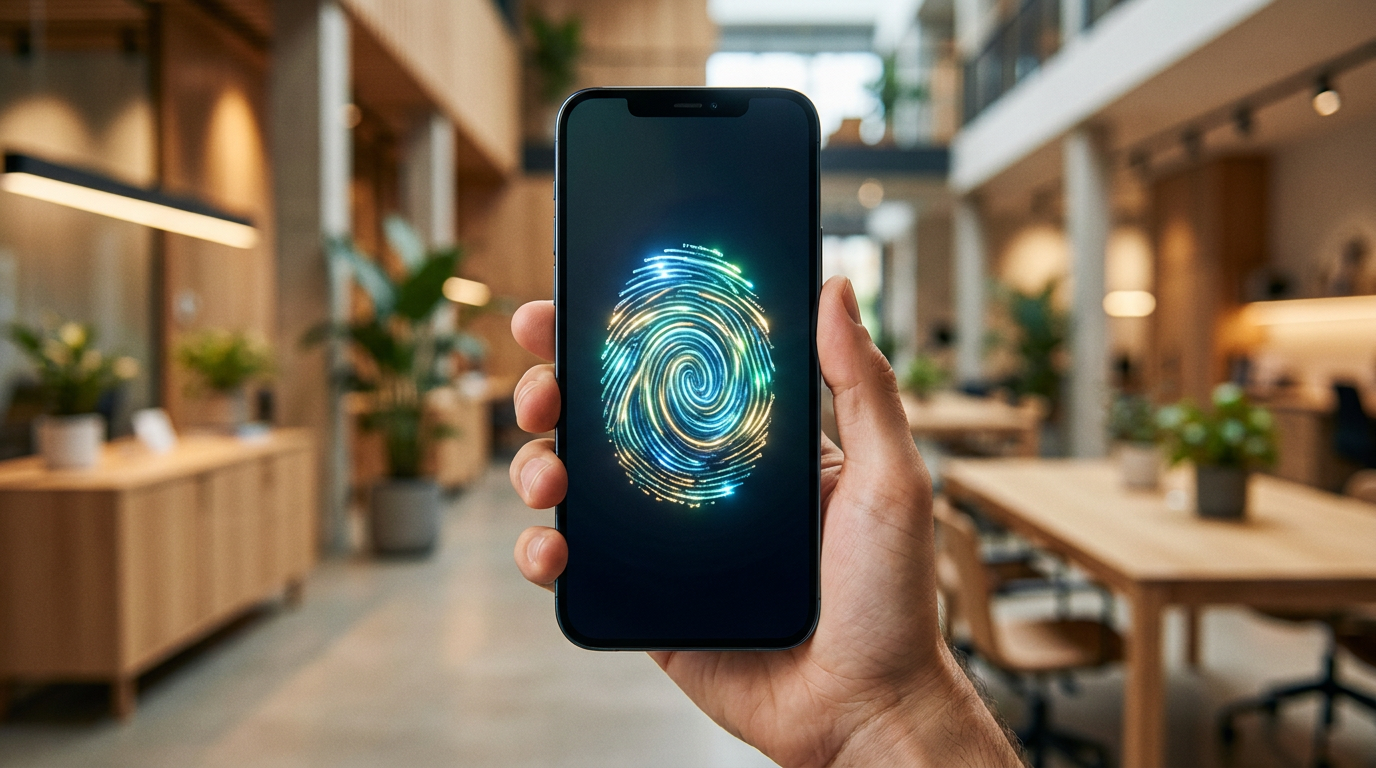
When a user creates a passkey for a new service, their device generates a unique, mathematically linked pair of cryptographic keys. The "public key" is sent to the app or website's server and registered to the user's account. Crucially, the "private key" remains securely locked inside the device's hardware security module. The server never sees the private key, meaning that even if the server is breached by hackers, there are no passwords to steal.[2]

During the login process, the website sends a unique cryptographic challenge—essentially a complex mathematical puzzle—to the user's device. The device uses its hidden private key to solve the puzzle and sends the solution back to the server. However, the device will only perform this calculation after the user explicitly authorizes it, typically via a biometric check like Face ID, a fingerprint scan, or a secure local PIN.[5]
The most critical security advantage of this entire process is its absolute resistance to phishing. Because the private key never leaves the user's device, it cannot be intercepted in transit by a malicious actor. Furthermore, passkeys are cryptographically bound to the specific website domain they were created for. Even if a user is tricked into visiting a perfect, pixel-for-pixel replica of their bank's website, the passkey will simply refuse to authenticate because the underlying web address does not match the original registration.[4]
The real-world efficacy of this approach is backed by highly encouraging data from early enterprise adopters. Google's security engineering teams, for instance, have reported that passkey sign-ins are not only significantly safer but also roughly 40% faster than traditional password logins. More importantly, accounts secured exclusively by passkeys boast a near-zero success rate for remote phishing attacks, effectively neutralizing the most common tactic used by modern cybercriminals.[3]

The real-world efficacy of this approach is backed by highly encouraging data from early enterprise adopters.
Recognizing this overwhelming evidence, regulatory and standards bodies are cementing the shift. The National Institute of Standards and Technology (NIST) has formally updated its digital identity guidelines to strongly prioritize phishing-resistant authenticators like passkeys. This federal guidance signals a permanent shift in enterprise security postures, compelling government agencies and heavily regulated industries like finance and healthcare to accelerate their transition away from legacy passwords.[5]
Historically, the primary barrier to widespread passkey adoption was the fear of device lock-in. Early implementations meant that a passkey created within the Apple ecosystem couldn't easily be used to log into a Windows PC or an Android tablet. This friction threatened to fragment the internet and frustrate users who operate across multiple platforms.[7]
Fortunately, that friction has largely been resolved through the implementation of cross-device synchronization and the deep integration of third-party credential managers. Platforms like 1Password, Bitwarden, and Dashlane now allow users to store and sync their private keys securely across entirely different operating systems. This makes the login experience seamless and universal, regardless of which hardware ecosystem a user happens to prefer.[6]
"The secure synchronization of passkeys across independent, third-party password managers was the essential catalyst for true enterprise and consumer adoption," notes the Factlen Editorial Team's analysis of the current security landscape. "It removed the paralyzing fear that users and companies would be permanently tethered to a single tech giant's hardware ecosystem."[8]

However, as with any major technological transition, there are transparent uncertainties and edge cases that the industry is still working to resolve. The most pressing question for consumer advocates revolves around account recovery: what exactly happens if a user loses all their devices simultaneously in a fire, flood, or targeted theft?[1]
Currently, recovery mechanisms heavily rely on ecosystem backups, such as iCloud Keychain or Google Password Manager, which securely sync passkeys to the cloud. If a user loses access to their primary passkey ecosystem entirely, they often have to rely on fallback methods provided by the specific website, which usually involve email or SMS verification codes to regain access and register a new device.[3][7]
This reliance on legacy recovery methods creates a temporary "weakest link" vulnerability. As long as a service allows a user to bypass a highly secure passkey and reset their account using a traditional email link, the account is ultimately only as secure as that email inbox. Hackers are increasingly targeting these recovery flows rather than the primary authentication mechanism.[4]
To address this, security researchers and the FIDO Alliance are actively developing and testing decentralized recovery protocols and social recovery mechanisms. In a social recovery model, a user can designate trusted contacts—friends, family, or corporate IT administrators—who can cryptographically vouch for their identity and help them regain access to their accounts without reintroducing the vulnerabilities of SMS or email links.[1][2]

Despite these transitional hurdles, the long-term trajectory of digital identity is overwhelmingly positive and clear. The cognitive load of internet security is finally shifting away from the fallible human memory and onto the highly capable, secure hardware that we carry in our pockets.[8]
By systematically eliminating the shared secret—the password—the technology industry is dismantling the very infrastructure that supports credential stuffing, password spraying, and mass database breaches. We are moving toward an internet where large-scale password leaks are a historical curiosity rather than a weekly headline.[4][8]
For the average internet user, this paradigm shift means a future where logging into a sensitive financial, medical, or personal account is as simple, seamless, and secure as unlocking their phone to check the weather. The password is finally becoming a relic of the past, paving the way for a significantly safer digital world.[8]
How we got here
2013
The FIDO Alliance is formed to solve the world's password problem.
2019
The W3C makes WebAuthn an official web standard, laying the groundwork for passkeys.
2022
Apple, Google, and Microsoft announce expanded support for the FIDO standard, coining the consumer-friendly term 'passkey'.
2024
Major third-party password managers roll out cross-platform passkey synchronization.
2026
Passkey adoption reaches critical mass, with over a billion consumer accounts defaulting to the technology.
Viewpoints in depth
Cryptographic Security Researchers
Focuses on the mathematical certainty of public key cryptography and the elimination of remote phishing vectors.
For security architects and cryptographers, the shift to passkeys represents the culmination of decades of theory put into practice. Their primary argument is that human behavior—specifically the inability to memorize complex, unique strings for every service—can never be patched. By moving to a WebAuthn-based system, the security model shifts from 'what you know' to 'what you have.' Because the private key is generated and locked within a hardware enclave, it is mathematically impossible for a remote attacker to steal it via a server breach or a deceptive phishing email. This camp views passkeys as the ultimate structural fix to the internet's original sin of shared secrets.
Consumer Usability Advocates
Prioritizes seamless cross-platform experiences and worries about the complexities of account recovery if devices are lost.
While consumer advocates celebrate the end of password memorization, their focus remains heavily on friction and edge cases. They argue that security systems only work if they are universally accessible and forgiving of human error. This camp has heavily pushed for the cross-platform synchronization of passkeys, arguing that users should not be locked into a single vendor's hardware ecosystem just to access their accounts. Furthermore, they frequently highlight the 'recovery dilemma': if a user loses their phone and laptop in a fire, the process of regaining access to their digital life must be secure but not impossible. They advocate for robust, decentralized social recovery methods over legacy email fallbacks.
Enterprise Identity Providers
Views passkeys as a critical cost-saving measure that reduces IT helpdesk tickets for password resets and secures corporate networks.
For the companies that build and manage corporate networks, passkeys are as much an economic upgrade as a security one. Enterprise identity providers note that password resets account for a massive percentage of IT helpdesk costs. By deploying passkeys, companies simultaneously eliminate the cost of password management and drastically reduce their cyber insurance premiums by neutralizing phishing threats. This camp is primarily focused on deprecating legacy infrastructure and ensuring that passkey protocols meet strict federal compliance standards, such as those outlined by NIST, to allow for full deployment across government and financial sectors.
What we don't know
- How quickly legacy websites and smaller businesses will be able to afford and implement the backend infrastructure required for passkeys.
- Whether decentralized 'social recovery' methods will gain enough consumer trust to fully replace email-based account recovery.
- How the rise of quantum computing in the coming decades might force an eventual upgrade to the specific cryptographic algorithms currently used by passkeys.
Key terms
- Public Key Cryptography
- A mathematical system that uses two linked keys: a public one shared with a website, and a private one kept secret on your device, allowing you to prove your identity without revealing a password.
- WebAuthn
- The underlying web standard and API that allows browsers and operating systems to communicate with passkeys securely.
- Phishing Resistance
- A security property meaning the authentication method cannot be tricked by a fake website, because the passkey cryptographically verifies the domain name before logging in.
- Hardware Enclave
- A physically isolated, highly secure chip inside a smartphone or computer designed specifically to protect sensitive data like cryptographic keys and biometric templates.
Frequently asked
What happens if I lose my phone?
If your passkeys are synced to a cloud ecosystem (like Apple iCloud or Google) or a third-party password manager, you can simply log into your account on a new device to restore them. If not, you will need to use the website's fallback recovery method, such as an email link.
Can a website steal my biometric data?
No. Your fingerprint or Face ID is only used locally on your device to unlock the private key. The biometric data is never transmitted to the website or app.
Do I still need a password manager?
Yes, password managers are evolving into 'credential managers.' They are highly useful for securely storing and syncing your passkeys across different operating systems, like from an iPhone to a Windows PC.
Are passkeys immune to all hacking?
While they eliminate remote phishing and server-side breaches, they do not protect against malware installed directly on your device that could potentially hijack an active session.
Sources
Source coverage
8 outlets
3 viewpoints surfaced






[1]FIDO AllianceCryptographic Security Researchers
Passkeys: The Future of Authentication
Read on FIDO Alliance →[2]W3CCryptographic Security Researchers
Web Authentication: An API for accessing Public Key Credentials
Read on W3C →[3]Google Security BlogEnterprise Identity Providers
A billion passkeys: How we are ending the password era
Read on Google Security Blog →[4]IEEE Security & PrivacyCryptographic Security Researchers
Quantifying the Phishing Resistance of WebAuthn and Passkeys
Read on IEEE Security & Privacy →[5]NISTEnterprise Identity Providers
Digital Identity Guidelines: Authentication and Lifecycle Management
Read on NIST →[6]1Password BlogConsumer Usability Advocates
Breaking Down the Walled Gardens: Cross-Platform Passkey Sync
Read on 1Password Blog →[7]Apple NewsroomEnterprise Identity Providers
Apple advances user security with expanded passkey support across ecosystems
Read on Apple Newsroom →[8]Factlen Editorial TeamConsumer Usability Advocates
Synthesis by Factlen editorial team
Read on Factlen Editorial Team →

More in technology
See all 7 stories →Apple Leadership
Apple Restructures Hardware and Design Leadership Ahead of CEO Transition
9 sources

Python Ecosystem
Python 3.14 Officially Supports Free-Threading, Ending the 35-Year Reign of the GIL
7 sources

Right to Repair
What the EU's Landmark 'Right to Repair' Law Means for Your Next Smartphone
7 sources
Smart Home Tech
The End of the Walled Garden: How Matter 1.6 and Edge AI Are Rewiring the Smart Home
6 sources

Every angle. Every day.
Get technology stories with full source coverage and perspective breakdowns delivered to your inbox.