
The Rise of Nutritional Psychiatry: How the Gut-Brain Axis is Reshaping Mental Health
Emerging research proves that the digestive tract and the brain are intimately connected, allowing dietary changes and specific probiotics to actively treat depression and anxiety.
By Factlen Editorial Team
- Nutritional Psychiatrists
- Argue that diet and microbiome modulation must be integrated into standard mental health care as a primary clinical intervention.
- Microbiome Researchers
- Focus on the molecular mechanisms of the gut-brain axis, emphasizing the need to map specific psychobiotic strains to neurological outcomes.
- Clinical Synthesis
- View dietary interventions as a highly empowering, low-risk adjunct therapy that gives patients daily agency over their neurochemistry.
What's not represented
- · Health Insurance Providers
- · Agricultural Policy Makers
Why this matters
For decades, mental health treatment relied almost exclusively on psychotherapy and pharmaceuticals. The discovery that the gut microbiome actively regulates brain chemistry empowers patients with a daily, accessible tool—their diet—to actively improve their mental resilience and cognitive health.
Key points
- The gut and brain communicate continuously through the microbiota-gut-brain axis, heavily influencing mood and cognition.
- Up to 90% of the body's serotonin is produced in the digestive tract by the enteric nervous system.
- The landmark SMILES trial proved that a modified Mediterranean diet can effectively treat clinical depression.
- Psychobiotics are specific bacterial strains that actively synthesize neurotransmitters and reduce neuroinflammation.
- Mindful eating engages the vagus nerve, fostering a physiological state that supports a healthy microbiome.
- Nutritional psychiatry is emerging as a powerful adjunct to traditional psychotherapy and medication.
For decades, modern medicine maintained a strict geographical border at the neck. Psychiatrists treated the brain, while gastroenterologists treated the digestive tract, with little professional crossover. Today, that boundary has entirely collapsed, giving rise to one of the most promising new fields in medicine: nutritional psychiatry.[6]
The catalyst for this shift is the "microbiota-gut-brain axis," a complex, bidirectional communication network linking the trillions of microorganisms in the human digestive tract directly to the central nervous system. Researchers have discovered that the gut and the brain converse constantly through neural, immune, and endocrine pathways, fundamentally shaping mood, cognition, and stress responses.[2][3]
The sheer scale of the gut's neurological influence is staggering. The enteric nervous system—often dubbed the "second brain"—produces an estimated 90% of the body's serotonin and 50% of its dopamine, the very neurotransmitters targeted by conventional antidepressant medications. When the gut microbiome is balanced, it acts as a steady factory for these mood-stabilizing chemicals.[5]
Conversely, a state of "dysbiosis"—an imbalance of gut bacteria often driven by Western diets high in ultra-processed foods and low in fiber—triggers systemic inflammation. This inflammation can cross the blood-brain barrier, a process increasingly recognized as a primary biological driver of depression and anxiety.[2][3]

For years, the link between food and mood was largely observational; people who ate poorly reported feeling worse. But in 2017, a landmark Australian study known as the SMILES trial transformed the field by proving causation. Led by Professor Felice Jacka, it was the first randomized controlled trial to test dietary improvement as an actual clinical treatment for major depressive episodes.[1]
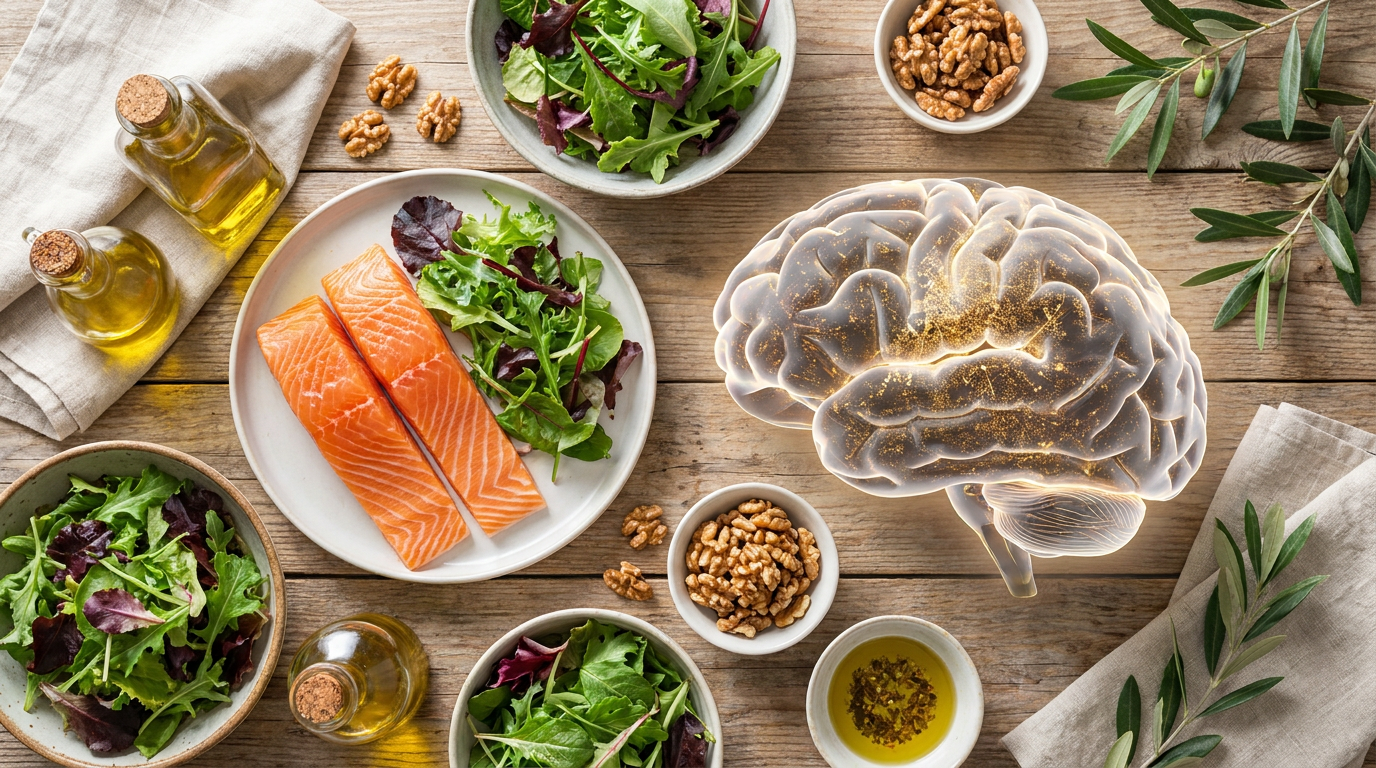
The SMILES trial recruited adults with moderate to severe depression and divided them into two groups. One group received standard social support, while the other underwent clinical dietary consulting to adopt a "ModiMed" diet—a modified Mediterranean protocol rich in whole grains, legumes, fresh produce, and olive oil.[1]
The SMILES trial recruited adults with moderate to severe depression and divided them into two groups.
The results stunned the psychiatric community. After 12 weeks, 32% of the participants in the dietary intervention group achieved full remission of their depression, compared to just 8% in the control group. The magnitude of the improvement rivaled the efficacy rates of standard pharmaceutical antidepressants, proving that the plate could be as potent as the pill.[1][6]

Building on this dietary foundation, researchers have isolated specific bacterial strains that actively confer mental health benefits, coining the term "psychobiotics." These specialized probiotics, primarily from the Lactobacillus and Bifidobacterium families, do more than just aid digestion; they act as microscopic neurochemical factories.[5]
Psychobiotics exert their influence through several distinct mechanisms. They synthesize neuroactive compounds, regulate the hypothalamic-pituitary-adrenal (HPA) axis to blunt the body's cortisol stress response, and produce short-chain fatty acids (SCFAs) like butyrate, which actively reduce neuroinflammation.[3]
A 2026 review in the Annual Review of Food Science and Technology confirmed that these microbial metabolites are essential for maintaining the integrity of the blood-brain barrier. By feeding the gut microbiome with prebiotic fibers and fermented foods, patients can effectively cultivate an internal ecosystem that defends against cognitive decline and mood disorders.[2]
The therapeutic potential extends beyond just what we eat, encompassing how we eat. Recent literature in Frontiers in Nutrition highlights that "mindful eating" directly engages the parasympathetic nervous system. By reducing the sympathetic "fight or flight" tone during meals, mindful eating stimulates the vagus nerve—the primary neural highway between the gut and brain—fostering a physiological environment where diverse, resilient microbiota can thrive.[4]

Despite these breakthroughs, experts caution against viewing nutritional psychiatry as a standalone cure-all. Severe psychiatric conditions still require comprehensive care, including psychotherapy and pharmacotherapy. Diet and psychobiotics are currently positioned as powerful, scalable adjunct treatments rather than outright replacements for conventional medicine.[3][6]
Furthermore, the science of personalized nutrition is still in its infancy. Because every individual's microbiome is as unique as a fingerprint, researchers are still working to map exactly which psychobiotic strains alleviate specific psychiatric symptoms in different populations.[2]
Nevertheless, the integration of dietitians into psychiatric care teams is rapidly becoming a new gold standard. By recognizing that mental health begins in the digestive tract, nutritional psychiatry offers a deeply empowering message: patients have the agency to actively shape their neurochemistry three times a day, simply by choosing what they put on their forks.[2][6]
How we got here
2013
The term 'psychobiotics' is first coined by researchers to describe live organisms that produce health benefits in patients suffering from psychiatric illness.
Jan 2017
The landmark SMILES trial is published in BMC Medicine, providing the first clinical evidence that dietary intervention can treat major depression.
2019
The World Health Organization reports that nearly 1 billion people globally are living with a mental disorder, accelerating the search for scalable adjunct treatments.
2022
Systematic reviews confirm that specific strains of Lactobacillus and Bifidobacterium can significantly reduce anxiety and depression scores in clinical trials.
2026
Major scientific journals publish comprehensive frameworks establishing the microbiota-gut-brain axis as a primary target for personalized psychiatric care.
Viewpoints in depth
Nutritional Psychiatrists
Argue that diet and microbiome modulation must be integrated into standard mental health care as a primary clinical intervention.
This camp points to landmark studies like the SMILES trial as definitive proof that food is a potent clinical intervention, not just a preventative measure. They argue that traditional psychiatry has historically ignored the metabolic and inflammatory roots of mental illness. By prescribing dietary changes—such as increasing fiber and fermented foods—practitioners can address the biological drivers of depression at their source, rather than merely managing symptoms with pharmaceuticals.
Microbiome Researchers
Focus on the molecular mechanisms of the gut-brain axis, emphasizing the need to map specific psychobiotic strains to neurological outcomes.
Scientists studying the microbiome emphasize the incredible complexity of the gut-brain axis. They focus on how microbial metabolites, particularly short-chain fatty acids, cross the blood-brain barrier to reduce neuroinflammation. While optimistic about the field's potential, they caution against oversimplified "food as medicine" claims, stressing that the scientific community must first map exactly how individual genetic differences and specific psychobiotic strains interact before personalized nutritional psychiatry can be fully realized.
Clinical Synthesis
View dietary interventions as a highly empowering, low-risk adjunct therapy that gives patients daily agency over their neurochemistry.
From a holistic clinical perspective, nutritional psychiatry represents a paradigm shift in patient empowerment. While acknowledging that diet cannot replace pharmacological interventions for severe, acute psychiatric crises, this viewpoint champions the daily agency food provides. By teaching patients how to feed their microbiome, clinicians offer a low-risk, highly accessible tool that builds long-term mental resilience and improves overall metabolic health simultaneously.
What we don't know
- Which specific psychobiotic strains are most effective for individual psychiatric symptoms, as personalized microbiome mapping is still evolving.
- The exact long-term durability of dietary interventions on major depressive disorder without ongoing clinical nutritional support.
- How genetic differences in human metabolism interact with the gut microbiome to alter the efficacy of nutritional psychiatry interventions.
Key terms
- Microbiota-Gut-Brain Axis
- The two-way biochemical signaling pathway between the gastrointestinal tract and the central nervous system.
- Psychobiotics
- Live bacteria (probiotics) that, when ingested in adequate amounts, confer mental health benefits by interacting with the gut microbiome.
- Short-Chain Fatty Acids (SCFAs)
- Beneficial compounds, such as butyrate, produced when gut bacteria ferment dietary fiber, known to reduce neuroinflammation.
- Vagus Nerve
- The primary neural highway connecting the brain to the digestive system, responsible for transmitting signals in both directions.
- Dysbiosis
- An imbalance in the gut microbial community, often caused by poor diet or stress, which can trigger systemic inflammation.
Frequently asked
What is the gut-brain axis?
It is a bidirectional communication network linking the central nervous system to the trillions of microbes in the digestive tract via neural, immune, and endocrine pathways.
What are psychobiotics?
Psychobiotics are specific strains of beneficial bacteria (probiotics), such as certain Lactobacillus and Bifidobacterium, that actively produce mental health benefits by synthesizing neurotransmitters and lowering inflammation.
Can changing my diet cure depression?
While diet is not a standalone cure for severe depression, clinical trials show that adopting a whole-food, Mediterranean-style diet can significantly reduce symptoms and even lead to remission when used alongside traditional treatments.
What was the SMILES trial?
Published in 2017, the SMILES trial was the first randomized controlled trial to prove that dietary improvement could be used as an effective clinical treatment for major depressive episodes.
Sources
Source coverage
6 outlets
3 viewpoints surfaced






[1]BMC MedicineNutritional Psychiatrists
A randomised controlled trial of dietary improvement for adults with major depression (the 'SMILES' trial)
Read on BMC Medicine →[2]Annual Review of Food Science and TechnologyMicrobiome Researchers
From Fork to Feelings: How Foods Shape Mental Health via the Microbiota–Gut–Brain Axis
Read on Annual Review of Food Science and Technology →[3]NutrientsNutritional Psychiatrists
Diet-Microbiome-Brain Axis and Mental Health: Biological Mechanisms and Nutritional Implications
Read on Nutrients →[4]Frontiers in NutritionMicrobiome Researchers
Mindful eating as the next therapeutic frontier in nutritional psychiatry
Read on Frontiers in Nutrition →[5]National Institutes of HealthMicrobiome Researchers
Psychobiotics: Mechanisms of Action, Evaluation Methods and Effectiveness in Applications with Food Products
Read on National Institutes of Health →[6]Factlen Editorial TeamClinical Synthesis
Synthesis by Factlen editorial team
Read on Factlen Editorial Team →
More in health
See all 6 stories →Nervous System
The Science of Heart Rate Variability: Why a 'Messy' Heartbeat is the Ultimate Metric for Longevity
0 sources

Psychiatric Research
Exercise as Psychiatric Medicine: The Clinical Case for Movement Over Medication in Mild Depression
0 sources

Precision Nutrition
Precision Nutrition: How AI and Microbiome Science Are Ending the 'One-Size-Fits-All' Diet
0 sources
Bilingual Brain
The Bilingual Brain Uses a Single 'Grammatical Engine' for All Languages, Study Finds
0 sources

Every angle. Every day.
Get health stories with full source coverage and perspective breakdowns delivered to your inbox.