
The Rise of 'Healing Anime': Why Millions Are Watching Shows Where Nothing Happens
As global audiences face mounting real-world stress, a Japanese anime subgenre known as 'iyashikei'—designed entirely to soothe and heal—is experiencing a massive streaming boom.
By Factlen Editorial Team
- Cultural Historians
- Focus on the genre's origins as a response to 1990s Japanese societal trauma.
- Psychological Researchers
- Focus on the mental health and nervous-system benefits of low-conflict media.
- Industry Analysts
- Focus on the commercial growth and streaming metrics of the genre.
What's not represented
- · Traditional screenwriters who argue that narrative conflict is essential for long-term audience engagement.
- · Viewers who find the slow pacing of iyashikei alienating or boring rather than relaxing.
Why this matters
Understanding the 'iyashikei' trend reveals a profound shift in how we consume media: rather than seeking escapism through high-stakes adrenaline, a growing segment of the population is using television as a form of active meditation to regulate their nervous systems.
Key points
- "Iyashikei" (healing) anime is a subgenre designed entirely to soothe viewers by removing traditional plot conflict.
- The genre originated in Japan in the mid-1990s as a cultural coping mechanism following severe economic and societal trauma.
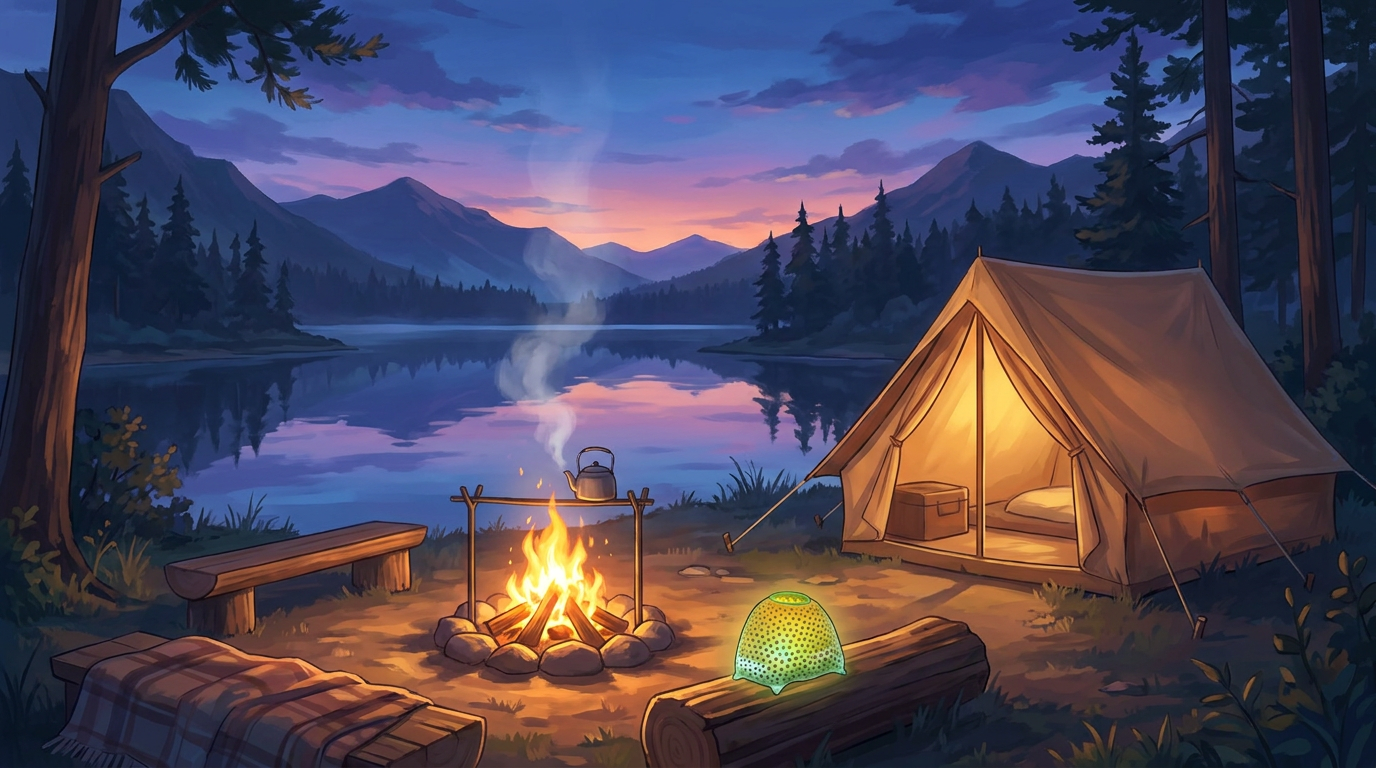
- Shows focus on mundane, everyday joys like cooking, camping, or observing nature, paired with ambient sound design.
- Psychologists note that the lack of dramatic stakes allows the viewer's nervous system to relax, acting as a form of active meditation.
- Global viewership for healing anime surged by 20% in 2025 as international audiences sought relief from modern burnout.
In the traditional Western storytelling playbook, conflict is king. Screenwriting gurus have long preached that without a villain, a ticking clock, or a life-altering crisis, a narrative simply cannot move forward. Yet, one of the fastest-growing genres in global entertainment actively defies this rule, offering audiences hours of television where absolutely nothing of consequence happens.[1][7]
Welcome to the world of "iyashikei"—a Japanese term that translates to "healing type." It is a subgenre of anime and manga designed with a singular, unapologetic purpose: to soothe the viewer's weary soul.[5][6]
In an iyashikei series, the stakes are deliberately microscopic. A typical episode might revolve around high school girls figuring out how to pitch a tent in the snow, a young woman learning to row a gondola, or a socially anxious writer adopting a stray cat.[1][6]
There are no world-ending threats, no screaming matches, and no dramatic betrayals. Instead, the screen is filled with lush, painterly backgrounds, ambient sound design, and characters who are simply trying to enjoy a quiet afternoon.[2][6]

While this might sound like a recipe for boredom, the global streaming numbers tell a different story. In 2025, viewership for slice-of-life and healing anime surged by 20% internationally, providing a lucrative counter-weight to the industry's dominant dark fantasy epics.[3]
To understand why millions of people are tuning in to watch animated characters drink tea, one has to look back at the genre's origins. The "iyashi" (healing) boom did not emerge from a place of peace, but from profound national trauma.[1][5]
In 1995, Japan was rocked by a devastating sequence of events: the Great Hanshin earthquake leveled parts of Kobe, and a domestic terror cult released sarin gas in the Tokyo subway system. These tragedies coincided with the bursting of Japan's economic bubble, plunging the country into what became known as the "Lost Decade."[1][5]
These tragedies coincided with the bursting of Japan's economic bubble, plunging the country into what became known as the "Lost Decade."
Facing a sudden collapse of both physical safety and economic certainty, the Japanese public was overwhelmed by anxiety. In response, creators began producing media that Paul Roquet, an associate professor of Japan Studies at MIT, famously likened to "ambient" art—stories that provided the emotional context for calm.[1][5]
Fast forward to the 2020s, and the rest of the world has caught up to that specific brand of exhaustion. Following a global pandemic, relentless political polarization, and the "always-on" pressure of modern work culture, international audiences began seeking out the same digital refuge.[1][6]

Psychologists and media researchers have started to document the tangible benefits of this consumption habit. A 2026 academic review highlighted that healing anime can act as an auxiliary tool for psychological development, helping young adults relieve stress and regulate their emotions.[4]
The mechanism is akin to "active meditation." Because the viewer's brain does not have to brace for a sudden plot twist or a character's death, the nervous system can actually power down. The slow pacing and focus on mundane joys—like the crackle of a campfire or the sound of rain on a windowpane—lower the viewer's heart rate.[4][6]
Furthermore, the absence of external conflict creates space for internal reflection. Shows like *March Comes in Like a Lion* or *My Roommate is a Cat* often deal with heavy themes like grief, loneliness, and depression, but they do so within a framework of absolute warmth and safety.[2]

By wrapping difficult emotions in "fuzzy socks," as some cultural critics describe it, iyashikei allows viewers to process their own real-world struggles without feeling overwhelmed. It proves that healing is rarely a dramatic turning point, but rather an accumulation of small, unglamorous moments.[1][2]
As the anime industry continues to expand into a projected $30 billion global market, the healing genre is cementing its place alongside the blockbuster action franchises.[3]
How we got here
1991
Japan's economic bubble bursts, beginning the 'Lost Decade' of financial stagnation and societal anxiety.
1995
The Great Hanshin earthquake and Tokyo subway sarin attack deeply traumatize the Japanese public, sparking the 'iyashi' (healing) cultural boom.
Late 1990s
Early foundational iyashikei manga, such as 'Yokohama Kaidashi Kikou', begin publication, offering peaceful, low-stakes narratives.
2018
The anime 'Laid-Back Camp' premieres, becoming a massive global hit and introducing a new generation to the healing genre.
2020
The global COVID-19 pandemic drives millions of international viewers toward comforting, low-stress anime to cope with real-world anxiety.
2025
Industry reports show a 20% surge in global streams for slice-of-life and healing anime, cementing its status as a major market force.
Viewpoints in depth
Cultural Historians
Scholars who trace the genre's roots to Japan's 1990s societal trauma.
Historians and sociologists view iyashikei not just as an aesthetic choice, but as a direct cultural coping mechanism. They point to 1995—the year of the Kobe earthquake and the Tokyo subway sarin attack—as the catalyst for the 'iyashi' (healing) boom. When the promise of endless economic growth collapsed during Japan's 'Lost Decade,' the public rejected high-stress narratives in favor of media that offered stability, safety, and a return to simple, controllable environments.
Psychological Researchers
Academics studying the mental health benefits of low-conflict media.
Media psychologists argue that healing anime functions as a form of emotional regulation. Because the narrative structure removes the threat of sudden tragedy or intense conflict, the viewer's nervous system does not enter a state of hyper-arousal. Researchers note that this 'active meditation' allows audiences—particularly young adults facing burnout—to safely process their own anxieties and experience a parasympathetic 'rest and digest' response while watching.
Industry Analysts
Market experts tracking the commercial viability of the genre.
From a business perspective, analysts see the 20% surge in slice-of-life streaming as a lucrative counter-programming strategy. While dark fantasy and action anime drive massive merchandise sales and social media hype, they are expensive to produce and can cause viewer fatigue. Healing anime provides streaming platforms with highly re-watchable, evergreen content that retains subscribers who are looking for daily comfort viewing rather than weekly adrenaline spikes.
What we don't know
- Whether the current boom in healing anime will sustain its momentum if global economic and political anxieties begin to recede.
- How the integration of AI in anime production might affect the highly specific, human-crafted 'warmth' that defines the iyashikei aesthetic.
Key terms
- Iyashikei
- A Japanese term meaning 'healing type,' used to describe media created specifically to soothe and relax the audience.
- Slice-of-Life
- A broad narrative genre that depicts the everyday, mundane experiences of characters without relying on heavy plot or dramatic conflict.
- Ambient Media
- A term coined by scholars to describe art and entertainment that functions primarily to create a specific atmosphere or mood, rather than to tell a traditional story.
- The Lost Decade
- A period of severe economic stagnation in Japan that began in the 1990s following the collapse of the country's asset price bubble.
Frequently asked
What does 'iyashikei' mean?
Iyashikei is a Japanese term that translates to 'healing type.' It refers to a subgenre of anime and manga designed to have a soothing, therapeutic effect on the audience.
Does nothing really happen in these shows?
While there is no major conflict or life-threatening danger, the shows focus on the micro-events of daily life—like cooking a meal, taking a walk, or having a quiet conversation with a friend.
Why did this genre start?
The genre emerged in Japan during the mid-1990s as a cultural response to the trauma of the Great Hanshin earthquake, domestic terror attacks, and a severe economic recession.
What are some popular examples of healing anime?
Well-known titles include 'Laid-Back Camp' (Yuru Camp), 'Aria', 'Natsume's Book of Friends', and 'My Roommate is a Cat'.
Sources
Source coverage
7 outlets
3 viewpoints surfaced







[1]Tokyo WeekenderCultural Historians
The Healing Power of Iyashikei Anime
Read on Tokyo Weekender →[2]CBRPsychological Researchers
How Cozy Anime Offer Hidden Depths
Read on CBR →[3]MediumIndustry Analysts
Japanese Animation Trends in 2025: A Fusion of Innovation and Tradition
Read on Medium →[4]University of MalayaPsychological Researchers
The Psychological Impact of Healing Anime on Youth
Read on University of Malaya →[5]WikipediaCultural Historians
Iyashikei
Read on Wikipedia →[6]Tabi BiyoriPsychological Researchers
What is Iyashikei? The Anti-Stress Genre
Read on Tabi Biyori →[7]Factlen Editorial TeamIndustry Analysts
Synthesis by Factlen editorial team
Read on Factlen Editorial Team →

Every angle. Every day.
Get entertainment stories with full source coverage and perspective breakdowns delivered to your inbox.