
The End of Airplane Mode: How Free, High-Speed Wi-Fi Became Standard in 2026
After years of sluggish connections and exorbitant fees, major U.S. airlines have officially made high-speed inflight internet a free, standard amenity. Powered by advanced satellite networks, the massive 2026 rollout is transforming the passenger experience.

The era of paying $20 for sluggish, intermittent internet at 35,000 feet is officially drawing to a close. In 2026, the U.S. airline industry crossed a long-awaited threshold: free, high-speed Wi-Fi has transitioned from a premium perk to a standard amenity across the major carriers.
The final domino fell in January 2026, when American Airlines launched complimentary high-speed internet across its domestic narrowbody fleet. The move, sponsored by AT&T, instantly brought free connectivity to millions of passengers and signaled the end of the industry's "Wi-Fi wars." With Delta, United, and Southwest already deep into their own rollouts, the baseline expectation for air travel has fundamentally shifted.
This transformation wasn't just a change in corporate generosity; it required a massive leap in aerospace telecommunications. For years, airlines relied on legacy Ku-band satellite dishes that provided a meager 3 Mbps of bandwidth shared across an entire aircraft. The resulting experience was notoriously slow and expensive, designed to discourage heavy use so the fragile networks wouldn't collapse.[2]
The breakthrough came with the deployment of high-throughput Ka-band satellites from providers like Viasat, and more recently, Low Earth Orbit (LEO) constellations like SpaceX's Starlink. These modern networks beam fiber-like speeds directly to aircraft traveling at 500 miles per hour, offering enough bandwidth for hundreds of passengers to stream video simultaneously without buffering.[3]
Delta Air Lines pioneered the current wave, announcing its ambitious free Wi-Fi initiative in early 2023. By 2026, the Atlanta-based carrier had equipped more than 1,000 aircraft—over 75% of its mainline and regional fleets—with its Viasat-powered Delta Sync platform. Delta expects to finish outfitting its entire global fleet, including complex long-haul widebodies, by the end of the year.[1]
American Airlines' 2026 rollout was a rapid catch-up maneuver. After quietly beta-testing the service in late 2025, American activated free access on over 800 narrowbody planes. While American's long-haul international flights still require payment for now, the domestic upgrade covers roughly 90% of the airline's total passenger volume.
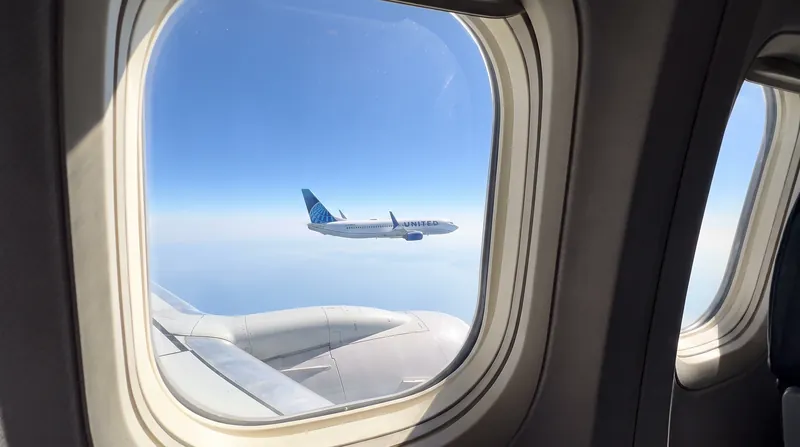
United Airlines, meanwhile, has taken a distinctly different technological gamble. Rather than upgrading its existing Viasat and Panasonic systems, United signed a landmark deal to retrofit its entire fleet with SpaceX's Starlink. The LEO technology promises unprecedented low latency, making it possible to play competitive online games or take seamless Zoom calls in the sky.[3]
United's Starlink rollout is moving aggressively. As of early 2026, the airline had completed installations on over 300 regional jets, bringing free Wi-Fi to a quarter of its daily departures. United plans to equip 500 additional mainline aircraft by the end of 2026, targeting full fleet completion by late 2027.
However, United's transition has created a temporary two-tier system. Passengers on older, non-Starlink planes must still pay for internet. In April 2026, United CEO Scott Kirby explicitly ruled out making the legacy Wi-Fi free in the interim, explaining that the older systems simply lack the bandwidth. "You make it unusable when you make it free," Kirby noted, emphasizing that the airline would rather wait for Starlink than offer a degraded free experience.[2]
Across all these airlines, the word "free" comes with one universal catch: passengers must be members of the carrier's loyalty program. Whether it's Delta SkyMiles, American AAdvantage, or United MileagePlus, the airlines are using Wi-Fi as a powerful acquisition tool. Joining is free, but it allows the airlines to capture valuable customer data and drive direct bookings in the future.[1]
The shift is also rewriting the landscape of corporate telecom sponsorships. For years, T-Mobile offered free inflight Wi-Fi as a perk for its cellular subscribers on United and American. But as airlines build their own captive portals tied to loyalty accounts, those third-party carrier partnerships are winding down, with T-Mobile's United partnership officially ending in April 2026.
While domestic skies are now largely connected, international long-haul flights remain the final frontier. Providing uninterrupted coverage over the vast stretches of the South Pacific or polar regions requires complex satellite handoffs. Delta and Air Canada are among the carriers actively working to eliminate these oceanic "dead zones" by late 2026.
For the average traveler, the psychological impact of this technological leap is profound. The airplane cabin is no longer a forced digital blackout zone. Whether a passenger needs to finish a crucial presentation, stream a live sports game, or simply text family members, the 2026 Wi-Fi rollout has transformed flight time from a disconnected burden into an extension of the modern living room.[1]
Key points
- American Airlines launched free Wi-Fi for AAdvantage members on its narrowbody fleet in January 2026.
- Delta Air Lines has equipped over 1,000 aircraft with free internet and targets global completion by late 2026.
- United Airlines is retrofitting its fleet with SpaceX's Starlink, with over 300 regional jets already completed.
- Passengers must join the airlines' free frequent flyer programs to access the complimentary internet.
What we don’t know
- How well the satellite networks will handle the bandwidth strain when 100% of passengers on every flight attempt to stream video simultaneously.
- Exactly when United Airlines will finish its Starlink rollout for its complex widebody international fleet.
- Whether international carriers will universally adopt the free Wi-Fi model pioneered by U.S. airlines.
How we got here
Early 2023
Delta Air Lines officially launches its fast, free Wi-Fi initiative for SkyMiles members.
October 2025
Southwest Airlines makes its inflight Wi-Fi complimentary for Rapid Rewards members.
January 2026
American Airlines activates free high-speed internet across its domestic narrowbody fleet.
February 2026
United Airlines surpasses 300 regional jets equipped with free Starlink Wi-Fi.
Late 2026
Delta expects to complete the rollout of free Wi-Fi across its entire global fleet.
- Airlines & Executives
- View free Wi-Fi as a crucial competitive advantage and a powerful engine for customer acquisition.
- Passengers & Consumer Advocates
- Celebrate the end of exorbitant fees and the ability to reclaim lost productivity or stream entertainment during flights.
- Satellite & Tech Providers
- See the airline rollout as a massive validation of next-generation satellite technology and a booming infrastructure market.
Perspectives this story doesn't cover
- Flight Attendants
- Corporate Travel Managers
Sources
Source coverage
3 outlets
3 viewpoints surfaced



- [1]Delta Air LinesAirlines & Executives
Delta Sync Wi-Fi presented by T-Mobile provides fast, free connectivity
Read on Delta Air Lines → - [2]Paddle Your Own KanooAirlines & Executives
United Airlines CEO Says Passengers Will Have to be Patient As He Rules Out Free Wi-Fi On Non-Starlink Planes
Read on Paddle Your Own Kanoo → - [3]View From The WingPassengers & Consumer Advocates
United Quietly Expanded Free Inflight Wi-Fi Beyond Starlink Aircraft
Read on View From The Wing →
More in Travel
See all →Aviation Safety
The 15-Minute Limit: How Sodium Chlorate Candles Sustain Passengers During Emergency Aircraft Descents
5 sources
Passenger Rights
How EU, US, and Canadian Laws Dictate Compensation for Denied Boarding and Flight Delays
7 sources
Pilot Fatigue Rules
The 8-Hour Flight Time and 14-Hour Duty Limit: How FAA Part 117 Actually Regulates Commercial Pilot Fatigue and Rest
6 sources
Airspace Management
The 5-Nautical-Mile, 1,000-Foot Rule: How Air Traffic Control Actually Maintains Aircraft Separation
7 sources
Comments
Every angle. Every day.
Get Travel stories with full source coverage and perspective breakdowns, free every day.