
The Rise of Direct Admissions: How Colleges Are Accepting Students Before They Even Apply
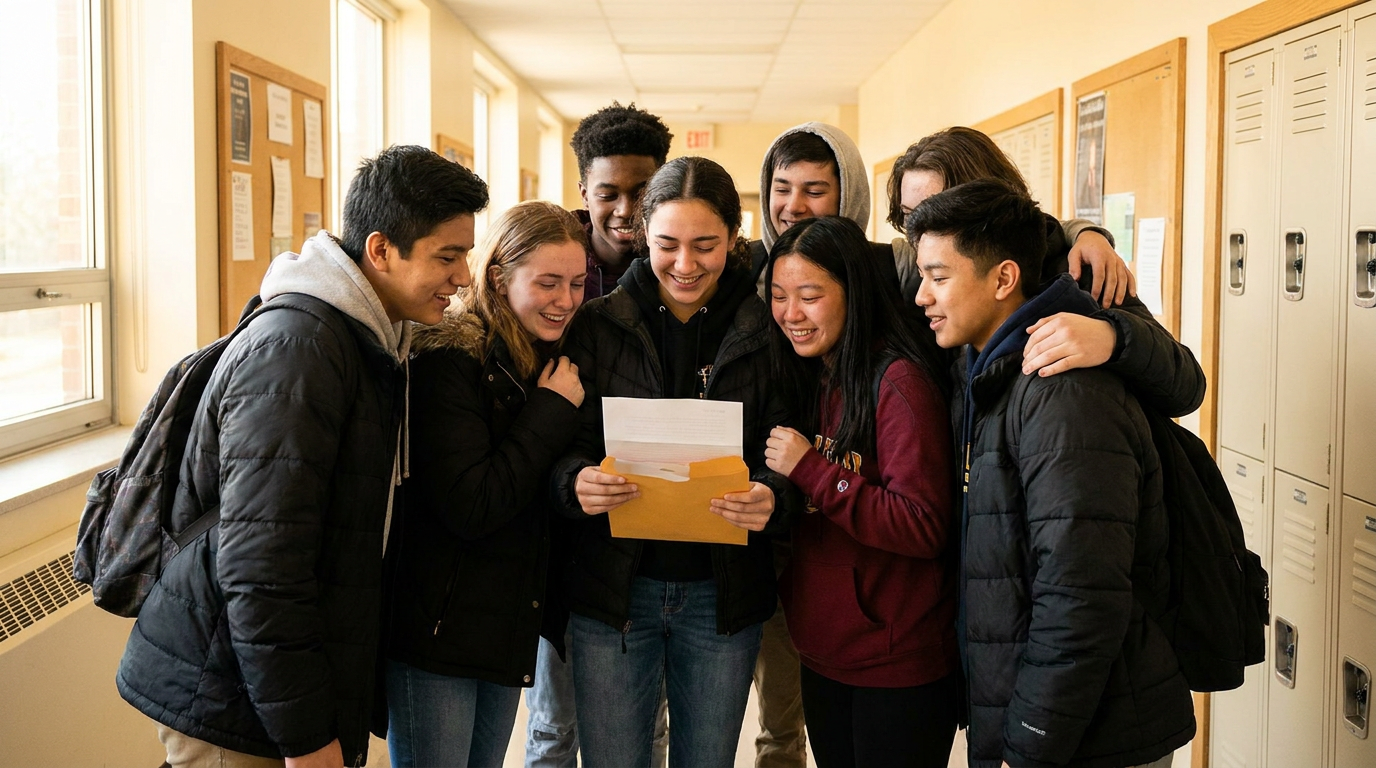
A rapidly growing trend in higher education is flipping the traditional application process by proactively offering high school seniors guaranteed college spots. By eliminating fees and essays, the model aims to reduce student anxiety and expand access for underrepresented groups.
By Factlen Editorial Team
- State Policymakers
- State leaders view direct admissions as a critical tool for workforce development and retaining local talent.
- First-Generation Advocates
- Equity advocates praise the model for dismantling systemic barriers that disproportionately affect low-income students.
- University Enrollment Directors
- College administrators see proactive admissions as a vital strategy to stabilize enrollment amid shifting demographics.
What's not represented
- · High School Guidance Counselors
- · Students who did not receive offers
Why this matters
By eliminating application fees, essays, and the fear of rejection, direct admissions is dismantling the traditional barriers to higher education. This shift not only reduces immense stress for high school seniors but also opens doors for hundreds of thousands of capable students who might otherwise never apply to college.
Key points
- Direct admissions programs proactively offer college spots to high school students based on existing academic data.
- The Common Application expanded its direct admissions program to 213 colleges for the 2025-2026 cycle, reaching over 800,000 students.
- State-run initiatives in Idaho, Minnesota, and Georgia have successfully boosted in-state enrollment and reduced application barriers.
- Offers are non-binding and typically waive application fees, essays, and recommendation letters.
- The model effectively combats 'undermatching' by building student confidence and simplifying the enrollment process.
The traditional college application process is a gauntlet of stress, fees, and uncertainty. For decades, high school seniors have spent their fall semesters writing essays, requesting recommendation letters, and paying application fees, all while waiting months to find out if they are deemed "college material." But a rapidly growing model in higher education is flipping the script, replacing the anxiety of rejection with the relief of guaranteed acceptance.[7]
Enter "direct admissions"—a system where colleges proactively offer high school students a guaranteed spot before they even submit an application. Instead of the student initiating the process and hoping for the best, universities reach out first, effectively telling the student that their academic record has already earned them a seat on campus.[6]
The mechanism behind direct admissions relies on data that states and educational platforms already possess. Using existing academic metrics—such as a student's grade point average (GPA), standardized test scores, and state residency—algorithms match qualified students with participating universities. This allows institutions to identify candidates who meet their baseline criteria without requiring the student to jump through administrative hoops.[4][6]

When a match is made, the student receives a formal notification of admission. These proactive offers are entirely non-binding, meaning the student is under no obligation to accept and can still explore other options. Furthermore, the offers typically come with significant perks: waived application fees, bypassed essay requirements, and no need for letters of recommendation. The student simply has to claim their spot.[3][6]
The scale of this movement has exploded for the 2025–2026 academic year. The Common Application, the ubiquitous portal used by millions of students to apply to college, has massively expanded its direct admissions program. For the current cycle, 213 member colleges across 45 states are participating in the initiative, signaling a major shift in how universities approach enrollment.[3]
Through the Common App platform alone, more than 800,000 first-generation and low- to middle-income students received proactive admission offers this year. The platform uses self-reported data to identify students who might otherwise opt out of the college process due to financial concerns or a lack of guidance, placing acceptance letters directly in their digital dashboards.[1][3]

Through the Common App platform alone, more than 800,000 first-generation and low- to middle-income students received proactive admission offers this year.
State governments are also driving the trend at a systemic level. Idaho pioneered the statewide direct admissions model in 2015, and the results were striking. Following the program's launch, Idaho saw an 88 percent increase in college applications and a 4 to 8 percent bump in first-time undergraduate enrollment across its campuses, proving that proactive outreach works.[4]
Following Idaho's success, other states have launched massive initiatives to keep their high school graduates in-state. Minnesota's "Direct Admissions Minnesota" program, now in its fourth year, reaches over 40,000 eligible seniors across more than 250 high schools. The state's core philosophy is simple: every student should know they are college material before they even ask the question.[5]
Georgia has implemented one of the largest state-run programs in the country. Dubbed "GEORGIA MATCH," the initiative recently mailed letters to 120,000 high school seniors. Based on high school grades already collected for the state's HOPE Scholarship, students were offered guaranteed spots at technical colleges and up to 23 public universities, dramatically simplifying the path to higher education.[2]

The evidence suggests that the direct admissions model is highly effective at reducing "undermatching"—a phenomenon where capable students fail to apply to college due to imposter syndrome, complex administrative hurdles, or a lack of social capital. By removing the psychological barrier of the "Will I get in?" question, the system builds immediate confidence and momentum.[4]
The data supports this behavioral shift. According to the Common App, 25 percent of students who received a direct admission offer ended up applying to at least one institution they had not previously considered. For universities facing a looming demographic cliff and declining overall enrollments, the program serves as a powerful tool to diversify their student bodies and fill incoming classes.[1][3]

While highly selective institutions—such as the Ivy League, the Georgia Institute of Technology, and the University of Georgia—still rely on traditional holistic review and do not participate in these programs, the vast majority of colleges are embracing the direct model. For these schools, the focus has shifted from gatekeeping to proactive recruitment.[2]
Ultimately, the rise of direct admissions represents a fundamental shift in the philosophy of higher education access. By dismantling the complex, expensive, and anxiety-inducing barriers of the traditional application process, states and universities are sending a clear, empowering message to hundreds of thousands of students: you belong here.[3][7]
How we got here
2015
Idaho becomes the first state to launch a statewide direct admissions program, resulting in an immediate enrollment boost.
2021
The Common Application pilots its first direct admissions initiative, offering spots to 3,300 students at historically Black colleges.
Fall 2022
Minnesota launches its Direct Admissions program, aiming to notify seniors that they are 'college material.'
October 2023
Georgia announces GEORGIA MATCH, sending proactive admission letters to 120,000 high school seniors.
Fall 2025
The Common App massively expands its program for the 2025-2026 cycle, sending offers to over 800,000 students across 213 colleges.
Viewpoints in depth
State Policymakers
State leaders view direct admissions as a critical tool for workforce development and retaining local talent.
For governors and state education boards, direct admissions is an economic imperative. By proactively admitting students to in-state public universities and technical colleges, states can combat 'brain drain' and ensure their future workforce has the necessary credentials. Programs like GEORGIA MATCH are explicitly tied to state workforce summits, highlighting the connection between accessible higher education and a robust state economy.
First-Generation Advocates
Equity advocates praise the model for dismantling systemic barriers that disproportionately affect low-income and first-generation students.
The traditional admissions process requires significant 'social capital'—knowing how to navigate financial aid forms, secure recommendation letters, and write compelling essays. Advocates note that direct admissions bypasses these hurdles entirely. By eliminating application fees and the fear of rejection, the system empowers students who might otherwise self-select out of higher education due to imposter syndrome or financial anxiety.
University Enrollment Directors
College administrators see proactive admissions as a vital strategy to stabilize enrollment amid shifting demographics.
With the higher education sector facing a 'demographic cliff'—a projected drop in the number of high school graduates—many universities are struggling to fill their incoming classes. Enrollment directors are utilizing direct admissions to expand their reach, proactively targeting students who fit their academic profiles but might not have discovered their institution organically. It transforms the admissions office from a gatekeeper into an active recruiter.
What we don't know
- Whether direct admissions significantly improves long-term college graduation rates, rather than just initial enrollment.
- How the expansion of direct admissions will impact the perceived prestige of participating universities over time.
Key terms
- Direct Admissions
- A process where colleges proactively offer a student guaranteed admission based on their existing academic data, without requiring a traditional application.
- Undermatching
- A phenomenon where highly capable students do not apply to colleges that match their academic abilities, often due to financial concerns or a lack of guidance.
- Holistic Review
- An admissions process that evaluates a student's entire profile—including essays, extracurriculars, and recommendation letters—rather than just their grades and test scores.
- Non-binding Offer
- An offer of admission that a student is not obligated to accept, allowing them to freely explore other college options.
Frequently asked
Is a direct admission offer binding?
No. Direct admission offers are entirely non-binding. Students can choose to accept the offer, or they can ignore it and apply to other colleges through the traditional process.
Do students still have to pay application fees?
In most direct admissions programs, including those run by the Common App and state governments, application fees are completely waived for students who receive an offer.
Are highly selective universities participating?
Generally, no. Highly selective institutions like the Ivy League or flagship state universities still require traditional applications with essays and test scores, as they use holistic review to select a limited number of students.
How do colleges know a student's grades before they apply?
Colleges partner with state education departments or platforms like the Common App, which securely share self-reported academic data or state-collected GPA records to match students with eligible schools.
Sources
Source coverage
7 outlets
3 viewpoints surfaced







[1]Higher Ed DiveUniversity Enrollment Directors
Common App expands direct admissions program
Read on Higher Ed Dive →[2]ForbesState Policymakers
Georgia Launches GEORGIA MATCH, A Statewide Direct College Admissions Program
Read on Forbes →[3]Common AppFirst-Generation Advocates
Common App Direct Admissions 2025-2026
Read on Common App →[4]State Higher Education Executive Officers AssociationFirst-Generation Advocates
Direct Admissions: Policies and Practices to Improve Access
Read on State Higher Education Executive Officers Association →[5]Minnesota Office of Higher EducationState Policymakers
Direct Admissions Minnesota
Read on Minnesota Office of Higher Education →[6]EdVisorlyUniversity Enrollment Directors
How Direct Admissions Work
Read on EdVisorly →[7]Factlen Editorial TeamFirst-Generation Advocates
Synthesis by Factlen editorial team
Read on Factlen Editorial Team →
Every angle. Every day.
Get education stories with full source coverage and perspective breakdowns delivered to your inbox.