
The Rise of 'Digital Sobriety': Why Minimalist Smartphones Are Becoming 2026's Ultimate Status Symbol
Driven by screen fatigue and algorithmic anxiety, a growing movement of users is abandoning traditional smartphones for premium, distraction-free devices.
By Factlen Editorial Team
- Digital Minimalists
- Advocates who believe strict hardware limitations are the only way to break smartphone addiction.
- Pragmatic Modifiers
- Users who seek to reduce screen time without losing access to essential modern utilities.
- Hardware Innovators
- Designers and engineers building the next generation of premium minimalist devices.
What's not represented
- · App Developers
- · Telecommunications Carriers
Why this matters
As digital burnout reaches critical levels, the shift toward minimalist technology offers a practical blueprint for reclaiming focus, mental clarity, and personal time in an increasingly noisy world.
Key points
- A growing 'digital sobriety' movement is driving users away from traditional smartphones toward minimalist devices.
- The global market for dumbphones and minimalist devices is projected to reach $10.6 billion.
- Premium devices like the Light Phone III and Mudita Kompakt offer high-end hardware without addictive app stores.
- Many users are adopting hybrid Android dumbphones to retain essential utilities like banking and navigation.
- The trend reflects a broader cultural shift prioritizing mental clarity and focus over constant digital connectivity.
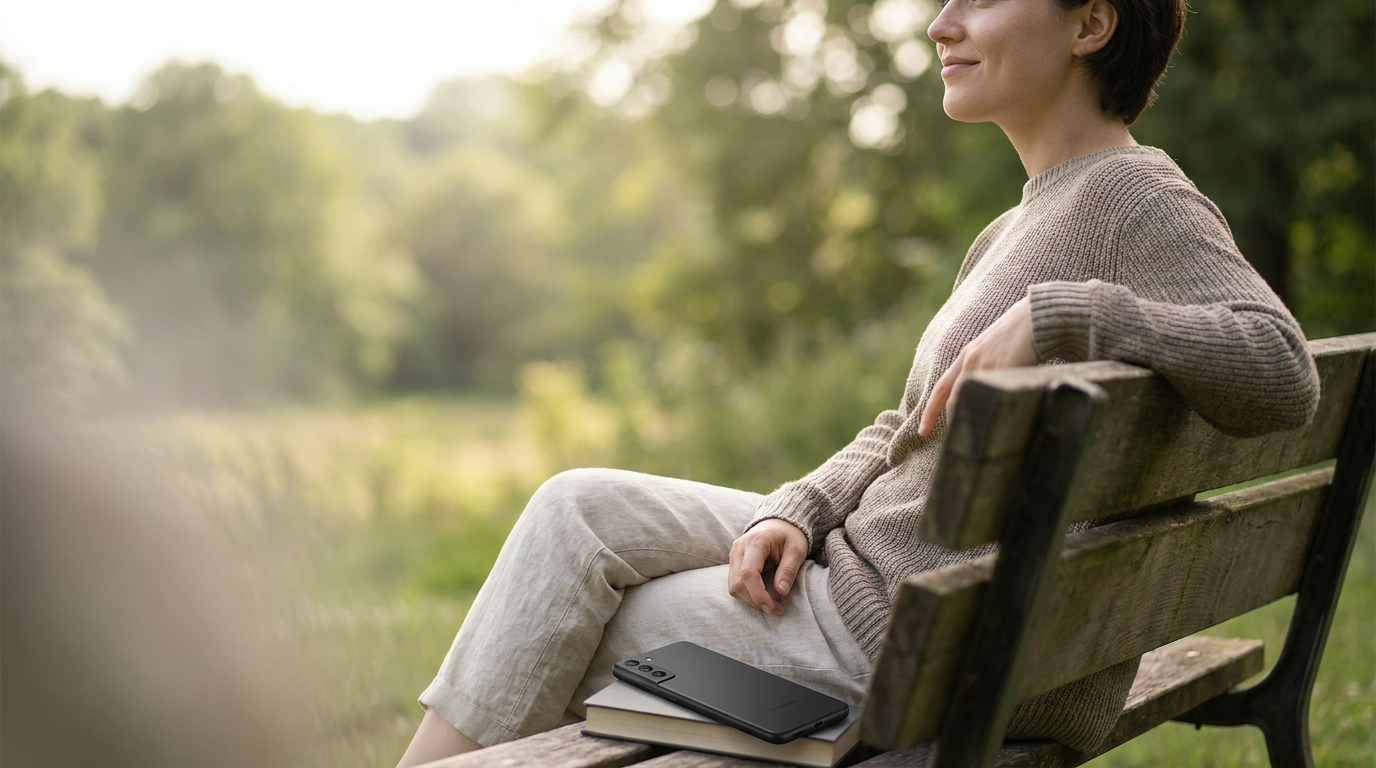
In 2026, the ultimate technological status symbol is no longer a foldable screen, a titanium chassis, or an AI assistant that records your every conversation. Instead, the most coveted luxury in the modern economy is the ability to be unreachable. A massive cultural shift toward "digital sobriety" is driving a growing wave of professionals, creatives, and Gen Z users to swap their high-powered supercomputers for minimalist devices.[7]
This movement, widely dubbed "Analog 2026," is a direct rebellion against the attention economy. For a generation raised as digital natives, the psychological toll of algorithmic anxiety, doomscrolling, and constant connectivity has reached a breaking point. Users are realizing that modern smartphones are designed as infinite loops of distraction, dictating mood and dopamine levels rather than simply serving as neutral tools.[5][7]
The response has been a surge in demand for "dumbphones"—a market that industry analysts project will surpass $10.6 billion. But the devices leading this charge are not the clunky, plastic flip phones of the early 2000s. They are premium, purpose-built tools designed to respect the user's time, proving that simplicity and utility can coexist without the digital noise.[4]
At the forefront of this hardware revolution is the Light Phone III. Designed for users who admit they have zero self-control with a standard smartphone, the device enforces strict intentionality. It features a 3.92-inch matte AMOLED screen, a basic 50-megapixel camera, and a curated set of tools: calls, texts, alarms, and navigation.[2][3]

Crucially, the Light Phone III has no web browser, no social media, and no app store. The lack of an escape hatch is the device's defining feature. By stripping away dopamine-driving apps, it forces users back into the physical world, exchanging the validation of digital likes for the presence of actual eye contact and uninterrupted focus.[3][7]
For those who find the Light Phone's strictness too limiting, the Mudita Kompakt offers a more flexible approach to digital minimalism. Built around a custom, de-Googled Android operating system, the Kompakt is designed for users who want to stay connected on their own terms without being consumed by their screens.[2][3]
For those who find the Light Phone's strictness too limiting, the Mudita Kompakt offers a more flexible approach to digital minimalism.
The Kompakt's secret weapon is its E-Ink display. The black-and-white, slow-refreshing screen makes doomscrolling feel physically unnatural, inherently adding friction to the user experience. This paper-like display also allows the device to achieve a remarkable five to six days of battery life on a single charge, turning daily charging panics into a weekly afterthought.[2][3]
Privacy advocates have also praised the Kompakt for its physical "Offline+" switch. With a single tactile click, users can instantly sever all cellular, Wi-Fi, and Bluetooth connections, along with the microphone and camera. In an era of abstract software toggles, this hardware switch provides a definitive, trustworthy break from the networked world.[2]

The philosophical divide between these devices centers on the concept of friction. While the Light Phone blocks all third-party software, the Mudita Kompakt allows users to sideload essential applications. This means users can install WhatsApp for family group chats or a banking app for two-factor authentication, acknowledging that full disconnection is often impractical in a modern economy.[2][3]
This pragmatic middle ground is also fueling the rise of Android "hybrid" dumbphones. These devices combine the physical limitations of a basic phone with essential smart features like 4G LTE, secure messaging, and ride-sharing apps. They cater to users who need to navigate the gig economy or modern logistics without falling into the trap of endless social media feeds.[6][7]
Not everyone is ready to purchase a dedicated minimalist device, leading to a parallel boom in software solutions. A growing number of iPhone and Android users are utilizing third-party launchers and accessibility settings to activate "dumbphone mode." By turning their screens to grayscale and hiding colorful icons, they reduce the cognitive load and visual triggers that prompt compulsive checking.[1]

Ultimately, the rise of the minimalist smartphone reveals a profound realization about modern life: human attention is a finite and highly valuable resource. In an increasingly automated and noisy world, the ability to focus deeply on a single task is becoming a rare competitive advantage.[6][7]
Choosing a minimalist phone is no longer viewed as a technological regression or a nostalgic novelty. It is a deliberate act of self-regulation. By choosing a device that does less, a growing demographic is finding that they can experience more clarity, more presence, and more control over their own minds.[4]
How we got here
Early 2000s
Basic feature phones dominate the mobile market before the advent of the modern smartphone.
2018
Early minimalist devices like the original Light Phone launch as niche secondary phones.
2024
Search interest in 'dumbphones' spikes as Gen Z begins pushing back against screen fatigue.
2025
Premium minimalist devices like the Light Phone III and Mudita Kompakt are announced, shifting the market toward intentional design.
Mid-2026
The 'Analog 2026' movement goes mainstream, with the global minimalist phone market projected to surpass $10 billion.
Viewpoints in depth
Digital Minimalists
Advocates who believe strict hardware limitations are the only way to break smartphone addiction.
This camp argues that modern smartphones are fundamentally compromised by their business models, which rely on maximizing user engagement and screen time. They believe that software blockers and 'dumbphone modes' are insufficient because they can be easily bypassed in moments of weakness. For true digital minimalists, the lack of an app store or a color screen isn't a missing feature—it is the primary selling point, enforcing a physical boundary between the user and the algorithmic feeds.
Pragmatic Modifiers
Users who seek to reduce screen time without losing access to essential modern utilities.
Pragmatists point out that going 'full brick' is a luxury that many workers and parents simply cannot afford. In a society that increasingly requires two-factor authentication, QR codes, and app-based banking, completely disconnecting can cause significant professional and logistical friction. This group favors hybrid devices or sideloading capabilities, arguing that the goal should be intentional technology use rather than absolute technological isolation.
Hardware Innovators
Designers and engineers building the next generation of premium minimalist devices.
For the companies building these devices, the challenge lies in making minimalism feel like an upgrade rather than a punishment. They focus heavily on premium materials, tactile feedback, and specialized displays like E-Ink or matte AMOLED. By prioritizing build quality and specialized operating systems, these innovators aim to prove that a phone can be a beautiful, high-end tool without demanding constant attention.
What we don't know
- Whether mainstream smartphone giants like Apple and Google will introduce native, hardware-level 'dumb' modes to compete.
- How the integration of AI voice assistants might evolve minimalist phones without requiring screens.
- If the premium pricing of purpose-built minimalist devices will prevent widespread adoption among lower-income users.
Key terms
- Digital Sobriety
- A lifestyle movement focused on intentionally reducing screen time and breaking the cycle of algorithmic addiction.
- E-Ink Display
- A screen technology that mimics the appearance of ordinary ink on paper, refreshing slowly and using very little battery power.
- Sideloading
- The practice of installing applications directly onto a device without using an official app store, often used on minimalist phones for essential tools.
- Dumbphone Mode
- Software settings or third-party launchers that strip a standard smartphone of its colorful icons and addictive features.
Frequently asked
Will a minimalist phone work with my current carrier?
Most premium minimalist phones in 2026 support 4G/5G and VoLTE, making them compatible with major networks, though specific band support varies by model.
Can I still use WhatsApp or banking apps?
It depends on the device. The Light Phone III strictly blocks all apps, while devices like the Mudita Kompakt allow users to sideload essential tools.
Do I need to buy a new device to try a digital detox?
No. Many users achieve a similar effect by using 'dumbphone mode' launchers on iOS or Android to strip away visual clutter and block addictive apps.
Sources
Source coverage
7 outlets
3 viewpoints surfaced







[1]NewsweekPragmatic Modifiers
Gen Z's Dumb Phone Mode Trend
Read on Newsweek →[2]PauseGadgetHardware Innovators
Light Phone III vs Mudita Kompakt
Read on PauseGadget →[3]AnalogBagDigital Minimalists
The Honest Minimalist Phone Head-to-Head
Read on AnalogBag →[4]KeyphoneDigital Minimalists
Why People Are Switching to Dumbphones in 2026
Read on Keyphone →[5]VertuHardware Innovators
The Analog 2026 Movement
Read on Vertu →[6]Dumbphones IndiaPragmatic Modifiers
Why Android Dumbphones Are Trending in 2026
Read on Dumbphones India →[7]MediumDigital Minimalists
The Digital Sobriety Movement
Read on Medium →


Every angle. Every day.
Get technology stories with full source coverage and perspective breakdowns delivered to your inbox.