
The End of the Password: The Evidence Behind Passkeys and Phishing Resistance
Passkeys have quietly become the default security standard for major tech platforms, replacing easily stolen passwords with device-bound cryptographic keys. Evidence shows this transition effectively eliminates traditional phishing while improving user convenience.
By Factlen Editorial Team
- Security Architects
- Focuses on the mathematical certainty of public-key cryptography and the elimination of human error in authentication.
- Consumer Privacy Advocates
- Values the on-device nature of biometric data but remains cautious about tech giants using passkeys to enforce ecosystem lock-in.
- Enterprise IT Administrators
- Prioritizes deployment feasibility, balancing the security benefits of passkeys against the cost of upgrading legacy corporate infrastructure.
What's not represented
- · Elderly users with older devices
- · Users in regions with low smartphone penetration
Why this matters
Passwords are the root cause of over 80% of data breaches, forcing users to memorize complex strings that are easily stolen. Passkeys eliminate this burden entirely, offering a rare technology upgrade that is simultaneously more secure and much easier to use.
Key points
- Passkeys replace traditional passwords with public-key cryptography, eliminating the need for users to memorize complex strings.
- Because the private key never leaves the user's device, passkeys cannot be stolen in a server database breach.
- The technology is fundamentally phishing-resistant because it mathematically verifies the website's domain before authenticating.
- Major platforms like Apple, Google, and Microsoft have implemented cloud-syncing to prevent account loss if a device is destroyed.
For decades, the internet has relied on a fundamental security flaw: the shared secret. When a user creates an account on a website, they generate a password that must be stored by the server and remembered by the human. This creates an asymmetric vulnerability. Humans are notoriously bad at generating random strings, leading to widespread password reuse across multiple services. If a single database is compromised, attackers can use those credentials to unlock accounts across the internet. The cybersecurity industry has spent billions attempting to patch this human vulnerability with complex password requirements, mandatory rotations, and SMS-based two-factor authentication, but these are merely bandages on a broken architecture.[5][6]
The alternative, which has now reached critical mass in consumer deployment, is the passkey. Built on the Web Authentication standard developed by the World Wide Web Consortium and the FIDO Alliance, passkeys represent a paradigm shift in how identity is verified online. Instead of relying on a shared secret that can be intercepted or stolen, passkeys utilize public-key cryptography. This is the same underlying mathematical framework that secures global banking transactions and encrypted messaging, now packaged into a consumer-friendly interface that requires no specialized technical knowledge to operate.[1][6]
The primary evidentiary claim supporting the transition to passkeys is their absolute resistance to traditional credential phishing. To understand why the evidence supports this claim, one must examine the underlying mechanism of public-key cryptography. When a user registers a passkey on a website, their device generates a unique mathematical pair: a public key and a private key. The public key is transmitted to the website's server, where it acts as a public address. The private key, however, is generated within the secure enclave of the user's device and never leaves that physical hardware.[1][4]
When the user returns to log in, the website's server sends a cryptographic challenge to the device. The device uses the private key to solve the challenge and sends the mathematical proof back to the server. Because the server holds the public key, it can verify that the challenge was solved correctly without ever needing to see the private key itself. This means there is no shared secret transmitted over the internet that an attacker could intercept. Even if a server's database is completely breached, the attackers only obtain public keys, which are mathematically useless for logging into accounts.[1][6]

This mechanism fundamentally breaks the economics of phishing. In a traditional phishing attack, a malicious actor sends an email directing the user to a fake website designed to look identical to a legitimate banking or email portal. When the user types their password into the fake site, the attacker captures it. With passkeys, this attack vector is neutralized at the protocol level. The WebAuthn standard requires the device to verify the exact domain name of the website requesting authentication before it will sign the cryptographic challenge.[1][3]
If a user is tricked into visiting a fraudulent domain—for example, 'paypa1.com' instead of 'paypal.com'—the passkey protocol recognizes the mismatch. The user's device will simply refuse to sign the challenge for the fake domain, because the private key is cryptographically bound only to the legitimate domain registered during setup. The user does not have to notice the subtle misspelling in the URL; the cryptography enforces the boundary automatically. This removes the burden of vigilance from the human and places it entirely on the mathematics.[3][6]
The empirical evidence supporting this mechanism is robust. The Cybersecurity and Infrastructure Security Agency has formally designated FIDO-based authentication as the gold standard for phishing-resistant multi-factor authentication, urging both government agencies and private enterprises to abandon SMS-based codes. SMS codes can be intercepted via SIM-swapping attacks or socially engineered out of victims in real-time. Passkeys, by contrast, cannot be socially engineered because the user does not actually know the cryptographic secret; they cannot give away what they do not possess.[3][5]
SMS codes can be intercepted via SIM-swapping attacks or socially engineered out of victims in real-time.
Large-scale deployment data further validates the efficacy of passkeys. Google, which began rolling out passkey support across its ecosystem, reports that hundreds of millions of accounts now utilize the technology. In their internal metrics, the success rate of automated credential stuffing and traditional phishing against passkey-secured accounts drops to effectively zero. Furthermore, Google's data indicates that authenticating with a passkey is significantly faster than typing a password and waiting for an SMS code, proving that security and usability are not always mutually exclusive.[2][8]

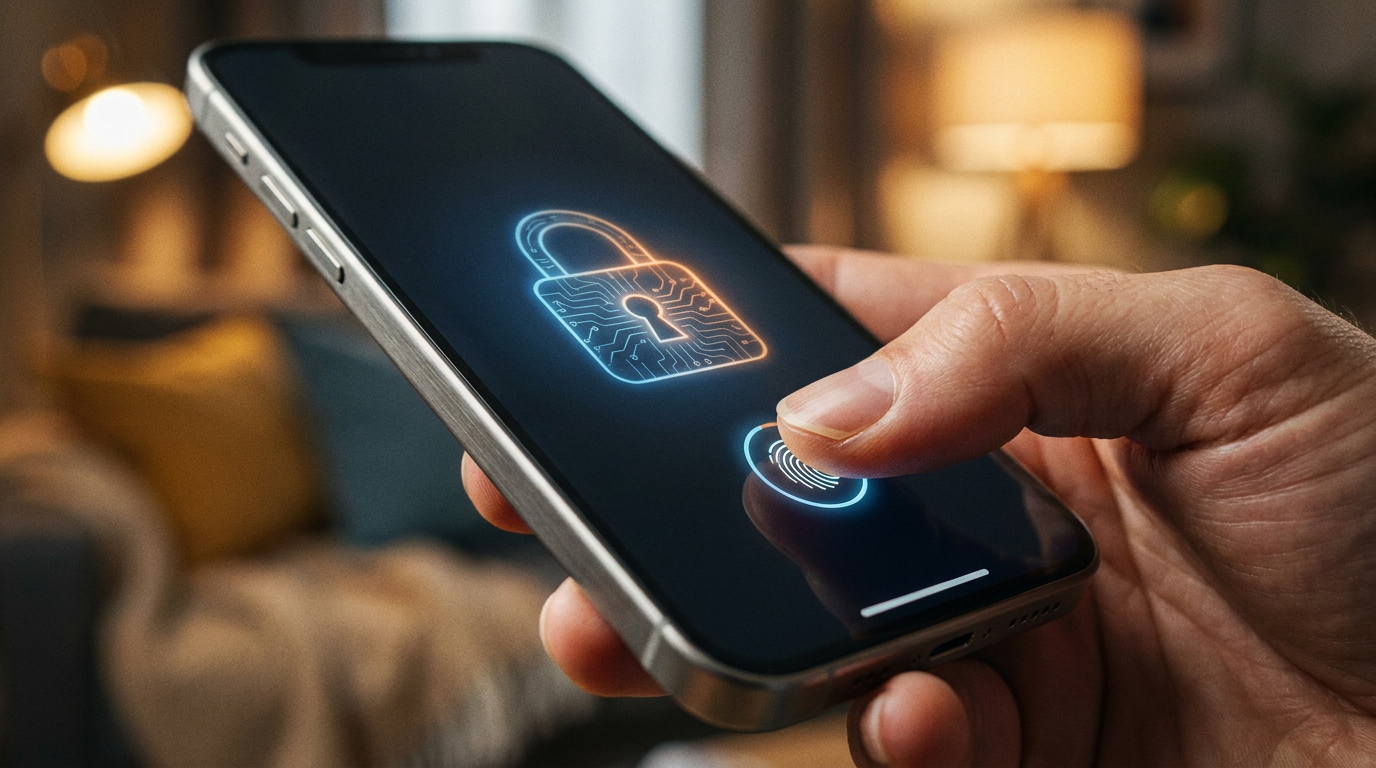
The usability improvements are a critical factor in the rapid adoption of passkeys. Historically, security upgrades have introduced significant friction into the user experience. Passkeys reverse this trend by leveraging the biometric sensors already ubiquitous on modern smartphones and laptops. Instead of typing a complex string of characters, a user simply authenticates locally using Face ID, Touch ID, or Windows Hello. The biometric data never leaves the device; it merely serves as the local authorization to unlock the private key stored in the hardware's secure enclave.[4][8]
Despite the overwhelming security benefits, the transition to a passwordless internet faces several structural uncertainties, primarily concerning device loss and ecosystem lock-in. If a private key is bound exclusively to a single physical smartphone, losing that phone would mean permanently losing access to all associated accounts. To solve this, major platform providers like Apple, Google, and Microsoft have implemented cloud-syncing mechanisms. When a passkey is created on an iPhone, it is securely synced via iCloud Keychain to the user's iPad and Mac, ensuring continuity of access even if one device is destroyed.[2][4]
However, this cloud-syncing approach introduces a new challenge: cross-ecosystem portability. Historically, moving a passkey from an Apple ecosystem to a Windows PC or an Android device required a cumbersome process involving scanning a QR code with the original device over a Bluetooth connection. This friction point has sparked debate among consumer privacy advocates, who warn that platform-bound passkeys could be used by major tech companies to lock users into their respective hardware ecosystems, making it difficult to switch from iOS to Android.[7][8]
To address these lock-in concerns, the FIDO Alliance and third-party developers are actively expanding the protocol. Independent password managers like 1Password and Dashlane have integrated passkey support, allowing users to store their private keys in an ecosystem-agnostic vault that syncs across all operating systems. Furthermore, new draft specifications within the WebAuthn standard aim to create secure, standardized export mechanisms, ensuring that users retain ultimate ownership of their cryptographic identity regardless of which hardware vendor they choose to patronize.[1][7]

The enterprise sector presents a different set of deployment challenges. While consumer platforms can force rapid adoption through software updates, corporate IT environments are burdened with decades of legacy infrastructure. Many enterprise applications, particularly those running on older mainframes or custom-built internal servers, do not natively support modern WebAuthn protocols. For these organizations, the transition requires significant architectural overhauls, often necessitating hybrid environments where passkeys protect modern cloud applications while legacy systems still rely on traditional passwords or smart cards.[3][6]
Despite these enterprise hurdles, the momentum behind passkeys is undeniable. The technology represents a rare convergence of interests: it saves companies millions in support costs related to password resets, it protects users from devastating account takeovers, and it fundamentally neutralizes the most common attack vectors utilized by cybercriminals. The National Institute of Standards and Technology has updated its digital identity guidelines to reflect the superiority of syncable authenticators, providing the regulatory air cover needed for risk-averse institutions to make the leap.[5][7]
As the rollout continues, the internet is entering a transitional phase. Passwords will not disappear overnight; they will likely persist as fallback mechanisms and legacy recovery options for years to come. However, they are rapidly being demoted from the primary method of authentication to a deprecated vulnerability. The evidence is clear: by replacing human memory with device-bound cryptography, the technology industry has finally engineered a scalable, mathematically sound solution to the phishing epidemic that has plagued the internet since its inception.[2][6]
Ultimately, the success of passkeys demonstrates that the most effective cybersecurity solutions are those that remove the human from the line of fire entirely. By making the secure path the easiest path, the industry is proving that everyday users do not need to be endlessly trained to spot increasingly sophisticated, AI-generated phishing lures. Instead, they simply need underlying infrastructure that renders those deceptive lures mathematically irrelevant, securing the digital economy one cryptographic signature at a time. This shift marks the beginning of a fundamentally safer digital era, where the burden of security rests on the silicon, not the user.[6][8]
How we got here
2013
The FIDO Alliance is formed to solve the internet's password problem.
2019
The World Wide Web Consortium (W3C) makes WebAuthn an official web standard.
2022
Apple, Google, and Microsoft announce expanded support for the FIDO standard, accelerating consumer adoption.
2026
Passkeys reach critical mass, with hundreds of millions of active users across major consumer internet platforms.
Viewpoints in depth
Security Architects
Focuses on the mathematical certainty of public-key cryptography and the elimination of human error in authentication.
For security architects and protocol designers, passkeys represent the holy grail of identity verification: removing the human from the security loop. By replacing shared secrets with asymmetric cryptography, they eliminate the root cause of credential stuffing and database breaches. This camp views the transition not just as an upgrade, but as a necessary structural repair to the internet's foundational architecture, emphasizing that security must be mathematically enforced rather than reliant on user vigilance.
Consumer Privacy Advocates
Values the on-device nature of biometric data but remains cautious about tech giants using passkeys to enforce ecosystem lock-in.
Privacy advocates strongly support the WebAuthn standard because it ensures biometric data like fingerprints and facial scans never leave the user's physical device. However, this camp expresses significant concern over how major tech companies have implemented the standard. By tying passkey syncing to proprietary cloud ecosystems like iCloud or Google accounts, advocates warn that consumers could face severe friction if they attempt to switch from an iPhone to an Android device, effectively using security as a tool for platform lock-in.
Enterprise IT Administrators
Prioritizes deployment feasibility, balancing the security benefits of passkeys against the cost of upgrading legacy corporate infrastructure.
While consumer platforms can adopt passkeys rapidly, enterprise IT administrators face a much slower transition. This camp acknowledges the massive cost savings associated with eliminating password reset tickets and neutralizing phishing attacks, but they are constrained by legacy applications that do not support modern authentication protocols. For enterprise IT, the passkey revolution requires a phased, hybrid approach, often relying on third-party identity providers to bridge the gap between modern cloud services and decades-old internal mainframes.
What we don't know
- How quickly legacy enterprise software will be updated to support WebAuthn protocols natively.
- Whether the FIDO Alliance's draft specifications for secure passkey export will successfully prevent ecosystem lock-in by major tech vendors.
- The long-term impact of quantum computing on the specific cryptographic algorithms currently underpinning the passkey standard.
Key terms
- Public-Key Cryptography
- A mathematical system that uses a pair of keys: a public key that can be shared openly, and a private key that is kept secret on the user's device.
- WebAuthn
- The official web standard that allows browsers and operating systems to communicate securely with physical authentication devices or biometric sensors.
- FIDO Alliance
- An open industry association whose mission is to develop and promote authentication standards that reduce reliance on passwords.
- Phishing-Resistant MFA
- Multi-factor authentication methods that cannot be intercepted or socially engineered, because they cryptographically verify the website's identity before logging the user in.
Frequently asked
Does the website get my fingerprint or face scan?
No. Your biometric data never leaves your device. It is only used locally to unlock the private cryptographic key stored in your device's secure hardware.
What happens if I lose my phone?
If you use an ecosystem like Apple or Google, your passkeys are securely synced to the cloud. You can recover them by signing into your account on a new device.
Can a passkey be phished if I click a bad link?
No. The passkey protocol automatically checks the hidden domain name of the website. If the domain is fake, the passkey will mathematically refuse to authenticate, even if you are tricked.
Do I still need a password manager?
Yes, for now. Password managers are adapting to store passkeys, allowing you to use them across different operating systems (like an iPhone and a Windows PC) without being locked into one ecosystem.
Sources
Source coverage
8 outlets
3 viewpoints surfaced







[1]FIDO AllianceSecurity Architects
How FIDO Works: The WebAuthn Standard
Read on FIDO Alliance →[2]Google Security BlogSecurity Architects
The beginning of the end of the password: 400 million passkeys and counting
Read on Google Security Blog →[3]CISASecurity Architects
Implementing Phishing-Resistant MFA
Read on CISA →[4]Apple SupportEnterprise IT Administrators
About the security of passkeys
Read on Apple Support →[5]NISTSecurity Architects
Digital Identity Guidelines SP 800-63B
Read on NIST →[6]Factlen Editorial TeamConsumer Privacy Advocates
Synthesis by Factlen editorial team
Read on Factlen Editorial Team →[7]1Password BlogEnterprise IT Administrators
The state of passkey adoption in 2026
Read on 1Password Blog →[8]IEEE Security & PrivacyConsumer Privacy Advocates
Usability and Security of WebAuthn: An Empirical Study
Read on IEEE Security & Privacy →

More in technology
See all 8 stories →Logical Qubits
How "Logical Qubits" Finally Fixed Quantum Computing's Biggest Flaw
0 sources

Battery Tech
Semi-Solid-State Batteries Finally Arrive in Consumer Gadgets
0 sources

Neuroprosthetics
How Neuroengineers Are Giving Bionic Limbs a Sense of Touch
0 sources

Youth Online Safety
The Evidence Behind the UK's Impending Social Media Ban for Under-16s
0 sources

Every angle. Every day.
Get technology stories with full source coverage and perspective breakdowns delivered to your inbox.