
The Psychobiotic Breakthrough: How Experts Are Using Gut Health to Rewire the Brain
An emerging global consensus among neuroscientists and microbiologists confirms that targeted gut bacteria can actively reduce anxiety, manage stress, and improve cognitive performance.
By Factlen Editorial Team
- Clinical Neuroscientists
- Focus on mapping the precise neural and metabolic pathways linking specific microbial strains to brain function.
- Nutritional Psychiatrists
- Emphasize whole-food interventions and diverse diets to naturally cultivate a resilient, mood-boosting microbiome.
- Biotech Innovators
- Focus on bioengineering and patenting specific probiotic strains to optimize cognitive performance and stress resilience.
What's not represented
- · Patients with severe, treatment-resistant psychiatric conditions
- · Traditional psychopharmacologists skeptical of microbiome interventions
Why this matters
Understanding the gut-brain axis shifts mental health from a purely neurological issue to a highly modifiable, whole-body system. By leveraging diet and targeted psychobiotics, individuals gain an accessible, empowering new toolkit for managing stress, improving focus, and building lifelong cognitive resilience.
Key points
- An emerging scientific consensus confirms that the gut microbiome directly influences emotional and cognitive well-being via the gut-brain axis.
- Psychobiotics are specific bacterial strains that can actively synthesize neurotransmitters like GABA and serotonin, reducing anxiety and stress.
- The vagus nerve acts as a primary neural superhighway, transmitting calming signals from the digestive tract directly to the brain.
- Nutritional psychiatrists emphasize that diverse, fiber-rich diets and fermented foods are the most reliable foundation for a resilient microbiome.
- While highly promising for stress resilience and cognitive performance, psychobiotics are currently viewed as adjunctive therapies rather than standalone cures.
For decades, mental health was treated almost exclusively as a phenomenon occurring above the neck. Psychiatry focused on neurotransmitters in the brain, while gastroenterology handled the digestive tract. Today, a profound paradigm shift is dissolving that boundary. An emerging global consensus among neuroscientists, microbiologists, and psychiatrists points to the gut as a central driver of emotional and cognitive well-being. At the heart of this shift is the microbiota-gut-brain axis, a bidirectional communication network that is redefining how we understand and treat conditions ranging from daily stress to clinical anxiety.[1][2]
The implications are highly empowering: if the gut microbiome shapes our mental state, then our mental state is highly modifiable. Unlike the human genome, which is fixed, the microbiome can be altered through diet, lifestyle, and targeted interventions. This realization has given rise to a new class of interventions known as "psychobiotics"—live microorganisms or microbe-derived products that, when consumed in adequate amounts, confer mental health benefits.[6][3]
Recent clinical reviews published in 2025 and 2026 have moved psychobiotics from theoretical curiosity to clinical reality. While early research relied heavily on animal models, a growing body of human trials now demonstrates that specific strains of bacteria can actively modulate brain chemistry. The science is moving rapidly from generic "mood-boosting" claims to mapping the precise metabolic pathways through which gut microbes influence focus, memory, and emotional resilience.[8][7]
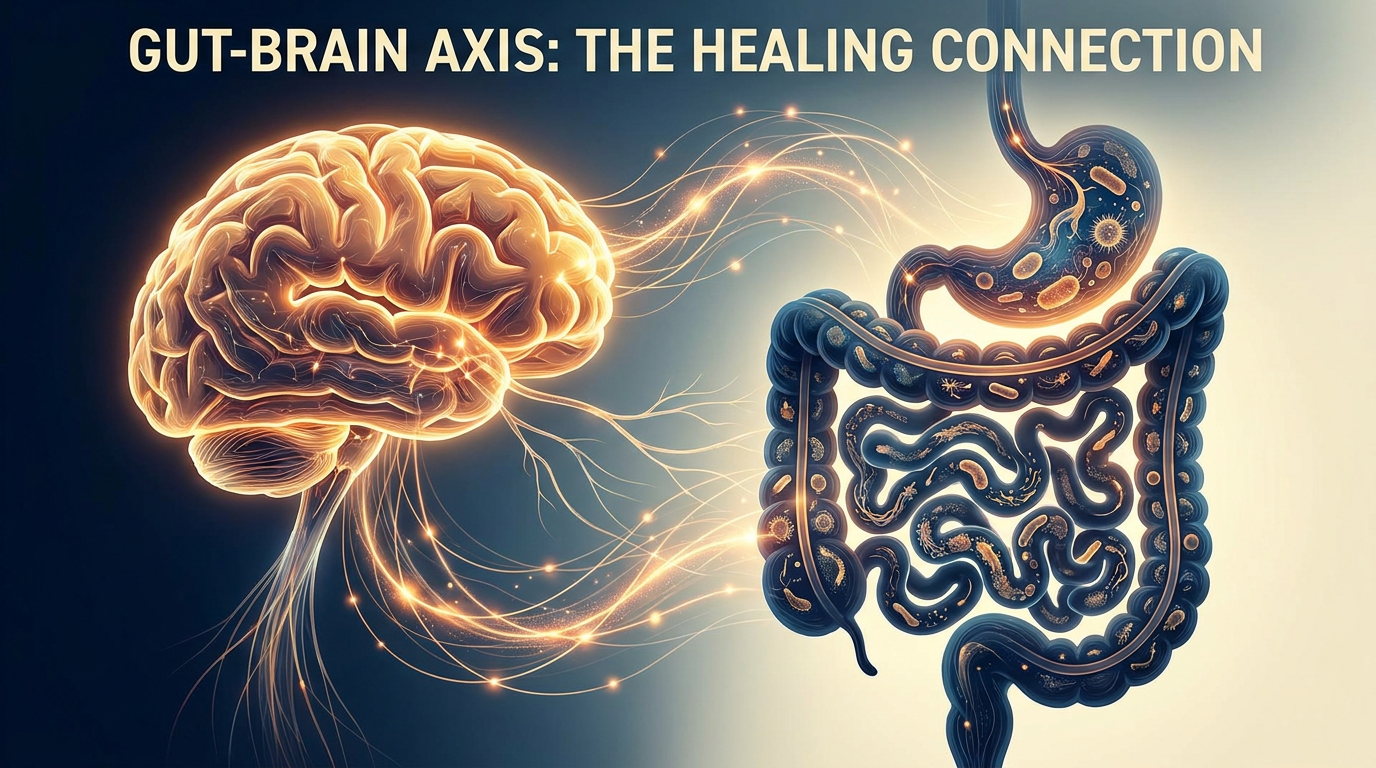
To understand how a microbe in the colon can alleviate anxiety in the brain, experts point to three primary communication channels. The most direct route is the vagus nerve, a massive bundle of neural fibers that acts as an information superhighway between the enteric nervous system—often called the "second brain"—and the central nervous system in the skull. When certain beneficial bacteria colonize the gut, they stimulate the vagus nerve, sending calming signals directly to the brain's emotion-processing centers.[6][2]

The second channel is chemical. Gut microbes are prolific chemical factories. Strains like Lactobacillus and Bifidobacterium actively synthesize or promote the production of key neurotransmitters, including gamma-aminobutyric acid (GABA), serotonin, and dopamine. In fact, an estimated 90% of the body's serotonin is produced in the digestive tract. While these gut-derived neurotransmitters do not always cross the blood-brain barrier directly, they trigger localized responses in the gut lining that cascade into systemic neural effects.[9][2]
The third pathway involves the immune system and metabolic byproducts. When beneficial microbes ferment dietary fiber, they produce short-chain fatty acids (SCFAs) like butyrate. These SCFAs are critical for maintaining the integrity of the intestinal barrier, preventing "leaky gut," and reducing systemic inflammation. Because neuroinflammation is increasingly recognized as a root cause of cognitive decline and depressive symptoms, lowering systemic inflammation through the gut directly protects brain tissue and promotes the release of brain-derived neurotrophic factor (BDNF), a protein essential for neuroplasticity and learning.[4][3]
The clinical evidence supporting psychobiotics is nuanced but highly promising. According to a 2026 review in Experimental Physiology, human trials lasting between four and twelve weeks have shown measurable improvements in affective and stress-related outcomes. Specific patented formulations, such as combinations of Lactobacillus helveticus and Bifidobacterium longum, have demonstrated the ability to modulate the hypothalamic-pituitary-adrenal (HPA) axis, effectively blunting the body's physiological response to chronic stress.[3][9]
The clinical evidence supporting psychobiotics is nuanced but highly promising.
However, researchers caution that the effects of isolated probiotic supplements are generally small to moderate, and they are most effective when used as adjunctive therapies rather than standalone cures. The consensus is that psychobiotics are not a replacement for conventional psychiatric care in severe cases, but rather a powerful tool for building resilience, managing mild-to-moderate anxiety, and supporting cognitive performance under pressure.[3][1]
This nuance is crucial because the microbiome is highly individualized. A 2026 global consensus report by leading gastroenterologists and immunologists emphasized that there is no single "perfect" microbiome profile. Geographic and demographic variations mean that a bacterial strain that significantly reduces anxiety in one individual might have a negligible effect on another. Consequently, the field is moving toward precision nutrition, utilizing microbiome sequencing and metabolomics to identify which patients are most likely to respond to specific psychobiotic interventions.[5][3]
While biotech companies race to patent specific psychobiotic strains, nutritional psychiatrists and dietitians advocate for a broader, "bottom-up" approach. Experts in this camp argue that before introducing novel bacterial strains via supplements, individuals should focus on feeding the beneficial microbes they already possess. This perspective is heavily supported by recent publications, including a 2026 review in the Annual Review of Food Science and Technology, which highlighted the profound impact of whole-food diets on the gut-brain axis.[6][4]

Energy-dense, high-sugar, and ultra-processed diets consistently correlate with poor mental health outcomes, largely because they starve beneficial microbes and promote inflammatory strains. Conversely, diets rich in diverse plant fibers, polyphenols, and fermented foods provide the exact prebiotic fuel required for psychobiotic bacteria to thrive. Fermented foods like kefir, kimchi, and kombucha deliver a broad spectrum of transient microbes that, while not permanently colonizing the gut, exert positive metabolic effects as they pass through the digestive system.[4][6]
For the general public, this represents a highly accessible intervention. Improving mental health may not require an expensive, highly engineered supplement; it can begin in the grocery store. By increasing the intake of diverse plant fibers—the preferred food of SCFA-producing bacteria—individuals can actively cultivate a gut environment that supports emotional stability and cognitive clarity.[1]
Beyond managing stress and mood, the latest frontier for psychobiotics is cognitive performance. With modern lifestyles characterized by extended screen time, constant digital stimulation, and high cognitive load, younger populations are increasingly seeking ways to support focus and processing speed. Recent clinical breakthroughs presented in 2025 and 2026 have shown that targeted probiotic blends can improve attention-related measurements in high-stress populations, such as action video gamers and students.[9]

These formulations are designed to optimize the production of neuroactive substances like GABA, which helps regulate excitability in the nervous system and promotes a state of calm focus. Industry leaders are now exploring how these specific psychobiotic blends might support neurodevelopmental conditions, including ADHD and autism spectrum disorder, by addressing the gut dysbiosis frequently observed in these populations.[7]
Despite the rapid progress, experts are transparent about what remains unknown. The exact causal mechanisms linking specific microbial shifts to psychiatric benefits in humans are still being mapped. Much of the foundational evidence relies on animal models, and translating those findings to the complex human ecosystem requires larger, standardized, and longer-term clinical trials.[8][3]

Furthermore, the regulatory landscape for psychobiotics remains fragmented, with different regions applying varying standards for what constitutes a valid cognitive or mental health claim. As the market expands toward a projected $190 billion by 2030, distinguishing evidence-based psychobiotics from generic probiotic marketing will become a critical challenge for consumers and healthcare providers alike.[9][1]
Yet, the overarching consensus is overwhelmingly optimistic. The discovery that our mental health is intimately tied to the trillions of microbes in our digestive tract transforms our understanding of human biology. It shifts the narrative from a brain-centric view of mental health to a holistic, whole-body perspective. By learning to tend to our internal ecosystems, we are unlocking a powerful, accessible, and deeply empowering pathway to lifelong cognitive resilience and emotional well-being.[1]
How we got here
2013
The term 'psychobiotics' is first coined by researchers to describe bacteria with mental health benefits.
2020
Research accelerates, linking specific Bifidobacterium and Lactobacillus strains to anxiety reduction in human trials.
2024
Clinical guidelines for Nutritional Psychiatry begin standardizing diet-microbiome interventions for mental health.
2025
Industry conferences highlight a shift from generic mood claims to mapping precise metabolic pathways for cognitive performance.
2026
A global consensus report redefines gut health to explicitly include the remission of mental and cognitive symptoms.
Viewpoints in depth
Clinical Neuroscientists
Focus on mapping the precise neural and metabolic pathways linking specific microbial strains to brain function.
Researchers in this camp view the gut-brain axis through a mechanistic lens. They prioritize isolating exactly how specific strains of Lactobacillus or Bifidobacterium influence the vagus nerve or alter the HPA axis. While optimistic, they caution against overstating the current evidence, noting that human trials show small-to-moderate effects. They advocate for rigorous, large-scale clinical trials to identify precise biomarkers, ensuring that future psychobiotic treatments are as targeted and evidence-based as conventional pharmaceuticals.
Nutritional Psychiatrists
Emphasize whole-food interventions and diverse diets to cultivate a resilient microbiome.
This camp argues that the most effective way to improve mental health via the gut is not through isolated supplements, but through comprehensive dietary shifts. They point to evidence showing that Mediterranean-style diets, rich in diverse plant fibers and fermented foods, naturally select for beneficial, SCFA-producing bacteria. They caution that dropping a single probiotic strain into a highly processed, low-fiber gut environment is unlikely to yield lasting cognitive benefits, advocating instead for a 'bottom-up' approach that feeds the entire ecosystem.
Biotech & Nutraceutical Innovators
Focus on bioengineering and patenting specific strains to optimize cognitive performance.
Industry scientists and biotech firms are driving the commercialization of psychobiotics, focusing on precision formulations. They argue that while whole foods are important, modern stressors and cognitive loads require targeted interventions. By identifying and cultivating specific strains that reliably boost GABA or blunt cortisol responses, this camp aims to create standardized, highly effective supplements that deliver predictable cognitive enhancements, moving beyond general wellness into the realm of active cognitive performance optimization.
What we don't know
- Whether specific psychobiotic strains permanently colonize the gut or require continuous supplementation to maintain mental health benefits.
- How genetic differences between individuals alter the efficacy of standardized psychobiotic formulations.
- The precise causal mechanisms that allow gut-derived metabolites to influence complex human behaviors and cognitive processing speeds.
Key terms
- Psychobiotics
- Live microorganisms or microbe-derived products that confer mental health benefits when consumed in adequate amounts.
- Microbiota-Gut-Brain Axis
- The bidirectional communication network linking the digestive tract and the brain through neural, chemical, and immune pathways.
- Vagus Nerve
- A major neural superhighway that transmits signals directly between the enteric nervous system in the gut and the brain.
- Short-Chain Fatty Acids (SCFAs)
- Beneficial compounds produced when gut bacteria ferment dietary fiber, known to reduce inflammation and protect brain tissue.
- Brain-Derived Neurotrophic Factor (BDNF)
- A crucial protein that promotes the survival and growth of neurons, essential for learning, memory, and neuroplasticity.
Frequently asked
What exactly is a psychobiotic?
A psychobiotic is a live microorganism, such as specific strains of probiotic bacteria, that provides mental health or cognitive benefits when consumed in adequate amounts.
Can probiotics replace my antidepressant medication?
No. Experts emphasize that psychobiotics are currently viewed as adjunctive therapies—meaning they should be used alongside, not instead of, conventional psychiatric treatments.
Do I need to take a supplement to get psychobiotic benefits?
Not necessarily. Nutritional psychiatrists recommend starting with a diet rich in diverse plant fibers and fermented foods, which naturally feeds and cultivates beneficial gut bacteria.
How long does it take for gut health changes to affect mood?
Clinical trials suggest that measurable improvements in stress and anxiety typically take between four and twelve weeks of consistent dietary or psychobiotic intervention.
Sources
Source coverage
9 outlets
3 viewpoints surfaced







[1]Factlen Editorial Team
Synthesis by Factlen editorial team
Read on Factlen Editorial Team →[2]Frontiers in Cellular and Infection MicrobiologyClinical Neuroscientists
Psychobiotics in mental health: insights from human clinical trials via the gut-brain axis
Read on Frontiers in Cellular and Infection Microbiology →[3]Experimental PhysiologyClinical Neuroscientists
Psychobiotics and the microbiota-gut-brain axis: Emerging paradigms in mental health modulation
Read on Experimental Physiology →[4]Annual Review of Food Science and TechnologyNutritional Psychiatrists
From Fork to Feelings: How Foods Shape Mental Health via the Microbiota–Gut–Brain Axis
Read on Annual Review of Food Science and Technology →[5]Gut Microbiota for HealthNutritional Psychiatrists
A global consensus establishes a basis for measuring and improving gut health
Read on Gut Microbiota for Health →[6]ZOE ScienceNutritional Psychiatrists
Psychobiotics: Microbes and mental health
Read on ZOE Science →[7]Nutrition InsightBiotech Innovators
Era of psychobiotics: Gut health science evolves with targeted probiotics for mental well-being
Read on Nutrition Insight →[8]Pharmacy TimesClinical Neuroscientists
A Healthy Gut Could Improve Mental Health
Read on Pharmacy Times →[9]Nutraceutical Business ReviewBiotech Innovators
New clinical breakthrough on cognitive health
Read on Nutraceutical Business Review →

Every angle. Every day.
Get perspectives stories with full source coverage and perspective breakdowns delivered to your inbox.