
The Great Re-Bundling: How 2026 Became the Year Streaming Finally Got Cheaper
After years of fragmentation and price hikes, major streaming platforms and telecom providers have embraced aggressive bundling, saving consumers hundreds of dollars annually.
By Factlen Editorial Team

- Budget-Conscious Consumers
- Value convenience and massive savings over maintaining individual premium subscriptions.
- Streaming Platforms
- Embracing bundles to reduce subscriber churn and guarantee a steady baseline of ad-supported viewership.
- Telecom Providers
- Using streaming perks as a retention tool to keep customers locked into their core internet and mobile services.
What's not represented
- · Independent Filmmakers
- · Ad-Free Purists
Why this matters
By taking advantage of new cross-platform bundles and telecom perks, households can cut their annual entertainment bills by up to $700 without sacrificing access to premium shows, live sports, or blockbuster movies.
Key points
- Major streaming platforms are abandoning exclusivity to offer heavily discounted, cross-platform bundles.
- The Disney+, Hulu, and Max ad-supported bundle saves consumers 42% compared to standalone subscriptions.
- Telecom providers like Comcast, Verizon, and T-Mobile are acting as aggregators, offering free or cheap streaming perks to retain mobile and internet customers.
- The shift is driven by the industry's need to reduce subscriber churn and guarantee stable audiences for their advertising partners.
For the better part of a decade, the trajectory of the streaming industry seemed designed to frustrate the average consumer. The "Streaming Wars" of the early 2020s saw every major media conglomerate claw back its licensed content to launch a proprietary, standalone application. Viewers who once enjoyed a unified library on a single platform were suddenly forced to juggle half a dozen subscriptions, navigate fragmented interfaces, and endure relentless annual price hikes. By 2024, the cost of maintaining access to the cultural zeitgeist had effectively surpassed the price of the traditional cable packages cord-cutters had originally fled. But in 2026, the industry has officially pivoted, marking a rare and massive financial win for households. The "Great Re-Bundling" is in full swing, replacing fierce isolationism with aggressive partnerships that are saving consumers hundreds of dollars a year.
Instead of fighting a zero-sum battle for exclusive dominance, rival platforms are now teaming up to offer heavily discounted, unified packages. The flagship example of this new era is the unprecedented partnership between Disney and Warner Bros. Discovery. Their combined bundle—featuring Disney+, Hulu, and Max—is currently priced at $19.99 per month for the ad-supported tier. This mega-package combines three of the most robust content libraries in the entertainment industry into a single monthly bill. For consumers, the math is highly favorable: subscribing to the trio via the bundle saves roughly 42% compared to purchasing each service individually at its standalone rate.[1][2][8]
This spirit of cooperation extends far beyond the Disney and Warner Bros. ecosystems. Recognizing the need to offer compelling value in a saturated market, Apple TV+ and Peacock have joined forces to offer their own combined subscription. Priced at $14.99 a month, the partnership delivers Peacock's extensive live sports catalog and Universal film library alongside Apple's premium, award-winning original series. The joint offering saves viewers over 30% monthly, proving that even tech giants are willing to compromise on exclusivity to secure a stable subscriber base.[1][7]

While the platforms themselves are partnering up, telecom and broadband providers have aggressively stepped in to act as the new aggregators, effectively recreating the convenience of the cable bundle but at a fraction of the historical cost. Comcast, for instance, has rolled out its Xfinity StreamSaver package, which bundles Apple TV+, Netflix, and Peacock for just $15 a month. By leveraging their massive distribution networks, these internet service providers can negotiate wholesale rates with the streamers and pass the savings directly to their broadband customers, creating a highly sticky ecosystem.[6]
Mobile carriers are equally aggressive in their bid to subsidize the streaming habits of their users. T-Mobile's premium "Experience Beyond" plans now include Netflix, Hulu, and Apple TV+ at no additional out-of-pocket cost, effectively handing subscribers over $30 a month in free entertainment value. Verizon offers a similar perk, allowing eligible users to add a combined Netflix and Max ad-supported bundle for a flat $10 a month—a near 50% discount. For consumers willing to audit their mobile and internet plans, these carrier perks have become the most lucrative loophole in the modern streaming landscape.[3][4]
Mobile carriers are equally aggressive in their bid to subsidize the streaming habits of their users.
The sudden generosity from historically ruthless media companies comes down to a single, terrifying metric: churn. Over the past few years, streaming platforms realized that consumers were increasingly treating subscriptions as temporary rentals. A user would sign up for a single hit show, binge-watch the entire season over a weekend, and immediately cancel the service. Bundles fundamentally alter this behavior. By tying multiple diverse content libraries—such as live sports, children's programming, and prestige dramas—to one discounted bill, platforms create "sticky" subscribers who are far less likely to cancel, even if they only actively watch one of the services in a given month.[5]

Furthermore, the industry has shifted its underlying business model from pure subscriber growth to platform economics and advertising revenue. By locking users into affordable, ad-supported bundles, streaming platforms guarantee a massive, stable, and predictable audience for their advertising partners. This strategy is paying off handsomely; industry data from 2026 indicates that nearly 67% of ad-supported television viewing time among adults aged 18 to 49 is now spent on streaming platforms, leaving traditional linear broadcast and cable with a rapidly diminishing share of the market.[5]
For the average household, the financial impact of this shift is undeniable. Industry analysts estimate that a family attempting to subscribe to all major streaming services individually year-round could easily spend upwards of $800 annually. However, by strategically leveraging telecom perks and unified bundles—such as pairing a free carrier-provided Netflix account with the $19.99 Disney/Hulu/Max trio—that same household can access five major platforms for under $25 a month. This optimized approach yields annual savings of $400 to $700, providing significant relief to entertainment budgets.[4]

Beyond the financial savings, the user experience is finally beginning to improve. The era of hunting across eight different applications to find a specific movie is slowly giving way to cross-platform integration. Bundled services like Disney+ and Hulu now allow users to surface and stream content from both libraries within a single, unified interface. While the industry hasn't achieved a perfect, universal search engine just yet, these partnerships are breaking down the walled gardens that made early-2020s streaming such a disjointed and frustrating experience for viewers.[8]
While ad-free premium tiers remain relatively expensive for those who absolutely refuse to watch commercials, the sheer volume of high-quality, affordable options means the era of "streaming fatigue" is finally receding. Consumers now have the power to choose between premium ad-free experiences or highly subsidized, bundled entertainment. For the first time in a decade, the streaming ecosystem is actually getting cheaper, more cooperative, and significantly easier to navigate, marking a definitive victory for audiences worldwide.[1][4]
How we got here
2019–2022
The 'Streaming Wars' peak as every major media company launches its own standalone app, fragmenting the market.
Mid-2024
Disney and Warner Bros. Discovery announce the unprecedented Disney+, Hulu, and Max bundle, signaling a shift toward cooperation.
Late 2025
Apple TV+ and Peacock launch their first combined subscription package, offering over 30% in savings.
Early 2026
Telecom providers aggressively expand their role as aggregators, offering multi-platform bundles like Xfinity's 'StreamSaver' for as low as $15 a month.
Viewpoints in depth
Budget-Conscious Consumers
Value convenience and massive savings over maintaining individual premium subscriptions.
For years, viewers felt penalized by the fragmentation of the streaming landscape, forced to pay a premium just to participate in cultural conversations around hit shows. This camp views the Great Re-Bundling as a long-overdue market correction. They argue that accepting ad-supported tiers is a more than fair trade-off for slashing their monthly entertainment bills by half. To these consumers, the convenience of unified billing and cross-platform search far outweighs the loss of an ad-free experience, finally making streaming feel like a sustainable household expense rather than a luxury.
Streaming Platforms
Embracing bundles to reduce subscriber churn and guarantee a steady baseline of ad-supported viewership.
Behind closed doors, media executives acknowledge that the era of chasing endless subscriber growth at any cost is over. The new mandate is profitability, and the biggest threat to profitability is churn—the rate at which users cancel their service. Platforms argue that bundles solve this by creating a highly 'sticky' product. Even if the revenue per user is technically lower in a discounted bundle, the lifetime value of a subscriber who never cancels is significantly higher. Furthermore, these massive, stable audiences allow platforms to command premium rates from advertisers, effectively subsidizing the cost for the consumer.
Telecom & Cable Providers
Using streaming perks as a retention tool to keep customers locked into their core internet and mobile services.
For internet service providers and mobile carriers, streaming bundles are not about entertainment; they are about utility and retention. The broadband market is highly competitive, and providers argue that offering a $15 streaming bundle or a free Netflix account is the most effective way to prevent a customer from switching to a rival network. By positioning themselves as the ultimate aggregators of the digital age, telecoms are successfully recreating the financial model of the old cable bundle, ensuring that they remain the indispensable gatekeepers of the modern living room.
What we don't know
- It remains unclear if these heavily discounted bundles will eventually face the same aggressive price hikes that plagued standalone services in the early 2020s.
- We do not yet know how the consolidation of viewership into ad-supported bundles will impact the budgets for niche, experimental, or independent original programming.
Key terms
- Churn
- The rate at which customers cancel their streaming subscriptions, a major metric platforms try to minimize.
- AVOD
- Advertising-Based Video on Demand; streaming services that are free or discounted because they include commercial breaks.
- SVOD
- Subscription Video on Demand; the traditional model where users pay a recurring fee for access to a content library.
- FAST
- Free Ad-Supported Streaming TV; platforms that offer linear, scheduled channels supported by commercials, similar to traditional broadcast TV.
Frequently asked
What is the cheapest way to get Disney, Hulu, and Max?
The official Disney+, Hulu, and Max bundle costs $19.99 per month for the ad-supported tier, saving subscribers about 42% compared to buying them separately.
Can I get Netflix included in a bundle?
Yes. Comcast offers a StreamSaver bundle with Netflix, Apple TV+, and Peacock for $15/month. Verizon and T-Mobile also offer heavily discounted or free Netflix with select mobile plans.
Do these bundles include ad-free streaming?
Most entry-level bundles are ad-supported. However, platforms typically offer a premium ad-free version of the bundle for a higher monthly fee, such as $32.99/month for the ad-free Disney, Hulu, and Max trio.
Sources
Source coverage
8 outlets
3 viewpoints surfaced








[1]IGNStreaming Platforms
These Streaming Bundles Are Worth the Monthly Cost
Read on IGN →[2]MashableStreaming Platforms
The best Hulu deals and bundles in 2026
Read on Mashable →[3]Cord Cutter WeeklyBudget-Conscious Consumers
Streaming service deals and bundles
Read on Cord Cutter Weekly →[4]LowerMySubsBudget-Conscious Consumers
Cheapest streaming bundle in 2026
Read on LowerMySubs →[5]OxagileTelecom Providers
The Biggest Shifts on the Streaming Horizon: Must-Know OTT Trends in 2026
Read on Oxagile →[6]A Good Movie To WatchTelecom Providers
Every Netflix Bundle Deal Available in 2026
Read on A Good Movie To Watch →[7]Apple NewsroomStreaming Platforms
Apple TV+ and Peacock Bundle
Read on Apple Newsroom →[8]Disney+Streaming Platforms
Disney+, Hulu, HBO Max Bundle
Read on Disney+ →

More in entertainment
See all 33 stories →Pixar Animation
'Toy Story 5' Early Reactions Hail Pixar's Return to Form as Toys Battle the Tablet
8 sources

Celebrity Business
Dolly Parton Launches 'Cup of Ambition' Coffee and Reimagined Tennessee Travel Stop
7 sources

Broadway
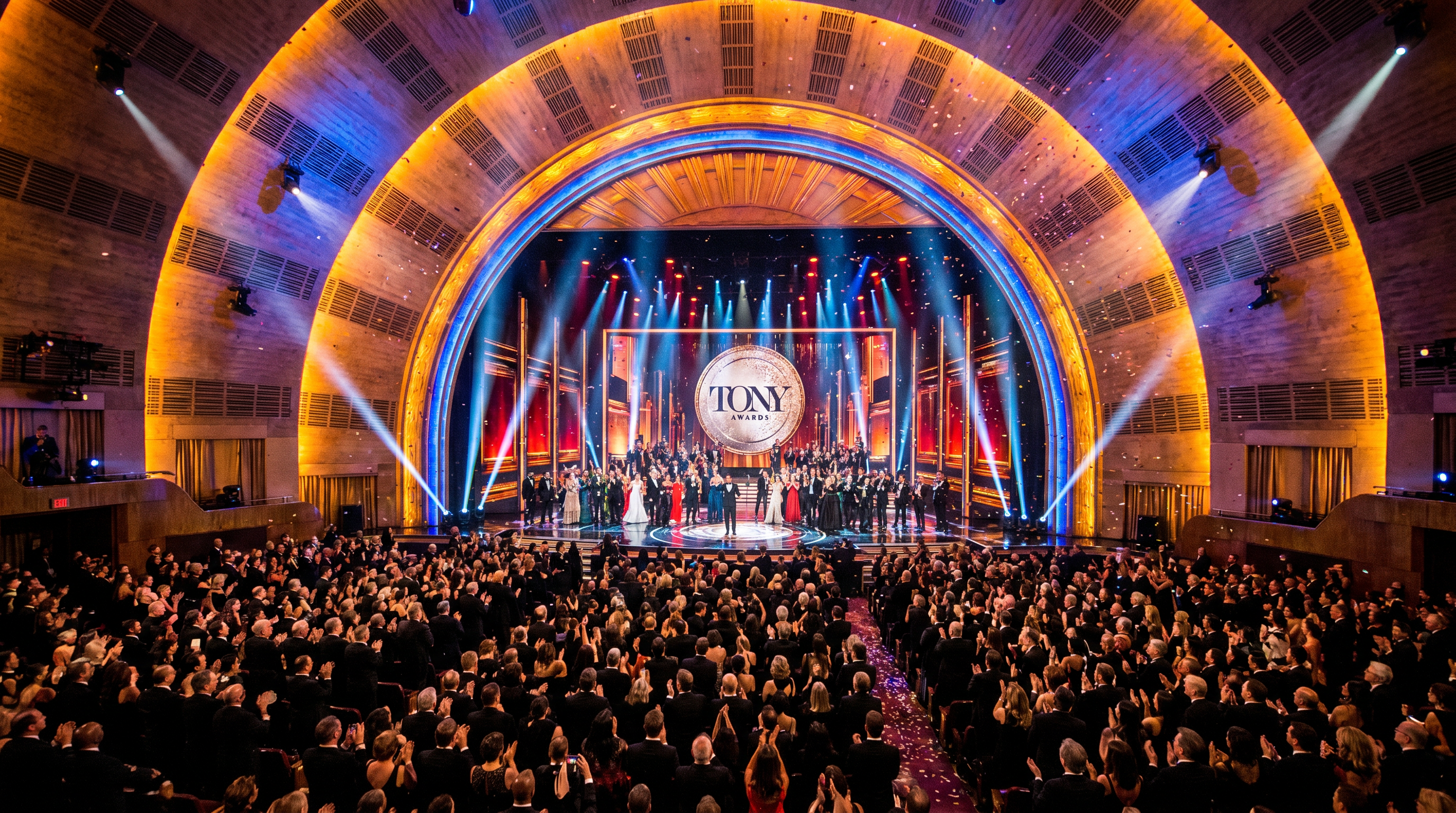
79th Tony Awards: 'Death of a Salesman' Sweeps While John Lithgow Makes History
7 sources
Nintendo Cinematic Universe
‘The Super Mario Galaxy Movie’ Becomes the First Film of 2026 to Cross $1 Billion Globally
6 sources
Every angle. Every day.
Get entertainment stories with full source coverage and perspective breakdowns delivered to your inbox.