
The Evidence on Office-to-Residential Conversions: What the Data Shows in 2026
As U.S. office vacancies near 20%, developers are turning empty commercial buildings into housing at a record pace. A review of 2026 market data and economic research reveals where adaptive reuse works, the climate benefits it offers, and the financial hurdles holding it back.
By Factlen Editorial Team
- Urban Planners & Developers
- Focus on the practical mechanics of revitalizing downtowns, navigating zoning laws, and increasing the raw supply of housing units.
- Economic Researchers
- Analyze the financial viability, structural limitations, and market conditions required for conversions to succeed without losing money.
- Policy & Sustainability Advocates
- View conversions primarily as a tool for decarbonizing the real estate sector and generating subsidized affordable housing.
Why this matters
Adaptive reuse sits at the intersection of three generational crises: the post-pandemic hollowing out of downtowns, a severe national housing shortage, and the urgent need to decarbonize real estate. Understanding the viability of these conversions reveals the future blueprint of American cities.
The American downtown is undergoing a profound structural shift. Driven by the permanent entrenchment of hybrid work models, U.S. office vacancy rates hovered near 19.8% in late 2025—a level of commercial distress not seen since the early 1990s. Simultaneously, the nation faces an acute housing shortage that has driven rents and home prices to historic highs. In response, urban planners, developers, and policymakers have increasingly championed a seemingly elegant solution: converting empty office buildings into residential apartments.[2][6]
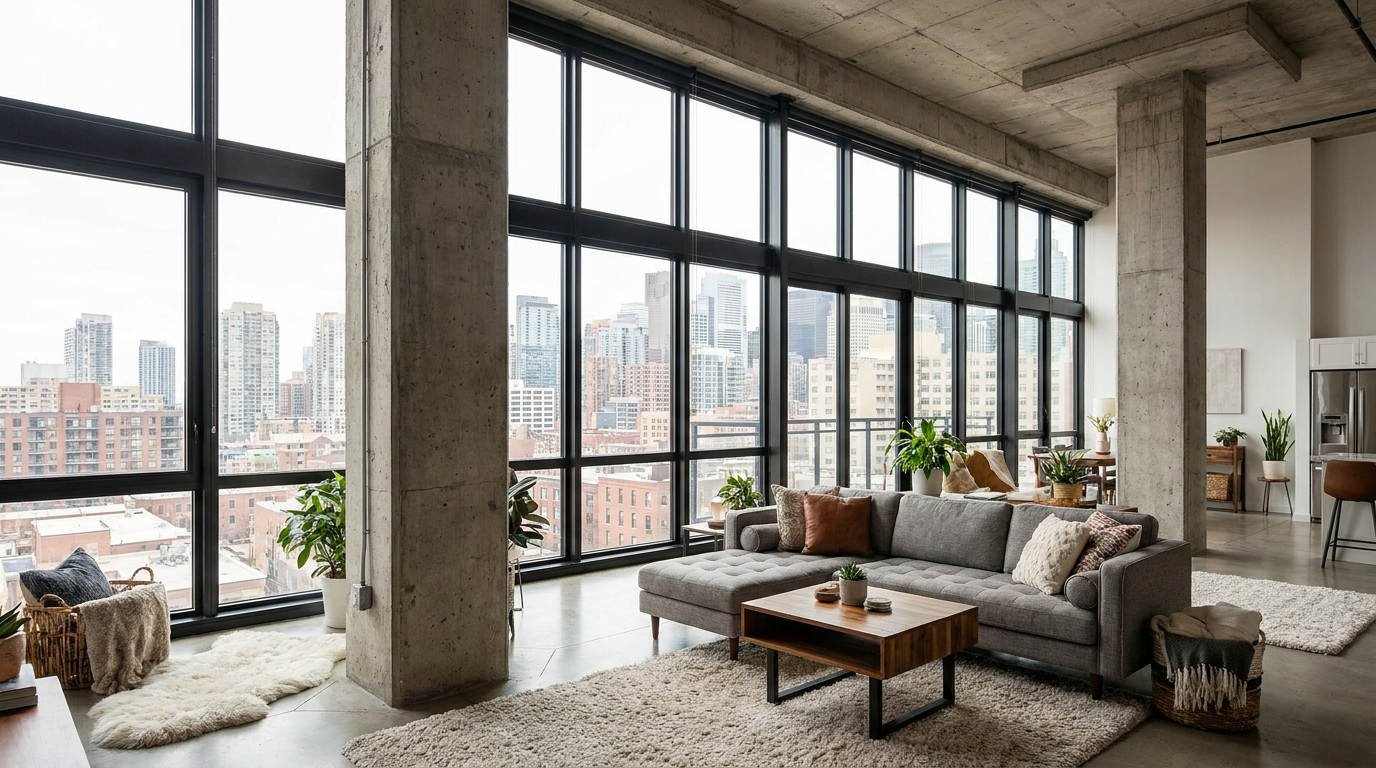
This evidence pack examines the data behind the office-to-residential conversion trend as of mid-2026. By synthesizing market reports, peer-reviewed economic models, and municipal data, we can separate the genuine momentum of adaptive reuse from the structural and financial hurdles that limit its scale. The data reveals a targeted, highly effective intervention that is accelerating rapidly, even if it is not a universal panacea for the housing crisis.[7]
Claim 1: The conversion pipeline is experiencing exponential growth. The evidence for a massive acceleration in adaptive reuse is strong. According to a March 2026 report from RentCafe, there were 90,300 apartment units in the process of conversion at the start of the year. This represents a 28% year-over-year increase and is nearly four times higher than the pipeline in 2022. Office conversions now comprise 47% of all future adaptive-reuse projects nationwide, far outpacing hotel and industrial conversions.[1]

Market data from CBRE corroborates this surge. In 2025, the amount of U.S. office space slated for either conversion or demolition (23.3 million square feet) far exceeded the amount of newly constructed office space coming online (12.7 million square feet). This marked a historic reversal from pre-pandemic norms, where new construction routinely dwarfed repurposing efforts. New York City leads the nation, with Cushman & Wakefield reporting that office-to-residential starts in the city doubled from 2023 to 2024, and accelerated even further in early 2025.[2][4]
Claim 2: Only a fraction of office buildings are physically suitable for conversion. While the pipeline is growing, the evidence clearly shows that most office buildings cannot become housing. A landmark working paper from the National Bureau of Economic Research (NBER) proposed a strict set of physical criteria to identify viable commercial properties. The researchers concluded that only about 11% of all office buildings across the U.S. are physically suitable for residential conversion.[3]
The primary constraint is the floor plate—the size and shape of a building's footprint. Modern office buildings, particularly those built in the 1980s and 1990s, often feature massive, deep floor plates designed for cubicle farms. Because residential building codes require bedrooms to have exterior windows for natural light and ventilation, deep floor plates leave vast amounts of un-leasable, windowless space in the building's core. Older, pre-war buildings with narrower profiles or U-shapes are much easier to adapt, which is why Manhattan's older stock is currently driving the national numbers.[4][6]

The primary constraint is the floor plate—the size and shape of a building's footprint.
Claim 3: Adaptive reuse offers massive, quantifiable climate benefits. The environmental case for conversion is backed by robust data. The construction and operation of real estate account for roughly 40% of global greenhouse gas emissions. Demolishing an existing structure and building a new one from scratch releases a massive amount of embodied carbon—the emissions associated with manufacturing and transporting steel, concrete, and glass.[3][6]
The NBER analysis found that rehabilitating existing older, less energy-efficient office buildings into green apartments produces 50% to 75% fewer carbon emissions than new ground-up construction. By upgrading HVAC systems, improving insulation, and electrifying the building during the conversion process, developers can dramatically lower the operational carbon footprint while entirely avoiding the embodied carbon penalty of new construction.[3]

Claim 4: Financial feasibility remains the primary bottleneck, heavily dependent on geography. The uncertainty surrounding adaptive reuse largely centers on its economics. Converting an office building is an expensive proposition, often requiring the complete replacement of plumbing, electrical, and HVAC systems to accommodate individual residential units. Construction costs can average $200 to $400 per square foot, depending on the level of intervention required.[2][6]
Because of these high costs, the NBER model demonstrates that conversions only pencil out financially without public subsidies in high-rent tier-one cities. In markets like New York City, San Francisco, Boston, and Washington, D.C., the premium that developers can charge for residential rent is high enough to overcome the acquisition and conversion costs. In secondary markets with lower residential rents, the math simply does not work for private developers acting alone, leaving many vacant offices stranded.[3][6]
Claim 5: Public policy and tax incentives are successfully bridging the financial gap. Where the private market fails to make conversions viable, municipal interventions are showing measurable success. The Bipartisan Policy Center notes that cities are increasingly viewing tax abatements not as a handout, but as a necessary tool to preserve their downtown tax bases and generate affordable housing.[6]
In New York City, the recently enacted 467-m property tax exemption program has been a major catalyst. The policy offers significant tax relief to developers who convert office buildings, provided that 25% of the resulting apartments are income-restricted and permanently rent-stabilized. City data indicates that up to 12.2 million square feet of Manhattan office space could qualify for the exemption by mid-2026, potentially creating 3,600 affordable units in historically inaccessible neighborhoods. Similarly, Washington, D.C.'s Housing in Downtown program offers 20-year tax abatements, helping the capital secure the second-largest conversion pipeline in the country.[1][5][6]
The Verdict: A vital piece of the puzzle, but not the whole picture. The evidence synthesized across these reports paints a clear picture: office-to-residential conversions are not a silver bullet that will single-handedly solve the U.S. housing shortage or eliminate the commercial real estate slump. The physical limitations of modern office floor plates and the steep financial costs restrict the scale of what is possible. However, where the architecture allows and the local policies support it, adaptive reuse is proving to be a highly effective, climate-friendly strategy to breathe new life into struggling urban cores.[2][7]
Viewpoints in depth
Urban Planners & Developers
Focused on the practical mechanics of revitalizing downtowns and increasing housing supply.
For urban planners and real estate developers, adaptive reuse is a pragmatic response to a dual crisis: empty downtowns and a severe housing shortage. This camp emphasizes the speed at which conversions can deliver new inventory compared to ground-up construction, which often faces years of zoning battles and neighborhood opposition. Developers point to the success in cities like New York and Washington D.C. as proof of concept, arguing that with the right municipal tax incentives, the private sector can rapidly transform blighted commercial corridors into vibrant, 24/7 mixed-use neighborhoods. Their primary concern is reducing bureaucratic red tape and securing the financial subsidies necessary to make the complex plumbing and HVAC overhauls pencil out.
Economic Researchers
Focused on the strict financial and structural limitations of the conversion trend.
Economists and real estate analysts offer a more measured, data-driven perspective, cautioning against viewing conversions as a universal cure-all. Researchers, such as those at the NBER, highlight that only about 11% of the U.S. office stock possesses the physical characteristics—such as narrow floor plates and adequate light wells—required for residential use. This camp stresses that outside of top-tier cities with exorbitant residential rents, the $200 to $400 per square foot cost of conversion simply results in a financial loss. They argue that while adaptive reuse is a valuable tool, the market must also accept that many obsolete office buildings will ultimately need to be demolished rather than saved.
Policy & Sustainability Advocates
Focused on the massive decarbonization benefits and the potential for affordable housing.
For climate scientists and housing advocates, the value of adaptive reuse lies in its externalities. This camp champions conversions primarily as a decarbonization strategy, noting that repurposing a building saves 50% to 75% of the greenhouse gas emissions associated with new construction by preserving the 'embodied carbon' of the existing steel and concrete. Furthermore, housing advocates view the commercial real estate crisis as a once-in-a-generation leverage point. Because developers desperately need tax abatements to make these expensive projects viable, advocates argue that municipalities have the power to demand permanent, rent-stabilized affordable housing units in exchange for those subsidies, ensuring that revitalized downtowns do not become exclusive enclaves for the wealthy.
What we don't know
- Whether secondary and tertiary cities with lower residential rents will ever see significant conversion activity without massive federal subsidies.
- How the influx of converted residential units will impact the long-term property tax revenues of major downtown districts.
- If the current pace of conversions can be sustained once the most physically suitable 'low-hanging fruit' buildings are exhausted.
Sources
Source coverage
7 outlets
3 viewpoints surfaced




[1]RentCafeUrban Planners & Developers
Adaptive Reuse Report: 90,300 Future Apartments Currently Underway
Read on RentCafe →[2]CBRE ResearchUrban Planners & Developers
U.S. Real Estate Market Outlook 2026: Office Conversions
Read on CBRE Research →[3]National Bureau of Economic ResearchEconomic Researchers
Converting Brown Offices to Green Apartments
Read on National Bureau of Economic Research →[4]Cushman & WakefieldUrban Planners & Developers
New York City Office-to-Residential Conversions Reach Historic Highs
Read on Cushman & Wakefield →[5]NYC Department of City PlanningPolicy & Sustainability Advocates
City of Yes for Housing Opportunity and 467-m Tax Exemption Data
Read on NYC Department of City Planning →[6]Bipartisan Policy CenterPolicy & Sustainability Advocates
Opportunities for Commercial-to-Residential Conversions
Read on Bipartisan Policy Center →[7]Factlen Editorial TeamEconomic Researchers
Synthesis by Factlen editorial team
Read on Factlen Editorial Team →
Every angle. Every day.
Get real estate stories with full source coverage and perspective breakdowns delivered to your inbox.