
The Evidence Is In: 'Missing Middle' Zoning Reforms Are Successfully Expanding Housing Supply
Five years of empirical data from California and Minneapolis reveal that legalizing Accessory Dwelling Units (ADUs) and duplexes significantly boosts housing stock and curbs rent growth.
By Factlen Editorial Team
- Housing Policy Researchers
- Focus on empirical data to measure whether zoning reforms actually translate to lower rents and increased supply.
- YIMBY Advocates & Urban Planners
- Argue that eliminating exclusionary zoning and building more housing of all types is the primary solution to the affordability crisis.
- Industry & Builders
- Emphasize the reduction of red tape, permitting fees, and regulatory barriers to make small-scale development financially viable.
- Informal Housing Analysts
- Highlight the massive existing stock of unpermitted units and the need to bring them into the formal market.
What's not represented
- · Low-income renters unable to afford market-rate ADUs
- · Local municipal officials managing infrastructure strain
Why this matters
Restrictive zoning has locked millions of Americans out of affordable housing. The proven success of 'missing middle' deregulation offers a scalable, low-cost blueprint for communities nationwide to stabilize rents and restore homeownership opportunities.
Key points
- California permitted over 24,000 ADUs in 2025, a 54% increase over five years.
- ADUs accounted for 38% of all new Certificates of Occupancy in LA County from 2022 to 2024.
- Minneapolis's elimination of single-family zoning reduced home prices by 16% to 34% compared to a synthetic control.
- Minneapolis increased its housing stock by 12% while keeping rent growth to just 1% over five years.
- Research shows 58% of ADU owners rent their units at below-market rates, often to family members.
The American housing crisis has long felt like an intractable math problem: too many people chasing too few homes, resulting in skyrocketing rents and locked-out first-time buyers. But over the past five years, a quiet revolution has been unfolding in residential backyards and municipal zoning boards.[8]
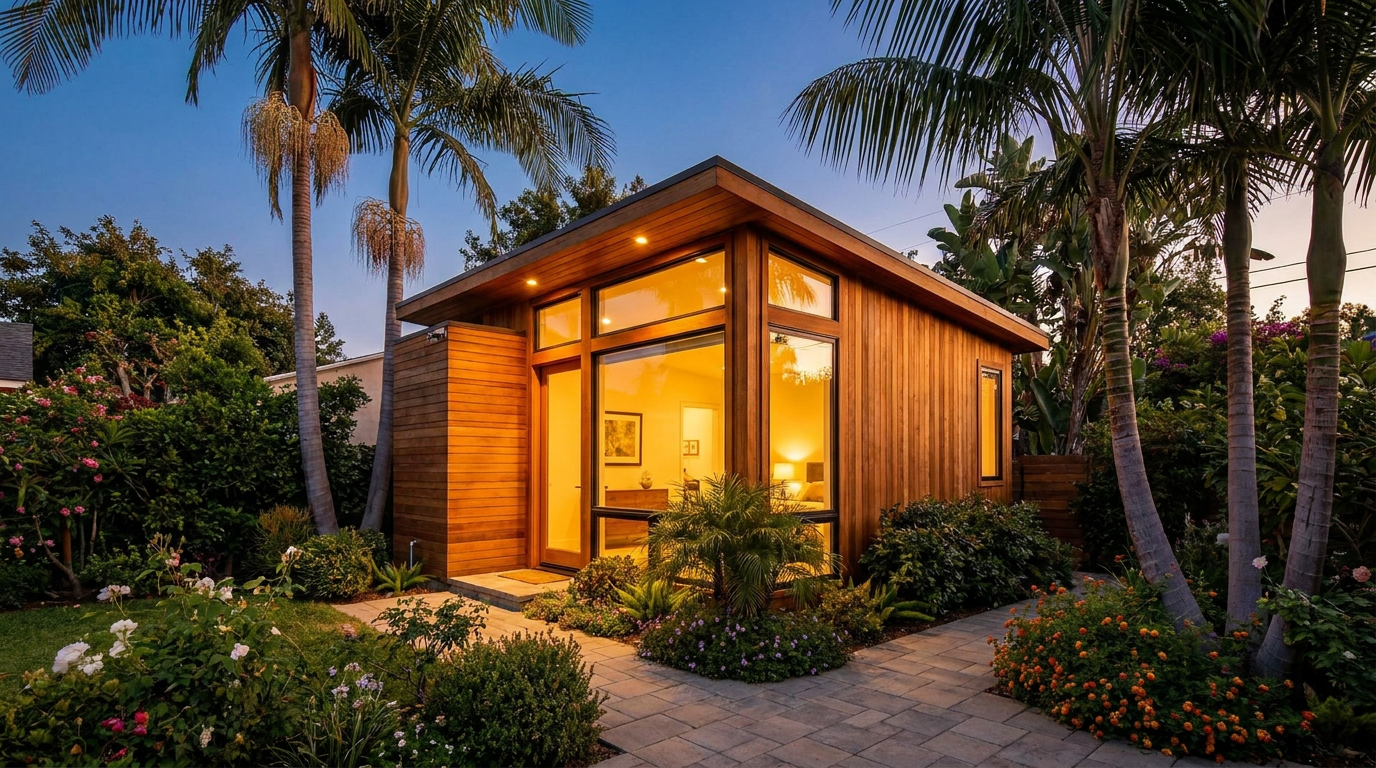
The concept of "missing middle" housing—structures like duplexes, triplexes, and Accessory Dwelling Units (ADUs) that sit between single-family homes and large apartment complexes—has moved from urbanist theory to concrete policy.[8]
California and Minneapolis serve as the primary laboratories for this deregulation experiment. By stripping away exclusionary zoning laws and streamlining the permitting process, these regions aimed to incentivize small-scale, "gentle density" development.[8]
The evidence is now rolling in, and the data suggests that these reforms are working. In California, the ADU boom has matured into a sustained driver of new housing supply. According to 2025 data from construction analytics firm Shovels, California permitted 24,192 ADUs, representing a 54.3% increase over a five-year period.[1]

This is not a marginal trend. In Los Angeles County, ADUs accounted for a staggering 38% of all new Certificates of Occupancy between 2022 and 2024, effectively becoming the backbone of the region's new housing pipeline.[7]
Further south, the Center for Housing Policy and Design at UC San Diego reported that ADU completions in San Diego County increased by 480% between 2020 and 2024. This explosive growth was directly catalyzed by state laws that forced local governments to approve ADUs on a ministerial basis, bypassing lengthy discretionary reviews.[4]
While California focused heavily on backyard cottages, Minneapolis took a broader approach. In 2018, it became the first major U.S. city to eliminate single-family zoning entirely through its Minneapolis 2040 Plan, allowing duplexes and triplexes on lots previously reserved for one home.[2]
While California focused heavily on backyard cottages, Minneapolis took a broader approach.
A 2025 study published by the Global Labor Organization evaluated the five-year impact of the Minneapolis reform using a synthetic control method. The researchers found that the policy significantly suppressed housing costs: home prices were 16% to 34% lower, and rents were 17.5% to 34% lower, compared to a mathematically modeled "counterfactual" Minneapolis.[2]
The Pew Charitable Trusts corroborated this trend, noting that between 2017 and 2022, Minneapolis increased its housing stock by 12% while rents grew by just 1%. In contrast, the rest of Minnesota saw a 14% rent increase over the same period despite adding only 4% to its housing stock.[3]

Interestingly, the economic researchers noted that the price reductions in Minneapolis were not solely the result of a massive construction boom. Instead, the legalization of denser housing altered market expectations, softening speculative demand for single-family homes because the land could now be utilized more efficiently.[2]
A central question for policymakers is whether this new "missing middle" supply actually serves low- and moderate-income residents. The evidence here is nuanced but generally positive. ADUs are frequently described as "naturally affordable" because their smaller square footage inherently limits their market price.
Research from the Terner Center for Housing Innovation found that 58% of ADU owners rented their units at below-market rates. Furthermore, nearly a third of ADU residents were family members or friends of the homeowner, highlighting the role of ADUs in facilitating multi-generational living and informal care networks.[5]

However, market-rate ADUs are not a panacea for deep poverty. The UC San Diego study found that 69% of newly permitted ADUs in the county were priced for "above-moderate" income earners. Yet, even these units relieve pressure on the broader housing market by absorbing demand that would otherwise drive up the cost of older, existing apartments.[4]
Beyond the permitted construction boom, housing analysts point to a massive shadow market. Freddie Mac estimates that there are 1.4 million ADUs nationwide, a significant portion of which were built informally before recent legalization efforts. Bringing these existing units into the formal market remains a critical challenge for ensuring safety and tenant protections.[6]
The success of these early adopters is prompting a wave of similar legislation across the country, from Oregon to Massachusetts. The emerging consensus among housing researchers is that while upzoning alone cannot solve the entirety of the affordability crisis, it is a necessary prerequisite.

By legalizing the missing middle, cities are proving that the housing shortage is not an unsolvable law of nature, but a regulatory choice. The data from the past five years demonstrates that when homeowners and small developers are legally permitted to build, they will deliver the supply the market desperately needs.[8]
How we got here
2018
Minneapolis passes the 2040 Plan, becoming the first major U.S. city to eliminate single-family zoning.
2019-2020
California passes sweeping state-level reforms that override local barriers to ADU construction.
2022
California's HOME Act takes effect, further streamlining approvals and eliminating owner-occupancy mandates for ADUs.
2024-2025
Empirical data confirms that early zoning reforms successfully increased housing supply and curbed rent growth.
Viewpoints in depth
Housing Policy Researchers
Empirical evidence from early adopters like Minneapolis and California is now robust enough to draw conclusions.
Researchers emphasize that while ADUs and missing middle housing don't solve deep-poverty homelessness on their own, they successfully stabilize middle-class rents and provide naturally occurring affordable options without requiring massive public subsidies. The data shows that simply changing the rules of what can be built alters speculative land values, cooling off overheated markets even before the new units are physically completed.
Neighborhood Preservationists
Concerned about the rapid transformation of historic single-family neighborhoods.
While not heavily represented in the cited economic studies, local opposition groups frequently argue that blanket upzoning strains municipal infrastructure, exacerbates parking shortages, and alters the visual character of established communities. They often push for discretionary review rather than 'by-right' approvals, arguing that local residents should have a say in how their streets evolve.
Industry & Builders
Focused on the practical bottlenecks of construction and financing.
For developers and construction tech firms, the focus is on predictability. They argue that the true bottleneck is no longer just zoning, but the friction of the permitting process, utility connections, and financing. They advocate for pre-approved architectural plans and state-level mandates that override local obstructionism, allowing small-scale builders to achieve economies of scale.
What we don't know
- How many newly constructed ADUs are being used as short-term rentals rather than long-term housing.
- The exact number of informal, unpermitted ADUs currently occupied across the United States.
- Whether the aggressive ADU growth seen in California can be replicated in states with less severe housing shortages.
Key terms
- Accessory Dwelling Unit (ADU)
- A secondary housing unit on a single-family residential lot, complete with its own kitchen and bathroom.
- Missing Middle Housing
- House-scale buildings with multiple units in walkable neighborhoods, bridging the gap between single-family homes and mid-rise apartments.
- Upzoning
- Changing local zoning codes to allow for higher-density development, such as permitting duplexes in areas previously restricted to single-family homes.
- By-Right Development
- A project approval process that relies on objective standards rather than discretionary review by a planning commission or city council.
- Synthetic Control Method
- A statistical technique used to evaluate policy impacts by comparing a treated area against a mathematically constructed 'synthetic' version made up of similar untreated cities.
Frequently asked
What is an Accessory Dwelling Unit (ADU)?
An ADU is a smaller, independent residential dwelling located on the same lot as a standalone single-family home. They are often called granny flats, backyard cottages, or in-law suites.
What does 'missing middle' housing mean?
It refers to multi-unit housing types—like duplexes, triplexes, and courtyard apartments—that fall between single-family homes and large apartment complexes in scale.
Did eliminating single-family zoning in Minneapolis lower home prices?
Yes. A 2025 study found that five years after the Minneapolis 2040 plan took effect, home prices were 16% to 34% lower than they would have been without the reform.
Are ADUs actually affordable for low-income renters?
Data is mixed but generally positive. While many new ADUs rent at market rates, they are typically cheaper than full-sized homes. Additionally, surveys show over half of ADU owners rent them below market rate, often to family members.
Sources
Source coverage
8 outlets
4 viewpoints surfaced






[1]ShovelsIndustry & Builders
California Housing Market Outlook: Supply Signals from Building Permit Data
Read on Shovels →[2]Global Labor OrganizationHousing Policy Researchers
Zoning Reforms and Housing Affordability: Evidence from the Minneapolis 2040 Plan
Read on Global Labor Organization →[3]The Pew Charitable TrustsYIMBY Advocates & Urban Planners
Minneapolis Land Use Reforms Offer a Blueprint for Housing Affordability
Read on The Pew Charitable Trusts →[4]UC San Diego Center for Housing Policy and DesignHousing Policy Researchers
ADU Production in San Diego County Is Going Up Fast
Read on UC San Diego Center for Housing Policy and Design →[5]Terner Center for Housing InnovationHousing Policy Researchers
ADU Update: Early Lessons and Impacts of California's State and Local Policy Changes
Read on Terner Center for Housing Innovation →[6]PLATFORMInformal Housing Analysts
The Impact of Informal ADUs on Affordable Housing
Read on PLATFORM →[7]Neighborhood Data for Social ChangeHousing Policy Researchers
SOLACHAN 2025 Chapter – Housing Supply
Read on Neighborhood Data for Social Change →[8]Factlen Editorial TeamYIMBY Advocates & Urban Planners
Synthesis by Factlen editorial team
Read on Factlen Editorial Team →
Every angle. Every day.
Get real estate stories with full source coverage and perspective breakdowns delivered to your inbox.