
The Era of Disposable Phones Ends as 'Right to Repair' Laws Take Effect
New legislation across Europe and the UK is forcing smartphone manufacturers to provide spare parts for up to seven years, making independent repairs cheaper and easier.
By Factlen Editorial Team
- Consumer Rights Advocates
- Advocates argue that true ownership means the unrestricted ability to repair and modify hardware.
- Independent Repair Industry
- Local technicians celebrate the leveling of the playing field against official manufacturer repair centers.
- Device Manufacturers
- Tech giants are balancing the new legal requirements with concerns over device security and durability.
What's not represented
- · Environmental NGOs focused specifically on the mining of rare-earth metals for new batteries.
- · Consumers in developing nations who rely on the secondary market for refurbished flagship devices.
Why this matters
For years, a cracked screen or a degraded battery meant buying a brand-new device. These new laws ensure that fixing your current phone is not only possible, but affordable and actively encouraged by extended warranties.
Key points
- The EU's Right to Repair Directive takes effect in July 2026, with the UK following in 2027.
- Manufacturers must provide spare parts like batteries and screens for at least seven years.
- Consumers who choose repair over replacement in the EU will receive a 12-month warranty extension.
- Smartphones must be designed to allow battery replacements using commonly available tools.
- The laws explicitly prohibit software locks that impede independent repairs.
The era of the sealed, disposable smartphone is drawing to a close. As of mid-2026, sweeping legislative changes across Europe and the United Kingdom are fundamentally rewriting the relationship between consumers and their devices.
At the heart of this shift is the European Union’s Right to Repair Directive, which member states must transpose into national law by July 31, 2026. The legislation mandates that manufacturers make consumer electronics, including smartphones, significantly easier and cheaper to fix.[1][7]
For years, consumers faced a frustrating dilemma when a device broke: navigate a labyrinthine, expensive official repair process, or simply abandon the device and buy a new one. The new regulations aim to dismantle that dynamic by requiring manufacturers to provide access to spare parts and repair manuals at reasonable prices.[1]
The UK government recently followed suit, announcing in April 2026 that it will extend its own Right to Repair legislation to cover smartphones and tablets starting in July 2027. This alignment ensures that the European continent remains a unified front in the push for sustainable consumer electronics.[2]
Under these new frameworks, manufacturers must supply essential spare parts—such as screens, batteries, cameras, and charging ports—for a minimum of seven years after a device model is discontinued. This effectively guarantees that a phone purchased today can be maintained well into the 2030s.[2][6]

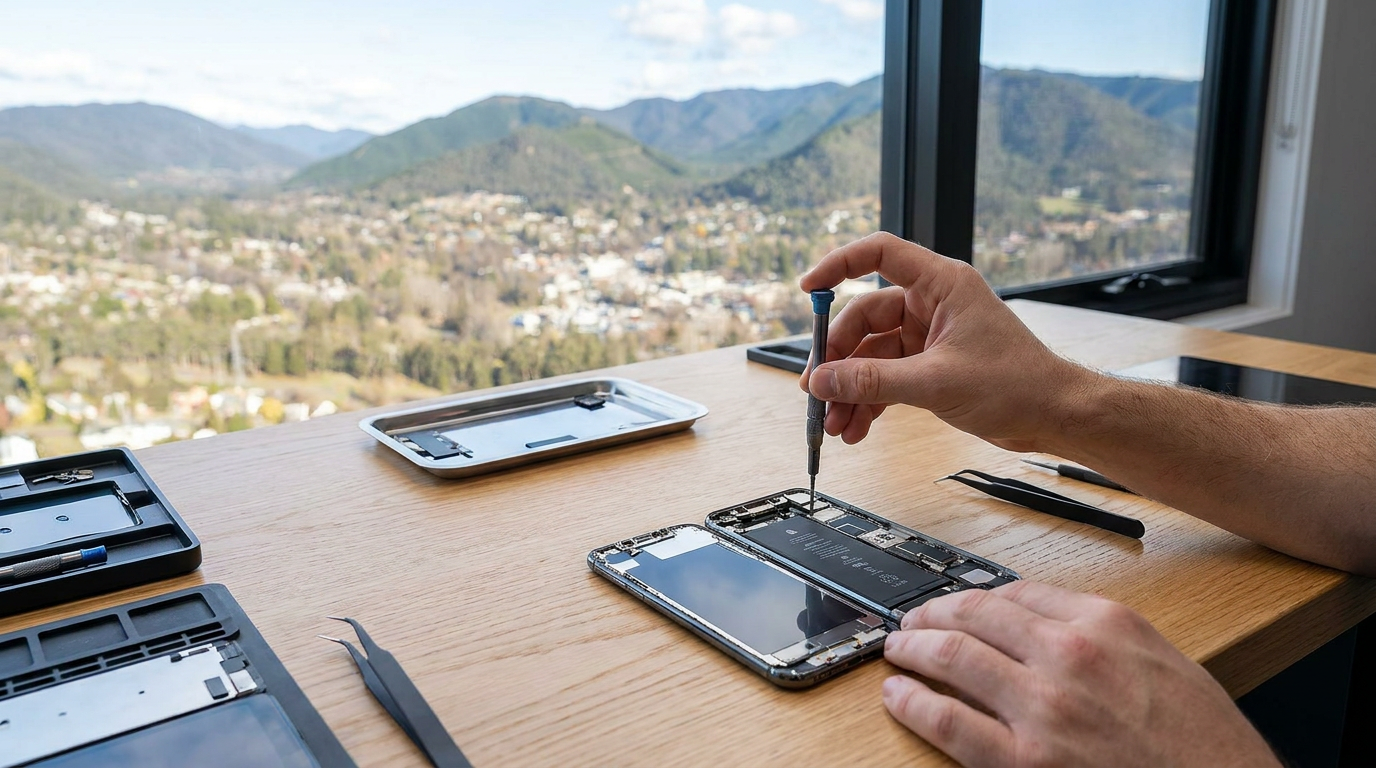
Crucially, the legislation also targets the physical design of the devices. Smartphones must now be engineered to allow battery replacements using commonly available tools, breaking the industry habit of gluing components together in ways that thwart independent technicians.[2][5]
To further incentivize consumers to choose maintenance over replacement, the EU directive introduces a novel warranty mechanism. If a consumer opts to repair a defective product under the legal guarantee rather than replacing it, the statutory warranty is automatically extended by 12 months.[6][7]
To further incentivize consumers to choose maintenance over replacement, the EU directive introduces a novel warranty mechanism.
This repair-first philosophy is already rippling through the smartphone market. Industry analysts note that 2026 is shaping up to be a highly disruptive year for mobile hardware, with manufacturers pivoting away from purely aesthetic, sealed designs toward modularity.[3]
Major brands are adapting, albeit at different paces. Apple, historically criticized for its closed ecosystem, has expanded its Self Service Repair program and introduced new processes—such as using low-voltage electricity to easily dislodge batteries—in its latest iPhone models.[5]
Samsung has also made strides, implementing easier battery pull-tab systems and better internal component layouts in its recent Galaxy devices. The company has heavily promoted its Maintenance Mode, which safeguards user data while a device is in the hands of a technician.[5]

Despite these improvements, consumer advocacy groups argue there is still work to be done. A recent report by the US PIRG Education Fund evaluated the repairability of major smartphone brands, giving Samsung a 'D' and Apple a 'D-' based on the EU's strict new energy and repairability labeling system.[4]
The lower grades stem largely from software restrictions and the practice of parts pairing, where a manufacturer uses software to lock a specific component to a specific device. The new EU directive explicitly prohibits the use of hardware or software techniques that impede independent repairs, setting the stage for a clash over these lingering restrictions.[1][4]
For independent repair shops and DIY enthusiasts, the legal changes represent a massive victory. Access to official schematics, diagnostic tools, and non-punitive wholesale pricing for parts means local technicians can finally compete on a level playing field.[2][5]
The environmental stakes are immense. Smartphones are a major contributor to global e-waste, and extending the average lifespan of a device by just one or two years drastically reduces the carbon footprint associated with manufacturing and shipping new hardware.[7]

Beyond the ecological benefits, the financial relief for consumers is tangible. With flagship smartphones routinely costing over $1,000, the ability to swap out a degraded battery for a fraction of that price preserves household budgets in an era of economic pressure.[3]
How we got here
March 2023
The European Commission submits the initial proposal for the Right to Repair Directive.
June 2024
The European Union officially adopts Directive 2024/1799.
June 2025
The EU Ecodesign regulation for smartphones takes effect, mandating repairability labels.
April 2026
The UK government announces it will extend its Right to Repair laws to smartphones.
July 2026
Deadline for EU member states to transpose the directive into national law.
July 2027
The UK's extended Right to Repair regulations officially come into force.
Viewpoints in depth
Consumer Advocates
Advocates argue that true ownership means the unrestricted ability to repair and modify hardware.
For consumer rights groups, the new legislation is a long-overdue correction to decades of planned obsolescence. They emphasize that while hardware is becoming easier to physically open, the next battleground is software. Advocates are heavily focused on eliminating 'parts pairing'—the practice of using software to lock a replacement screen or battery out of full functionality unless it is authenticated by the manufacturer's proprietary servers.
Independent Repairers
Local technicians celebrate the leveling of the playing field against official manufacturer repair centers.
Independent repair shops have historically been forced to rely on salvaged parts or unauthorized third-party components, often operating in a legal gray area. The mandate for manufacturers to provide official schematics, diagnostic tools, and non-punitive wholesale pricing allows these small businesses to offer certified, reliable repairs. This shift is expected to create thousands of local jobs and drive down repair costs through increased market competition.
Device Manufacturers
Tech giants are balancing the new legal requirements with concerns over device security and durability.
Smartphone manufacturers argue that the historical shift toward sealed devices was driven by consumer demand for thinner profiles and robust water resistance, not just a desire to monopolize repairs. While they are complying with the new directives by redesigning internal layouts and expanding self-service programs, they caution that improper DIY repairs involving lithium-ion batteries still pose significant safety risks. They also defend certain software checks as necessary to protect biometric security features like fingerprint scanners and facial recognition.
What we don't know
- How strictly the EU will enforce the ban on software-based parts pairing.
- Whether the United States will adopt a unified federal Right to Repair standard to match Europe.
Key terms
- Right to Repair
- Legislation that requires manufacturers to provide consumers and independent shops with the parts, tools, and manuals needed to fix devices.
- Parts Pairing
- A controversial practice where manufacturers use software to lock a specific hardware component to a single device, preventing aftermarket replacements.
- Planned Obsolescence
- The strategy of designing products with an artificially limited useful life so they will become obsolete and require replacement.
- E-waste
- Discarded electronic appliances, which pose significant environmental hazards if not properly recycled or repaired.
Frequently asked
When do the new Right to Repair rules take effect?
The European Union's directive must be implemented by member states by July 31, 2026. The UK's extended regulations will come into force in July 2027.
What parts must manufacturers provide?
Companies are required to supply essential components like screens, batteries, cameras, and charging ports for at least seven years after a device is discontinued.
Does repairing my phone void the warranty?
No. Under the new EU rules, choosing to repair a defective product rather than replacing it actually extends your statutory warranty by 12 months.
Will this make smartphones thicker or less waterproof?
Manufacturers are developing new internal designs, such as low-voltage battery removal techniques, to maintain sleek, water-resistant profiles while complying with the repairability laws.
Sources
Source coverage
7 outlets
3 viewpoints surfaced







[1]CybernewsConsumer Rights Advocates
EU Right to Repair law will make it easier to fix a smartphone
Read on Cybernews →[2]MyMobilesIndependent Repair Industry
UK Right to Repair Law Extended to Smartphones from 2027
Read on MyMobiles →[3]ForbesConsumer Rights Advocates
Forget The Specs: Why 2026 Is The Most Disruptive Year For Smartphones In A Decade
Read on Forbes →[4]SammyGuruDevice Manufacturers
Samsung Beats Apple in Repairability, but Both Receive Poor Grades
Read on SammyGuru →[5]Digi4uIndependent Repair Industry
Most Repairable Smartphones in 2026 – Which Brands Are Easier to Fix?
Read on Digi4u →[6]Hogan LovellsDevice Manufacturers
Germany's new repair law: Implementing the EU Right to Repair Directive
Read on Hogan Lovells →[7]EcomondoConsumer Rights Advocates
Right to Repair: the other EU Member States are getting ready. What does the directive entail?
Read on Ecomondo →



Every angle. Every day.
Get technology stories with full source coverage and perspective breakdowns delivered to your inbox.