
The Compliance Redesign: How the FDA's New MoCRA Powers Force Mandatory Registration and Safety Substantiation for All US Cosmetics
The FDA's sweeping Modernization of Cosmetics Regulation Act (MoCRA) has fully transitioned into its enforcement era in 2026, ending decades of industry self-policing. The overhaul forces a complex trade-off between unprecedented consumer safety transparency and the severe operational costs now shouldered by independent beauty brands.
By Ivan Smirnov

- Consumer Safety Advocates
- Prioritize strict oversight, ingredient transparency, and rapid recall authority to protect public health.
- Independent Beauty Brands
- Value innovation and low barriers to entry, warning that compliance costs threaten small businesses.
- Supply Chain & Importers
- Focus on the logistical realities of border clearance, facility registration, and international trade compliance.
Perspectives this story doesn't cover
- Retailers and Department Stores
- Raw Ingredient Suppliers
For nearly a century, the United States cosmetics industry operated under a largely self-policed regime established by the 1938 Federal Food, Drug, and Cosmetic Act. That era is officially over. By mid-2026, the Modernization of Cosmetics Regulation Act (MoCRA) has fully transitioned from a legislative rollout into an active enforcement reality, fundamentally reshaping how beauty products are brought to market.[1][5]
The FDA has spent the last three years operationalizing its new authority, launching digital portals and stepping up enforcement activity. As of early 2026, the agency's database reflects over 14,299 unique, active facility registrations and nearly one million active product listings. This unprecedented visibility means the FDA now knows exactly who is manufacturing what, and where.[3]
This sweeping compliance redesign forces a complex trade-off across the beauty sector. On one side, the regulations introduce a long-overdue framework for consumer safety, transparency, and rapid response to hazardous products. On the other side, the new rules impose severe operational and financial burdens that threaten the viability of independent beauty brands and small-scale formulators.[7]
The case for strict compliance is anchored in the elimination of dangerous regulatory blind spots. Before MoCRA, the FDA lacked the authority to mandate pre-market safety testing, require facility registration, or even force a recall of adulterated products. Now, the agency wields mandatory recall authority and requires responsible persons to report serious adverse events within 15 business days.[1][5][6]
Furthermore, the safety substantiation requirements mean that brands can no longer rely solely on the historical safety profiles of individual ingredients. They must maintain records, often requiring toxicological assessments and laboratory testing, demonstrating a reasonable certainty that the final formulation is safe. For consumers, this guarantees that the serums, lotions, and color cosmetics they apply daily have been rigorously vetted.[4][7]
Furthermore, the safety substantiation requirements mean that brands can no longer rely solely on the historical safety profiles of individual ingredients.
The regulatory net is also tightening around specific ingredients. In 2026, the FDA is leveraging its MoCRA authority to target high-risk substances, including a forthcoming proposed rule on fragrance allergen labeling expected in May, and new restrictions on PFAS, formaldehyde, and talc. This shift forces companies to disclose individual allergens rather than hiding them under the generic term fragrance, driving a massive wave of label reformulations.[2][3]
However, the case against this sweeping burden highlights the disproportionate impact on the independent beauty ecosystem. While the FDA itself does not charge government fees for facility registration or product listing, the hidden costs of compliance are substantial. Brands must now navigate a labyrinth of third-party services, from hiring U.S. Agents for foreign facilities to retaining safety assessors for formulation reviews.[1][7]
Although MoCRA includes exemptions for small businesses, defined as those with average annual gross receipts under $1 million, from facility registration and Good Manufacturing Practices, these exemptions are notably narrow. Crucially, no brand, regardless of size, is exempt from the safety substantiation mandate, adverse event reporting, or the requirement to update product labels with contact information.[1][4][7]
For a micro-indie brand or a solo formulator, the cost of conducting independent toxicological assessments and overhauling packaging can easily erase profit margins. The evidence of this strain is already visible in the supply chain, as contract manufacturers are forced to absorb greater liability and pass those compliance costs down to the brand owners.[6][7]
The transition into 2026 also marks a period where regulatory expectations become strictly operational. Incomplete or inaccurate product listings now risk not only FDA enforcement action but also delayed or rejected shipments at the U.S. border for imported cosmetics. Importers and customs brokers are finding that MoCRA adherence is no longer a future goal but a daily prerequisite for clearing goods.[3][5]
Ultimately, this regulatory redesign fits well when applied to large multinational conglomerates and established contract manufacturers. These entities possess dedicated regulatory affairs teams, economies of scale, and the capital necessary to absorb the overhead of continuous safety testing and adverse event monitoring. For them, MoCRA simply standardizes practices they largely already followed.[7]
Conversely, the MoCRA framework does not fit well when applied to grassroots cosmetic innovators and small-scale artisans. The rigid requirement for documented safety substantiation and rapid adverse event reporting creates a high barrier to entry, potentially stifling the very independent brands that have historically driven trend innovation and niche product development in the beauty industry.[7]
Key points
- The FDA's MoCRA framework is fully operational in 2026, ending 84 years of industry self-policing.
- Over 14,000 facilities and nearly one million cosmetic products are now registered with the agency.
- The FDA now wields mandatory recall authority and requires 15-day reporting for serious adverse events.
- Small businesses are exempt from facility registration but must still provide safety substantiation for all products.
- The compliance burden forces a trade-off, increasing consumer safety while threatening the margins of independent beauty brands.
Why this matters
For consumers, this regulatory overhaul guarantees that the beauty products they use daily are finally subject to rigorous federal safety standards and rapid recalls. For the industry, it fundamentally rewrites the economics of launching a beauty brand, forcing companies to prioritize compliance budgets over rapid product iteration.
Sources
Source coverage
7 outlets
3 viewpoints surfaced





- [1]U.S. Food and Drug AdministrationConsumer Safety Advocates
Modernization of Cosmetics Regulation Act of 2022 (MoCRA)
Read on U.S. Food and Drug Administration → - [2]Cosmetics & ToiletriesConsumer Safety Advocates
Significant reforms and enforcement strategies coming into focus
Read on Cosmetics & Toiletries → - [3]Foley & LardnerSupply Chain & Importers
Cosmetics Under the Microscope: FDA's Expanding Regulatory Reach Under MoCRA
Read on Foley & Lardner → - [4]EcoMundoSupply Chain & Importers
What is the MoCRA update in 2026?
Read on EcoMundo → - [5]Alba Wheels UpSupply Chain & Importers
The FDA's New Era of Cosmetics Oversight: What Importers and Compliance Teams Must Know
Read on Alba Wheels Up → - [6]Kelley DryeSupply Chain & Importers
FDA Touts MoCRA Achievements
Read on Kelley Drye → - [7]Factlen Editorial TeamIndependent Beauty Brands
Synthesis by Factlen editorial team
Read on Factlen Editorial Team →
Comments

More in Shopping & Reviews
See all →Video Codecs
The 50% Storage Reduction: How H.265 (HEVC) Halves Video File Size Compared to H.264 at the Same Quality, and the Processing Power Trade-off
6 sources
USB-C Standards
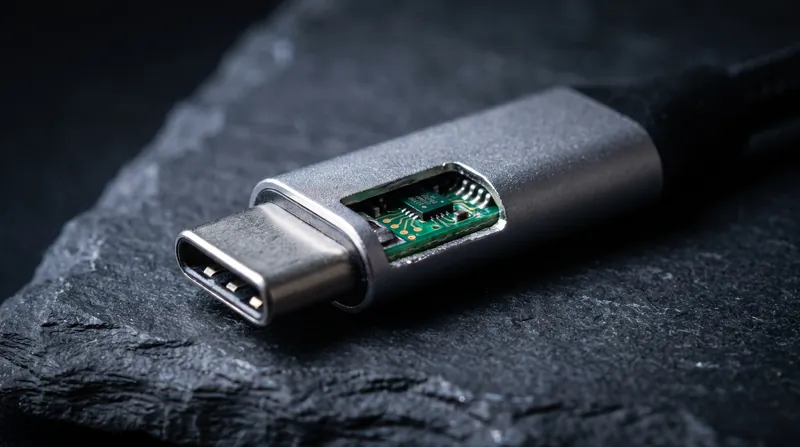
E-Marker Chip Data vs. Cable Length: How Two Factors Dictate a USB-C Cable's Maximum Power Delivery and Data Rate
9 sources
Hard Drive Tech
Shingled Magnetic Recording vs. Conventional Magnetic Recording: The Trade-Off Between Hard Drive Density and Sustained Write Speed
6 sources
Display Tech
The 18 Gbps vs. 48 Gbps Difference: How HDMI 2.1 Bandwidth Dictates 4K/120Hz and Variable Refresh Rate Support
10 sources
Every angle. Every day.
Get Shopping & Reviews stories with full source coverage and perspective breakdowns delivered to your inbox.