
The Abundance Agenda: Why 'Building More' Became the Defining Editorial Movement of the Decade
A growing coalition of thinkers and policymakers argues that the key to solving America's housing, energy, and infrastructure crises is to dismantle the bureaucratic hurdles that make building nearly impossible.
By Factlen Editorial Team
- Supply-Side Progressives
- Argue that excessive regulation and veto points restrict the supply of essential goods, driving up costs.
- Labor & Equity Advocates
- Argue that the abundance agenda must center worker power, union jobs, and equitable distribution.
- Anti-Monopoly Skeptics
- Warn that gutting environmental reviews and permitting processes will primarily benefit corporate monopolies.
What's not represented
- · Local community boards and neighborhood associations who utilize current zoning laws to preserve local character.
- · Conservative supply-side economists who favor traditional tax cuts over state-capacity building.
Why this matters
For decades, political debates have centered on how to subsidize demand or redistribute wealth. The 'abundance' framework shifts the focus entirely to the supply side, arguing that unless we physically build more homes, power plants, and transit systems, the cost of living will continue to crush the middle class.
Key points
- The 'Abundance Agenda' argues that excessive regulations and veto points have created artificial scarcity in housing, energy, and infrastructure.
- Proponents believe that subsidizing demand without expanding physical supply leads to skyrocketing costs and 'cost-disease socialism.'
- The movement has gained significant traction among center-left and center-right think tanks, state governors, and editorial boards.
- Critics warn that deregulation primarily benefits corporate monopolies and fossil fuel interests while bypassing necessary environmental safeguards.
- Labor advocates argue that true abundance must include strong union protections and equitable distribution of public investments.
For decades, the dominant debate in American policy circles centered on how to pay for things. The political left focused on redistributing wealth and subsidizing demand for essentials like healthcare and housing, while the right focused on cutting taxes to spur private investment.[1]
But over the past few years, a new intellectual framework has swept through think tanks, editorial boards, and statehouses: the 'Abundance Agenda.'[2][3]
Popularized by writers like Ezra Klein and Derek Thompson in their 2025 bestseller 'Abundance,' the movement argues that America has fundamentally forgotten how to build.[2]
The core diagnosis of this movement is that well-intentioned policies—originally designed to promote environmental protection, community input, and labor rights—have inadvertently created a labyrinth of bureaucracy.[2]

This phenomenon is sometimes referred to as 'cost-disease socialism.' When governments try to make essential goods affordable by subsidizing demand—such as offering housing vouchers or student loans—without increasing the physical supply of those goods, prices simply skyrocket.[3]
Housing serves as the most glaring example of this artificial scarcity. In highly regulated markets like California, restrictive zoning laws and endless permitting processes have made construction prohibitively expensive.[2]
It currently costs an estimated $700,000 to build a single affordable housing unit in San Francisco. Despite spending $24 billion on homelessness between 2019 and 2024, the state saw the problem grow by 24 percent, largely because the physical supply of homes could not expand to meet the need.[2]

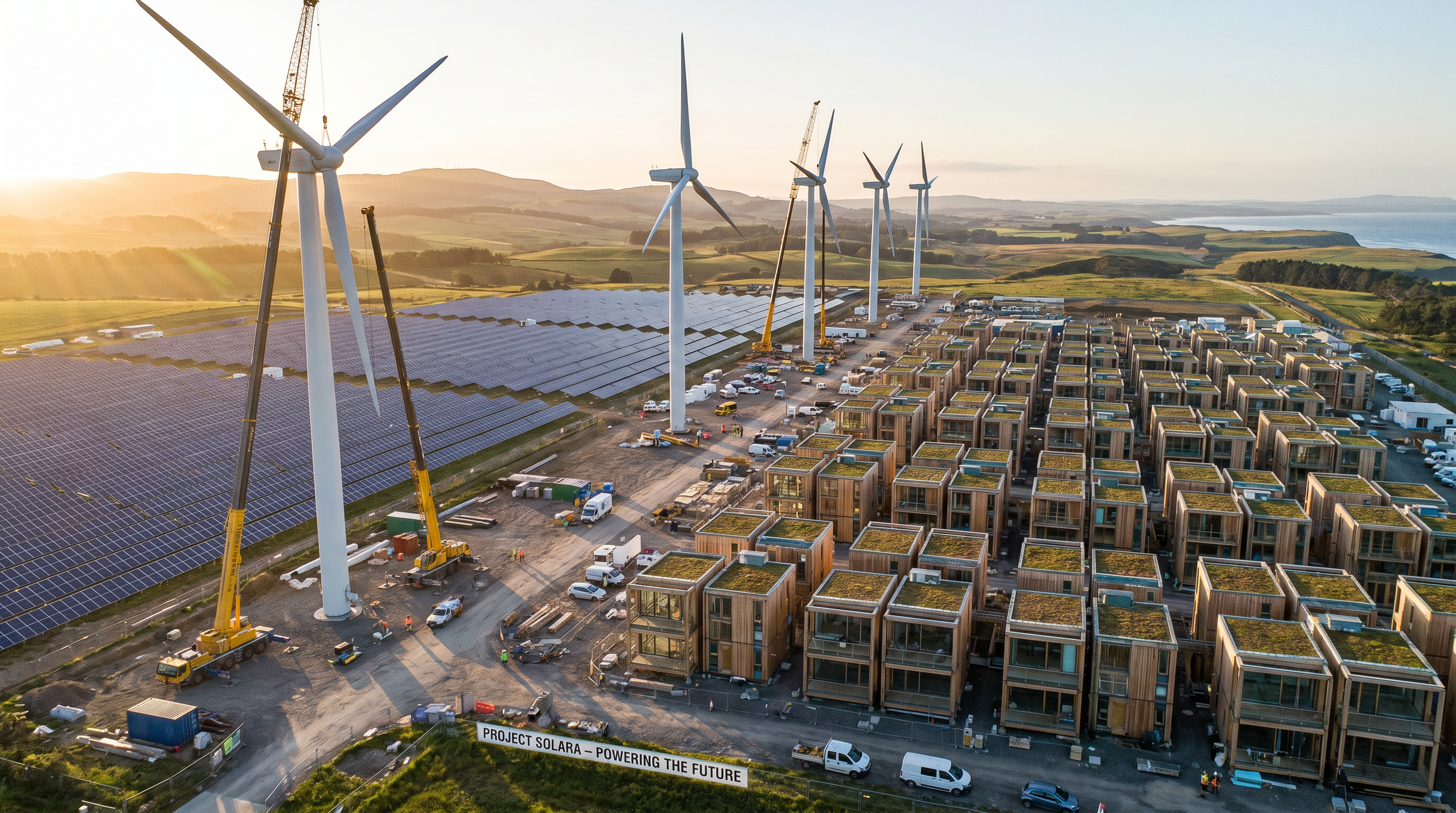
The energy transition faces an identical bottleneck. To meet ambitious climate goals, the United States needs to build massive amounts of clean energy infrastructure, including solar farms, wind turbines, and thousands of miles of high-voltage transmission lines.[4]
Yet, the very environmental laws designed to protect nature are frequently weaponized to block green development. The National Environmental Policy Act (NEPA) and similar state-level laws allow local opposition groups to tie up clean energy projects in years of litigation.[5]
Yet, the very environmental laws designed to protect nature are frequently weaponized to block green development.
The abundance framework proposes a radical shift in governance: ruthlessly eliminating 'veto points.' A veto point is any stage in a regulatory process where a single agency, local committee, or lawsuit can halt a project.[3]
This message is beginning to translate from editorial pages into concrete policy. At a May 2025 Stanford Institute for Economic Policy Research forum, Utah Governor Spencer Cox detailed how a single data center developer requested 25 percent of the state's current energy supply.[4]
Recognizing the sheer scale of the need, Cox launched a multi-pronged strategy to double Utah's power production over the next decade and streamline regulations to construct 35,000 'starter homes' in five years.[4]

In late 2025, the advocacy group Abundance New York released a comprehensive agenda targeting the state's interlocking crises of housing, transit, and energy. Their proposals included legalizing Single Room Occupancy (SRO) units citywide, expanding mass timber construction, and reforming the state's building codes to reduce costs.[6]
By April 2026, the movement formalized further with the launch of the Inclusive Abundance Initiative, a project aimed at translating the philosophy into a comprehensive federal policy platform spanning healthcare, workforce development, and family policy.[7]
However, the rapid rise of the abundance agenda has sparked fierce pushback, particularly from the progressive left. Critics argue that the movement's focus on deregulation ignores the realities of corporate power and wealth distribution.[5]
The Revolving Door Project, a progressive watchdog, published a sweeping debunking of the agenda, warning that stripping away environmental reviews and permitting rules primarily benefits fossil fuel companies and corporate monopolies, rather than the public.[5]
They argue that if private corporations refuse to produce socially necessary goods, it is because they do not expect to make a sufficiently large profit, not simply because of paperwork. Taming monopoly power, they suggest, is a more effective way to increase the output of goods and services.[5]
Labor advocates have also voiced concerns. The Roosevelt Institute published a 2026 report arguing that the abundance agenda is incomplete without addressing worker power. They caution that bypassing unions in the name of speed will erode labor standards and exacerbate inequality.[8]

Instead, the Roosevelt Institute proposes 'Democratic Abundance,' arguing that organized labor can actually help deliver infrastructure at scale by supplying skilled workers and building the political coalitions necessary to secure long-term public investment.[8]
Despite these internal debates, the abundance framework has undeniably reshaped the editorial landscape. By shifting the conversation from how to divide a shrinking pie to how to bake a larger one, it offers a fundamentally optimistic vision of state capacity.[1]
The ultimate test of the abundance agenda will not be whether it can win arguments in think tanks, but whether it can actually put shovels in the ground. If policymakers can successfully navigate the tension between speed and equity, the next decade could see a historic boom in American building.[1]
How we got here
2021-2022
Early essays by Ezra Klein and Derek Thompson introduce the concepts of 'supply-side progressivism' and the 'abundance agenda.'
June 2024
The Niskanen Center publishes a manifesto on the 'rise of the abundance faction,' signaling growing think-tank consensus.
March 2025
Klein and Thompson publish the bestselling book 'Abundance,' bringing the framework into the mainstream political conversation.
May 2025
The Stanford Institute for Economic Policy Research hosts a major forum bridging abundance research with state-level policy.
April 2026
The Inclusive Abundance Initiative launches to translate the philosophy into a comprehensive federal policy platform.
Viewpoints in depth
Supply-Side Progressives
Advocates who believe that removing regulatory bottlenecks is the key to solving scarcity.
This camp argues that decades of well-meaning regulations—from environmental reviews to local zoning laws—have calcified into a system that makes building essential infrastructure nearly impossible. By focusing on 'state capacity' and streamlining permitting, they believe the government can dramatically lower the cost of housing, healthcare, and clean energy. They argue that subsidizing demand without expanding supply only leads to inflation and 'cost-disease socialism.'
Labor & Equity Advocates
Progressives who argue that abundance must be paired with strong worker protections and public investment.
Thinkers in this camp, including researchers at the Roosevelt Institute, warn that a pure focus on deregulation risks leaving workers behind. They argue that organized labor is not a bottleneck, but a necessary partner that can supply the skilled workforce needed for massive infrastructure projects. They advocate for 'Democratic Abundance,' ensuring that the push to build more also creates high-quality union jobs and equitable distribution of resources.
Anti-Monopoly Skeptics
Critics who warn that the abundance agenda is a Trojan horse for corporate deregulation.
Watchdog groups like the Revolving Door Project view the abundance framework with deep skepticism. They argue that attacking environmental protections like NEPA primarily serves the interests of fossil fuel companies and corporate developers. In their view, the real cause of scarcity is not paperwork, but corporate monopolies that artificially restrict supply to maximize profits. They advocate for stronger antitrust enforcement rather than gutting regulatory safeguards.
What we don't know
- It remains unclear whether state and local governments can successfully streamline permitting without triggering massive political backlash from local homeowners.
- The long-term environmental impact of bypassing traditional review processes like NEPA is still heavily debated.
- It is unknown if the bipartisan coalition supporting the abundance framework will hold together when specific, controversial projects are proposed in local districts.
Key terms
- Abundance Agenda
- A political and economic framework arguing for massive increases in the supply of housing, energy, and infrastructure by removing regulatory bottlenecks.
- Cost-Disease Socialism
- A term describing when the government subsidizes the cost of essential goods while failing to address the underlying supply restrictions, causing prices to skyrocket.
- Veto Point
- A stage in a political or regulatory process where a single individual, group, or agency can halt or significantly delay a project.
- NEPA
- The National Environmental Policy Act, a US law requiring federal agencies to assess the environmental effects of their proposed actions, often cited by abundance advocates as a source of project delays.
- YIMBY
- 'Yes In My Backyard,' a pro-housing movement that advocates for increasing the supply of housing in cities where costs are high.
- State Capacity
- The ability of a government to effectively implement its policies, build infrastructure, and deliver public services without being bogged down by inefficiency.
Frequently asked
Isn't supply-side economics a conservative idea?
Historically, 'supply-side economics' referred to right-wing tax cuts. 'Supply-side progressivism' reclaims the term to focus on physically building public goods like clean energy, transit, and affordable housing.
Why do abundance advocates want to change environmental laws?
They argue that laws designed in the 1970s to stop pollution are now frequently weaponized by local groups to block the construction of green infrastructure, like solar farms and high-speed rail.
How does this framework address the housing crisis?
The agenda argues that restrictive zoning laws and community vetoes artificially limit the number of homes that can be built, which drives up rents and home prices across the country.
What do critics of the abundance agenda say?
Critics warn that bypassing regulations is a giveaway to corporate developers and fossil fuel companies, and that true abundance requires strong labor unions and antitrust enforcement.
Sources
Source coverage
8 outlets
3 viewpoints surfaced








[1]Factlen Editorial TeamSupply-Side Progressives
Synthesis by Factlen editorial team
Read on Factlen Editorial Team →[2]WikipediaSupply-Side Progressives
Abundance (Klein and Thompson book)
Read on Wikipedia →[3]Niskanen CenterSupply-Side Progressives
The rise of the abundance faction
Read on Niskanen Center →[4]Stanford Institute for Economic Policy ResearchSupply-Side Progressives
'Our country has a building problem'
Read on Stanford Institute for Economic Policy Research →[5]Revolving Door ProjectAnti-Monopoly Skeptics
Debunking the Abundance Agenda
Read on Revolving Door Project →[6]Abundance New YorkSupply-Side Progressives
The Abundance Agenda
Read on Abundance New York →[7]Inclusive Abundance InitiativeSupply-Side Progressives
Inclusive Abundance Initiative Announces The Abundance Agenda
Read on Inclusive Abundance Initiative →[8]Roosevelt InstituteLabor & Equity Advocates
Democratic Abundance: An Abundance That Works for Workers
Read on Roosevelt Institute →

More in opinion
See all 11 stories →Future of Work
The 4-Day Workweek Debate: Evidence, Hidden Costs, and the Future of Productivity
8 sources

Slow Media
The Revival of the Letter to the Editor: How 'Slow Media' is Fixing Public Discourse
8 sources

Cancer Vaccines
The 2030 Prediction: How Personalized mRNA Vaccines Are Poised to Transform Oncology
7 sources

Workplace Trends
The End of Hustle Culture: Why 'Slow Productivity' is Winning the Workplace
8 sources

Every angle. Every day.
Get opinion stories with full source coverage and perspective breakdowns delivered to your inbox.