
The 2026 EV Road Trip: How NACS and New Infrastructure Solved Range Anxiety
With Tesla's Supercharger network opening to most brands and federal NEVI funding accelerating highway charger deployment, cross-country electric travel has shifted from a logistical puzzle to a routine drive.
By Factlen Editorial Team
- EV Owners & Advocates
- Celebrate the standardization and infrastructure boom as the end of range anxiety.
- Infrastructure Planners
- Focus on the logistical and grid challenges of deploying high-power chargers in rural areas.
- Travel & Retail Industry
- View EV charging as a new revenue stream and an opportunity to upgrade highway amenities.
What's not represented
- · Rural residents who live far from the designated 50-mile highway corridors.
- · Independent gas station owners struggling to afford the capital costs of installing fast chargers.
Why this matters
For years, the fear of being stranded with a dead battery kept millions of drivers from switching to electric vehicles. In 2026, a massive standardization of charging plugs and a surge in highway infrastructure have finally made the cross-country EV road trip accessible to the average family.
Key points
- The industry-wide shift to the NACS plug allows most new EVs to use Tesla's massive Supercharger network.
- Older EVs with CCS ports can access the expanded network using automaker-supplied adapters.
- The federal NEVI program is funding new fast-charging hubs every 50 miles along major US highways.
- Modern travel plazas are adding EV chargers alongside traditional amenities like food and restrooms.
- Drivers can optimize travel time by keeping their battery between 20% and 80% during highway driving.
Not long ago, taking an electric vehicle on a cross-country road trip felt like an extreme sport. It required a patchwork of different smartphone apps, a trunk full of adapter cables, and the constant, gnawing fear of arriving at a broken charger in a dark, empty parking lot. But as the summer travel season of 2026 kicks into high gear, the landscape of American road-tripping has fundamentally transformed.[8]
The most significant catalyst for this shift is the near-universal adoption of the North American Charging Standard (NACS). Originally designed by Tesla as a proprietary connector for its own vehicles, the elegant, lightweight plug was open-sourced in late 2022 and formalized as an industry standard. Today, it has effectively won the charging wars, reshaping how drivers plan their routes and interact with public infrastructure.[1][3]
For non-Tesla drivers, this standardization unlocks access to the sprawling Supercharger network, long considered the gold standard for reliability and geographic coverage. Tesla reports that more than 15,000 of its fast-charging stalls across North America are now open to other EV brands. Depending on the vehicle's make and model year, drivers can tap into this network either through a native NACS port built into the car at the factory, or by using an automaker-approved adapter.[2][3][4]

The transition is still rolling out in phases. While many 2025 and 2026 models from brands like Hyundai, Genesis, and Toyota are beginning to feature native NACS ports, millions of existing EVs on the road still rely on the older Combined Charging System (CCS) standard. For these drivers, automakers have been distributing NACS-to-CCS adapters, allowing them to bridge the hardware gap and plug into Tesla stations with ease.[1][2][4]
However, access is not entirely universal just yet. While current network tracking suggests that more than two-thirds of Supercharger stalls are now accessible to non-Tesla vehicles, some older V2 stations remain restricted. Drivers are encouraged to use network apps to verify compatibility before routing to a specific location, ensuring their vehicle is authorized to initiate a charge.[2][8]
Beyond the private sector's standardization, a massive influx of public funding is filling in the remaining geographical gaps. The National Electric Vehicle Infrastructure (NEVI) Formula Program, a $5 billion federal initiative, is actively deploying fast chargers along designated Alternative Fuel Corridors. After a brief administrative pause and legal battles in 2025, the program has relaunched with streamlined guidance in 2026, accelerating the pace of construction.[5][6]
Beyond the private sector's standardization, a massive influx of public funding is filling in the remaining geographical gaps.
The NEVI program's core mandate is strict: states must install compliant DC fast-charging hubs every 50 miles along major highways, and those stations must be located within one mile of an exit. Each site is required to have at least four charging ports capable of delivering 150 kilowatts simultaneously, ensuring that multiple vehicles can charge quickly without creating massive bottlenecks during peak holiday travel.[1][5]

Once a state successfully certifies that its primary highway corridors are 'Fully Built-Out' under the NEVI guidelines, the program's flexibility expands significantly. States can then direct remaining federal funds toward off-corridor locations, such as urban parking facilities, community centers, and popular tourist destinations. This secondary phase is critical for ensuring that the benefits of electric mobility reach beyond interstate travelers and into local communities.[1][5]
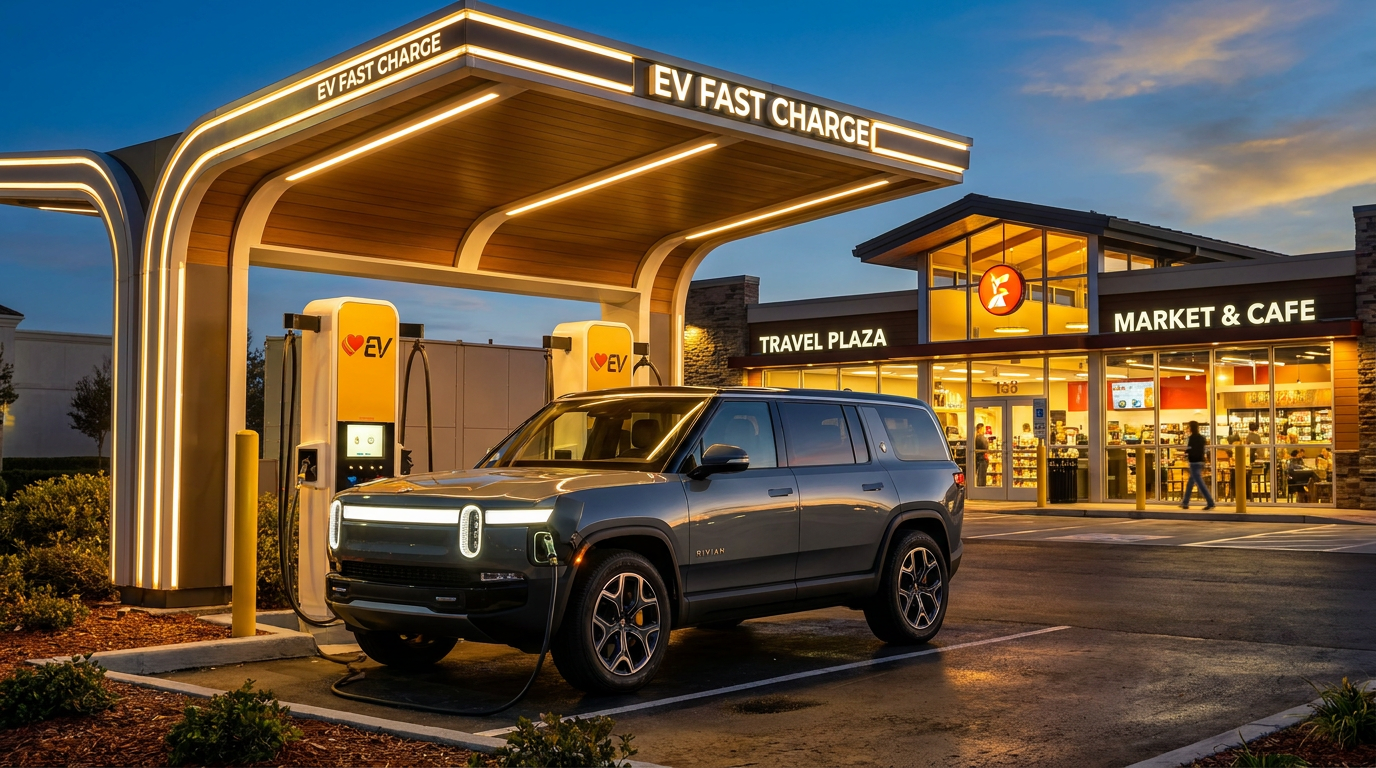
As these state-level plans move from the drawing board to the pavement, the physical environment of the charging stop is evolving. The industry is moving away from placing single chargers behind abandoned shopping malls and toward integrated, full-service travel plazas. Major operators like Love's Travel Stops are aggressively expanding their EV footprint, offering drivers well-lit canopies, clean restrooms, dog parks, and hot food while they wait.[7][8]
This evolution in infrastructure requires a slight shift in driver mindset. The secret to a successful EV road trip is syncing charging times with natural human breaks. Instead of standing by a pump for five minutes, EV drivers are learning to plug in while they eat lunch, stretch their legs, or use the restroom. A modern DC fast charger can add hundreds of miles of range in the 20 to 30 minutes it takes a family to grab a meal.[7][8]
To optimize these stops, veteran EV travelers swear by the "20-80% rule." Lithium-ion batteries charge rapidly when they are relatively empty, but the charging speed slows down dramatically as the battery approaches 100% to protect the cells from degradation. Therefore, it is significantly faster to drive until the battery drops to 20%, charge it up to 80%, and get back on the road, rather than waiting an extra 40 minutes to squeeze in the final 20 percent.[8]

Real-world range is another crucial factor that modern route-planning software has learned to handle. An EV's official EPA range is calculated under ideal conditions, but highway driving at 75 mph, blasting the air conditioning, or climbing mountain passes will drain the battery faster. Today's in-car navigation systems and third-party apps automatically calculate these variables, adjusting estimated arrival times and dynamically suggesting charging stops based on topography and weather.[1][8]
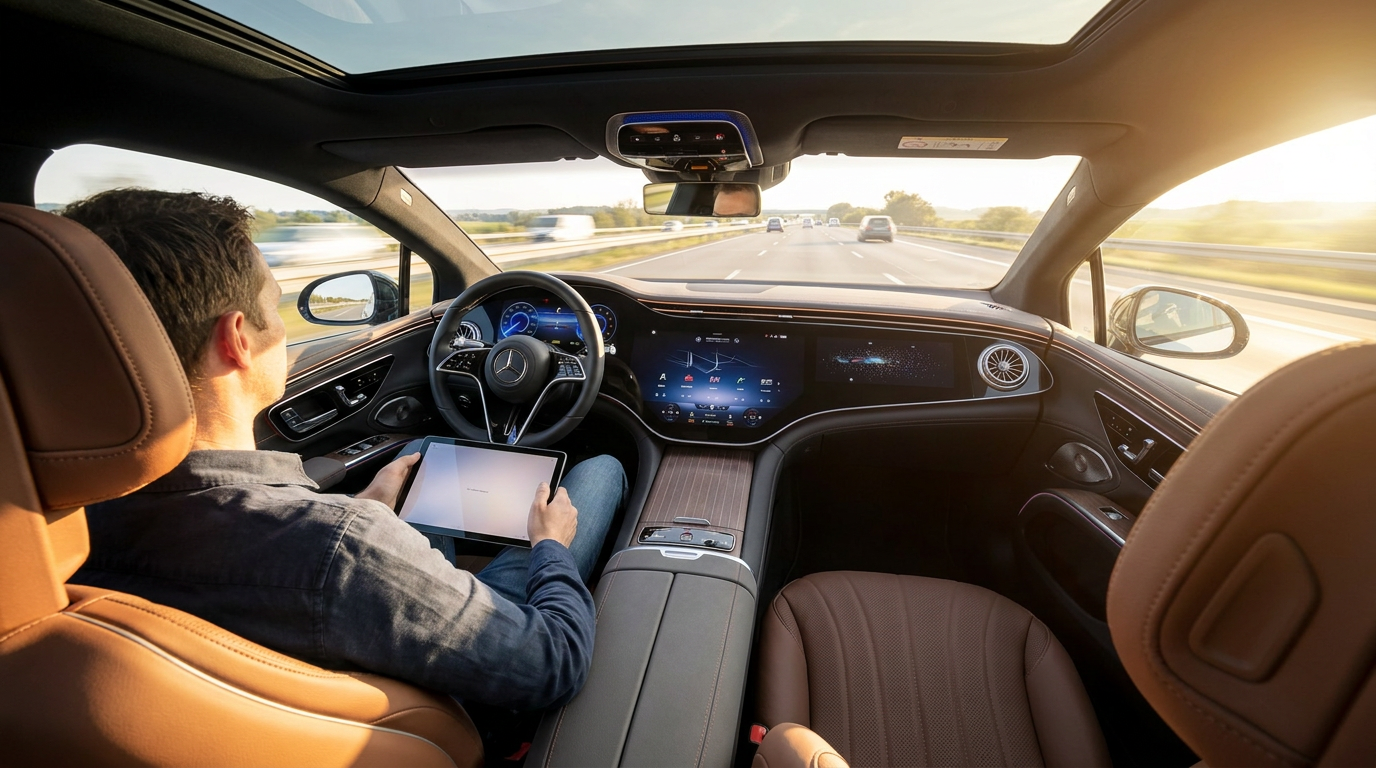
To manage all these variables, drivers no longer need to perform complex mental math. Modern EVs come equipped with sophisticated native route planners that monitor the car's state of charge, battery temperature, and real-time charger availability. If a planned station goes offline or fills up, the software dynamically reroutes the vehicle to an alternative hub, ensuring the driver is never left stranded.[1][8]
The combination of the NACS standard, NEVI-funded highway corridors, and smarter software has effectively neutralized range anxiety for the average consumer. While peak travel days may still see occasional queues at popular stations, the fundamental math of the EV road trip has been solved. In 2026, driving an electric vehicle across the country is no longer a pioneering adventure—it is simply a quiet, comfortable, and increasingly routine way to travel.[1][8]
How we got here
Late 2022
Tesla open-sources its proprietary charging connector, renaming it the North American Charging Standard (NACS).
Mid 2023
Major automakers, led by Ford and GM, announce they will abandon CCS and adopt NACS for future vehicles.
Early 2024
The first official NACS-to-CCS adapters begin shipping to non-Tesla EV owners.
August 2025
The federal government releases streamlined guidance for the NEVI program, unfreezing billions in infrastructure funding.
Summer 2026
Native NACS ports become standard on many new EV models, and NEVI-funded corridor stations rapidly come online.
Viewpoints in depth
EV Owners & Advocates
Focus on the newfound freedom and convenience of a unified charging network.
For early adopters, the 2026 landscape is the realization of a decade-long promise. The ability to pull up to a Tesla Supercharger in a Ford, Rivian, or Hyundai without worrying about software handshakes failing or screens freezing is a game-changer. Advocates emphasize that the expanded network not only makes road trips viable but also dramatically increases the resale value and daily utility of non-Tesla vehicles, effectively removing the last major barrier to mass EV adoption.
Infrastructure Planners
Focus on grid capacity, equitable deployment, and the logistics of the NEVI rollout.
State departments of transportation and utility planners view the road trip boom through the lens of grid management and logistics. While they celebrate the unfreezing of NEVI funds, they point out that installing four 150kW chargers at a rural highway exit requires massive electrical upgrades, often necessitating new substations. Their focus is on ensuring that the 50-mile corridor mandate doesn't just serve wealthy coastal routes, but also provides reliable 'charging safety nets' in the Midwest and rural interior.
Traditional Automakers
Focus on maintaining brand competitiveness while relying on a rival's infrastructure.
For legacy automakers, adopting Tesla's NACS standard was a bitter pill that ultimately cured a massive headache. By outsourcing the road-trip charging experience to the Supercharger network, companies like GM, Ford, and Toyota saved billions in infrastructure investment. However, they are now focused on ensuring their in-car software seamlessly integrates with these chargers, utilizing 'Plug and Charge' technology so their customers don't feel like second-class citizens on a competitor's network.
What we don't know
- How well the electrical grid in highly rural areas will handle the sudden installation of multi-megawatt charging hubs.
- Whether peak holiday travel weekends will result in significant wait times at popular corridor bottlenecks.
- Exactly how long it will take for all 50 states to achieve 'Fully Built-Out' status under the NEVI program.
Key terms
- NACS (North American Charging Standard)
- The charging plug design originally created by Tesla, now adopted by almost all major automakers in North America for fast charging.
- CCS (Combined Charging System)
- The older, bulkier fast-charging standard used by most non-Tesla EVs built before 2025.
- NEVI (National Electric Vehicle Infrastructure)
- A $5 billion federal program designed to fund the construction of fast-charging stations along major U.S. highways.
- DC Fast Charging (Level 3)
- High-power charging that bypasses the car's onboard converter to feed direct current straight to the battery, adding hundreds of miles of range in minutes.
- Range Anxiety
- The fear that an electric vehicle will run out of battery power before reaching a suitable charging station.
Frequently asked
Can any electric car use a Tesla Supercharger?
As of 2026, most major EV brands have secured access to the Supercharger network. Newer models feature built-in NACS ports, while older models require an approved NACS-to-CCS adapter.
Why shouldn't I charge my EV to 100% on a road trip?
Charging speeds slow down significantly after a battery reaches 80% to protect the cells. It is much faster to unplug at 80%, drive until you reach 20%, and charge again.
How far apart are highway charging stations?
Under the federal NEVI program, states are required to install compliant fast-charging hubs no more than 50 miles apart along designated Alternative Fuel Corridors.
Do I need a dozen different apps to charge my car?
While multiple networks exist, modern EVs feature built-in route planners that handle the logistics for you, and many chargers now support seamless 'Plug and Charge' or simple credit card taps.
Sources
Source coverage
8 outlets
3 viewpoints surfaced








[1]GreenCarsEV Owners & Advocates
The Charging Plug Conversation Finally Gets Practical
Read on GreenCars →[2]Motor IllustratedTravel & Retail Industry
Most New EVs Are Getting NACS. Don't Think You're Welcome to all Tesla Superchargers Just Because
Read on Motor Illustrated →[3]TeslaEV Owners & Advocates
Expanding Charging Access
Read on Tesla →[4]InsideEVsEV Owners & Advocates
Which Non-Tesla EVs Can Use Superchargers Right Now?
Read on InsideEVs →[5]U.S. Department of EnergyInfrastructure Planners
National Electric Vehicle Infrastructure Formula Program
Read on U.S. Department of Energy →[6]Great Lakes EchoInfrastructure Planners
Michigan's charger funding whiplash
Read on Great Lakes Echo →[7]Love's Travel StopsTravel & Retail Industry
Shaping the next generation of travel stop EV charging
Read on Love's Travel Stops →[8]Factlen Editorial TeamInfrastructure Planners
Synthesis by Factlen editorial team
Read on Factlen Editorial Team →
Every angle. Every day.
Get automotive stories with full source coverage and perspective breakdowns delivered to your inbox.