
The Science of Skin Barrier Repair: How Ceramides, Hyaluronic Acid, and Peptides Actually Work
Dermatologists increasingly point to a compromised skin barrier as the root cause of dryness, acne, and sensitivity. Here is the clinical science behind how ceramides, humectants, and peptides rebuild the skin's natural defenses.
By Factlen Editorial Team
- Clinical Dermatologists
- Focus on repairing the stratum corneum to treat underlying inflammatory conditions like eczema and rosacea.
- Cosmetic Chemists & Formulators
- Focus on formulation stability, molecular weight, and advanced delivery systems for active ingredients.
- Public Health & Education
- Focus on consumer education, simplifying routines, and preventing over-exfoliation.
What's not represented
- · Patients suffering from severe chronic dermatoses who require prescription immunosuppressants beyond over-the-counter barrier repair.
- · Aesthetic practitioners focusing exclusively on invasive procedures rather than topical preventative care.
Why this matters
Understanding the biochemistry of the skin barrier empowers you to stop wasting money on harsh products that cause inflammation. By focusing on cellular repair, you can resolve chronic sensitivity and build long-term dermatological resilience.
Key points
- The skin barrier acts as a 'brick and mortar' shield, with ceramides making up 50% of the protective lipid mortar.
- A damaged barrier leads to transepidermal water loss, causing dryness, stinging, and inflammatory conditions like eczema.
- Hyaluronic acid draws water into the skin, while ceramides form a watertight seal to lock that moisture in.
- Peptides are amino acid chains that signal the skin to produce more collagen, provided they are small enough to penetrate the barrier.
- Full structural restoration of a damaged skin barrier typically requires four to eight weeks of consistent, gentle care.
For years, the skincare industry championed a philosophy of aggressive intervention: harsh exfoliants, high-strength chemical peels, and potent retinoids designed to force cellular turnover. Today, clinical dermatology has undergone a profound paradigm shift. Medical professionals and researchers are increasingly focusing not on stripping the skin, but on fortifying its outermost shield. This concept, known as skin barrier repair, has moved from a niche clinical concern to the foundational principle of modern dermatological care, offering a sustainable solution for chronic dryness, sensitivity, and premature aging.[7]
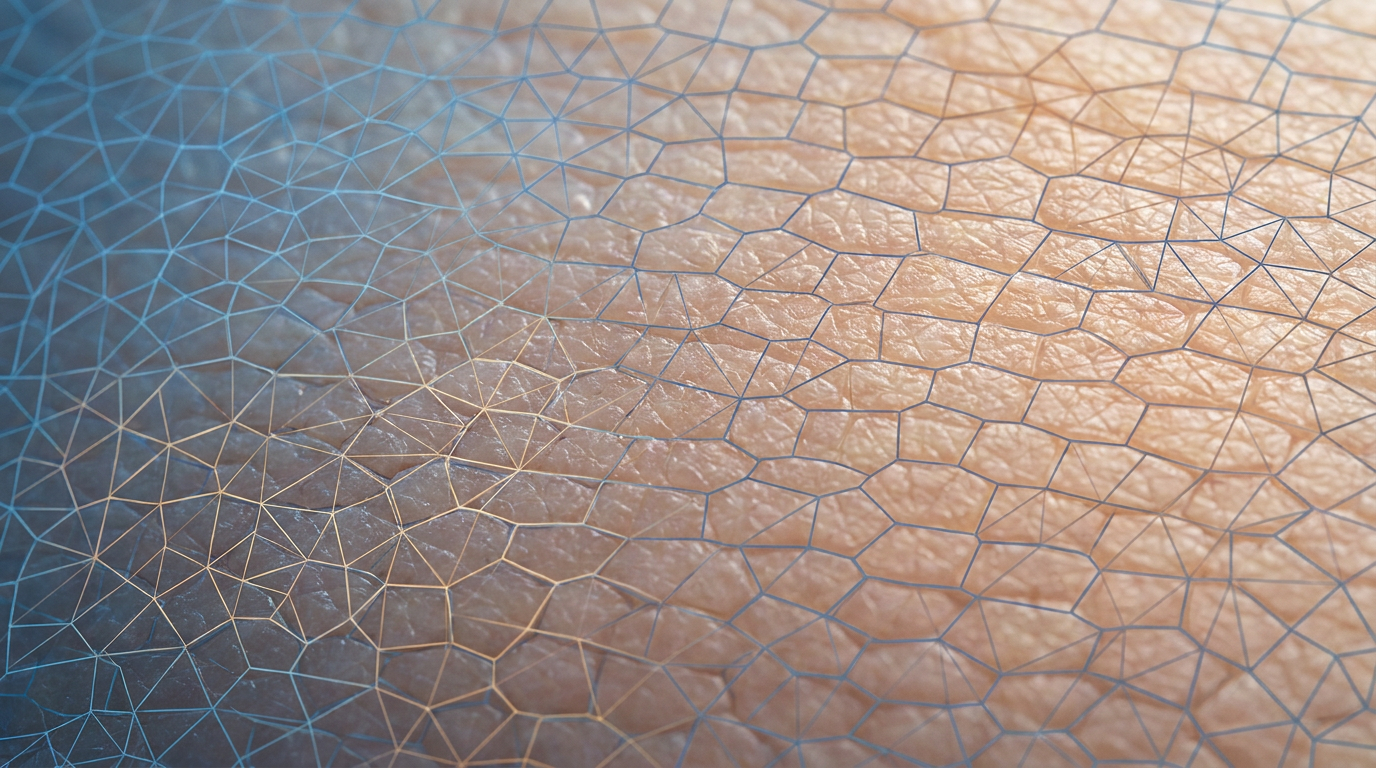
To understand how barrier repair works, scientists rely on the "brick and mortar" model of the stratum corneum—the outermost layer of the epidermis. In this microscopic architecture, the "bricks" are corneocytes, which are toughened, dead skin cells that provide structural integrity. The "mortar" holding these cells together is a complex matrix of intercellular lipids. When this lipid matrix is robust and intact, it forms an impermeable seal that locks moisture inside the body while keeping environmental pollutants, allergens, and microbial pathogens out.[1][5]
However, when this barrier is compromised by over-exfoliation, harsh weather, or genetic predispositions, the mortar begins to degrade. This degradation leads to a phenomenon known as transepidermal water loss (TEWL), where essential moisture evaporates into the air, leaving the skin dehydrated and vulnerable. A broken barrier is the underlying culprit behind a host of inflammatory dermatoses, including atopic dermatitis, rosacea, and chronic acne. Symptoms often manifest as persistent stinging, redness, and a sudden intolerance to previously safe skincare products.[1][4]

To combat this, dermatologists have developed a targeted clinical approach often summarized by the "TLC" concept: target skin disruption, lock in moisture, and connect skin cells. This multilevel strategy relies on a specific triad of biochemical ingredients to restore homeostasis. Rather than applying temporary occlusives that merely sit on the surface, modern formulations aim to supply the skin with bioidentical compounds that it can assimilate directly into its damaged lipid matrix.[5][7]
The most critical components of this repair process are ceramides. These naturally occurring lipid molecules are the heavy lifters of the stratum corneum, making up approximately 50% of the skin barrier's total lipid composition by weight. Ceramides function as the primary waterproofing agents of the skin. As the body ages, or when it is subjected to chronic environmental stress, natural ceramide production drops precipitously, leading to a structurally weaker barrier.[1][3]
Topical application of synthetic or plant-derived ceramides—often listed on ingredient labels as Ceramide NP, AP, or EOP—can effectively fill the microscopic gaps in a damaged barrier. However, clinical research indicates that ceramides do not work optimally in isolation. The most effective barrier repair occurs when ceramides are combined with cholesterol and free fatty acids in a precise 3:1:1 ratio, which mimics the skin's natural lipid balance and accelerates the restoration of the stratum corneum.[5][7]

While ceramides rebuild the structural mortar, they require a reservoir of water to seal inside. This is where humectants like hyaluronic acid enter the equation. Unlike lipids, hyaluronic acid is a glycosaminoglycan—a sugar molecule naturally found in the skin's connective tissue that acts as a moisture magnet. It possesses the remarkable ability to draw and hold up to 1,000 times its own weight in water, pulling hydration from the deeper dermal layers up into the epidermis.[3][7]
While ceramides rebuild the structural mortar, they require a reservoir of water to seal inside.
The synergy between hyaluronic acid and ceramides is a cornerstone of effective barrier therapy. Hyaluronic acid floods the cellular environment with necessary hydration, plumping the skin and facilitating optimal enzymatic function. Ceramides then form a watertight seal over this hydration, preventing it from evaporating into the environment. Without the lipid seal provided by ceramides, the moisture drawn by hyaluronic acid would quickly be lost to the air, particularly in dry climates.[3][5]
Beyond basic hydration and lipid repair, the frontier of skincare science has increasingly turned to peptides to actively regenerate damaged tissue. Peptides are short chains of amino acids that serve as the fundamental building blocks for essential structural proteins like collagen, elastin, and keratin. Because full protein molecules are too large to penetrate the skin, scientists utilize these smaller peptide fragments to deliver targeted biological messages directly to living cells.[2][6]
The efficacy of topical peptides hinges on overcoming the "500 Dalton Rule," a pharmacological principle stating that molecules heavier than 500 Daltons cannot easily cross the stratum corneum. To bypass this anatomical fortress, cosmetic chemists engineer specific peptide sequences that are small enough to penetrate the lipid matrix or utilize specialized delivery systems to ensure these active compounds reach the deeper layers where cellular signaling occurs.[2][6][7]

Once inside the skin, different classes of peptides perform highly specialized functions. "Signal peptides" are perhaps the most widely utilized in regenerative aesthetics. These molecules artificially mimic the breakdown products of natural collagen. When the skin's receptors detect these fragments, they are tricked into believing that a massive collagen degradation event has occurred, prompting the fibroblasts to synthesize fresh collagen and elastin to repair the perceived damage.[2][6]
Another vital category includes "carrier peptides," which transport essential trace minerals deep into the epidermis. Copper tripeptide, for instance, is a well-documented carrier that delivers copper ions to enzymatic pathways responsible for wound healing and tissue remodeling. Clinical trials have demonstrated that these carrier peptides not only accelerate the repair of a damaged barrier but also possess potent anti-inflammatory properties that soothe irritated, reactive skin.[2][6]
Additionally, "neuro-modulating peptides" offer a different mechanism of action by interacting with the chemical messengers that control facial muscle contractions. Compounds like acetyl hexapeptide-8 work by mildly inhibiting the release of acetylcholine, effectively softening the appearance of dynamic fine lines in a manner conceptually similar to, though far less invasive than, clinical injectables.[6]
Despite the clinical efficacy of these ingredients, dermatologists emphasize that barrier repair is a biological process that requires patience. Unlike the immediate, superficial smoothness provided by a harsh exfoliant, rebuilding the stratum corneum takes time. Patients typically notice improvements in hydration and a reduction in stinging within the first two weeks, but full structural restoration of the lipid matrix generally requires four to eight weeks of consistent, gentle care.[3][7]

Emerging research also highlights the profound connection between systemic health and epidermal resilience. The skin's ability to synthesize its own ceramides and peptides is heavily influenced by the gut microbiome and systemic inflammation. Short-chain fatty acids produced by healthy gut bacteria provide the necessary precursors for lipid synthesis, suggesting that true barrier repair is an inside-out process that benefits from both topical intervention and internal nutritional support.[4][7]
Ultimately, the elevation of ceramides, hyaluronic acid, and peptides from specialized medical treatments to everyday skincare essentials marks a maturation in how we approach skin health. By moving away from a cycle of continuous damage and inflammation, and instead providing the skin with the precise biochemical tools it needs to heal itself, modern dermatology offers a scientifically grounded path to long-term resilience and vitality.[1][5]
How we got here
1980s
Researchers identify the critical 3:1:1 optimal ratio of ceramides, cholesterol, and fatty acids required for skin barrier repair.
2002
Clinical research presented at the American Academy of Dermatology demonstrates that synthetic peptides can successfully stimulate collagen production.
2020s
The skincare industry experiences a massive paradigm shift, moving away from harsh daily exfoliants toward barrier-fortifying routines.
Viewpoints in depth
Clinical Dermatologists
Focus on repairing the stratum corneum to treat underlying inflammatory conditions like eczema and rosacea.
For medical dermatologists, barrier repair is not a cosmetic luxury but a clinical necessity. They view the degradation of the lipid matrix as the primary driver of transepidermal water loss (TEWL) and subsequent immune responses. From this perspective, replenishing ceramides and utilizing humectants is the first-line defense against chronic dermatoses, prioritizing structural integrity over superficial anti-aging metrics.
Cosmetic Chemists
Focus on formulation stability, molecular weight, and advanced delivery systems for active ingredients.
Formulators and cosmetic chemists approach barrier repair as a biochemical engineering challenge. Their primary concern is the '500 Dalton Rule' and ensuring that active ingredients like peptides and hyaluronic acid can actually penetrate the stratum corneum without degrading. They emphasize that the presence of an ingredient on a label is meaningless without a sophisticated delivery mechanism, such as encapsulation or precise lipid ratios (like the 3:1:1 ceramide-to-cholesterol ratio), to ensure bioavailability.
Integrative Skincare Researchers
Focus on the holistic connection between the skin microbiome, gut health, and endogenous lipid production.
Integrative researchers argue that topical applications are only half the equation. They highlight the emerging science connecting gut dysbiosis to systemic inflammation, which can actively suppress the skin's natural ability to synthesize ceramides. This camp advocates for a dual approach: using topical barrier creams to seal the skin externally, while supporting the microbiome internally through diet and oral supplements to boost the body's endogenous lipid production.
What we don't know
- Whether oral ceramide supplements can effectively replace or significantly outperform topical applications for patients with severe, chronic barrier dysfunction.
- The long-term comparative efficacy of newer, experimental 'microproteins' and exosomes versus well-established synthetic peptides.
- Exactly how individual variations in the skin microbiome alter the absorption and efficacy of topically applied barrier-repair ingredients.
Key terms
- Stratum Corneum
- The outermost layer of the epidermis, consisting of dead skin cells and lipids, which acts as the body's primary protective barrier.
- Transepidermal Water Loss (TEWL)
- The process by which water passively evaporates through the skin into the external environment, often exacerbated by a damaged barrier.
- Humectant
- A substance, such as hyaluronic acid or glycerin, that attracts and binds water molecules to keep the skin hydrated.
- Corneocytes
- Toughened, dead skin cells that act as the 'bricks' in the skin barrier's structure.
- Fibroblasts
- Cells located deep in the dermis that are responsible for synthesizing collagen, elastin, and the structural framework of tissues.
Frequently asked
How long does it take to repair a damaged skin barrier?
While you may notice improved hydration and less stinging within a few days, full structural restoration of the lipid matrix typically takes four to eight weeks of consistent care.
Can I use exfoliating acids while repairing my barrier?
Dermatologists strongly recommend pausing all harsh exfoliants, retinoids, and strong acids until the barrier is fully healed to prevent further lipid degradation.
Are ceramides the same thing as hyaluronic acid?
No. Ceramides are lipids (fats) that seal the skin to prevent moisture loss, while hyaluronic acid is a humectant that draws water into the skin. They work best when used together.
Do topical peptides actually work for anti-aging?
Yes, clinical studies show that specific peptides, when formulated correctly to penetrate the skin, can signal cells to produce more collagen and elastin, reducing the appearance of fine lines.
Sources
Source coverage
7 outlets
3 viewpoints surfaced







[1]Journal of Clinical and Aesthetic DermatologyClinical Dermatologists
Epidermal Barrier Dysfunctions and Stratum Corneum Self-Repair
Read on Journal of Clinical and Aesthetic Dermatology →[2]MDPICosmetic Chemists & Formulators
Topical Peptides as Cosmeceuticals
Read on MDPI →[3]Cleveland ClinicPublic Health & Education
What Are Ceramides and How Do They Help Your Skin?
Read on Cleveland Clinic →[4]Dove PressClinical Dermatologists
The Neuroimmune Axis in Atopic Dermatitis: From Pathogenic Mechanisms to Targeted Neuroimmunotherapy
Read on Dove Press →[5]KargerClinical Dermatologists
A Functional Model of the Skin Barrier and the Role of Moisturizers
Read on Karger →[6]The PMFA JournalCosmetic Chemists & Formulators
The role of topical peptides in regenerative aesthetics
Read on The PMFA Journal →[7]Factlen Editorial TeamPublic Health & Education
Synthesis by Factlen editorial team
Read on Factlen Editorial Team →

Every angle. Every day.
Get lifestyle stories with full source coverage and perspective breakdowns delivered to your inbox.