
Evaluating the Trade-Offs Between Next-Generation Bio-Leathers and Traditional Animal Hides
As mycelium and cactus-based materials reach commercial scale, the fashion industry faces a turning point in sustainable sourcing. A detailed comparison reveals the distinct environmental benefits and structural trade-offs between innovative bio-leathers and traditional animal hides.
By Factlen Editorial Team
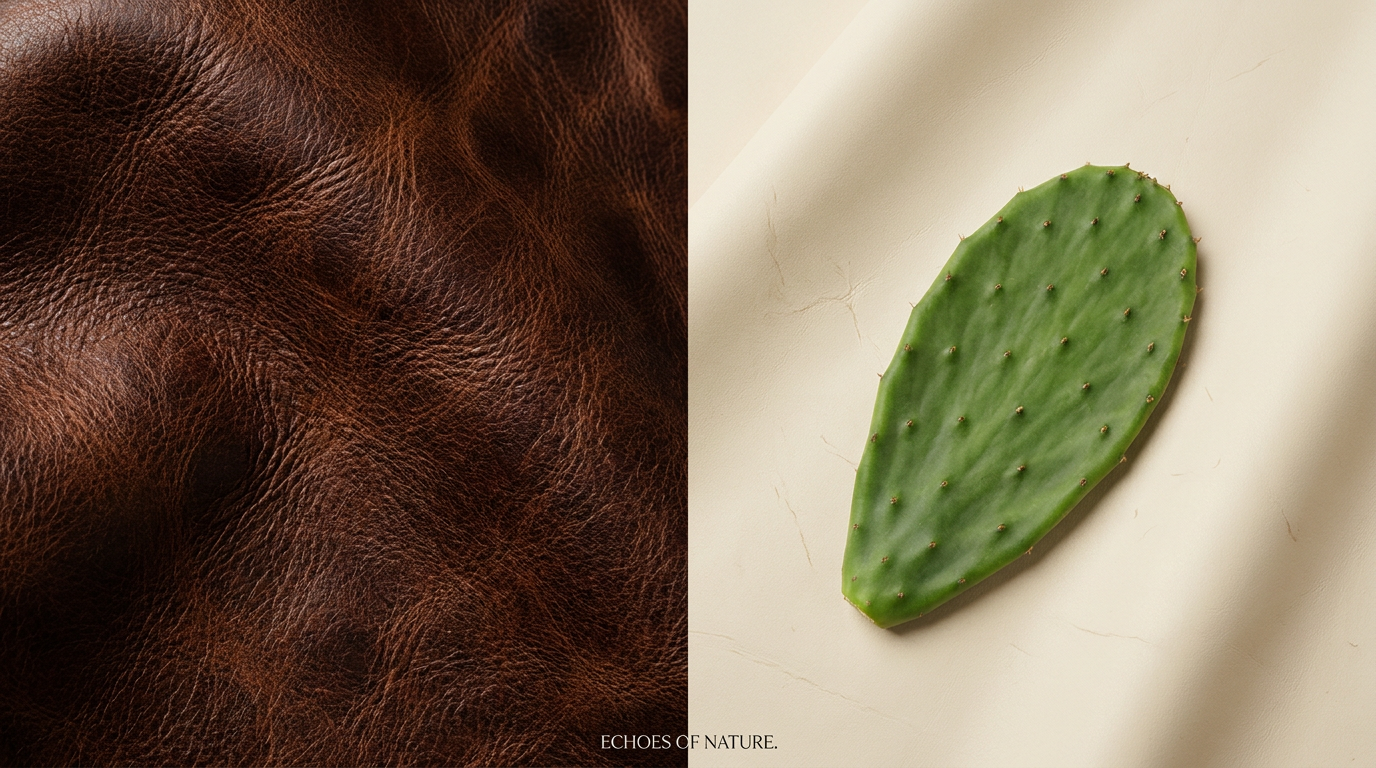
- Next-Gen Material Advocates
- Argue that bio-leathers are essential for decarbonizing fashion and ending reliance on animal agriculture.
- Lifecycle Pragmatists
- Focus on the full environmental math, noting that bio-leathers still use plastic binders and may not last as long.
- Supply Chain Analysts
- View the shift through market dynamics, focusing on cost reduction, scalability, and consumer demand.
What's not represented
- · Tannery workers in developing nations
- · Cattle farmers reliant on hide sales
- · End-of-life textile recyclers
Why this matters
As next-generation materials reach commercial scale, consumers are no longer forced to choose between cheap plastics and environmentally costly animal hides. Understanding the genuine trade-offs between traditional and bio-based leathers empowers shoppers to align their wardrobes with their values without sacrificing durability or style.
Key points
- Next-generation bio-leathers, such as those made from mycelium and cactus, are rapidly challenging traditional animal leather in the fashion industry.
- Bio-leathers offer dramatic environmental benefits, including up to 97% less water usage and 89% fewer greenhouse gas emissions.
- Traditional full-grain animal leather still holds the advantage in absolute longevity, capable of lasting decades with proper care.
- Many current plant-based leathers still rely on polyurethane (PU) backings for structural integrity, complicating their end-of-life biodegradability.
- The choice between the two materials depends heavily on whether a consumer prioritizes immediate carbon reduction or multi-decade product lifespan.
As the global fashion industry enters 2026, the conversation around sustainable sourcing has moved from experimental prototypes to mainstream commercial reality. At the center of this shift is a fierce debate over the future of fashion's most ubiquitous premium material: leather. Consumers and brands are increasingly forced to choose between traditional animal-derived leather, which has defined luxury for centuries, and a rapidly expanding class of next-generation bio-leathers engineered from mycelium, cactus, and agricultural waste. This transition represents more than just a change in aesthetics; it is a fundamental rethinking of how materials are cultivated, processed, and ultimately returned to the earth. For the modern shopper, navigating this landscape requires looking past the marketing hype to understand the genuine trade-offs between the old standard and the new innovators.[9]
The stakes for this material transition are exceptionally high. The worldwide sustainable fabrics market is expanding at a rapid pace, driven by both shifting consumer expectations and looming regulatory pressures regarding supply chain transparency. Industry forecasts now project that next-generation materials could account for up to eight percent of the total global fiber market by 2030, a massive leap from their current footprint. This growth is not merely ideological; strategic adoption of these materials is expected to reduce the cost of goods sold for major brands over the next five years. As bio-leathers scale up to meet this demand, they invite a rigorous, side-by-side comparison with traditional leather across metrics of durability, environmental impact, and practical everyday use.[2][5][7]
When evaluating traditional animal leather, the primary argument for its continued use remains its unmatched longevity and structural integrity. The evidence for this durability is well-documented in both historical use and modern material science. High-quality, full-grain bovine leather possesses a dense, interwoven fiber structure that allows it to withstand decades of heavy physical wear without catastrophic failure. In laboratory testing, conventional leather consistently achieves a tensile strength of nearly sixteen megapascals, setting the high-water mark for flexible apparel materials. This inherent toughness means that a well-cared-for leather jacket or pair of boots can easily last twenty years or more, developing a unique patina rather than degrading into an unusable state.[1][9]

Furthermore, proponents of traditional leather argue that it serves a practical role in waste reduction, as it is primarily a byproduct of the global meat and dairy industries. If these animal hides were not tanned and repurposed into durable goods, millions of tons of biological waste would be sent directly to landfills, generating significant methane emissions as they decompose. Additionally, when processed using natural vegetable tanning methods rather than heavy metals, traditional leather is inherently biodegradable at the end of its long lifecycle. For consumers who prioritize buying a single, heirloom-quality item that will never need to be replaced, traditional leather presents a compelling case for long-term resource efficiency.[4][8]
Conversely, the argument against traditional leather centers on its severe and immediate environmental toll, alongside pressing ethical concerns regarding animal welfare. Evidence shows that conventional cattle farming is a massive driver of deforestation, land degradation, and greenhouse gas emissions. Even when viewed strictly as a byproduct, the economic value of hides subsidizes the broader ecological footprint of animal agriculture. Furthermore, the conventional tanning process is notoriously toxic; it relies heavily on chromium and other harsh chemicals that frequently result in hazardous wastewater runoff, polluting local ecosystems and posing severe health risks to tannery workers in developing nations.[1][4]
Turning to next-generation bio-leathers, the argument for their rapid adoption is driven by dramatic ecological savings and completely cruelty-free production models. The evidence supporting these materials is striking. Comprehensive lifecycle assessments reveal that cultivating mycelium—the root structure of fungi—or harvesting rain-fed nopal cacti requires a fraction of the resources needed for livestock. Specifically, producing bio-leather can reduce water consumption by up to ninety-seven percent and slash greenhouse gas emissions by eighty-nine percent compared to conventional animal leather. Furthermore, agricultural operations like cactus farming act as active carbon sinks, sequestering thousands of tons of carbon dioxide annually while regenerating the soil.[1][6]

Turning to next-generation bio-leathers, the argument for their rapid adoption is driven by dramatic ecological savings and completely cruelty-free production models.
Additionally, these bio-materials are rapidly approaching both the price parity and performance benchmarks required to compete on a global scale. Recent material testing demonstrates that high-quality mycelium leather can achieve a tensile strength of over twelve megapascals—roughly seventy-eight percent of the strength of conventional leather. When treated with biodegradable coatings like polylactic acid, some bio-leathers can even exceed the tear and flex strength of animal hides. As production costs drop from over one hundred dollars per square meter a decade ago to roughly twenty-three dollars today, bio-leathers are becoming highly suitable for everyday fashion applications without carrying the heavy environmental guilt of their animal-based counterparts.[1][3]
However, the argument against current bio-leathers focuses heavily on their reliance on synthetic binders and their unproven multi-decade lifespans. Evidence from material analyses reveals that many popular plant-based leathers, including leading cactus and apple variants, are not entirely natural. To achieve the necessary flexibility and structural stability required for footwear and handbags, the organic biomass is frequently mixed with or backed by polyurethane (PU)—a synthetic plastic polymer. This reliance on petroleum-derived plastics complicates the material's end-of-life biodegradability and introduces the risk of microplastic pollution as the garment eventually breaks down, leading critics to argue that they are simply a greener version of traditional synthetic pleather.[4][8]
Furthermore, because these next-generation materials have only been on the commercial market for a few years, their long-term durability remains largely theoretical. Current industry estimates suggest that a high-quality cactus or mycelium leather product has a functional lifespan of roughly five to ten years under normal wear conditions. This falls significantly short of the twenty-plus years expected from premium animal leather. Pragmatists argue that if a consumer has to replace a bio-leather handbag three times over a twenty-year period, the cumulative manufacturing footprint and waste generation may negate some of the initial carbon and water savings touted by the material's creators.[8]

Ultimately, traditional animal leather fits well when the consumer requires a product that will endure decades of heavy physical wear and exposure to the elements. It is the optimal choice for items like heavy-duty work boots, motorcycle protective gear, equestrian equipment, or heirloom luggage. In these specific applications, the unmatched tensile strength, natural breathability, and ability to be repeatedly conditioned and repaired make traditional leather functionally superior. It is the right choice when maximum durability and a multi-decade lifespan are the absolute highest priorities for the buyer.[9]
Conversely, traditional leather does not fit well when the buyer is highly focused on minimizing their immediate carbon footprint, strictly avoiding animal products, or purchasing fast-moving fashion trends. If an item is only intended to be worn for a few seasons before going out of style, investing in a material designed to last a century is ecologically and economically inefficient. It is also a poor fit for consumers who are uncomfortable with the opaque, chemical-heavy supply chains that still dominate the majority of the global commercial tanning industry.[9]

On the other hand, bio-based leather fits well when the buyer prioritizes a drastically reduced environmental footprint, cruelty-free production, and everyday fashion utility. It is ideal for consumer goods like luxury handbags, casual sneakers, wallets, and lightweight jackets. For these items, the twelve-megapascal tensile strength of mycelium or cactus leather is more than sufficient to provide years of reliable use. It is the perfect choice for consumers who want premium aesthetics and a soft, luxurious hand-feel, but who also want their purchasing power to align with modern sustainability metrics and climate goals.[9]
Bio-based leather does not fit well when the application demands extreme structural integrity, when the user expects the item to last a lifetime without degrading, or when the buyer is strictly avoiding any synthetic polymers in their wardrobe. Until material scientists can completely phase out polyurethane binders while maintaining commercial-grade strength, purists seeking a one-hundred-percent natural, plastic-free garment may find current bio-leathers lacking. It is not yet a true one-to-one replacement for heavy-duty heritage items, but rather a highly effective alternative for the vast majority of everyday fashion needs.[9]
How we got here
2019
Desserto, the first highly commercialized cactus-based leather, officially launches in Mexico.
2021
Major luxury and athletic brands begin releasing prototype footwear and handbags made from mycelium leather.
2023
Lifecycle assessments confirm that lab-grown and plant-based leathers offer massive reductions in water use and carbon emissions compared to cattle farming.
2025
Industry reports project that next-generation materials could capture up to 8% of the global fiber market by 2030.
Viewpoints in depth
Next-Gen Material Advocates
Argue that bio-leathers are essential for decarbonizing fashion and ending reliance on animal agriculture.
This camp emphasizes the staggering environmental savings of bio-based materials. By pointing to lifecycle assessments that show up to 97% reductions in water use and massive drops in greenhouse gas emissions, they argue that the fashion industry must rapidly scale these technologies. They view the current reliance on synthetic binders as a temporary stepping stone toward fully biodegradable, circular materials that completely remove animals from the supply chain.
Lifecycle Pragmatists
Focus on the full environmental math, noting that bio-leathers still use plastic binders and may not last as long.
Pragmatists caution against viewing current bio-leathers as a flawless silver bullet. They highlight that materials like cactus leather often require polyurethane backings for structural integrity, which complicates end-of-life biodegradability and introduces microplastics. Furthermore, they argue that if a bio-leather jacket must be replaced every five years while an animal leather jacket lasts fifty, the overall consumption cycle may negate some of the initial carbon savings.
Supply Chain Analysts
View the shift through market dynamics, focusing on cost reduction, scalability, and consumer demand.
For analysts, the debate is less about ideology and more about economics. They track the projected growth of the next-gen fiber market, noting that as production scales, bio-materials could reduce the cost of goods sold for major brands. Their focus is on overcoming high minimum order quantities and building the infrastructure necessary to make mycelium and plant-based leathers financially competitive with traditional tanning on a global scale.
What we don't know
- How the long-term durability of bio-leathers will hold up over decades of real-world use, as the materials are still relatively new.
- When bio-leather manufacturers will be able to completely phase out synthetic polyurethane binders while maintaining commercial-grade strength.
- Whether the global supply chain can scale quickly enough to meet the projected demand for next-generation materials by 2030.
Key terms
- Mycelium
- The vegetative, root-like structure of fungi that can be grown into dense, durable mats used to create leather alternatives.
- Tensile Strength
- The maximum amount of stress or pulling force a material can withstand before breaking or tearing.
- Polyurethane (PU)
- A synthetic plastic polymer often used as a backing or coating in vegan leathers to improve durability and flexibility.
- Lifecycle Assessment (LCA)
- A comprehensive analysis of the environmental impact of a product throughout its entire lifespan, from raw material extraction to disposal.
- Scope 3 Emissions
- Indirect greenhouse gas emissions that occur in a company's value chain, such as the emissions from producing the raw materials they purchase.
Frequently asked
Is cactus leather completely plastic-free?
Not always. While the primary material is derived from the nopal cactus, many commercial versions currently use a polyurethane (PU) backing or binder to provide the necessary flexibility and strength.
How long does bio-based leather last compared to animal leather?
Current estimates suggest high-quality bio-leathers last between 5 to 10 years with proper care, whereas premium full-grain animal leather can last 20 years or more.
Does mycelium leather feel like real leather?
Yes, mycelium can be engineered to closely mimic the texture, drape, and hand-feel of traditional animal leather, and it even achieves about 78% of its tensile strength.
Are bio-leathers more expensive than traditional leather?
Historically yes, but costs are dropping rapidly. Production costs for some bio-materials have fallen to around $23 per square meter, approaching the $18-$22 range of conventional leather.
Sources
Source coverage
9 outlets
3 viewpoints surfaced









[1]Journal of Biological SciencesSupply Chain Analysts
Technical feasibility and economic sustainability of biomaterial production
Read on Journal of Biological Sciences →[2]Council of Fashion Designers of AmericaNext-Gen Material Advocates
Scaling Next-Gen Materials in Fashion
Read on Council of Fashion Designers of America →[3]FaunalyticsNext-Gen Material Advocates
Fungi Fashion: The Sustainable Appeal Of Mycelium Leather
Read on Faunalytics →[4]SustamizeLifecycle Pragmatists
Environmental impact of different types of leather materials
Read on Sustamize →[5]HKTDC ResearchSupply Chain Analysts
Next-Gen Materials: What Buyers Need to Know for Sourcing Success in 2026
Read on HKTDC Research →[6]Collective Fashion JusticeNext-Gen Material Advocates
Desserto cactus leather life cycle assessment
Read on Collective Fashion Justice →[7]Suston MagazineNext-Gen Material Advocates
Report predicts next-gen materials are poised to scale up – fast
Read on Suston Magazine →[8]Eiken ShopLifecycle Pragmatists
Cactus Leather: Does it Live Up to the Hype?
Read on Eiken Shop →[9]Factlen Editorial TeamLifecycle Pragmatists
Synthesis by Factlen editorial team
Read on Factlen Editorial Team →
Every angle. Every day.
Get shopping stories with full source coverage and perspective breakdowns delivered to your inbox.