
Solid-State Batteries Finally Hit Mainstream Consumer Gadgets
After decades of research, solid-state batteries are arriving in 2026 consumer electronics, delivering multi-day battery life, 15-minute charging, and eliminating fire risks.
By Factlen Editorial Team
- Consumer Tech Brands
- Focused on utilizing the space-saving and thermal benefits to design thinner, faster-charging laptops and phones.
- Battery Innovators
- Startups and specialized manufacturers pushing aggressive timelines to disrupt the legacy lithium-ion market.
- Scientific Skeptics
- Academic researchers and legacy automakers urging caution regarding unverified claims of infinite cycle life and immediate EV scale.
What's not represented
- · Lithium mining communities affected by the shift to pure lithium metal anodes
- · Recycling facilities tasked with processing the new ceramic and polymer materials
Why this matters
For the first time in three decades, the fundamental chemistry powering our daily lives is changing. Solid-state technology means laptops that genuinely last 24 hours, phones that charge in minutes without degrading, and the complete elimination of battery fire risks in homes and airplanes.
Key points
- Solid-state batteries replace flammable liquid electrolytes with solid ceramics or polymers.
- Samsung's Galaxy S26 is the first mainstream smartphone to feature the technology.
- Dell and Lenovo are introducing laptops capable of 24 hours of continuous real-world use.
- The solid architecture prevents dendrite growth, allowing for pure lithium metal anodes.
- China is set to release the world's first official solid-state battery standard in July 2026.
- While consumer electronics are adopting the tech now, mass EV deployment remains a few years away.
For three decades, the lithium-ion battery has been the invisible ceiling on consumer technology. No matter how fast processors became or how bright displays shone, devices were tethered to the wall by a volatile liquid chemistry. In mid-2026, that ceiling has finally shattered as solid-state batteries—long dismissed as the "always five years away" vaporware of the tech industry—officially hit the mainstream market.[1][2]
The transition away from liquid electrolytes is no longer a lab experiment. From ultra-slim power banks to 24-hour laptops and the first commercial smartphones, the technology is fundamentally altering the capabilities of portable electronics. Engineers are now moving past the theoretical hurdles of solid electrolytes to deliver products that charge faster, last longer, and operate safely in extreme conditions.[1][7]
The most visible milestone arrived with Samsung's Galaxy S26, the first flagship smartphone to integrate a solid-state cell. The device achieves all-day battery life under heavy use, charges fully in under 20 minutes, and is rated to retain 90 percent of its original capacity after 1,500 charge cycles—roughly three times the lifespan of conventional smartphone batteries.[1][2]
The laptop market is following suit. Dell and Lenovo have announced new models featuring solid-state batteries that deliver a genuine 24 hours of active use, rather than manufacturer-estimated numbers that bear little relation to real-world workflows. Because the solid cells double as structural separators, they eliminate bulky safety components, allowing for radically thinner chassis designs.[1]

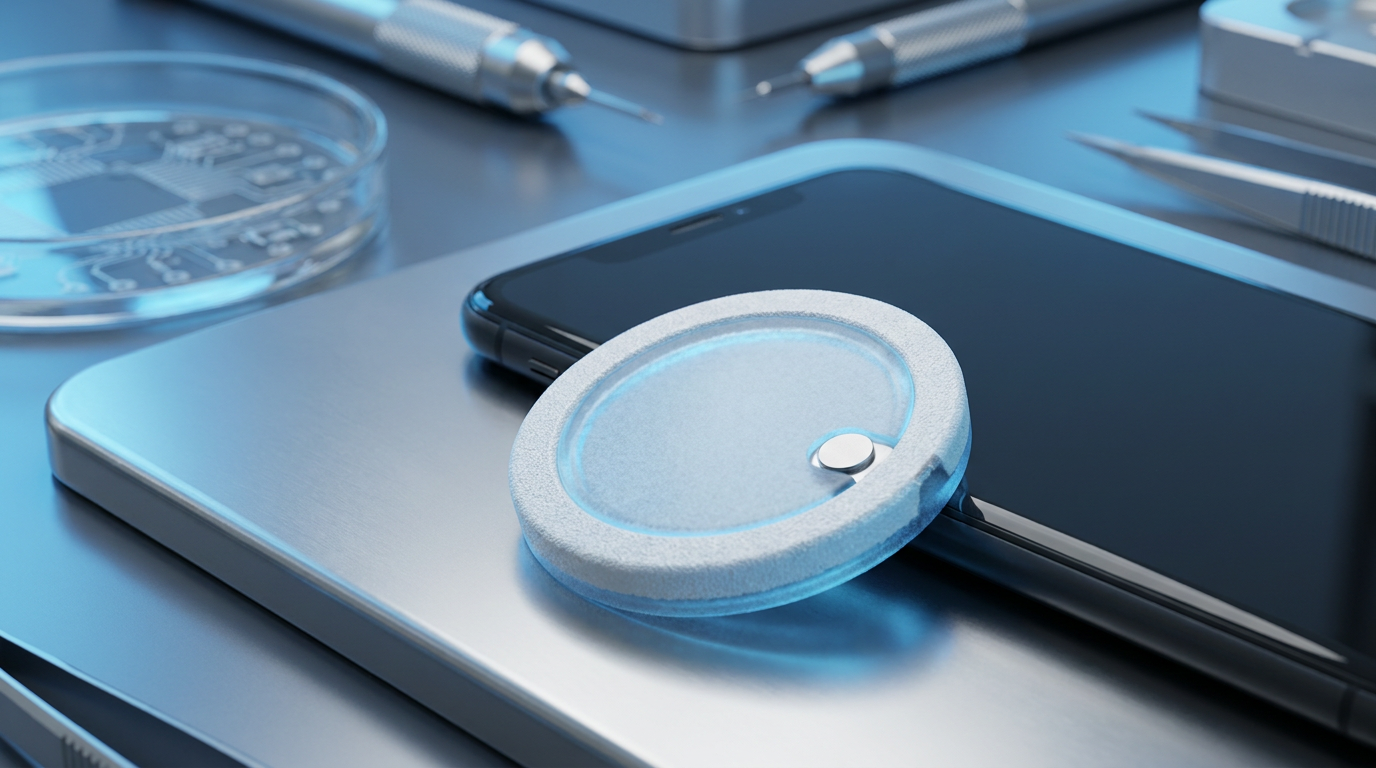
The accessory ecosystem is also transforming. At the Consumer Electronics Show (CES) earlier this year, Better Mobile Xperience (BMX) debuted its SolidSafe Air power banks. Utilizing a semi-solid-state electrolyte, the 5,000 mAh version measures a mere 6.8 millimeters thick while supporting 140W fast charging, proving that the technology can be miniaturized without losing its thermal advantages.[2][5]
To understand the breakthrough, one must look inside the cell. Traditional lithium-ion batteries rely on a liquid electrolyte to shuttle lithium ions between the anode and cathode. This liquid is inherently flammable, degrades with every charge cycle, and limits how densely energy can be packed before the cell becomes unstable.[3][7]
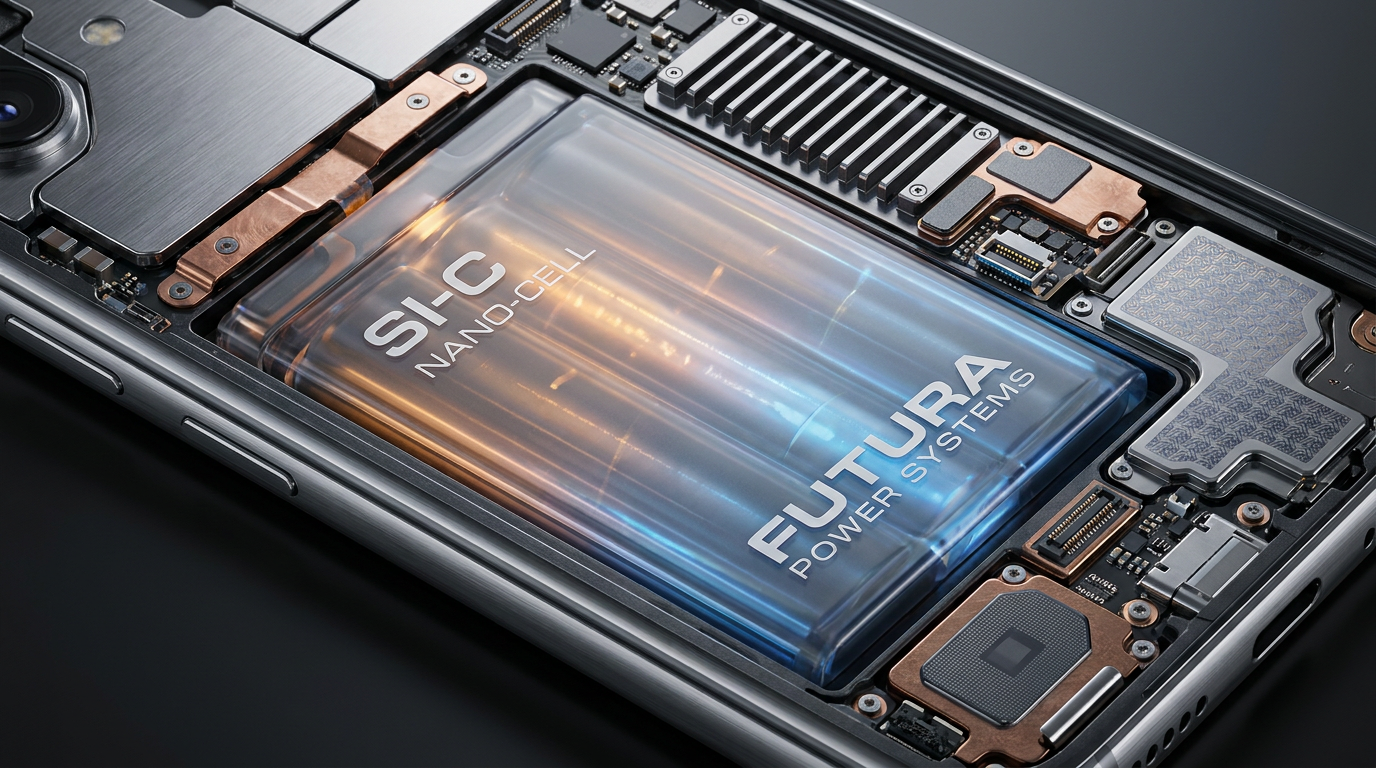
Solid-state batteries replace that liquid with a solid material—typically a specialized ceramic, glass, or polymer. This simple swap suppresses the growth of "dendrites," microscopic metallic whiskers that form over time in liquid batteries and can pierce internal structures to cause catastrophic short circuits.[3][5]
Solid-state batteries replace that liquid with a solid material—typically a specialized ceramic, glass, or polymer.
By eliminating the threat of dendrites, engineers can safely use pure lithium metal anodes instead of the heavier graphite used in traditional cells. The result is a massive leap in energy density. While today's best lithium-ion cells hover around 200 to 260 watt-hours per kilogram (Wh/kg), the new solid-state generation is pushing 350 to 500 Wh/kg.[3][6]

Beyond longevity and power, the most profound impact is safety. Because solid-state cells contain no volatile liquids, they are intrinsically non-flammable. They will not catch fire if punctured, crushed, or overheated, effectively eliminating the thermal runaway risks that have historically grounded hoverboards and prompted strict airplane baggage bans.[1][3]
The solid architecture also unlocks entirely new form factors. Because the batteries do not require rigid, pressurized cylindrical or prismatic casings to contain liquids, they can be screen-printed or cut into custom shapes. This allows manufacturers to fit batteries into the exact contours of a drone, a smartwatch strap, or an augmented reality headset.[1][7]
While consumer electronics serve as the beachhead, the automotive sector remains the ultimate prize. Verge Motorcycles, partnering with Finnish startup Donut Lab, recently unveiled an electric motorcycle boasting a 370-mile range and a 10-minute charge time, marking the first time a solid-state battery has powered a production-ready road vehicle.[2][5]

However, the automotive claims have drawn intense scrutiny. Battery researchers and industry veterans have expressed skepticism over Donut Lab's assertions that it can immediately scale to gigawatt-hour production without rare materials. Legacy giants like Toyota and CATL have spent billions on the technology and still target later in the decade for mass electric vehicle deployment, leading experts to demand rigorous third-party validation for startup claims.[6]
Despite the startup drama, the broader industry is undeniably mobilizing for scale. In a massive signal of market maturity, China is set to release its first official solid-state battery standard in July 2026. This regulatory framework is expected to pave the way for standardized, gigawatt-hour-level mass production by companies like GBT.[4]
Meanwhile, established innovators are scaling up their own operations. Taiwan-based ProLogium Technology recently unveiled its "Superfluidized All-Inorganic Solid-State Lithium Ceramic Battery," partnering with European engineering firms to deploy the technology in light vehicles and e-bikes, proving that the manufacturing bottlenecks of the past decade are finally clearing.[5]

The arrival of solid-state batteries in 2026 marks the end of the lithium-ion era's monopoly. As production lines scale and costs inevitably fall, the technology promises to untether consumers from the wall, making "battery anxiety" a relic of the past and fundamentally rewriting the rules of portable power.[1][3]
How we got here
1991
Sony commercializes the first lithium-ion battery, revolutionizing portable electronics.
2010s
Solid-state research accelerates but struggles with manufacturing scale and interface issues.
Jan 2026
BMX and Donut Lab showcase production-ready solid-state power banks and EV cells at the Consumer Electronics Show.
Early 2026
Samsung launches the Galaxy S26, the first flagship phone with a solid-state battery.
July 2026
China is scheduled to release the first national standard for solid-state battery manufacturing.
Viewpoints in depth
Consumer Tech Brands
Leveraging the technology to design thinner, longer-lasting devices.
For consumer electronics manufacturers, the appeal of solid-state batteries goes beyond just longer battery life. Because the solid cells double as structural components and do not require the heavy safety casings of liquid batteries, hardware designers can reclaim significant internal space. This allows for laptops that are millimeters thinner and smartphones that can pack more powerful camera sensors or cooling systems into the same footprint, fundamentally changing industrial design constraints.
Battery Innovators
Startups pushing aggressive timelines and novel manufacturing techniques.
A wave of agile startups is attempting to leapfrog legacy battery makers by introducing novel manufacturing techniques, such as screen-printing solid-state cells into custom shapes. These innovators argue that the transition to solid-state does not require the decades-long timeline proposed by legacy automakers. By focusing first on smaller applications like drones, power banks, and motorcycles, they aim to prove the commercial viability of the technology and force the broader industry to accelerate its adoption.
Scientific Skeptics
Demanding third-party validation for extreme cycle-life and EV scale claims.
While acknowledging the breakthrough in consumer gadgets, academic researchers and legacy automakers urge caution regarding the automotive sector. Scaling a solid-state battery for a smartphone is vastly different from manufacturing gigawatt-hours of cells that must survive the extreme thermal and physical stresses of a moving vehicle. Skeptics point out that claims of 100,000 charge cycles and immediate mass production from unknown startups often lack rigorous, independent peer review, warning that the final push to mass EV deployment will still take years of refinement.
What we don't know
- Whether startup claims of 100,000 charge cycles for EV batteries will hold up to independent testing.
- How quickly manufacturing costs will fall to make solid-state cells standard in budget-tier devices.
- The exact timeline for legacy automakers like Toyota to achieve mass-market scale.
Key terms
- Solid-state battery
- A battery that uses a solid electrolyte, such as ceramic or glass, instead of a liquid one.
- Electrolyte
- The medium that allows ions to flow between the battery's anode and cathode during charging and discharging.
- Dendrites
- Microscopic, needle-like metallic structures that can grow inside liquid batteries, potentially causing short circuits and fires.
- Energy density
- The amount of energy a battery can store relative to its weight, typically measured in watt-hours per kilogram (Wh/kg).
- Anode
- The negative electrode of a battery; solid-state technology allows this to be made of pure lithium metal rather than heavier graphite.
Frequently asked
Will my next phone have a solid-state battery?
Flagship models like the Samsung Galaxy S26 are adopting them in 2026, with broader rollout expected across mid-tier devices by 2027.
Are solid-state batteries really fireproof?
Yes. Because they contain no volatile liquid electrolytes, solid-state batteries are intrinsically non-flammable and will not catch fire if punctured or crushed.
Why did this technology take so long to arrive?
Manufacturing solid electrolytes that maintain perfect contact with the electrodes as the battery naturally expands and contracts during use proved extremely difficult to scale.
Sources
Source coverage
7 outlets
3 viewpoints surfaced







[1]DigatopiaConsumer Tech Brands
Solid-state batteries finally arriving in consumer devices
Read on Digatopia →[2]Android PoliceConsumer Tech Brands
The battery revolution is coming
Read on Android Police →[3]Bonnen BatteriesBattery Innovators
Solid-state batteries (SSBs) are the hot topic of 2026
Read on Bonnen Batteries →[4]ExienentBattery Innovators
Chinese Manufacturers launching GWh-level mass production
Read on Exienent →[5]The American Ceramic SocietyBattery Innovators
Solid-state batteries turn heads at CES 2026
Read on The American Ceramic Society →[6]Swiss Business SchoolScientific Skeptics
Interest across the electric vehicle sector has intensified
Read on Swiss Business School →[7]PhoneArenaConsumer Tech Brands
The future of smartphone batteries is solid-state
Read on PhoneArena →
More in technology
See all 5 stories →AI Defense
The AI Vulnerability Spike: Why a Record Number of Software Bugs is Actually Good News
8 sources

AI Security
How AI is Transitioning from Finding Software Bugs to Automatically Fixing Them
8 sources

Mobile Accessibility
Apple and Google Unveil Breakthrough AI Accessibility Features for Next-Generation Smartphones
6 sources

Every angle. Every day.
Get technology stories with full source coverage and perspective breakdowns delivered to your inbox.