
The Science of Exercise Mimetics: How New Drugs Aim to Replicate the Benefits of a Workout
A new class of drugs known as "exercise mimetics" is entering human clinical trials, aiming to trigger the cellular benefits of physical activity without the sweat. While early data is promising for metabolic health, researchers caution that replacing the full systemic effects of exercise remains a formidable challenge.
By Factlen Editorial Team
- Longevity Biotech Developers
- Focus on extending healthspan by targeting cellular energy sensors to prevent age-related decline.
- Molecular Biologists
- Focus on mapping the exact molecular pathways that mediate physical exertion.
- Clinical Skeptics
- Argue that exercise's systemic benefits cannot be fully replicated by a single molecule.
What's not represented
- · Fitness Industry Professionals
- · Physical Therapists
Why this matters
For the elderly, disabled, or those with severe obesity, exercise is often physically impossible. A drug that mimics its metabolic benefits could prevent muscle wasting, reverse metabolic decline, and extend healthspan for millions who cannot safely work out.
Key points
- Exercise mimetics aim to trigger the cellular benefits of physical activity without physical exertion.
- Phase 1b data for the AMPK activator ATX-304 showed significant metabolic improvements in obese adults.
- Researchers hope to pair mimetics with GLP-1 drugs to prevent muscle loss during weight reduction.
- Experts warn that pills cannot replicate the mechanical load of exercise, which is necessary for bone density.
- The FDA requires these drugs to target specific diseases, like obesity, rather than general aging.
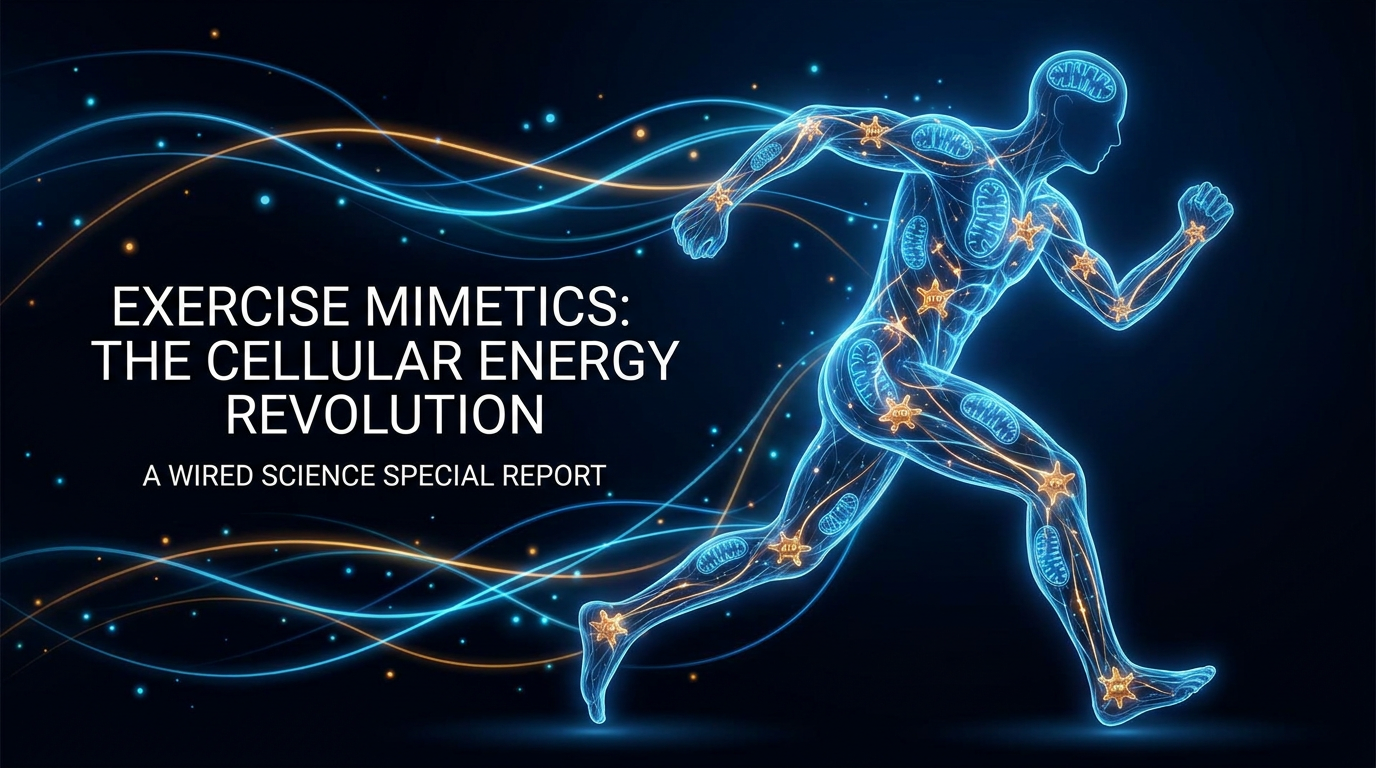
The concept of "exercise in a pill" has long been dismissed as science fiction, or worse, as a marketing gimmick for unregulated dietary supplements. But in 2026, the pursuit of "exercise mimetics" has matured into a legitimate, multi-billion-dollar branch of longevity biotechnology. Driven by advances in cellular metabolism and a massive influx of capital into healthspan research, pharmaceutical companies are now pushing compounds into human clinical trials that aim to trigger the exact biological pathways activated by a grueling workout—without the patient ever breaking a sweat.[1]
The core premise driving this research is simple but profound: physical activity is the most effective known medical intervention for extending human healthspan. Regular exercise improves cardiovascular elasticity, promotes neurogenesis in the brain, clears metabolic waste, and regulates insulin. However, for millions of elderly, disabled, bedridden, or severely obese individuals, rigorous exercise is physiologically impossible. A drug that could artificially induce the metabolic state of a runner could serve as a lifeline, preventing muscle wasting and reversing metabolic decline for those who cannot safely step onto a treadmill.[1]
The scientific challenge of creating such a drug is immense because exercise is a systemic stressor that triggers a highly complex cascade of adaptive responses across multiple organs. To mimic this, researchers are targeting the cellular energy sensors that detect physical exertion. When the body burns ATP (the primary molecule of cellular energy) during a workout, the resulting energy deficit activates specific proteins. These proteins act as master switches, signaling the body to burn stored fat, increase endurance capacity, and build new mitochondria to meet the perceived physical demand.[3]
The most prominent target in the exercise mimetic field is AMP-activated protein kinase (AMPK). AMPK acts as the body's primary metabolic sensor; it is activated naturally when cellular energy levels drop due to fasting, oxygen deprivation, or intense physical exertion. Once activated, AMPK prompts the cell to pull glucose from the bloodstream and mobilize fatty acids to produce more energy. As humans age, the innate ability to activate AMPK naturally declines, leading to the metabolic sluggishness associated with getting older.[7]

A major breakthrough in targeting this pathway occurred in June 2026 at the American Diabetes Association's 86th Scientific Sessions. Cambrian Bio, a clinical-stage longevity biotech company, alongside its pipeline subsidiary Amplifier Therapeutics, presented highly anticipated Phase 1b human data for a drug candidate called ATX-304. ATX-304 is a pan-AMPK activator designed to force the body into a "fast burn" metabolic state, effectively tricking the cells into believing they are undergoing sustained physical exertion.[2]
The Phase 1b trial results provided the first solid clinical evidence that this mechanism could translate successfully to humans. Enrolling adults with obesity and prediabetes, the study demonstrated statistically significant improvements in liver fat, visceral adipose tissue, triglycerides, and resting metabolic rate. Crucially, the drug achieved these metabolic improvements without elevating core body temperature, causing flushing, or increasing heart rate—confirming that the metabolic benefits of exercise could be partially isolated from cardiovascular strain.[2]
The timing of these AMPK activators entering the clinic is critical due to the current landscape of obesity treatments. While GLP-1 weight-loss drugs like Wegovy and Zepbound are highly effective at reducing overall body mass, they frequently cause significant muscle loss alongside fat reduction. Researchers hypothesize that pairing a GLP-1 agonist with an exercise mimetic like ATX-304 could preserve lean muscle mass by keeping the muscle tissue metabolically active, offering a complementary mechanism of action that enhances fat loss while protecting physical strength.[1][8]

The timing of these AMPK activators entering the clinic is critical due to the current landscape of obesity treatments.
Beyond AMPK, researchers are exploring other cellular pathways, most notably the estrogen-related receptors (ERRs). A preclinical compound known as SLU-PP-332 (and its successor SLU-PP-915) has been engineered to activate three specific ERRs. These receptors are heavily involved in the body's adaptation to aerobic exercise. By acting as a synthetic pan-agonist, the drug induces gene programs associated with endurance training directly within skeletal muscle tissue.[4][6]
In preclinical mouse models, these ERR agonists have demonstrated remarkable physiological effects. Administered to sedentary mice, the compounds enhanced treadmill endurance and significantly reduced fat mass, effectively giving the animals the physical conditioning of trained athletes without any actual training. However, these compounds remain strictly in the preclinical phase as research tools; no human efficacy trials have been completed, and translating these specific genetic activations from rodents to humans remains a formidable hurdle.[4]
Another entirely different avenue of exercise mimetic research involves circulating blood factors. Researchers have long known that exercise releases various proteins and molecules into the bloodstream, but the exact systemic effects were difficult to isolate. In a landmark study, researchers at UCSF demonstrated that blood plasma taken from aged mice that exercised regularly could transfer cognitive benefits—including enhanced memory and neurogenesis—when injected into sedentary aged mice.[5]
The UCSF team identified a specific liver-derived protein, Gpld1, which increases significantly after exercise and correlates strongly with improved cognitive function in the brain. This discovery suggests that some of the most profound benefits of exercise, particularly for brain health and warding off dementia, are mediated by endocrine signals that travel through the bloodstream. This opens up the possibility of developing biologic drugs that deliver these specific exercise-induced proteins directly to patients.[5]

Despite these rapid advancements, clinical pharmacologists consistently warn against the hubris of believing a pill can fully replace physical activity. A foundational 2017 paper in Clinical Pharmacology & Therapeutics explicitly cautioned that the development of exercise mimetics is "running without a road map." The authors noted that while mechanistic plausibility exists in animal models, the sheer breadth of exercise's clinical benefits in humans is nearly impossible to capture in a single molecular target.[3]
The most glaring limitation of any pharmacological mimetic is the absence of mechanical load. A pill cannot replicate mechanotransduction—the physical stress placed on bones, joints, and tendons during movement that stimulates bone density and prevents osteoporosis. Furthermore, a molecule cannot easily replicate the complex psychological and mood-stabilizing benefits of a workout, which involve a delicate interplay of endorphins, endocannabinoids, and psychological accomplishment.[1][3]
The regulatory landscape also presents a unique challenge for longevity biotechs. The FDA does not recognize "aging" or a "sedentary lifestyle" as treatable diseases. Therefore, companies cannot run clinical trials simply to prove a drug extends healthy lifespan. Instead, they must develop these mimetics for specific, recognized conditions—such as obesity, cardiometabolic disease, or muscular dystrophy. Only after proving safety and efficacy in these sick populations can the drugs potentially be used as preventative medicines.[1][8]

Looking ahead, the field is moving rapidly from theoretical biology to applied medicine. Based on the success of the Phase 1b data, Cambrian Bio is advancing ATX-304 into Phase 2 trials, dubbed REWIRE-1 and REWIRE-2. These studies will evaluate the drug's utility in muscle-sparing weight loss at higher exposures, marking a critical test of whether the preclinical promise of exercise mimetics can survive the rigorous demands of late-stage human trials.[2][8]
If successful, the first generation of exercise mimetics will not serve as an excuse for the able-bodied to cancel their gym memberships. Instead, they will emerge as a vital medical intervention for those trapped in a cycle of physical and metabolic decline. By offering the cellular benefits of a marathon to those who cannot walk to the starting line, these drugs represent one of the most promising frontiers in the quest to extend human healthspan.[1]
How we got here
2017
Clinical pharmacologists publish foundational papers outlining the theoretical framework and potential pitfalls of exercise mimetics.
2020
UCSF researchers demonstrate that blood plasma from exercised mice can transfer cognitive benefits to sedentary mice.
2023
Cambrian BioPharma launches Amplifier Therapeutics to develop ATX-304, a clinical-stage AMPK activator.
June 2026
Phase 1b human data for ATX-304 is presented at the American Diabetes Association, showing significant metabolic improvements in obese adults.
Viewpoints in depth
Longevity Biotech Developers
Focus on extending healthspan by targeting cellular energy sensors to prevent age-related decline.
This camp views aging not as an inevitable decline, but as a series of metabolic malfunctions that can be corrected. By targeting master energy switches like AMPK, they aim to create 'preventative medicines' that keep cells in a youthful, high-energy state. They argue that while exercise is ideal, a pharmacological alternative is a moral imperative for the elderly, the bedridden, and those suffering from severe obesity who physically cannot achieve the heart rates necessary to trigger these pathways naturally.
Clinical Skeptics
Argue that exercise's systemic benefits cannot be fully replicated by a single molecule.
Pharmacologists and clinical skeptics emphasize that physical activity is a complex, multi-organ stressor. While a pill might successfully trigger fat oxidation in the liver or glucose uptake in muscle, it cannot replicate 'mechanotransduction'—the physical load on bones that prevents osteoporosis. Furthermore, they caution that artificially keeping cellular energy sensors permanently 'switched on' without the corresponding physical exhaustion could have unforeseen long-term consequences, urging a highly cautious approach to human trials.
Molecular Biologists
Focus on mapping the exact molecular pathways that mediate physical exertion.
Basic science researchers are less concerned with immediate commercialization and more focused on the staggering complexity of the body's response to movement. They are mapping how muscle contractions release 'myokines' into the bloodstream, how estrogen-related receptors (ERRs) reprogram gene expression, and how liver proteins like Gpld1 cross the blood-brain barrier to promote neurogenesis. For this camp, exercise mimetics are invaluable research tools that prove the endocrine and metabolic networks of the body are deeply interconnected.
What we don't know
- Whether artificially activating cellular energy sensors long-term carries unforeseen side effects.
- If the muscle-sparing effects seen in animal models will translate to humans taking GLP-1 agonists.
- How regulators will handle the off-label use of these drugs for general healthspan extension once approved for specific diseases.
Key terms
- Exercise Mimetic
- A pharmacological compound designed to replicate the physiological and cellular benefits of physical activity without actual physical exertion.
- AMPK (AMP-activated protein kinase)
- An enzyme that acts as a master metabolic switch, turning on fat-burning and glucose-uptake processes when cellular energy levels drop.
- ERR (Estrogen-related receptor)
- A type of protein receptor in cells that helps regulate energy metabolism and is heavily involved in the body's adaptation to aerobic exercise.
- Mechanotransduction
- The process by which cells convert physical mechanical stimuli—like the impact of running on bones—into chemical activity, crucial for maintaining bone density.
- Healthspan
- The period of a person's life during which they are generally healthy and free from serious or chronic illness, distinct from total lifespan.
Frequently asked
What is an exercise mimetic?
It is a class of experimental drugs designed to activate the same cellular pathways—such as AMPK or ERR—that are normally triggered by physical exertion, mimicking the metabolic benefits of a workout.
Will these drugs replace going to the gym?
No. Experts caution that a pill cannot replicate the mechanical load required for bone density, nor the complex psychological benefits of exercise. They are intended for those who cannot physically work out.
Are any exercise mimetics approved by the FDA?
As of mid-2026, no exercise mimetics are FDA-approved. Several compounds, such as ATX-304, are in early human clinical trials (Phase 1b/2), while others remain in animal testing.
How could these drugs help with weight loss?
Researchers believe that pairing an exercise mimetic with a GLP-1 weight-loss drug could help patients burn fat while preserving lean muscle mass, a common issue with current obesity treatments.
Sources
Source coverage
8 outlets
3 viewpoints surfaced







[1]Factlen Editorial TeamLongevity Biotech Developers
Synthesis by Factlen editorial team
Read on Factlen Editorial Team →[2]American Diabetes AssociationLongevity Biotech Developers
Phase 1b results of ATX-304, an AMPK Network Activator
Read on American Diabetes Association →[3]Clinical Pharmacology & TherapeuticsClinical Skeptics
Exercise Mimetics: Running Without a Road Map
Read on Clinical Pharmacology & Therapeutics →[4]Journal of Pharmacology and Experimental TherapeuticsMolecular Biologists
An orally active estrogen receptor-related receptor agonist, SLU-PP-915, enhances aerobic exercise capacity
Read on Journal of Pharmacology and Experimental Therapeutics →[5]ScienceMolecular Biologists
Blood factors transfer beneficial effects of exercise on neurogenesis and cognition to the aged brain
Read on Science →[6]Frontiers in PhysiologyMolecular Biologists
Targeting ERRs to counteract age-related muscle atrophy associated with physical inactivity
Read on Frontiers in Physiology →[7]Nature Communications BiologyMolecular Biologists
The AMPK activator O304 improves metabolic and exercise capacity in aged mice
Read on Nature Communications Biology →[8]ClinicalTrials.govLongevity Biotech Developers
Study of ATX-304 in Adults With Obesity and Prediabetes (REWIRE-1)
Read on ClinicalTrials.gov →

Every angle. Every day.
Get health stories with full source coverage and perspective breakdowns delivered to your inbox.