
Memory Chip Stocks Hit $1 Trillion Valuations, Yet Remain the AI Boom's Biggest Bargain
Driven by insatiable demand for high-bandwidth memory, giants like Micron and SK Hynix have seen their stock prices triple in 2026. Despite the historic rally, the sector continues to trade at surprisingly low valuation multiples as earnings outpace share prices.
By Factlen Editorial Team
- Value-Focused Investors
- Argue that memory stocks are the best bargain in the AI boom, trading at low forward multiples despite massive cash flow.
- Cyclical Skeptics
- Warn that memory is still a commodity, and the inevitable oversupply from current capacity expansions will eventually crash margins.
- Enterprise IT Buyers
- Concerned about the collateral damage, as the HBM focus causes severe shortages and price hikes for standard DRAM used in everyday servers and PCs.
What's not represented
- · Consumer electronics manufacturers facing higher component costs
- · Retail investors struggling with direct access to Asian markets
Why this matters
For investors, the memory sector offers a rare opportunity to buy into the AI infrastructure boom at value-stock prices. For consumers and IT managers, the chipmakers' pivot to AI memory means everyday electronics and standard servers will likely become significantly more expensive.
Key points
- Memory chipmakers SK Hynix and Micron have joined Samsung in the $1 trillion market cap club.
- SK Hynix's valuation recently surpassed Bitcoin as AI infrastructure demand surges.
- Despite stock prices tripling, the sector trades at low forward P/E ratios of 9x to 14x.
- Manufacturers have sold out their High-Bandwidth Memory (HBM) capacity through the end of 2026.
- The shift to HBM production has created a severe shortage of standard DRAM, driving up costs for everyday electronics.
- Retail investors are increasingly using specialized ETFs to gain exposure to Asian memory giants.
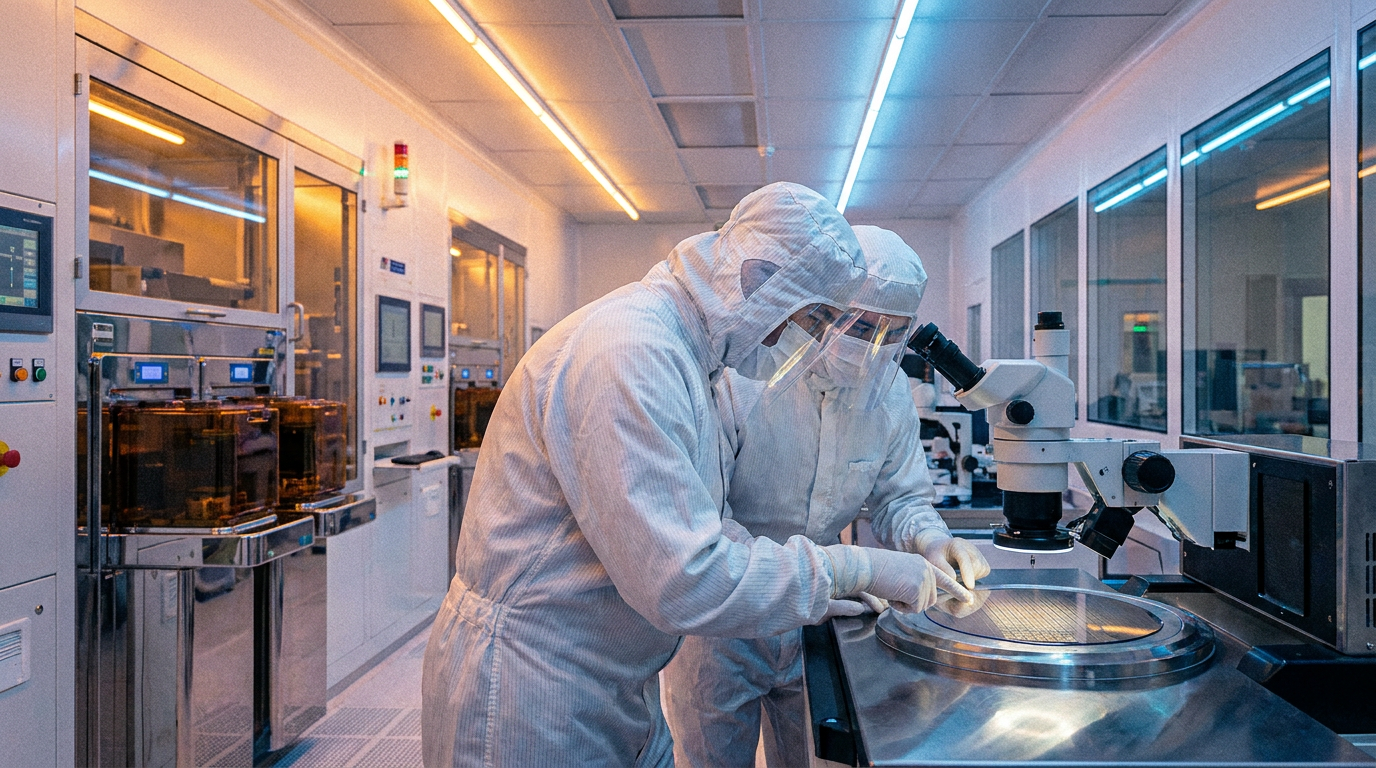
The artificial intelligence boom has minted a new class of trillion-dollar titans, and surprisingly, they aren't all software companies or GPU designers. Memory chipmakers—historically viewed as the highly cyclical, heavily commoditized workhorses of the broader semiconductor industry—are experiencing an unprecedented and lucrative renaissance in 2026. Driven by the architectural demands of modern AI data centers, these foundational hardware companies have transformed from unglamorous component suppliers into the most critical bottleneck in the global technology supply chain. This week, both U.S.-based Micron Technology and South Korea's SK Hynix officially crossed the $1 trillion market capitalization threshold, joining their rival Samsung Electronics in that rarified club. The market surge has been so violent and sustained that SK Hynix, now valued at roughly $1.3 trillion, recently overtook Bitcoin in global asset rankings, cementing the memory sector's dominance in the current financial landscape.[1][3][6]
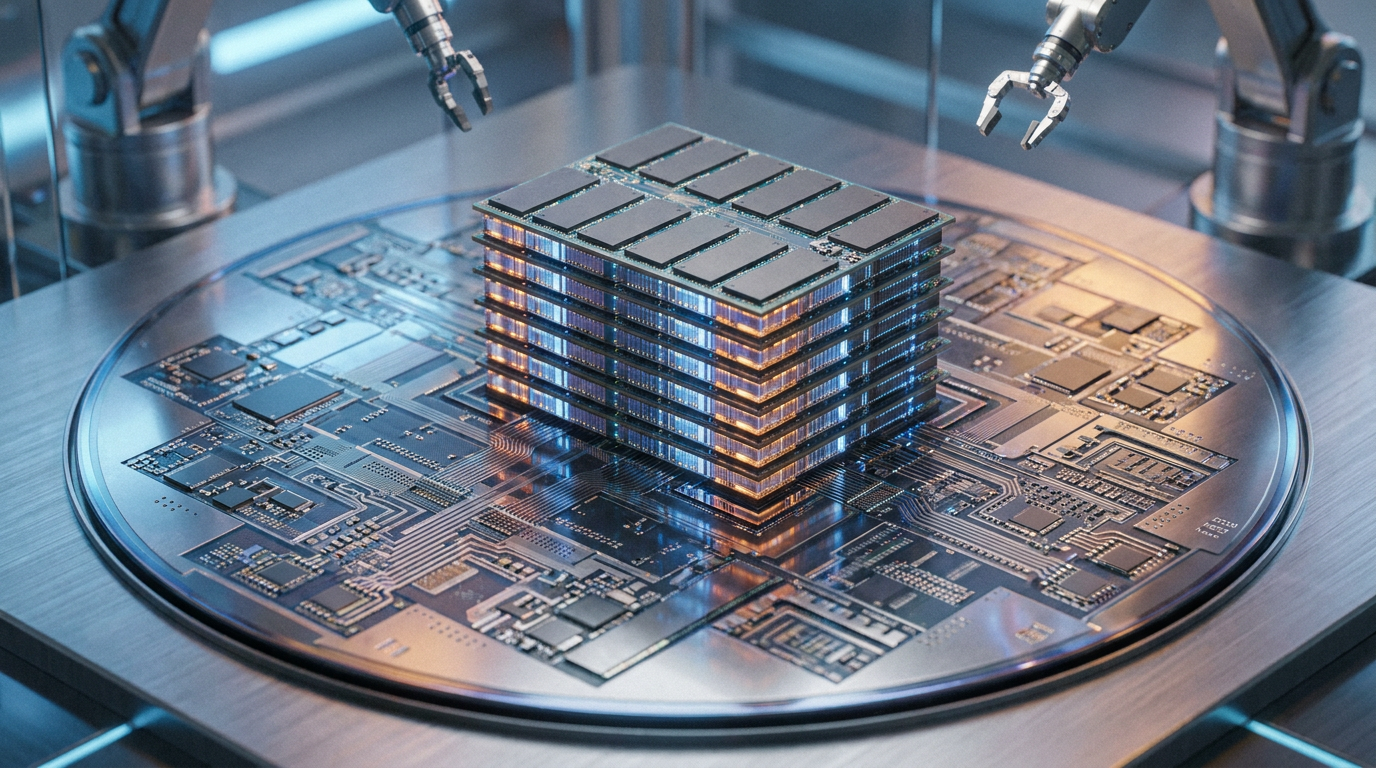
The primary catalyst for this historic wealth creation is High-Bandwidth Memory (HBM), a specialized and highly complex architecture that stacks memory chips vertically to feed massive amounts of data into AI accelerators. As hyperscalers like Microsoft, Meta, and Alphabet race to build increasingly larger AI clusters for training next-generation models, the demand for HBM has vastly outpaced the industry's physical ability to manufacture it. 'The chip shortage is a big part of this story. They just can't produce chips fast enough to keep up with the demand from data centers,' notes recent market analysis. This structural deficit has given memory makers unprecedented pricing power, with all three major global suppliers reporting that their entire HBM production capacity is completely sold out through the end of 2026.[2][4][7]

Yet, the defining tension of the 2026 memory trade is a glaring valuation paradox: despite their stock prices surging 200% to over 300% over the last twelve months, memory stocks still look historically cheap on paper. While investors have grown accustomed to paying massive, speculative premiums for AI darlings like Nvidia or custom silicon designers, memory stocks are currently trading at forward price-to-earnings (P/E) ratios of just 9x to 14x. To put that into perspective, this is roughly half the average valuation multiple of the broader Nasdaq index. For retail and institutional investors alike, this presents a fascinating anomaly—the companies physically enabling the AI revolution are trading at value-stock multiples.[1][7]
This valuation disconnect stems directly from the sheer scale of the cash these companies are generating right now. Put simply, their earnings are exploding even faster than their rapidly ascending share prices. Micron, for instance, recently posted a staggering 756% year-over-year growth in earnings per share, while Samsung's EPS surged nearly 500% in its most recent quarter. The broader infrastructure market reflects this windfall; data center IT semiconductor revenues jumped 116% in the first quarter of 2026 alone. Industry analysts at Dell'Oro Group noted that elevated DRAM pricing contributed the largest share of that revenue growth in absolute terms, outpacing even the revenue growth generated by the AI accelerators themselves.[1][5]

This valuation disconnect stems directly from the sheer scale of the cash these companies are generating right now.
So why the persistent hesitation from Wall Street to assign a premium valuation? History has a firm, unforgiving grip on how investors view these companies. For decades, the memory market has operated on a brutal, predictable boom-and-bust cycle: a sudden surge in demand leads to a flood of new supply, which eventually crashes prices and wipes out profit margins. Skeptics argue that the current AI supercycle is no different. Micron, SK Hynix, and Samsung are currently pouring tens of billions of dollars into aggressive capital expenditures to build new fabrication plants. Historical trends suggest that when all three primary producers increase capacity simultaneously, a painful oversupply inevitably follows within a two-to-three-year window.[1][4]
However, bullish investors counter that High-Bandwidth Memory is fundamentally different from the interchangeable commodity memory of the past. Because HBM requires highly complex advanced packaging and tight, custom integration with specific GPUs, it behaves much more like a high-margin custom logic chip than a traditional plug-and-play commodity. This structural shift could potentially insulate the major players from traditional price crashes. Meanwhile, the AI memory boom is creating a massive, unavoidable ripple effect across the broader technology ecosystem. Because HBM is so highly profitable, manufacturers are aggressively diverting their finite silicon wafer capacity away from standard DRAM production to chase those lucrative AI margins.[4][7]

This strategic reallocation has triggered a severe supply squeeze for the conventional memory used in everyday laptops, smartphones, and enterprise servers. According to supply chain trackers, standard DRAM contract prices are projected to spike by up to 60% in the second quarter of 2026, driving up the bill-of-materials cost for consumer electronics worldwide and forcing corporate IT departments to stretch their budgets. For retail investors looking to navigate this complex boom, the logistics of buying in have proven slightly frustrating. While Micron trades cleanly on the Nasdaq at over $1,000 a share, SK Hynix and Samsung trade primarily in South Korea, making direct equity access difficult for the average U.S. buyer.[3][4]
This geographic friction has driven billions of dollars in fresh capital into specialized exchange-traded funds, such as the Roundhill Memory ETF, which utilizes total return swaps to offer retail investors direct exposure to the Asian memory giants alongside Micron. Ultimately, the 2026 memory market represents a unique transitional phase for the global semiconductor industry. Whether the current low valuations represent the ultimate bargain of the decade or a rational, cautious pricing of an impending cyclical peak, the sheer volume of cash flow generated by the HBM shortage is permanently reshaping the balance of power in Silicon Valley and beyond.[1][2][3]
How we got here
Mid-2024
The AI boom accelerates, creating an initial surge in demand for High-Bandwidth Memory to pair with Nvidia GPUs.
Early 2025
Memory manufacturers begin aggressively shifting their fabrication capacity away from standard DRAM to prioritize highly profitable HBM production.
Q1 2026
Data center IT semiconductor revenues jump 116% year-over-year, driven heavily by memory pricing.
May 2026
SK Hynix and Micron officially cross the $1 trillion market capitalization threshold, joining Samsung.
June 2026
SK Hynix's market value surpasses Bitcoin, cementing the memory sector's dominance in global asset rankings.
Viewpoints in depth
Value-Focused Investors
Memory stocks represent the last remaining bargain of the AI supercycle.
This camp points to the staggering cash flow generated by HBM sales, noting that companies like Micron are posting 756% earnings growth while trading at forward P/E ratios of just 9x to 14x. They argue that because HBM requires complex advanced packaging and tight integration with GPUs, it behaves more like a high-margin custom logic chip than a traditional plug-and-play commodity, meaning the historical boom-and-bust cycle may not apply this time.
Cyclical Skeptics
The memory market is still a commodity, and oversupply is inevitable.
Veteran semiconductor analysts warn that the current euphoria ignores the economic realities of chip manufacturing. With Samsung, SK Hynix, and Micron all pouring tens of billions of dollars into new fabrication plants simultaneously, skeptics argue that a supply glut is mathematically guaranteed within two to three years. They believe the low valuation multiples are a rational market mechanism pricing in the inevitable crash in margins once capacity catches up to AI demand.
Enterprise IT Buyers
The AI memory boom is driving up costs for everyone else.
Procurement managers and cloud service providers are sounding the alarm over the collateral damage of the HBM gold rush. Because chipmakers are diverting their finite silicon wafer capacity toward high-margin AI memory, standard DRAM—the memory used in everyday laptops, smartphones, and corporate servers—is facing a severe shortage. This camp is bracing for bill-of-materials costs to spike by up to 60% this year, forcing painful budget trade-offs for non-AI IT infrastructure.
What we don't know
- Whether the massive capital expenditures by memory makers will lead to a supply glut and price crash in 2027.
- How quickly next-generation HBM4 technology will render current memory architectures obsolete.
- If enterprise IT budgets can absorb the 60% price hikes for standard DRAM without delaying non-AI infrastructure upgrades.
Key terms
- High-Bandwidth Memory (HBM)
- A high-performance RAM interface that stacks memory chips vertically, essential for feeding data rapidly to AI accelerators.
- DRAM (Dynamic Random-Access Memory)
- The standard type of memory used in personal computers, servers, and smartphones to store data that is actively being used.
- Forward P/E Ratio
- A valuation metric that divides a company's current stock price by its estimated future earnings per share, used to determine if a stock is overvalued or undervalued.
- Hyperscaler
- Massive cloud service providers like Amazon Web Services, Google Cloud, and Microsoft Azure that operate data centers on a global scale.
- Wafer Capacity
- The total volume of silicon wafers a semiconductor fabrication plant can process in a given timeframe, representing the hard limit on chip production.
Frequently asked
What is High-Bandwidth Memory (HBM)?
HBM is a specialized type of memory that stacks chips vertically to feed massive amounts of data into AI processors much faster than traditional memory.
Why are memory stocks considered cheap right now?
Despite their stock prices tripling, memory companies are generating so much profit that their forward price-to-earnings ratios remain around 9x to 14x, which is roughly half the Nasdaq average.
How does the AI boom affect regular computers and smartphones?
Because manufacturers are shifting their factory capacity to produce AI memory, standard memory chips are in short supply, which is driving up the cost of everyday electronics.
Can U.S. investors buy SK Hynix or Samsung stock directly?
It is difficult for U.S. retail investors to buy them directly as they trade in South Korea and lack standard ADRs, leading many to use specialized ETFs like the Roundhill Memory ETF.
Sources
Source coverage
7 outlets
3 viewpoints surfaced






[1]MarketWatchValue-Focused Investors
Memory stocks are having their best year ever. Why do they still look so cheap?
Read on MarketWatch →[2]ForbesCyclical Skeptics
AI Infrastructure Spending Continues
Read on Forbes →[3]The Motley FoolValue-Focused Investors
SK Hynix and Micron Technology just reached $1 trillion market capitalizations
Read on The Motley Fool →[4]Astute GroupEnterprise IT Buyers
Memory Shortages: AI Infrastructure Investment Absorbs Capacity
Read on Astute Group →[5]Dell'Oro GroupEnterprise IT Buyers
Data Center IT Semiconductor and Component Revenue Increased 116 Percent in 1Q 2026
Read on Dell'Oro Group →[6]BloomingBitValue-Focused Investors
SK Hynix has overtaken Bitcoin and US memory chipmaker Micron Technology Inc. in market capitalization
Read on BloomingBit →[7]TradingKeyValue-Focused Investors
Relying on strong AI demand, 2026 will be the memory cycle
Read on TradingKey →

More in finance
See all 5 stories →Stablecoin Adoption
Mastercard and Visa Expand Stablecoin Settlement as Digital Dollars Enter Mainstream Banking
6 sources

AI Hardware
Memory Stocks Are Having Their Best Year Ever. Why Do They Still Look So Cheap?
6 sources
Retirement Planning
The late-career Roth 401(k) switch: When paying taxes now pays off in retirement
6 sources

Every angle. Every day.
Get finance stories with full source coverage and perspective breakdowns delivered to your inbox.