
The Science of 'Exercise in a Pill': How Mimetics Are Entering Clinical Trials
Researchers are advancing drugs that replicate the metabolic, skeletal, and neurological benefits of physical exertion. While they won't replace the gym, these "exercise mimetics" could revolutionize care for the elderly and immobile.
By Factlen Editorial Team
- Biotech & Pharma Developers
- Focused on commercializing metabolic pathways to treat obesity and muscle wasting.
- Academic Physiologists
- Warn against reductionism, emphasizing the holistic, multi-system benefits of physical movement.
- Aging & Gerontology Researchers
- Prioritize exercise mimetics for preserving bone density and brain health in the elderly and immobile.
What's not represented
- · Fitness Industry Professionals
- · Sports Anti-Doping Agencies
Why this matters
For millions of elderly, bedridden, or paralyzed individuals, physical exercise is impossible. Unlocking the molecular pathways of exertion could prevent frailty, osteoporosis, and cognitive decline in those who need it most.
Key points
- Exercise mimetics are drugs designed to replicate the metabolic, skeletal, and neurological benefits of physical activity.
- Clinical trials have begun for compounds targeting beta-2 receptors and AMPK to burn fat while preserving muscle.
- Researchers have identified the Piezo1 protein as a target for mimetics that could prevent osteoporosis.
- These drugs are primarily intended for the elderly, paralyzed, and bedridden, not as a shortcut for the general public.
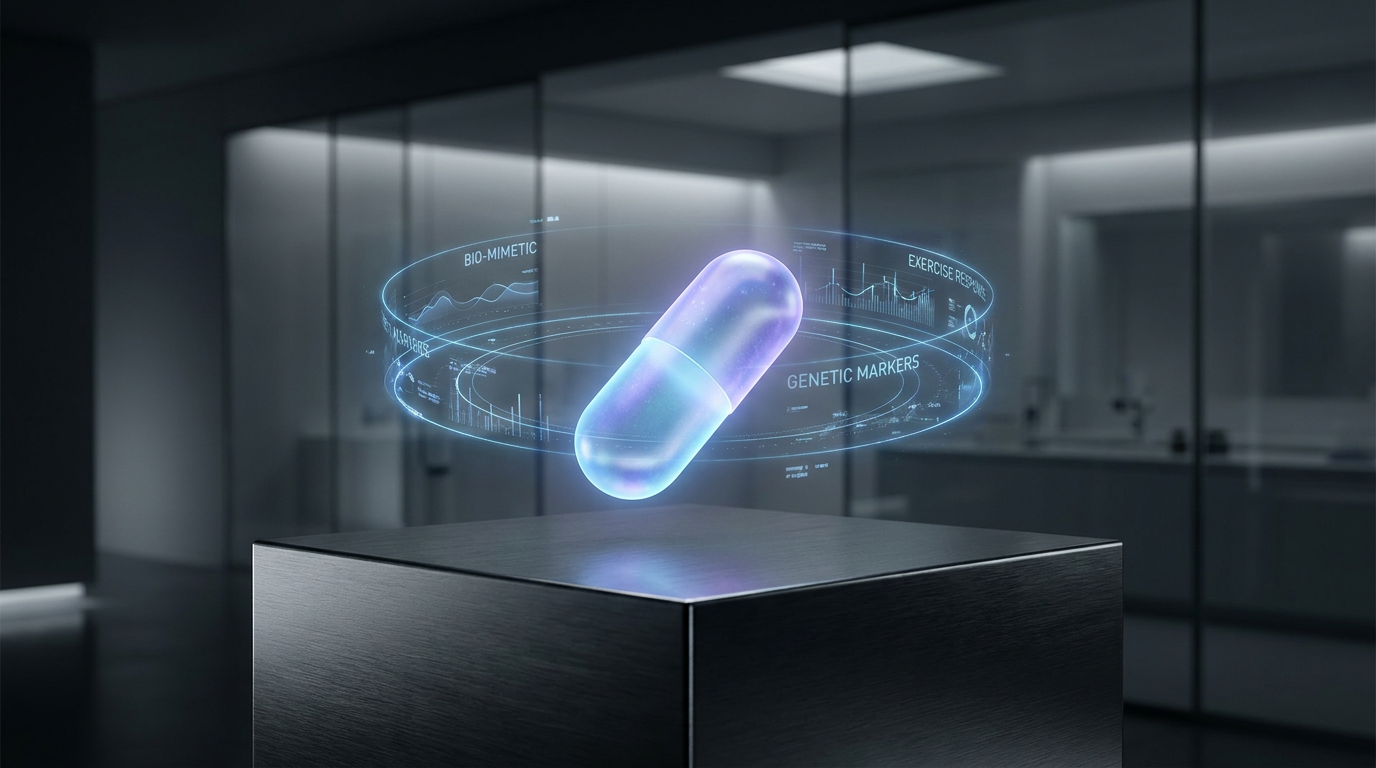
The concept of "exercise in a pill" has long been dismissed as a lazy fantasy, a science-fiction trope reserved for those looking to skip the gym. But in 2026, the scientific pursuit of "exercise mimetics" has moved definitively from theoretical biology into human clinical trials. Researchers are no longer just mapping the systemic benefits of physical exertion; they are actively isolating the molecular pathways that trigger them and developing pharmacological compounds to replicate those exact signals. This emerging class of therapeutics aims to deliver the metabolic, skeletal, and neurological adaptations of a workout to patients who are entirely stationary.[1]
The urgency behind this pharmacological shift is not driven by a desire to help the general public avoid the treadmill. Instead, it is heavily motivated by the limitations of the current generation of blockbuster weight-loss drugs, specifically the GLP-1 agonists. While these medications are highly effective at reducing appetite and driving unprecedented weight loss, they come with a significant metabolic cost: patients on these drugs lose substantial amounts of lean muscle mass alongside their body fat. In some cases, up to a third of the total weight lost is lean tissue, which can lower resting metabolic rates and increase the risk of frailty.[6]
"When you lose weight from appetite reduction just like a crash diet, you lose fat, but you also lose muscle," notes James Peyer, CEO of Cambrian Biopharma, a company heavily invested in longevity therapeutics. To counter this unintended consequence, researchers are looking for pharmacological ways to trigger the metabolic benefits of physical exertion without the mechanical wear and tear. If a drug can convince the body that it is exercising, it could theoretically burn fat while simultaneously preserving or even building lean muscle mass, offering a crucial counterbalance to appetite-suppressing therapies.[6]
The most advanced efforts in this space target the body's fundamental metabolic engines. In March 2026, the Swedish biopharma company Atrogi AB began dosing human subjects with ATR-258, an oral therapy explicitly designed to mimic the physiological effects of a 30-minute vigorous workout. The clinical trial, led by researchers at the University of Copenhagen, aims to demonstrate that the drug can drive the loss of fat while actively sparing and building muscle tissue in overweight subjects, marking a significant milestone in the commercialization of exercise mimetics.[2]

ATR-258 works by selectively modulating the beta-2 adrenergic receptor. When a person engages in vigorous physical exercise, signals transduce through the body's cells to upregulate specific gene transcription, prompting muscle cells to take in more glucose from the bloodstream to use as energy. According to Atrogi CEO Paul Little, ATR-258 triggers this exact profile of action at the genetic level. By forcing glucose into the muscle cells, the drug provides the energy needed for muscle turnover and growth, effectively creating a metabolic sink that strips fat from the liver and improves insulin sensitization.[3]
Historically, attempting to target this specific pathway was fraught with danger. Older drugs that modulated beta-2 receptors, such as clenbuterol, successfully built muscle but caused severe and dangerous cardiovascular side effects, rendering them entirely unsuitable for chronic human use. However, recent advancements have shown that these receptors can activate alternative cellular pathways mediated by beta-arrestins. Atrogi's modified approach selectively activates these alternative pathways, aiming to deliver the muscle-building and fat-burning benefits without placing undue stress on the heart muscle or causing the receptors to quickly become desensitized.[2][3]
Another major molecular target for exercise mimetics is AMPK, an enzyme that acts as the master energy sensor within human cells. During prolonged endurance exercise, cellular energy stores of ATP are depleted, which activates AMPK. Once activated, this enzyme stimulates mitochondrial biogenesis—the creation of new cellular power plants—and heavily promotes fat oxidation. In the realm of longevity and metabolic research, AMPK is considered a holy grail because it sits at the intersection of nutrient sensing and the body's adaptive response to physical stress.[7]
Another major molecular target for exercise mimetics is AMPK, an enzyme that acts as the master energy sensor within human cells.
Activating AMPK chemically essentially tells the body that it is in the middle of running a marathon. It catabolizes fat to fuel the muscle, acting as a metabolic switch that replicates the endurance adaptations of cardiovascular training without building bulky muscle tissue. As Peyer explains, AMPK activation is fundamentally catabolic for fat but highly active for muscle metabolism. It is much more akin to the physiological response of going for a long run than the response triggered by lifting heavy weights, making it an ideal target for improving systemic metabolic health.[6]
Beyond metabolism and muscle preservation, researchers are unlocking how exercise fortifies the skeletal system, leading to mimetics that target bone density. In January 2026, researchers at the University of Hong Kong's School of Clinical Medicine identified a protein called Piezo1 that acts as the body's mechanical "exercise sensor." This protein is responsible for translating physical movement and mechanical loading—such as the impact of feet hitting the pavement—into the chemical signals that actively build and maintain bone strength.[4]

By mapping the Piezo1 pathway, scientists have opened the door to developing drugs that chemically activate this exact sensor without requiring any physical impact. These specific exercise mimetics could prove revolutionary for preventing osteoporosis and age-related bone loss. The clinical applications extend to bedridden patients, individuals suffering from severe frailty, and even astronauts who rapidly lose bone density in the zero-gravity environment of space. For these populations, replicating the skeletal benefits of weight-bearing exercise at the molecular level could mean the difference between independence and debilitating fractures.[4]
The systemic benefits of exercise also extend profoundly to the brain, and neurological mimetics are following closely behind metabolic and skeletal research. At the University of Southern California's Leonard Davis School of Gerontology, researchers are actively mapping the complex chemical messengers that travel from contracting skeletal muscles directly to the brain during physical exertion. These messengers are known to reduce neuroinflammation and activate brain-derived neurotrophic factor (BDNF), a crucial protein that nourishes neurons and supports cognitive function and memory retention as humans age.[5]
According to USC gerontology professor Constanza Cortes, these exercise-induced messengers play a vital role in reactivating the brain's cellular "trash trucks." In the development of Alzheimer's disease, the brain's ability to clear out toxic beta-amyloid and tau proteins becomes impaired, leading to their dangerous accumulation. Exercise naturally stimulates this clearance process. Cortes's lab is currently working to package these specific muscle-brain messenger signals into a therapeutic pill, envisioning a treatment that could slow cognitive decline in older adults who lack the mobility to engage in neuro-protective physical activity.[5]
Despite these highly promising clinical breakthroughs, the broader scientific community consistently warns against a purely reductionist approach to physical health. Exercise is a profoundly complex, systemic stressor that triggers highly redundant physiological responses across the molecular, cellular, and organ levels simultaneously. Academic physiologists caution that isolating a single pathway—whether it is AMPK, beta-2, or Piezo1—cannot possibly capture the full spectrum of human biological adaptation to movement, and attempting to do so may overlook crucial synergistic effects that only occur when the entire body is engaged in physical exertion.[1][7]

A single targeted molecule cannot replicate the mechanical strengthening of tendons and ligaments, the structural cardiovascular conditioning of the heart muscle, or the complex psychological benefits of a "runner's high" mediated by endorphins and endocannabinoids. Furthermore, rodent models have repeatedly shown that there is no single "exercise gene" that can be flipped on to grant perfect health. Because of this physiological redundancy, researchers emphasize that exercise mimetics should be viewed as targeted medical interventions rather than wholesale replacements for an active lifestyle.[1][7]
Therefore, the target demographic for these emerging therapeutics is not the general public looking for a convenient shortcut to fitness. The true clinical and ethical value of exercise mimetics lies in treating those who physically cannot move. This includes the elderly suffering from severe osteoarthritis, individuals paralyzed by spinal cord injuries, patients recovering from debilitating surgeries, and those afflicted with genetic muscle-wasting diseases. For these vulnerable populations, a pill that provides even a fraction of the benefits of exercise is not a luxury; it is a vital medical necessity.[1][4]
As these novel compounds advance through human clinical trials in 2026, they represent a fundamental paradigm shift in preventive medicine and gerontology. By painstakingly isolating the molecular signatures of physical exertion, science is learning how to prescribe the biochemical essence of movement. While they will never replace the holistic experience of a long walk or a vigorous run, exercise mimetics hold the unprecedented potential to deliver the healing power of physical activity to those who need it most, fundamentally redefining how we treat immobility and aging.[1]
How we got here
2000s-2010s
Early research identifies AMPK and PGC-1alpha as key molecular regulators of exercise adaptation.
2010s
First-generation beta-2 agonists show muscle-building promise but are abandoned due to severe cardiovascular side effects.
Jan 2026
University of Hong Kong researchers identify the Piezo1 protein as the mechanical 'exercise sensor' for bone density.
Mar 2026
Atrogi AB begins human clinical trials for ATR-258, an oral beta-2 modulator designed to mimic vigorous exercise.
Viewpoints in depth
Biotech & Pharma Developers
Focused on commercializing metabolic pathways to treat obesity and muscle wasting.
For the biotechnology sector, exercise mimetics represent the next massive frontier in metabolic medicine, particularly as a companion or alternative to GLP-1 agonists. Developers argue that by targeting specific pathways like AMPK or beta-2 receptors, they can offer the fat-burning benefits of weight-loss drugs without the dangerous side effect of lean muscle deterioration. They view these compounds not as lifestyle shortcuts, but as essential therapies for an aging population that requires metabolic intervention but cannot safely engage in the vigorous physical activity needed to maintain muscle mass.
Academic Physiologists
Warn against reductionism, emphasizing the holistic, multi-system benefits of physical movement.
Many academic researchers and physiologists maintain a healthy skepticism regarding the term 'exercise in a pill.' They emphasize that physical exertion is a highly complex, systemic stressor that triggers redundant and synergistic adaptations across the heart, lungs, bones, and brain simultaneously. From this perspective, isolating a single molecular pathway—such as AMPK activation—will inevitably fall short of replicating the true, holistic benefits of exercise. They caution that while mimetics may successfully treat specific symptoms like muscle wasting or bone loss, they cannot replace the cardiovascular conditioning or mental health benefits of actual movement.
Aging & Gerontology Researchers
Prioritize exercise mimetics for preserving bone density and brain health in the elderly and immobile.
Gerontologists view exercise mimetics primarily through the lens of 'healthspan'—the period of life spent free from chronic disease and disability. For this camp, the most exciting applications are not related to obesity, but rather to preventing the cascading failures of aging. By utilizing mimetics that target the Piezo1 pathway for bone density or muscle-brain messengers for Alzheimer's prevention, gerontologists hope to protect bedridden or frail patients from osteoporosis and cognitive decline, ultimately preserving their independence for years longer than currently possible.
What we don't know
- Whether long-term chemical activation of exercise pathways will cause cellular exhaustion or receptor desensitization.
- If exercise mimetics can safely be combined with GLP-1 agonists to prevent muscle loss without adverse drug interactions.
- How effectively muscle-brain messenger pills can cross the blood-brain barrier to clear Alzheimer's proteins in human patients.
Key terms
- Exercise mimetic
- A pharmacological compound designed to replicate the physiological benefits of physical exercise without actual mechanical exertion.
- AMPK
- An enzyme that serves as the master energy sensor in cells, activated during exercise to stimulate fat burning and energy production.
- Beta-2 adrenergic receptor
- A cell membrane receptor that, when activated, prompts muscle cells to take in glucose and build mass.
- Piezo1
- A mechanosensitive protein that translates physical movement and mechanical stress into chemical signals that build bone density.
- GLP-1 agonists
- A class of weight-loss and diabetes medications that reduce appetite but can also lead to unintended muscle loss.
Frequently asked
Will an exercise pill replace the need to go to the gym?
No. While mimetics can trigger specific metabolic or bone-building pathways, they cannot replicate the cardiovascular conditioning, joint strengthening, or mental health benefits of actual physical exertion.
Why are these drugs being developed now?
The rise of GLP-1 weight-loss drugs, which often cause patients to lose significant muscle mass alongside fat, has accelerated the search for compounds that can preserve or build muscle without requiring heavy exercise.
Who is the intended patient for exercise mimetics?
The primary targets are individuals who cannot exercise due to age, frailty, paralysis, osteoarthritis, or muscle-wasting diseases, as well as astronauts facing zero-gravity bone loss.
Are any of these drugs available yet?
No. As of early 2026, the most advanced candidates, such as Atrogi's ATR-258, are just entering early-stage human clinical trials to test for safety and basic efficacy.
Sources
Source coverage
7 outlets
3 viewpoints surfaced







[1]Factlen Editorial TeamAcademic Physiologists
Synthesis by Factlen editorial team
Read on Factlen Editorial Team →[2]BioWorldBiotech & Pharma Developers
Promise of exercise in a pill as Atrogi pivots from type 2 diabetes to obesity
Read on BioWorld →[3]FirstWord PharmaBiotech & Pharma Developers
Atrogi is carving out its own obesity niche for 'exercise-in-a-pill' programme
Read on FirstWord Pharma →[4]SciTechDailyAging & Gerontology Researchers
Breakthrough Bone Discovery Could Lead To “Exercise-in-a-Pill” for Osteoporosis
Read on SciTechDaily →[5]USC NewsAging & Gerontology Researchers
Can 'exercise in a pill' help prevent Alzheimer’s?
Read on USC News →[6]Decoding LongevityBiotech & Pharma Developers
Can aging biology become medicine? James Peyer on Exercise Mimetics
Read on Decoding Longevity →[7]Journal of Molecular EndocrinologyAcademic Physiologists
Nuclear receptors and AMPK: Can exercise mimetics cure diabetes?
Read on Journal of Molecular Endocrinology →

More in health
See all 5 stories →Exercise Mimetics
The Science of Exercise Mimetics: How New Longevity Drugs Aim to Replicate the Benefits of a Workout
6 sources
Brain Health
New Evidence Links the Shingles Vaccine to a 24% Lower Risk of Dementia
5 sources

Exercise Mimetics
The Rise of 'Exercise Mimetics': How New Longevity Drugs Aim to Replicate the Metabolic Effects of a Workout
7 sources
Every angle. Every day.
Get health stories with full source coverage and perspective breakdowns delivered to your inbox.