
Vance Delays Switzerland Trip for Iran Talks, Rebukes Israeli Critics of Peace Deal
Vice President JD Vance postponed a planned trip to Switzerland for U.S.-Iran negotiations, citing logistical challenges amid a fragile ceasefire. The delay comes as Vance sharply criticized Israeli officials opposed to the newly signed peace framework, reminding them of their reliance on American military aid.

Share this story
Vice President JD Vance has abruptly postponed a planned trip to Switzerland, where he was scheduled to lead a U.S. delegation in direct technical talks with Iranian officials. The White House confirmed late Thursday that Vance would not be departing as initially planned, injecting immediate uncertainty into the next phase of the newly signed U.S.-Iran peace framework.[1][2][8]
The official explanation from the administration cited the unpredictable "logistics" of organizing high-stakes diplomatic meetings on short notice. However, regional reports indicate that the delay is intimately tied to the fragile situation on the ground in the Middle East. Specifically, Iranian officials reportedly hesitated to send their delegation to the Bürgenstock Resort due to ongoing Israeli military strikes in southern Lebanon, which threaten to unravel the broader ceasefire.[2][6]
The Switzerland talks are intended to build upon the "Islamabad Memorandum of Understanding," a preliminary agreement signed electronically earlier this week by U.S. President Donald Trump and Iranian President Masoud Pezeshkian. The framework is designed to formally end the devastating war that erupted between the U.S., Israel, and Iran in late February, a conflict that has severely disrupted global energy markets.[5][6][7]
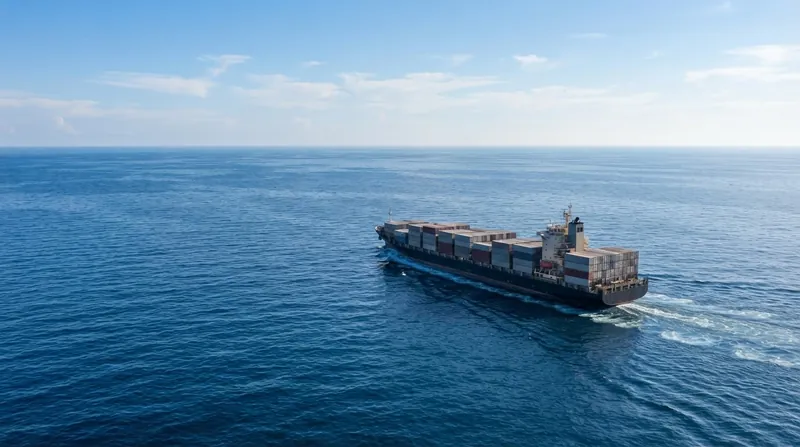
As part of the initial concessions, the United States military has officially lifted its naval blockade on Iranian ports. Vance confirmed during a White House press briefing that the blockade's removal is already facilitating the movement of commercial vessels, with more than 12.5 million barrels of oil passing through the critical Strait of Hormuz on Wednesday night alone.[3][4]
While the immediate resumption of shipping has brought relief to global markets, friction remains over the waterway's long-term administration. Iran's Supreme National Security Council announced that while the strait will be toll-free for the next 60 days, Tehran plans to implement "maritime service fees" to cover security and environmental protection once the negotiation window closes—a move the U.S. and European allies strongly oppose.[3][6]
The signing of the memorandum triggered a strict 60-day countdown for Washington and Tehran to negotiate the most intractable issues of their conflict. The upcoming technical talks must address the removal of Iran's highly enriched uranium stockpiles, the dismantling of specific nuclear infrastructure, and the timeline for permanent international sanctions relief.[5][7]
However, the diplomatic breakthrough has been met with fierce resistance from Israel. Members of Prime Minister Benjamin Netanyahu's cabinet have publicly lambasted the agreement, arguing that it fails to permanently dismantle Iran's ballistic missile program and leaves Israel constrained in its ongoing military campaign against Hezbollah militants in Lebanon.[3][4][5]
The Israeli criticism prompted an extraordinary and highly public rebuke from Vice President Vance. Taking to the podium in the White House briefing room, Vance delivered some of the sharpest language directed at Israel by a sitting U.S. administration in recent memory, warning Israeli leaders that they risk alienating their most vital partner.[1][4]
Vance suggested that Israeli officials need to "wake up and smell the reality" of their international isolation. He pointedly noted that President Trump is "the only head of state in the entire world who is sympathetic to the nation of Israel at this moment in time," and advised Netanyahu's cabinet to stop attacking their only remaining powerful ally.[3][4]
To drive the point home, the Vice President reminded critics of the sheer scale of American military support. He emphasized that two-thirds of the defensive weapons that have protected Israel over the past three months of warfare "have been built by American hands and paid for by American tax dollars."[3][4]
The public dressing-down highlights a widening rift between Washington and Jerusalem over the strategic direction of the Middle East. While the U.S. administration views the Iran deal as a necessary off-ramp to prevent a broader regional conflagration and stabilize the global economy, Israeli leadership views the survival of Iran's current nuclear infrastructure as an existential threat.[4][5]
Despite the delay and the transatlantic diplomatic friction, the White House maintains that the U.S. delegation remains prepared to depart for Switzerland at the "first available opportunity." Mediators from Pakistan and Qatar are reportedly still staging at the Lake Lucerne resort, awaiting the arrival of the primary negotiating teams.[1][6][8]
The stakes for the upcoming talks could not be higher. If the 60-day negotiation window expires without a comprehensive technical agreement on uranium removal and sanctions, the preliminary ceasefire could collapse, plunging the region back into a multi-front war and once again choking off one of the world's most vital economic arteries.[4][7]
Unanswered questions
- When the technical talks in Switzerland will officially be rescheduled.
- Whether Iran will successfully implement its planned 'maritime service fees' in the Strait of Hormuz after 60 days.
- How Israel will adjust its military posture in southern Lebanon given the intense public pressure from Washington.
- U.S. Administration
- Argues the deal de-escalates a devastating war, secures global energy markets, and that allies should support the diplomatic off-ramp.
- Israeli Security Establishment
- Views the agreement as a dangerous concession that leaves Iran's nuclear infrastructure intact and emboldens regional proxies.
- Iranian Leadership
- Frames the agreement as a victory that breaks the U.S. blockade and asserts Iranian control over the Strait of Hormuz.
- Global Energy Markets
- Primarily concerned with the immediate resumption of toll-free shipping through the Strait of Hormuz to stabilize oil prices.
Sources
Source coverage
8 outlets
4 viewpoints surfaced








- [1]NYT
Vance Delays Trip to Switzerland for Direct Talks on Iran Deal
Read on NYT → - [2]AxiosU.S. Administration
Vance postpones Iran talks trip to Switzerland
Read on Axios → - [3]The GuardianGlobal Energy Markets
Trump news at a glance: Vance uses US weaponry barbs to scold Israeli critics of Iran deal
Read on The Guardian → - [4]Washington PostU.S. Administration
Vance defends Iran deal, warns Israel against criticizing U.S.
Read on Washington Post → - [5]Times of IsraelIsraeli Security Establishment
Vance says Israel will eventually join US-Iran deal, defends Trump's MOU
Read on Times of Israel → - [6]Al JazeeraIranian Leadership
US-Iran talks to kick off Sunday in Switzerland, says Pakistan
Read on Al Jazeera → - [7]Fox News
Trump’s new Iran deal faces nuclear blind spot over uranium stockpile, experts warn
Read on Fox News → - [8]Arab NewsIranian Leadership
Vance not flying Thursday night to Switzerland for Iran talks: White House
Read on Arab News →

More in News & Politics
See all →High Seas Jurisdiction
Flag State Jurisdiction Prevents Coastal Interceptions of Foreign Vessels Under UNCLOS Article 92
3 sources
US-Israel Relations
US Defense Secretary Hegseth Makes Unannounced Visit to Israel Ahead of Election
6 sources
Humanitarian Aid
WFP Halts Gaza Food Aid for 500,000 People Citing Severe Funding Shortage
4 sources
Presidential Runoff
Lula and Flávio Bolsonaro Clash in First Presidential Runoff Debate
5 sources

Comments
Every angle. Every day.
Get News & Politics stories with full source coverage and perspective breakdowns, free every day.