
Anthropic Launches Live Artifacts for Claude Code, Turning Terminal Sessions Into Shareable Enterprise Dashboards
Anthropic has introduced a beta update for Claude Code that converts ephemeral AI coding sessions into live, interactive HTML workspaces. The feature allows enterprise teams to instantly share auto-updating dashboards and project context without building permanent internal software.
By Factlen Editorial Team
- Enterprise Engineering Teams
- Values the elimination of manual status updates and the rise of disposable internal tools.
- Security & Compliance Officers
- Focuses on the strict Content Security Policy and stateless architecture that protects corporate data.
- AI Product Strategists
- Contrasts Anthropic's ephemeral approach with OpenAI's persistent application model.
- Open-Source Advocates
- Wary of vendor lock-in and prefers self-hosted, open-license collaboration tools.
What's not represented
- · Non-technical stakeholders who consume the dashboards but do not interact with the AI directly.
- · Independent security researchers auditing the strict Content Security Policy for potential bypasses.
Why this matters
This update fundamentally changes how technical teams communicate with management. By turning complex backend work into instant, auto-updating visual dashboards, it eliminates hours of manual reporting and makes custom internal software a disposable, on-demand resource.
Key points
- Anthropic launched Claude Code Artifacts in beta for Team and Enterprise subscribers on June 18, 2026.
- The feature converts terminal coding sessions into live, interactive HTML web pages hosted at private URLs.
- Using the Model Context Protocol, the AI pulls live data from connected apps like GitHub and Slack to auto-update the dashboards.
- Artifacts are entirely stateless, featuring no backend capabilities and a strict Content Security Policy to protect corporate data.
- The update shifts enterprise workflows toward 'disposable internal software' that can be spun up quickly and discarded after use.
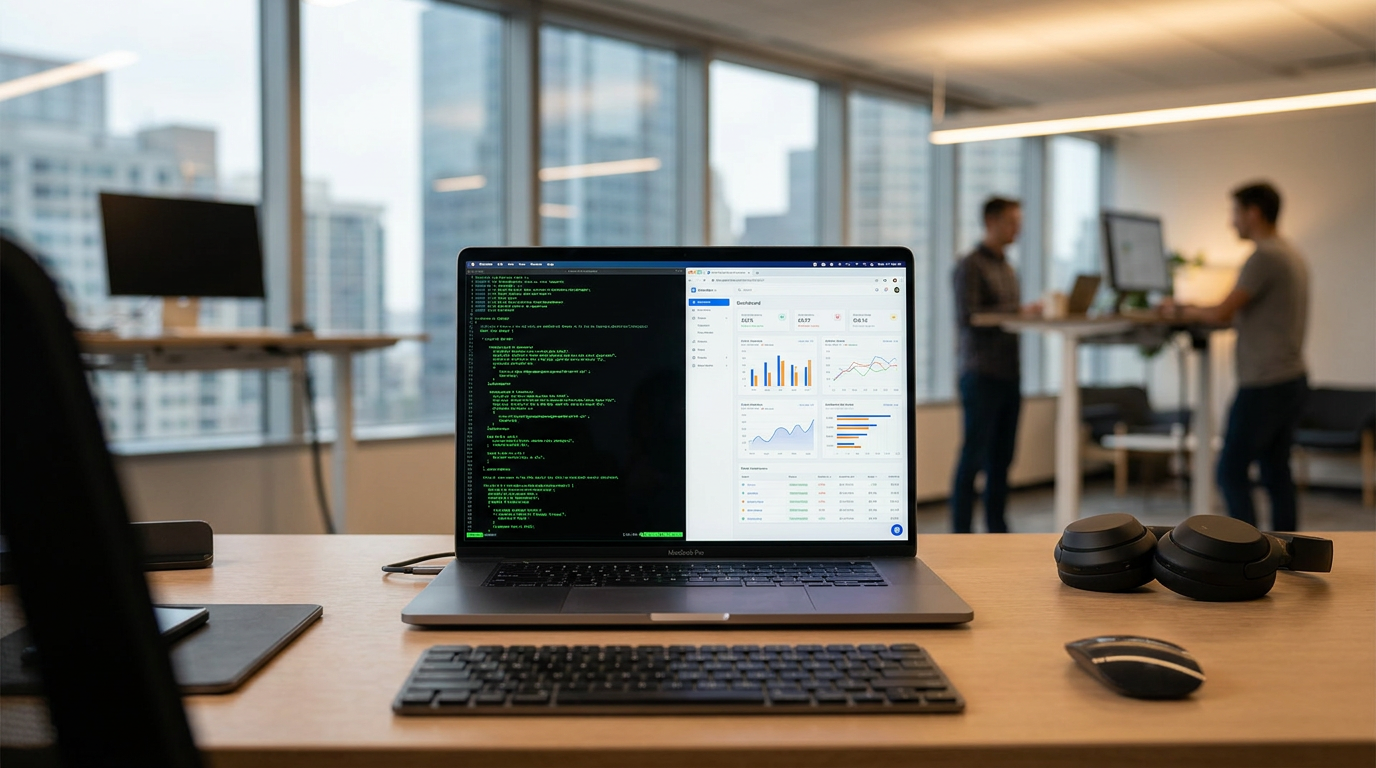
On June 18, 2026, Anthropic launched a major update to its enterprise artificial intelligence suite, officially releasing Claude Code Artifacts in beta for its Team and Enterprise subscribers. The highly anticipated feature converts ephemeral AI coding sessions into live, interactive HTML workspaces that are hosted at private, shareable URLs. By bridging the historical gap between deep backend engineering and non-technical stakeholders, the update aims to fundamentally change how corporate teams collaborate on software development and data analysis. Instead of relying on static exports, teams can now watch their data evolve in real time.[1][2][3]
The core problem Anthropic is targeting is what developers often refer to as the 'quiet tax' on terminal-first work. When an engineer uses an AI assistant to trace a complex privacy bug across a sprawling codebase or to analyze a massive pull request, the AI's reasoning and context are usually trapped in the terminal's scrollback. Once the coding session ends or the tab is closed, that valuable context dies with it. The reasoning is the most valuable part of the exercise, yet it is exactly what fails to survive the session, leaving teammates with only the final conclusion rather than the path taken to get there.[4]
Previously, to share that context with a project manager or a peer reviewer, developers had to manually compile screenshots, copy-paste raw code snippets, and write extensive summaries in external documentation tools. Claude Code Artifacts eliminates this manual translation layer entirely. Instead of writing a lengthy status report, a developer can simply prompt the AI to generate a live, interactive web page that encapsulates the entire session's work. One single link replaces hours of manual busywork, allowing the creator to instantly share a comprehensive view of the project's current state.[1][4][6]

Under the hood, Claude Code acts as a dynamic translation engine rather than just a code generator. It utilizes the Model Context Protocol (MCP)—an open standard often described by the industry as a 'USB-C for AI'—to connect directly to the applications where a company's data already lives. This protocol allows the AI agent to pull live, authenticated information from GitHub repositories, Slack channels, Jira tickets, and internal databases without requiring the user to manually upload files or sort through context.[1][5][7]
Using this unbroken context, the AI builds a specialized user interface from what already exists in the session. Crucially, these generated web pages are not static exports that freeze the moment they are created. As the developer continues to work in the terminal, or as the underlying data in the connected applications changes, the shared webpage refreshes in-place automatically. Everyone holding the link sees the latest version of the dashboard, PR walkthrough, or incident timeline in real time, ensuring that the entire team remains synchronized without needing to constantly hit refresh.[1][6]
This capability introduces a massive paradigm shift toward what industry analysts are calling 'disposable internal software.' Historically, if a business team needed a custom dashboard to track a specific metric or a temporary workflow, they had to file an engineering ticket, wait for two sprints, and then maintain the resulting software indefinitely. Now, knowledge workers can spin up a highly specific, auto-updating tracker in minutes using plain English, use it for the duration of a project, and simply discard it when the initiative concludes.[5][7]
To make this vendor-managed, continuous-ingestion approach palatable to strict enterprise compliance teams, Anthropic has heavily prioritized organizational security. Unlike traditional web applications that require database hosting, server maintenance, and complex authentication layers, Claude Code Artifacts are designed to be entirely stateless. They have no backend infrastructure of their own, cannot store user form input, and are strictly prohibited from calling external APIs at view time. They are designed purely to show finished thinking and live data reads, not to run as a persistent service that could be exploited by bad actors.[1][4]
To make this vendor-managed, continuous-ingestion approach palatable to strict enterprise compliance teams, Anthropic has heavily prioritized organizational security.
The technical constraints placed on these artifacts are rigid by design to prevent data leakage. The published file must be a self-contained HTML, HTM, or Markdown document, capped at a maximum rendered size of 16 MiB. Furthermore, the pages are served under a strict Content Security Policy (CSP) that explicitly prevents the loading of any external resources or scripts. This architectural decision ensures that sensitive corporate data, proprietary code, and internal metrics cannot be accidentally exfiltrated to third-party servers.[1][4]

Access control is equally stringent, catering directly to the needs of enterprise IT administrators. Every artifact generated is private to its author by default and strictly cannot be made public to the broader internet. When an engineer chooses to share a link, it is viewable exclusively by authenticated members of that specific organization. System administrators retain ultimate authority over the ecosystem, managing access through organization-level toggles, role-based scoping, and explicit data retention policies that dictate how long shared and unshared artifacts survive.[1][4][6]
This stateless architecture highlights a stark philosophical divergence from Anthropic's primary rival, OpenAI, in the race for enterprise dominance. OpenAI recently introduced Codex Sites, a competing enterprise workspace feature that focuses on helping companies build persistent web applications complete with backend capabilities and database connections. Anthropic, conversely, is keeping Claude Code firmly anchored in ephemeral, highly secure technical workflows. The company's stance is that these artifacts are meant to replace whiteboard diagrams, manual bug walkthroughs, and temporary status reports, rather than serving as permanent software infrastructure that requires long-term maintenance.[1]

Despite the robust security measures, the continuous ingestion of live external data introduces inherent cybersecurity risks that enterprises must navigate. Because the AI agent reads live emails, Slack messages, and PDF documents to populate these dashboards, it is theoretically vulnerable to prompt injection attacks. If malicious instructions are hidden within an ingested document, they could potentially hijack the AI's reasoning or alter the dashboard's output—a risk that Anthropic's own published research acknowledges carries a roughly one percent success rate even with active mitigations in place.[5]
Data quality presents another significant operational bottleneck for teams relying on live artifacts for daily operations. Because the dashboards automatically update based on connected data sources without manual intervention, any error, hallucination, or misclassification in the underlying database flows directly into the executive view. If a connected CRM has duplicate entries, the artifact will faithfully render those duplicates. Experts warn that while auto-updated numbers feel official and authoritative, teams must establish rigorous human review steps before making consequential business decisions based on these AI-generated pages.[7]
The closed-license nature of the platform has also sparked pushback from the open-source community. Because Claude Code Artifacts are locked behind paid Team and Enterprise tiers and hosted exclusively on Anthropic's infrastructure, teams cannot independently host or modify the underlying code. This restriction has driven interest in self-hosted alternatives like `tdoc`, which offer similar document-generation capabilities but can be deployed on independent infrastructure like Cloudflare Workers, ensuring teams retain full ownership of their collaboration stack and avoid vendor lock-in.[6]

Nevertheless, for the enterprises adopting the beta feature, the update bridges a massive communication divide that has plagued software development for decades. In a matter of seconds, an AI agent can execute a complex database read, build an interactive drop-off funnel, diagnose a stalling bug in the production environment, and generate a secure link that a product manager can instantly open on a mobile device. The friction of translating technical backend work into actionable business insight is effectively reduced to zero, allowing teams to move significantly faster.[1]
As the battle for enterprise AI budgets intensifies in the second half of 2026, Anthropic is making a highly calculated bet on workflow integration over raw application generation. The company is proving that the most valuable output of an AI coding assistant isn't just the raw code it generates for the developer in the moment. It is the context, the reasoning, and the ability to seamlessly share that complex work across an entire organization, turning isolated terminal sessions into collaborative company assets that empower both technical and non-technical staff alike.[1][3]
How we got here
June 2024
Anthropic introduces the first iteration of Artifacts to its consumer web chatbot, allowing users to publish static code snippets.
August 2024
The original Artifacts feature reaches general availability, eventually generating hundreds of millions of static workspaces.
April 2026
Anthropic begins teasing 'Live Artifacts' for its Cowork platform, hinting at auto-updating dashboards.
June 18, 2026
Claude Code Artifacts officially launches in beta for Team and Enterprise subscribers, integrating live data connections.
Viewpoints in depth
Enterprise Engineering Teams
Focuses on workflow efficiency and the elimination of manual status updates.
For developers, the primary value of Artifacts is the eradication of the 'quiet tax' on terminal work. Engineers frequently spend hours debugging or analyzing code, only to spend additional time translating those findings into screenshots and summaries for non-technical colleagues. By turning the AI's working context into a live, shareable link, engineering teams can replace manual reporting with auto-updating dashboards, treating internal software as a disposable resource rather than a permanent maintenance burden.
Security & Compliance Officers
Prioritizes data privacy, strict content policies, and stateless architecture.
Corporate security teams are traditionally wary of AI tools that ingest live company data. Anthropic has catered to this camp by designing Artifacts as entirely stateless HTML pages with no backend capabilities. Because the pages are served under a strict Content Security Policy that blocks external requests, compliance officers can ensure that sensitive data never leaks outside the corporate boundary. The inclusion of org-level toggles and role-based access controls further solidifies this enterprise-first security posture.
Open-Source Advocates
Prefers self-hosted alternatives to avoid vendor lock-in and closed ecosystems.
While enterprise users embrace the seamless integration, open-source developers remain critical of Anthropic's closed licensing model. Because Claude Code Artifacts are locked behind paid Team and Enterprise tiers and hosted exclusively on Anthropic's infrastructure, teams cannot independently modify the underlying code. This has driven interest in open-source alternatives like `tdoc`, which offer similar document-generation capabilities but can be self-hosted on platforms like Cloudflare Workers, ensuring teams retain full ownership of their collaboration stack.
AI Product Strategists
Analyzes the competitive divergence between Anthropic and OpenAI's enterprise offerings.
Industry analysts view this release as a defining moment in the AI workspace wars, highlighting a stark philosophical split. While OpenAI's Codex Sites focuses on helping enterprises build persistent, backend-connected web applications, Anthropic is anchoring Claude Code in ephemeral, highly secure workflows. Strategists note that Anthropic is betting that enterprises don't necessarily want more permanent software to maintain; instead, they want secure, temporary lenses into their existing data that can be discarded when a project concludes.
What we don't know
- Will Anthropic eventually open up Live Artifacts to free and Pro tier users, or will it remain an enterprise-exclusive feature?
- How will OpenAI respond to Anthropic's stateless approach as the two companies vie for enterprise AI dominance in late 2026?
- Can the 1% prompt injection vulnerability be fully mitigated as AI agents ingest increasingly complex and varied external data?
Key terms
- Model Context Protocol (MCP)
- An open standard that allows AI models to securely connect to and read from external data sources like Slack, GitHub, and internal databases.
- Stateless Architecture
- A system design where no data or session information is stored on the server after a request is processed, enhancing security.
- Content Security Policy (CSP)
- A computer security standard introduced to prevent cross-site scripting and data injection attacks by restricting where a web page can load resources from.
- Prompt Injection
- A cybersecurity vulnerability where malicious instructions are hidden in data ingested by an AI, tricking the model into executing unauthorized actions.
Frequently asked
Who has access to Claude Code Artifacts?
The feature is currently in beta and restricted to Anthropic's paid Team and Enterprise subscription plans. Free and Pro tier users do not currently have access.
Can anyone on the internet view a shared Artifact?
No. Artifacts are private by default, and when shared, they are only accessible to authenticated members within the creator's specific organization.
Does an Artifact have its own database?
No. Artifacts are stateless HTML pages. They pull live data from connected tools via the Model Context Protocol but cannot store form input or host a backend database.
How does this differ from OpenAI's Codex Sites?
OpenAI's Codex Sites are designed to build persistent web applications with backend capabilities, whereas Claude Code Artifacts are ephemeral, stateless pages meant for secure, temporary visualization.
Sources
Source coverage
7 outlets
4 viewpoints surfaced






[1]VentureBeatEnterprise Engineering Teams
Anthropic's Claude Code Artifacts update brings live, shared dashboards and interactive workspaces to enterprises
Read on VentureBeat →[2]CryptoBriefingAI Product Strategists
Anthropic Releases Claude Code Artifacts in Beta: Converts AI Coding Sessions Into Live, Shareable Enterprise Dashboards
Read on CryptoBriefing →[3]AI News WeeklySecurity & Compliance Officers
Anthropic Releases Claude Code Artifacts in Beta
Read on AI News Weekly →[4]Claude DocumentationSecurity & Compliance Officers
Claude Code Artifacts: Live, shareable pages at a versioned URL
Read on Claude Documentation →[5]MediumOpen-Source Advocates
Claude Cowork Live Artifacts Just Made Internal Dashboards Disposable
Read on Medium →Artifacts is Here: Claude Code Turns AI Conversations Into Shareable Documents
Read on Medium →[7]Founders BayEnterprise Engineering Teams
Anthropic just shipped a feature that changes how founders work with AI: Live Artifacts
Read on Founders Bay →
Every angle. Every day.
Get technology stories with full source coverage and perspective breakdowns delivered to your inbox.