
How Hotels Are Engineering the Perfect Night's Sleep as 'Sleep Tourism' Booms
With the global sleep tourism market surging past $75 billion, hotels are deploying circadian lighting, acoustic cocooning, and AI-powered mattresses to cure traveler exhaustion.
By Factlen Editorial Team
- Luxury Hospitality Brands
- View sleep as a premium performance asset that drives guest loyalty and justifies higher room rates.
- Sleep Tech Innovators
- Believe that biometric data and active AI hardware are the only ways to guarantee restorative rest in unfamiliar environments.
- Industry Pragmatists
- Argue that while smart beds are effective, their high cost will prevent them from becoming a standard amenity outside of luxury tiers.
What's not represented
- · Budget and mid-tier hotel operators who cannot afford these technological upgrades.
- · Everyday travelers who suffer from sleep deprivation but are priced out of luxury wellness resorts.
- · Medical professionals treating clinical sleep disorders that cannot be solved by environmental design alone.
Why this matters
As chronic sleep deprivation affects more than a third of adults, the hospitality industry is shifting its focus from packed itineraries to biological recovery, offering travelers new tools to combat jet lag and burnout.
Key points
- The global sleep tourism market has reached a valuation of $75.7 billion as travelers increasingly prioritize rest over sightseeing.
- Luxury hotels are installing circadian lighting systems that shift from blue-enriched morning light to warm amber tones in the evening.
- Acoustic cocooning techniques, including triple-glazed windows and specialized HVAC systems, are being used to eliminate the 'first-night effect' of poor sleep.
- AI-powered smart beds now use biometric sensors to actively adjust firmness and regulate temperature throughout the night.
- Despite the benefits, industry experts warn that the high cost of smart mattresses will likely prevent them from becoming standard in mid-tier hotels.
The modern vacation is undergoing a fundamental transformation. Instead of packing itineraries with nonstop sightseeing and exhausting excursions, a rapidly growing number of travelers are paying a premium simply to go to sleep. This shift has birthed "sleep tourism," a booming sector of the hospitality industry dedicated entirely to biological recovery and rest. The stakes for this emerging market are remarkably high, driven by a global epidemic of exhaustion. According to the Centers for Disease Control and Prevention, roughly 36 percent of American adults get insufficient sleep—a chronic deficit that travel usually exacerbates through jet lag, time zone changes, and unfamiliar environments. In response to this widespread fatigue, the global sleep tourism market has surged to a staggering valuation of $75.7 billion, and is currently growing at over 8 percent annually as consumers seek out restorative escapes.[1][2]
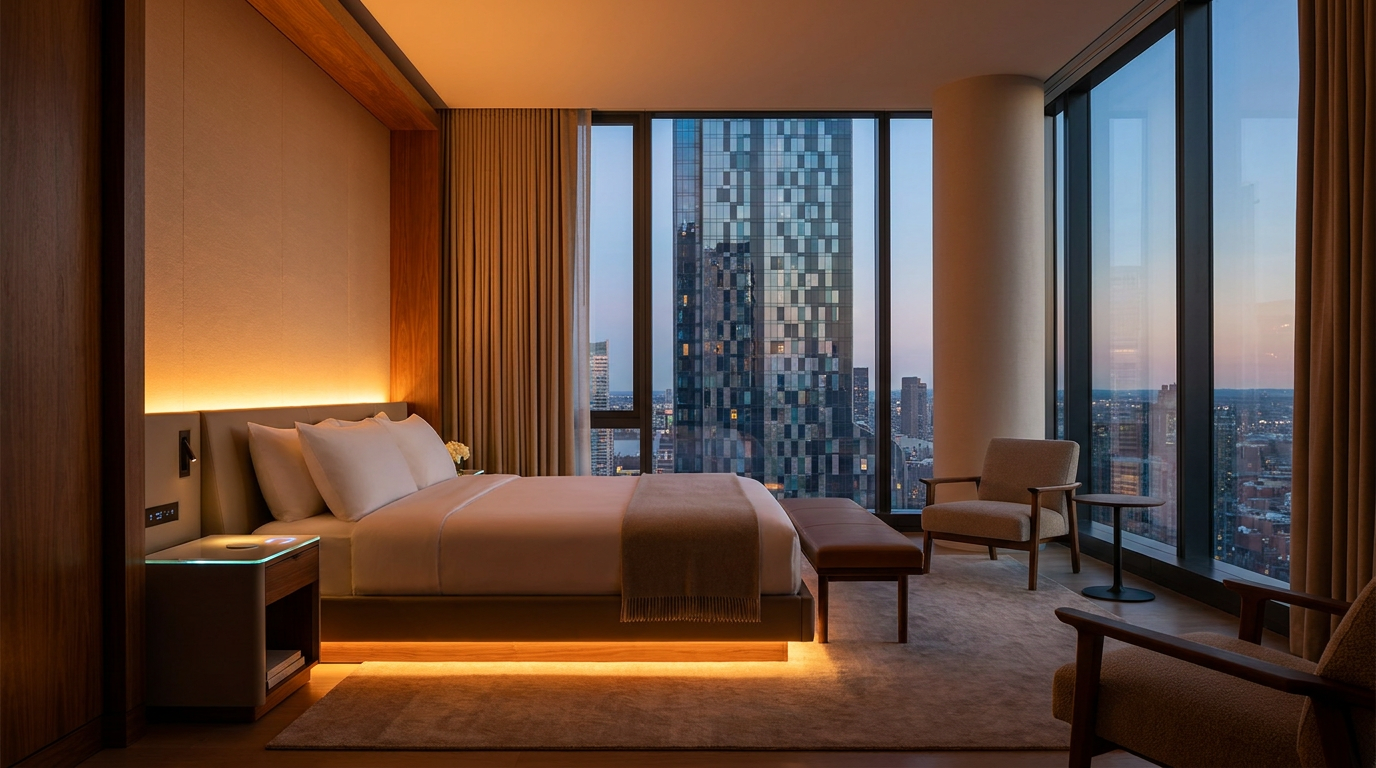
Hotels are no longer just offering a comfortable mattress, a quiet room, and a pillow menu at check-in. They are actively engineering the sleep environment using neuro-architecture, biometric data, and advanced environmental controls to guarantee a perfect night of rest. Major hospitality brands have recognized that sleep is the ultimate luxury amenity. Hilton recently dubbed this evolution "Sleep Tourizzzm 2.0," signaling a definitive move from passive comfort to active, science-backed sleep intervention. Properties ranging from boutique wellness retreats to massive luxury chains are dedicating entire suites to the science of slumber, partnering with sleep doctors and acoustic engineers to redesign the guest experience from the ground up.[2][4]
The first pillar of this environmental engineering is circadian lighting. The human sleep-wake cycle is governed by the suprachiasmatic nucleus, a region of the brain that regulates the production of melatonin—the hormone responsible for initiating sleep. This biological process is highly sensitive to light exposure, particularly the blue light emitted by screens and standard LED bulbs, which can trick the brain into thinking it is still daytime and delay the onset of restorative sleep. To combat this biological disruption, luxury properties like the Equinox Hotel in New York are installing dynamic lighting systems that mirror the natural progression of the sun, automatically adjusting color temperature and intensity throughout the day.[4]

In the morning, these smart rooms flood with bright, blue-enriched light to suppress melatonin and stimulate alertness, helping guests shake off jet lag. As evening approaches, the system automatically shifts to warm, amber tones, signaling to the brain that it is time to wind down. Beyond lighting, hotels are investing heavily in "acoustic cocooning." A 2017 study in the Journal of Clinical Sleep Medicine found that unfamiliar noises in hotel-like environments can reduce sleep efficiency by up to 20 percent—a phenomenon sleep scientists refer to as the "first-night effect." To neutralize this threat, hospitality designers are retrofitting rooms with triple-glazed windows, heavy acoustic insulation, and specialized HVAC systems engineered for near-silent operation.[4]
In the morning, these smart rooms flood with bright, blue-enriched light to suppress melatonin and stimulate alertness, helping guests shake off jet lag.
The most aggressive technological intervention, however, lies in the bed itself. Artificial intelligence has moved from the smartphone to the mattress, with companies like Bryte and Orion developing smart beds designed to actively manage a guest's rest. These AI mattresses are packed with biometric sensors that monitor a sleeper's heart rate, respiratory movements, and sleep stages throughout the night. If a guest begins tossing and turning, the bed responds in real-time without requiring any manual input. This represents a massive leap forward from traditional memory foam, turning the bed into an active participant in the sleep cycle rather than just a passive surface.[5][6]
Bryte's Restorative Bed, for instance, utilizes 90 active cushions that subtly inflate and deflate to relieve pressure spikes before they can wake the sleeper. Other systems, like the Orion smart cover, focus on microclimate control, continuously adjusting the temperature of the bed to keep the body in the optimal thermal zone for deep, restorative sleep. Some of these smart beds even feature a "Somnify" mode, which synchronizes sleep-inducing audio with gentle, rhythmic movement within the mattress to help guests physically unwind and drift off to sleep faster. For couples, dual-zone technology allows each side of the bed to operate independently, ensuring that differing temperature and firmness preferences do not disrupt either partner's rest.[5][6]

The business case for these high-tech upgrades is compelling. Sleep has become a performance asset, particularly for business travelers and executives who need to recover quickly from transcontinental flights to perform at their peak. Data shows that guests who experience measurably better sleep are significantly more likely to return, driving up revenue per available room (RevPAR) for early adopters. Yet, the integration of high-end sleep science into hospitality is not without its skeptics. The primary barrier to widespread adoption is cost. While a standard luxury mattress is a simple one-time capital expense, AI-equipped beds require ongoing software maintenance, sensor calibration, and a significantly higher upfront investment.[4][7]
Industry pragmatists point out that while smart beds are becoming a staple at wellness resorts, they are unlikely to become an industry-wide standard anytime soon. The economics simply do not support deploying highly complex, expensive smart beds across mid-tier or budget hotel chains. Furthermore, organizations like the Global Wellness Institute have raised concerns about a growing "sleep divide." As affluent travelers gain access to perfectly engineered, AI-optimized sleep environments, millions of people continue to struggle with basic sleep deprivation driven by financial insecurity, shift work, and environmental noise at home. The contrast between a $10,000 smart bed and widespread public sleep deprivation highlights the growing commodification of rest.[3][7]

Despite these disparities, the science of sleep optimization is beginning to trickle down. While budget hotels may not install biometric mattresses this year, the foundational principles of sleep tourism—better blackout curtains, warmer evening lighting, and quieter air conditioning—are becoming baseline expectations across the broader industry. Ultimately, the rise of sleep tourism reflects a profound cultural shift. Rest is no longer viewed as passive downtime, but as a critical, measurable pillar of human health. For the modern traveler, the ultimate luxury is no longer a beachfront view or a packed itinerary, but an uninterrupted eight hours of perfect sleep.[1][2][3]
How we got here
2018
Sleep tech startup Bryte introduces its first AI-based Restorative Bed specifically designed for the hospitality industry.
2022
The Park Hyatt New York makes headlines by debuting a dedicated 84-square-meter suite entirely optimized for sleep.
2024
The global sleep tourism market reaches a valuation of $75.7 billion, driven by rising rates of chronic sleep deprivation.
2025
Hilton officially names 'Sleep Tourizzzm 2.0' as a top global travel trend in its annual hospitality report.
2026
Circadian lighting and AI mattress covers see widespread adoption across luxury wellness resorts globally.
Viewpoints in depth
The Luxury Hospitality View
Treating sleep as a measurable performance asset rather than a passive amenity.
For high-end hotel operators, the shift toward sleep tourism is driven by shifting guest expectations and hard economics. Executives and frequent flyers are increasingly treating travel as a biological stressor that needs active management. By offering environments that actively lower cortisol and induce deep sleep, luxury brands can command premium rates and secure fierce loyalty from travelers who can no longer afford to lose a day to jet lag.
The Sleep Tech Innovators
Pushing beyond passive comfort into active, biometric intervention.
Hardware developers argue that a static mattress, no matter how comfortable, cannot adapt to the dynamic needs of a human body in an unfamiliar environment. Innovators in this space are focused on real-time biometric feedback—using AI to monitor heart rates and micro-movements, and instantly adjusting firmness or temperature to prevent the sleeper from waking. For these engineers, the future of sleep is entirely personalized and data-driven.
The Pragmatists' View
Highlighting the economic barriers to widespread adoption.
While the technology is undeniably effective, industry analysts and mid-tier operators point to the prohibitive costs of implementation. A standard commercial mattress is a simple, one-time capital expenditure. An AI-powered smart bed requires software updates, sensor maintenance, and a massive upfront investment. Pragmatists argue that while circadian lighting and better soundproofing will trickle down to budget chains, active AI mattresses will remain an exclusive perk for the ultra-wealthy.
What we don't know
- Whether the high costs of AI mattresses will eventually decrease enough to allow adoption in mid-tier and budget hotel chains.
- How long-term reliance on AI-optimized sleep environments might affect a traveler's ability to sleep naturally without technological assistance.
- The extent to which the 'sleep divide' will widen as luxury sleep optimization outpaces public health solutions for everyday sleep deprivation.
Key terms
- Circadian Lighting
- Lighting systems that automatically adjust color temperature and intensity throughout the day to mirror natural sunlight and regulate the body's internal clock.
- Acoustic Cocooning
- The use of advanced soundproofing materials, triple-glazed windows, and white noise integration to completely isolate a room from external noise.
- Suprachiasmatic Nucleus (SCN)
- The region of the brain that regulates the circadian rhythm and controls the production of melatonin based on light exposure.
- RevPAR
- Revenue per available room, a key performance metric in the hotel industry used to measure a property's financial success.
Frequently asked
What exactly is sleep tourism?
Sleep tourism is a growing travel trend where the primary purpose of the trip is biological rest. Instead of packed itineraries, guests book stays at properties engineered to optimize sleep through advanced lighting, acoustics, and smart beds.
How do AI mattresses improve sleep?
AI mattresses use biometric sensors to monitor a sleeper's heart rate, breathing, and movements. They actively adjust firmness to relieve pressure points and regulate temperature to keep the body in an optimal state for deep sleep.
Will smart beds become standard in all hotels?
It is unlikely in the near future. While luxury and wellness resorts are rapidly adopting them, the high upfront cost and maintenance requirements make AI mattresses impractical for budget or mid-tier hotel chains.
Sources
Source coverage
7 outlets
3 viewpoints surfaced







[1]Us WeeklyLuxury Hospitality Brands
Why Sleep Tourism Is One of 2026's Biggest Travel Trends
Read on Us Weekly →[2]Mattress MiracleIndustry Pragmatists
Sleep Trends 2026: Tourism, Sleepmaxxing & Dopamine Menus
Read on Mattress Miracle →[3]Global Wellness InstituteLuxury Hospitality Brands
Sleep Initiative Trends for 2026
Read on Global Wellness Institute →[4]IncredibleStayLuxury Hospitality Brands
Circadian Lighting, Acoustic Cocooning, and the Science Hotels Use to Make You Sleep Better
Read on IncredibleStay →[5]Hotel BusinessSleep Tech Innovators
Smart mattress provides a restorative sleep
Read on Hotel Business →[6]EntrepreneurSleep Tech Innovators
This 25-Year-Old's Sleep Problems Gave Him Vertigo. His Response? An AI Mattress Cover That Hit Eight Figures
Read on Entrepreneur →[7]MarketScaleIndustry Pragmatists
For the Best Sleep, Will AI Mattresses Become More Common in Hotels?
Read on MarketScale →

Every angle. Every day.
Get travel stories with full source coverage and perspective breakdowns delivered to your inbox.