
The Homebuyer's Guide to Assumable Mortgages in a High-Rate Market
As interest rates remain elevated, buyers are increasingly utilizing assumable mortgages to take over sellers' ultra-low rates from previous years. Here is how the mechanism works, who qualifies, and how to navigate the equity gap.
By Factlen Editorial Team
- Homebuyers
- View assumable mortgages as a vital lifeline to achieve affordability, willing to endure longer closing times and complex paperwork for long-term savings.
- Home Sellers
- Leverage their existing low-rate government loans as a premium asset to command higher asking prices and attract highly motivated buyers.
- Mortgage Servicers
- Face significant administrative burdens processing complex assumptions for minimal, legally capped fees, leading to systemic processing delays.
- Housing Policy Advocates
- Argue for federal reforms to streamline the assumption process and increase servicer compensation to make the tool more widely accessible.
What's not represented
- · Real estate agents navigating the complex transaction logistics
- · Second-mortgage lenders providing gap financing
Why this matters
Understanding assumable mortgages can save buyers hundreds of dollars a month and give sellers a unique competitive advantage, unlocking homeownership for those priced out by current interest rates.
Key points
- Assumable mortgages allow buyers to take over a seller's existing loan and its original, often lower, interest rate.
- Only government-backed loans (FHA, VA, USDA) are legally assumable; conventional loans are not.
- Buyers must cover the 'equity gap' between the home's purchase price and the remaining loan balance with cash or a second mortgage.
- The process requires full underwriting by the seller's servicer and typically takes 60 to 90 days to close.
- Sellers with assumable loans are increasingly using them as premium features to command higher asking prices.
The current interest rate environment has fundamentally altered the math of American homeownership. With Federal Reserve Chair Kevin Warsh signaling a sustained commitment to inflation control, the era of ultra-low borrowing costs appears definitively over, leaving many prospective buyers bracing for a prolonged period of elevated mortgage rates.[1]
Yet, a powerful workaround is gaining traction among savvy buyers and real estate agents: the assumable mortgage. Rather than accepting defeat or waiting on the sidelines for macroeconomic shifts, buyers are actively hunting for properties that allow them to bypass current market rates entirely.[2][7]
The mechanism is elegantly simple in concept. Instead of originating a brand-new loan at today's prevailing rate of around 7%, the buyer legally steps into the seller's shoes, taking over their existing mortgage at its original interest rate, which is often locked in at 3% or 4% from the pandemic era.[5]
The financial impact of this maneuver is staggering. On a $400,000 loan balance, the difference between a 3% rate and a 7% rate translates to roughly $900 in monthly savings. Over the standard 30-year life of a loan, that single contractual substitution can save a family hundreds of thousands of dollars in interest payments.[7]
However, executing an assumption requires navigating a significant structural hurdle known as the equity gap. When a buyer assumes a loan, they are only taking over the exact remaining balance of the seller's mortgage, not securing financing for the home's current market price.[2]
For example, if a home is being sold for $500,000, but the seller's remaining mortgage balance is only $300,000, there is a $200,000 shortfall. The buyer must cover this difference to make the seller whole for their accumulated equity and the home's appreciation.[7]

Buyers typically bridge this equity gap in one of two ways. The most straightforward path is bringing substantial cash to the closing table, which heavily favors buyers with significant liquid assets. Alternatively, buyers can take out a second mortgage to cover the difference, blending the ultra-low assumed rate with a smaller, higher-rate loan to achieve a manageable overall payment.[6]
The most straightforward path is bringing substantial cash to the closing table, which heavily favors buyers with significant liquid assets.
It is crucial to understand that not all mortgages are eligible for this strategy. Conventional loans, backed by Fannie Mae and Freddie Mac, which make up the vast majority of the U.S. market, almost universally contain a "due-on-sale" clause. This legal provision requires the loan to be paid off in full when the property changes hands, explicitly preventing assumption.[5]
The opportunity lies entirely within government-backed loans. By law, mortgages insured by the Federal Housing Administration (FHA), the Department of Veterans Affairs (VA), and the U.S. Department of Agriculture (USDA) are assumable. Together, these represent roughly 22% of the active mortgage market, creating a massive, untapped inventory of low-rate debt.[3][4][6]

FHA loans are the most common assumable product encountered by general buyers. The process is not automatic; the buyer must still formally apply and qualify for the loan based on their credit score, debt-to-income ratio, and employment history. However, this underwriting is performed by the seller's current mortgage servicer rather than a new lender.[3]
VA loans offer an incredible opportunity but come with a highly specific caveat. While anyone—even a civilian with no military background—can assume a VA loan, the original veteran seller's "entitlement" remains tied to that property until the loan is paid off. This means the seller cannot use their full VA benefit to buy another home unless the buyer is also a qualified veteran who agrees to substitute their own entitlement.[4]
The actual process of assuming a loan requires immense patience from both parties. Unlike a standard real estate transaction that typically closes in 30 days, assumptions are notorious for taking 60 to 90 days, and sometimes longer, to reach the closing table.[2]

This delay is largely driven by servicer bottlenecks. Mortgage servicers are legally permitted to charge only a small, capped fee—often around $900—for processing an assumption. Because the administrative burden is high and the financial incentive is low, these files frequently languish at the bottom of the priority pile.[6]
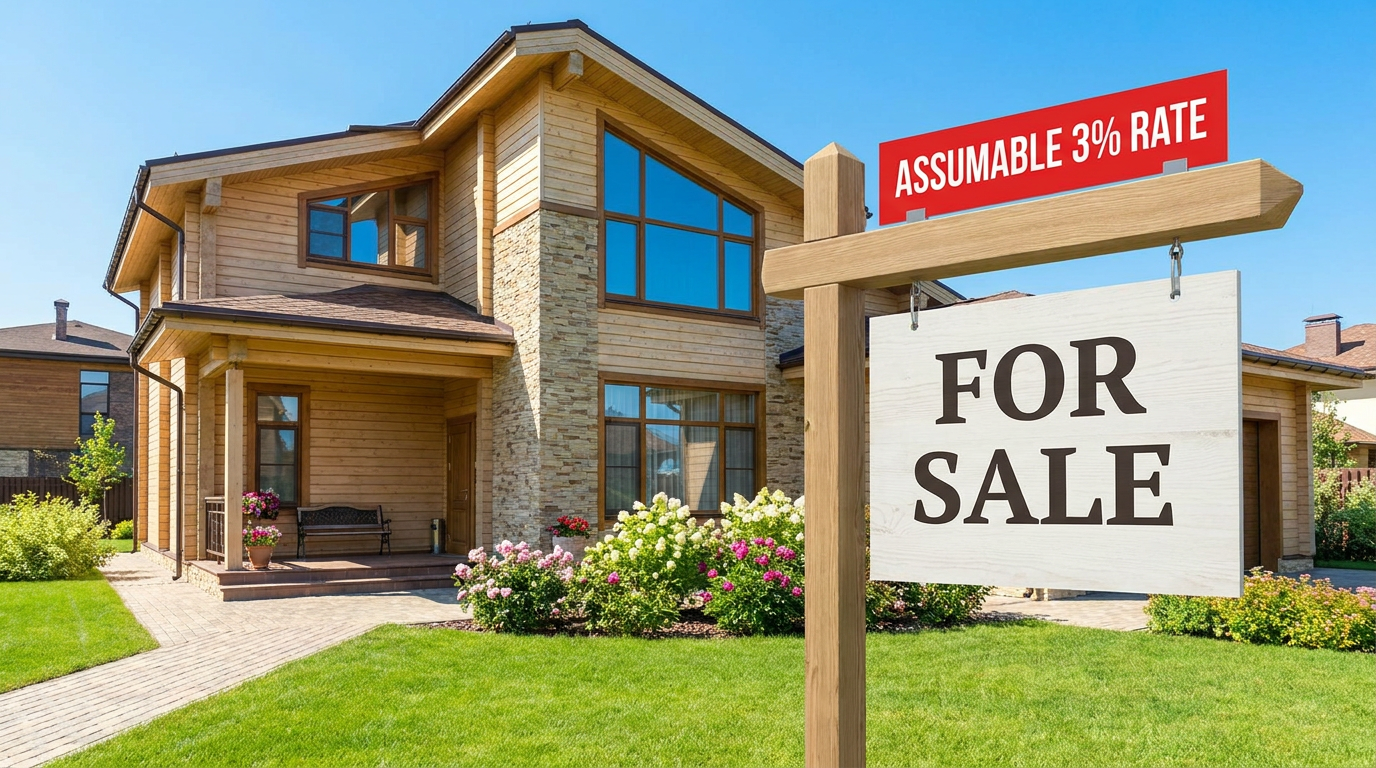
Despite the bureaucratic friction, the real estate market is rapidly adapting to the value of these loans. Property listings increasingly feature phrases like "Assumable 2.75% FHA Rate" in their headline descriptions, treating the old mortgage as a premium home feature akin to a renovated kitchen or a new roof.[7]
Sellers who hold these assumable loans are discovering they possess immense leverage. In many markets, they can command higher asking prices than comparable homes, as buyers are more than willing to pay a premium upfront in exchange for decades of significantly lower monthly carrying costs.[6]
Looking ahead, housing policy advocates are actively pushing federal agencies to streamline the assumption process. Proposals include increasing the allowable processing fees to incentivize servicers and creating standardized, expedited underwriting tracks to make these transactions as seamless as traditional originations.[6]
For motivated buyers willing to hunt for the right property, assemble the necessary cash, and navigate the paperwork, assumable mortgages represent one of the most powerful financial lifehacks in modern real estate—a rare opportunity to turn back the clock on interest rates.[7]

How we got here
2020–2021
Millions of homebuyers lock in historically low mortgage rates between 2.5% and 4.0%.
2022–2024
The Federal Reserve aggressively hikes interest rates, pushing standard 30-year mortgage rates above 7%.
2026
With rates remaining elevated under Fed Chair Kevin Warsh, assumable mortgages surge in popularity as a primary affordability strategy.
Viewpoints in depth
Homebuyers' Strategy
Buyers view assumptions as the ultimate financial lifehack to achieve affordability.
For prospective buyers, the math of an assumable mortgage is undeniable. By securing a 3% rate in a 7% market, families can save hundreds of dollars a month, effectively increasing their purchasing power by tens of thousands of dollars. While buyers acknowledge the frustration of assembling large cash down payments to cover the equity gap and enduring 90-day closing periods, they view these hurdles as temporary inconveniences compared to the decades of guaranteed savings.
Sellers' Leverage
Homeowners are weaponizing their low-rate debt to command premium prices.
Sellers holding FHA or VA loans recognize they possess a highly coveted asset. Instead of viewing their mortgage merely as a debt to be cleared, they are marketing the loan itself as a premium feature of the home. This leverage allows them to maintain firm asking prices even in cooling markets, as buyers are willing to pay a premium on the purchase price in exchange for the long-term savings embedded in the assumed interest rate.
Mortgage Servicers' Reality
Servicers face a misaligned incentive structure that causes systemic processing delays.
From the perspective of mortgage servicing companies, assumptions are a logistical headache. Processing an assumption requires the same rigorous underwriting as originating a new loan, but federal regulations cap the fees servicers can charge—often around $900. Because there is virtually no profit margin in processing these complex, labor-intensive files, servicers have little financial incentive to hire dedicated assumption teams, resulting in the severe bottlenecks that frustrate buyers and sellers.
What we don't know
- Whether federal agencies will increase allowable processing fees to incentivize faster servicer turnaround times.
- How the expansion of second-mortgage products specifically designed to cover the equity gap will impact overall default rates.
Key terms
- Assumable Mortgage
- A type of home loan that allows a buyer to take over the seller's exact mortgage terms, including the remaining balance, repayment period, and interest rate.
- Equity Gap
- The financial difference between the home's agreed-upon purchase price and the remaining balance of the assumed mortgage, which the buyer must cover.
- Due-on-Sale Clause
- A standard provision in conventional mortgages requiring the borrower to repay the lender in full if the property is sold or transferred.
- VA Entitlement
- The specific dollar amount the Department of Veterans Affairs guarantees on a VA loan, which remains tied to the property if a non-veteran assumes the mortgage.
Frequently asked
Can I assume a conventional mortgage?
Generally, no. Conventional loans backed by Fannie Mae and Freddie Mac contain a 'due-on-sale' clause that requires the loan to be paid off entirely when the home is sold.
Do I need to be a veteran to assume a VA loan?
No, civilians can assume a VA loan. However, the original veteran seller's VA entitlement remains tied to the property until the loan is paid off, unless the buyer is a veteran who substitutes their own entitlement.
How long does the assumption process take?
Assumptions typically take 60 to 90 days to close, significantly longer than a traditional 30-day mortgage origination, due to servicer processing bottlenecks.
Do I still need to qualify for the loan?
Yes. The seller's mortgage servicer will underwrite your application, checking your credit score, income, and debt levels to ensure you can afford the monthly payments.
Sources
Source coverage
7 outlets
4 viewpoints surfaced







[1]MarketWatchHome Sellers
Fed Chair Kevin Warsh wants to get inflation under control. That could be bad news for home buyers seeking lower mortgage rates.
Read on MarketWatch →[2]BankrateHomebuyers
What is an assumable mortgage and how does it work?
Read on Bankrate →[3]U.S. Department of Housing and Urban DevelopmentHousing Policy Advocates
FHA Single Family Housing Policy Handbook
Read on U.S. Department of Housing and Urban Development →[4]U.S. Department of Veterans AffairsHousing Policy Advocates
VA Home Loans: Assumptions
Read on U.S. Department of Veterans Affairs →[5]Consumer Financial Protection BureauHousing Policy Advocates
What is an assumable mortgage?
Read on Consumer Financial Protection Bureau →[6]Urban InstituteMortgage Servicers
Assumable Mortgages: An Untapped Resource for Homebuyers
Read on Urban Institute →[7]Factlen Editorial TeamHomebuyers
Synthesis by Factlen editorial team
Read on Factlen Editorial Team →

Every angle. Every day.
Get finance stories with full source coverage and perspective breakdowns delivered to your inbox.