
How Cold-Climate Heat Pumps Actually Work in Sub-Zero Weather
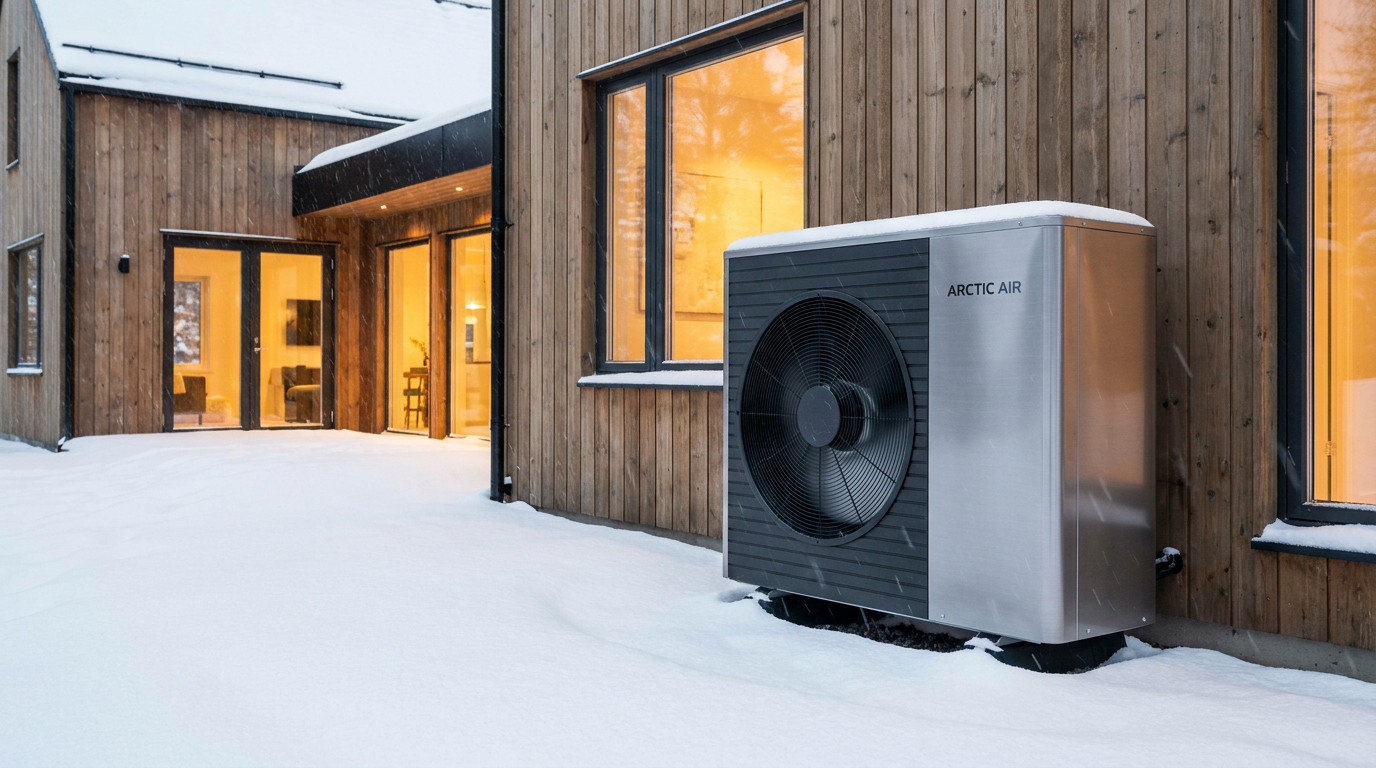
Advances in variable-speed compressors and vapor injection have transformed heat pumps, allowing them to heat homes efficiently even when temperatures plunge to -20°F.
By Factlen Editorial Team
- Decarbonization Advocates
- View cold-climate heat pumps as essential for eliminating residential fossil fuel use and meeting climate goals.
- HVAC Industry & Manufacturers
- Focus on engineering breakthroughs, grid-interactive features, and scaling production to meet new efficiency standards.
- Consumer & Trade Experts
- Prioritize practical home comfort, proper sizing, insulation prerequisites, and the financial return on investment for homeowners.
What's not represented
- · Renters who cannot upgrade their own HVAC systems but bear the cost of inefficient heating.
- · Electrical grid operators managing the winter peak load surge caused by widespread electrification.
Why this matters
Heating and cooling account for over 40% of home energy use. Upgrading to a cold-climate heat pump can drastically cut utility bills and carbon emissions, but understanding the technology is key to avoiding costly installation mistakes.
Key points
- Modern cold-climate heat pumps can operate efficiently in temperatures as low as -22°F, dismantling the stigma that they only work in mild climates.
- Field tests by the Department of Energy showed prototype units achieving 190% efficiency (a COP of 1.9) even when outdoor temperatures hovered near 0°F.
- The performance leap is driven by variable-speed inverter compressors and enhanced vapor injection, which allow the system to adapt to extreme cold.
- Heat pumps have outsold traditional gas furnaces in the U.S. for four consecutive years, driven by better technology and federal tax incentives.
- Experts warn that heat pumps require well-insulated homes to function optimally; installing one in a drafty house will still lead to high energy bills.
Heat pumps outsold gas furnaces in the United States for the fourth consecutive year in 2025, marking a fundamental shift in how Americans heat their homes.[8]
For decades, homeowners in northern states were told that heat pumps were only viable in mild climates. Older, single-stage models struggled when temperatures dropped below freezing, forcing reliance on expensive electric resistance backup heating that caused winter utility bills to skyrocket.[3][4]
But the technology has undergone a quiet revolution. The U.S. Department of Energy's Cold Climate Heat Pump Challenge, which concluded its field validation phase in late 2024 and published its final results in early 2025, proved that modern systems can handle extreme winters without breaking a sweat.[1][2]
The DOE partnered with major HVAC manufacturers—including Bosch, Carrier, Lennox, and Trane—to test prototype units in occupied homes across the U.S. and Canada, subjecting the machines to real-world blizzards and sub-zero cold snaps.[2][6]
The results dismantled outdated stigmas. In temperatures between 0°F and 5°F, the median Coefficient of Performance (COP) across all tested sites was an impressive 1.9.[1]
A COP of 1.9 means the heat pump operates at 190% efficiency, producing nearly twice as much heat energy as the electrical energy it consumes. By comparison, even the most advanced, top-of-the-line natural gas furnaces max out at around 98% efficiency.[1][3][5]

How does a machine generate heat from freezing air? The secret is that unlike a furnace, which burns fuel to create heat, a heat pump merely transfers it.[3]
Even at sub-zero temperatures, outdoor air contains usable thermal energy. The system's chemical refrigerant absorbs this ambient heat, a compressor pressurizes the gas to drastically increase its temperature, and the system pumps that concentrated warmth indoors.[3][4]
The recent performance leap relies on three main hardware advances. The first and most critical is the variable-speed inverter compressor.[5][7]
The recent performance leap relies on three main hardware advances.
Traditional compressors operate like a light switch: they are either 100% on or 100% off. Variable-speed inverters act like a dimmer switch or cruise control, continuously adjusting their output from 25% to 100% to match the exact heating load required by the house at any given moment.[5]

The second breakthrough is enhanced vapor injection. This technology acts like a turbocharger for the compressor, injecting additional refrigerant vapor into the cycle when outdoor temperatures plummet, allowing the system to maintain its full heating capacity down to -15°F or even -22°F.[5][7]
The third improvement lies in software and defrost cycles. When extracting heat from cold, humid air, ice naturally builds up on the outdoor coils, which can choke the system's airflow.[4]
Modern cold-climate heat pumps use advanced algorithms to optimize when and how they defrost, minimizing the time the system spends melting ice instead of heating the home. Software interventions alone have been shown to boost efficiency by up to 50% in extreme cold.[4][8]
Real-world field trials validate these engineering upgrades. A prototype installed by Trane Technologies in a Boise, Idaho residence successfully heated the home through two winters, relying on its backup electric heat strip only 10% of the time and delivering 15% to 20% savings on energy bills.[6]

Despite these advances, experts caution that a heat pump is only as good as the building envelope it serves. Proper insulation and air sealing are non-negotiable prerequisites.[3]
Because heat pumps deliver "low-temperature heat"—often supplying a steady stream of air around 100°F compared to a furnace's 130°F blast—they need to run longer cycles to maintain comfort. Installing a high-efficiency unit in a drafty, poorly insulated house will still result in high bills and a chilly interior.[3]
For homeowners in the absolute coldest regions who remain hesitant to fully disconnect their gas lines, HVAC professionals often recommend "dual-fuel" systems as a practical bridge.[3]
These setups pair a high-efficiency heat pump with a traditional gas furnace. The heat pump handles the heating load for 90% of the winter, and the system automatically switches to gas only during the most extreme sub-zero cold snaps, optimizing both comfort and cost.[3]

The momentum behind cold-climate electrification is accelerating rapidly. States like Maine have already surpassed their initial heat pump adoption goals, now targeting 275,000 new installations by 2027.[8]
How we got here
2021
The U.S. Department of Energy launches the Cold Climate Heat Pump Challenge to accelerate the development of sub-zero heating technology.
2022
Heat pumps outsell gas furnaces in the United States for the first time, signaling a shift in consumer preference.
2022–2024
HVAC manufacturers deploy prototype cold-climate units in occupied homes across the U.S. and Canada for rigorous field testing.
Jan 2025
The Pacific Northwest National Laboratory publishes the field validation results, proving the prototypes maintained high efficiency at 5°F.
2026
Next-generation cold-climate models featuring advanced vapor injection and optimized defrost algorithms become widely available to consumers.
Viewpoints in depth
HVAC Manufacturers & Engineers
Focused on pushing the thermodynamic limits of refrigerant cycles.
For the engineering sector, the Cold Climate Heat Pump Challenge was a catalyst to accelerate R&D that might otherwise have taken a decade. Manufacturers like Trane, Bosch, and Carrier are heavily invested in variable-speed inverters and vapor injection technologies. Their primary goal is maintaining heating capacity without relying on electric resistance strips, which drag down overall efficiency. They are also preparing for upcoming regulations by transitioning to low-GWP (Global Warming Potential) refrigerants, which present their own thermodynamic challenges in sub-zero conditions.
Decarbonization Advocates
Viewing heat pumps as the linchpin of residential climate policy.
Environmental groups and state energy offices view the technological maturation of cold-climate heat pumps as the green light for aggressive electrification mandates. Because buildings account for a massive share of carbon emissions, transitioning away from fossil-fuel furnaces is a top priority. Advocates point to states like Maine—which rapidly hit its 100,000-unit goal—as proof that even regions with brutal winters can safely electrify. They argue that as the electrical grid becomes greener, the carbon footprint of home heating will approach zero.
Homeowners & Trade Installers
Balancing upfront costs, home comfort, and practical installation hurdles.
While the technology is proven, the people actually living with and installing these systems face practical hurdles. Installers emphasize that a heat pump cannot fix a poorly insulated house; if the building envelope is leaky, the system will run constantly and drive up electric bills. Furthermore, homeowners accustomed to the 130°F blast of a gas furnace often feel that the 100°F air from a heat pump is 'cold,' even though it is actively warming the room. Managing these comfort expectations and navigating the high upfront costs—even with tax credits—remains the biggest barrier on the ground.
What we don't know
- How quickly the electrical grid in colder regions can adapt to the increased winter peak loads caused by widespread heat pump adoption.
- The long-term durability and maintenance costs of the highly complex variable-speed compressors compared to simpler, older HVAC technology.
- Whether the high upfront installation costs will drop sufficiently to make the technology accessible to lower-income homeowners without heavy government subsidies.
Key terms
- Coefficient of Performance (COP)
- A metric used to measure the energy efficiency of a heating system; a COP of 2.0 means the system outputs twice as much heat energy as the electrical energy it uses.
- Variable-Speed Inverter Compressor
- A compressor that can continuously adjust its operating speed to match the exact heating needs of a home, rather than just turning 100% on or off.
- Vapor Injection
- A technology that injects additional refrigerant vapor into the compressor cycle, acting like a turbocharger to boost heating capacity in extreme cold.
- Defrost Cycle
- A brief period where the heat pump temporarily reverses its operation to melt ice that has accumulated on the outdoor unit's coils during cold, humid weather.
- Dual-Fuel System
- A hybrid HVAC setup that uses an electric heat pump for the vast majority of heating, but automatically switches to a backup gas furnace during the most extreme cold snaps.
Frequently asked
Do heat pumps actually work in sub-zero temperatures?
Yes. Modern cold-climate heat pumps use advanced compressors and refrigerants to extract heat from the air even when temperatures drop to -15°F or -22°F.
What does a COP of 1.9 mean?
Coefficient of Performance (COP) measures efficiency. A COP of 1.9 means the heat pump produces 1.9 units of heat energy for every 1 unit of electrical energy it consumes, equating to 190% efficiency.
Will a heat pump save me money in the winter?
Generally, yes, because they are significantly more efficient than gas or oil furnaces. However, actual savings depend on your local electricity rates, natural gas prices, and how well-insulated your home is.
Why does the air from my heat pump feel cooler than my old furnace?
Gas furnaces deliver short blasts of very hot air (around 130°F). Heat pumps provide a steady, continuous flow of lower-temperature air (around 100°F), which maintains the room's temperature more evenly but can feel cooler to the touch.
Sources
Source coverage
8 outlets
3 viewpoints surfaced








[1]Pacific Northwest National LaboratoryHVAC Industry & Manufacturers
Performance Results from DOE Cold Climate Heat Pump Challenge Field Validation
Read on Pacific Northwest National Laboratory →[2]U.S. Department of EnergyDecarbonization Advocates
Residential Cold Climate Heat Pump Challenge
Read on U.S. Department of Energy →[3]This Old HouseConsumer & Trade Experts
Heat Pump vs. Furnace: Understanding the Differences
Read on This Old House →[4]CNETConsumer & Trade Experts
Heat Pumps Can Struggle in Coldest Winter, but New Models at CES Show Promise
Read on CNET →[5]LearnMetricsConsumer & Trade Experts
Best Heat Pumps For Cold Climates In 2025 (Down To -22°F)
Read on LearnMetrics →[6]Trane TechnologiesHVAC Industry & Manufacturers
Cold Climate Heat Pump Challenge Success
Read on Trane Technologies →[7]Building Decarbonization CoalitionDecarbonization Advocates
Heat Pumps Take Center Stage at the 2025 AHR Expo
Read on Building Decarbonization Coalition →[8]PalmettoDecarbonization Advocates
Cold Climate Heat Pumps Keep You Comfortable in the Winter
Read on Palmetto →
Every angle. Every day.
Get home stories with full source coverage and perspective breakdowns delivered to your inbox.