
US-Iran Ceasefire Talks in Switzerland Abruptly Cancelled, Sparking Regional Escalation
A highly anticipated diplomatic summit in Switzerland aimed at implementing a 14-point agreement to end the US-Israeli war on Iran has collapsed before it began. The sudden cancellation of the talks has immediately triggered renewed military strikes across the Middle East and dashed hopes for a 60-day de-escalation window.
By Factlen Editorial Team
- US Administration & Allies
- Argues that Iran and its proxy network acted in bad faith by repeatedly violating the unwritten ceasefire, making diplomacy impossible.
- Iranian Establishment
- Views the abrupt US withdrawal as proof of Western unreliability and capitulation to Israeli pressure to sabotage the agreement.
- Israeli Security Establishment
- Considers the 14-point MOU a flawed deal that would have allowed Iran to rebuild its proxy network and demands sustained military deterrence.
- Humanitarian Observers
- Focuses on the devastating human toll of the broader war, arguing that high-level diplomacy often ignores the ongoing suffering of civilians in Gaza and Lebanon.
What's not represented
- · European Union Mediators
- · Global Shipping and Energy Conglomerates
Why this matters
The collapse of these talks removes the only diplomatic off-ramp to the ongoing US-Israeli war on Iran, virtually guaranteeing a resumption of high-intensity conflict. For global markets, the failure to secure the Strait of Hormuz threatens immediate spikes in energy costs and severe disruptions to international shipping.
Key points
- A crucial US-Iran diplomatic summit in Switzerland was abruptly cancelled before it began.
- The talks were meant to implement a 14-point agreement and open a 60-day de-escalation window.
- The US blamed the collapse on ceasefire violations by Iran-backed proxy groups.
- Iran accused the US of acting in bad faith and capitulating to Israeli pressure.
- Israel immediately resumed military strikes against Hezbollah targets in southern Lebanon.
- The collapse threatens to severely disrupt global oil traffic through the Strait of Hormuz.
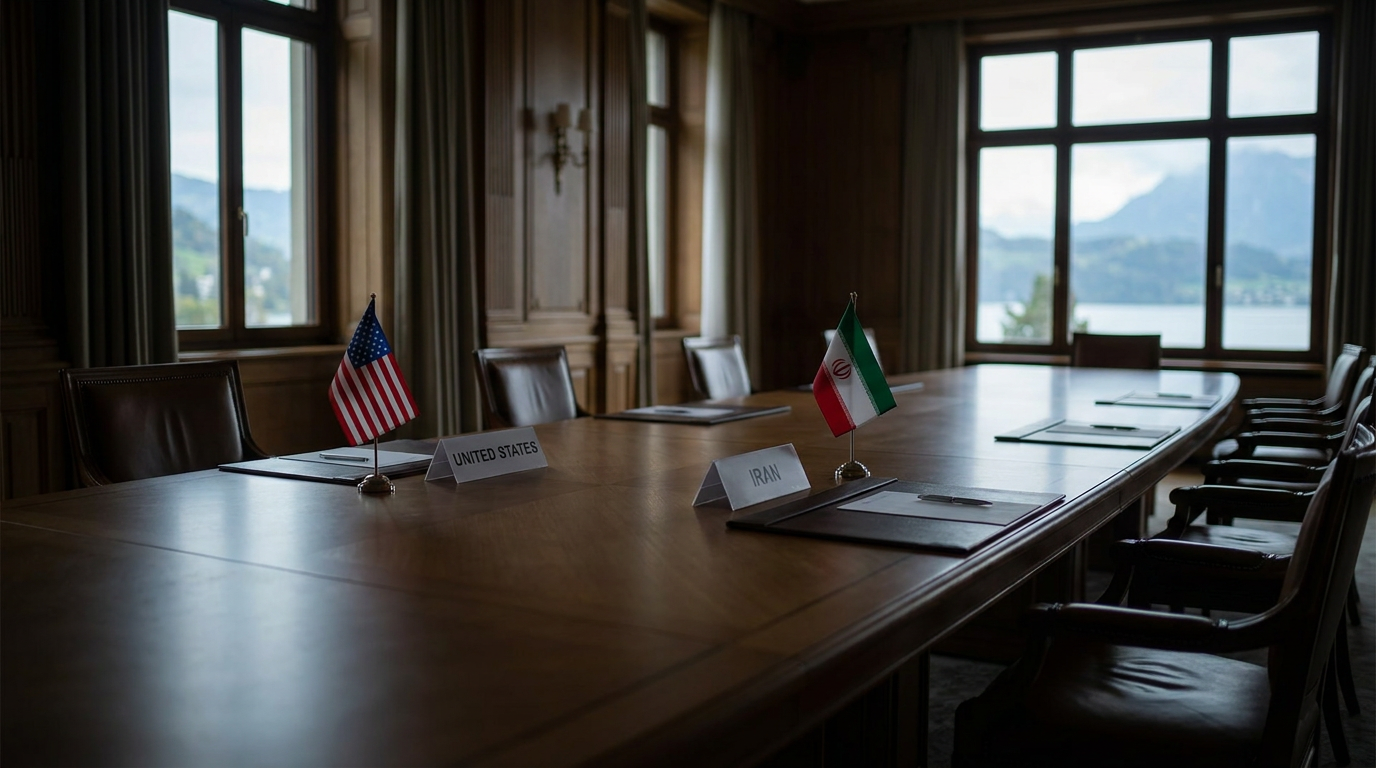
A highly anticipated diplomatic breakthrough in the Middle East has unraveled before a single formal meeting could take place. Talks scheduled for Friday in the Swiss village of Obbürgen between the United States and Iran were abruptly cancelled, shattering a fragile diplomatic window aimed at ending the ongoing US-Israeli war on Iran. Vice President JD Vance’s staff were already at an airbase preparing to fly to the Bürgenstock summit when the trip was suddenly aborted by the administration.[1][6]
The summit was intended to be the critical next step in implementing a 14-point memorandum of understanding (MOU) signed just days prior. That agreement had opened a 60-day window to negotiate a permanent settlement regarding Iran’s nuclear program, while simultaneously establishing protocols to safely resume oil traffic through the heavily contested Strait of Hormuz. Instead, the Swiss foreign ministry confirmed the complete suspension of the talks, leaving the diplomatic framework in ruins.[1][10]
The mechanism of the 14-point MOU was designed to be a phased de-escalation. According to foreign policy analysts, the framework required simultaneous concessions: Iran would freeze specific tiers of its uranium enrichment and grant access to International Atomic Energy Agency (IAEA) inspectors, while the US and its allies would temporarily halt military strikes and allow a restricted volume of Iranian oil exports to reach Asian markets. The 60-day window was meant to test compliance before moving to a binding treaty.[5][10]

However, the sequencing of these steps proved to be the agreement's fatal flaw. The United States claims that Iran-backed proxy groups repeatedly violated the unwritten terms of the ceasefire in the days leading up to the summit, making diplomatic engagement impossible. The Trump administration reportedly viewed the continued proxy harassment as evidence that Tehran was either unwilling or unable to control its regional network, prompting the sudden withdrawal from the Swiss talks.[2][7]
Conversely, officials in Tehran have accused Washington of acting in bad faith, framing the cancellation as a capitulation to Israeli pressure. Iranian state media asserts that the US walked back on the 14-point agreement because it could not guarantee that Israel would abide by the ceasefire parameters. From Tehran's perspective, the US withdrawal validates their long-held stance that Western diplomatic promises are unreliable, particularly during election years or periods of domestic political transition.[9]
Conversely, officials in Tehran have accused Washington of acting in bad faith, framing the cancellation as a capitulation to Israeli pressure.
The collapse of the talks has had immediate and violent repercussions across the region. Within hours of the summit's cancellation, the Israel Defense Forces (IDF) launched a wave of strikes against Hezbollah targets in southern Lebanon. The IDF claimed these strikes were a necessary response to repeated violations of the ceasefire by the Iran-backed militant group, signaling a rapid return to the high-intensity, multi-front conflict that the Swiss talks were meant to pause.[2][8]

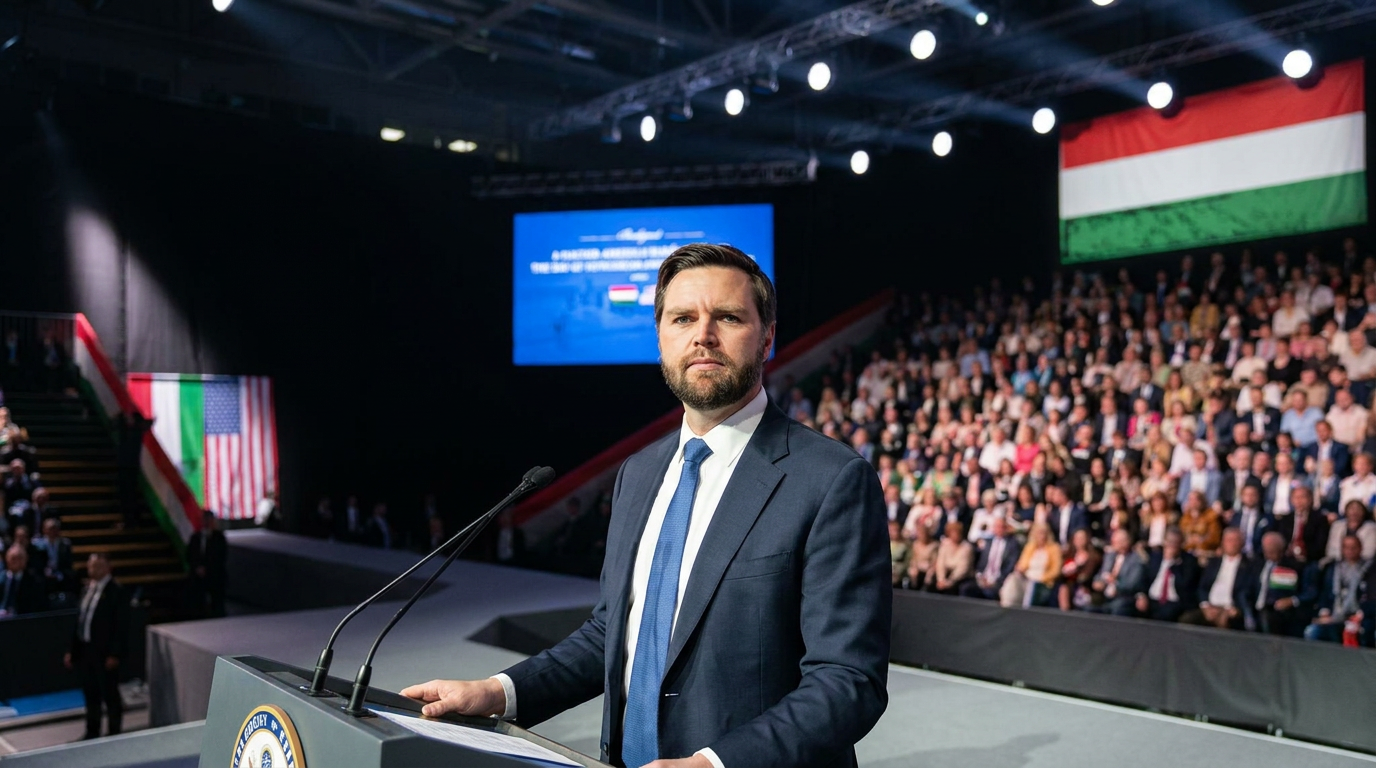
The political dynamics within the US and Israel played a massive role in the summit's demise. JD Vance has been actively messaging critics of the Iran deal within Israel, recently stating that the current US administration is their "only ally left in the world." This rhetoric highlights the intense domestic and allied pressure on the White House to avoid any agreement that could be perceived as overly accommodating to Tehran, especially regarding sanctions relief.[2][6]
The human cost of the broader US-Israeli war on Iran remains staggering, though heavily obscured by the fog of war. Experts note that internet blackouts, media censorship, and government restrictions have severely hampered casualty reporting across the region. While official figures are difficult to verify, human rights organizations estimate that thousands have been killed in the overlapping conflicts, with the true total likely to remain unknown for years.[4]
Furthermore, regional observers warn that the intense focus on the "Iran deal" has provided diplomatic cover for ongoing crises elsewhere. Humanitarian advocates point out that while global attention was fixated on the Swiss summit and the geopolitics of the Strait of Hormuz, the devastating conditions for Palestinians have continued unabated. The diplomatic noise surrounding the US-Iran negotiations has, for many, overshadowed the daily realities of the broader regional war.[3]
The economic stakes of the diplomatic collapse are equally severe. The 14-point MOU included specific provisions for securing oil traffic, a critical component given that a significant percentage of the world's daily oil consumption passes through the Strait of Hormuz. With the 60-day window now slammed shut, energy markets are bracing for renewed attacks on commercial shipping, which could trigger immediate spikes in global crude prices and disrupt international supply chains.[1][10]

Diplomatic backchannels, primarily facilitated by Oman and Qatar, are now scrambling to salvage any remnants of the de-escalation framework. However, analysts note that the public and abrupt nature of the US withdrawal makes a rapid return to the negotiating table highly unlikely. Both sides have now entrenched their positions, with hardliners in both Washington and Tehran feeling vindicated in their skepticism of the diplomatic process.[5][10]
Ultimately, the failure in Switzerland underscores the deep, structural incompatibilities between the warring parties. The attempt to simultaneously address nuclear proliferation, regional proxy warfare, and global energy security within a single 60-day framework proved too ambitious. As military operations resume in Lebanon and the Persian Gulf, the Middle East faces a renewed period of unchecked escalation, with the guardrails of diplomacy now entirely removed.[2][8][10]

How we got here
Earlier this week
The US and Iran sign a 14-point memorandum of understanding to open a 60-day diplomatic window.
Thursday
Reports emerge of continued clashes and proxy strikes, straining the unwritten ceasefire.
Friday Morning
The US abruptly cancels the planned summit in Switzerland; JD Vance aborts his trip.
Friday Afternoon
Israel launches a wave of strikes against Hezbollah targets in southern Lebanon.
Viewpoints in depth
Washington's Stance
The US administration views the collapse as a necessary response to Iranian intransigence and proxy violence.
From the perspective of the US administration, proceeding with the Swiss summit while Iran-backed groups continued to launch attacks would have projected weakness. Officials argue that the 14-point MOU was predicated on a mutual, albeit unwritten, cessation of hostilities to allow diplomats room to maneuver. By failing to rein in its regional proxy network—or choosing not to—Tehran demonstrated that it could not uphold its end of the bargain. Consequently, the US felt compelled to withdraw to maintain deterrence and reassure allies like Israel that it would not negotiate under fire.
Tehran's Position
Iranian officials frame the cancellation as proof that the US is an unreliable negotiating partner beholden to Israel.
In Tehran, the abrupt cancellation is being utilized to validate the hardline narrative that diplomacy with the West is a futile endeavor. Iranian state media and officials argue that the US never intended to honor the 14-point agreement and was merely using the 60-day window as a stalling tactic. They point to JD Vance's messaging to Israeli critics as evidence that domestic US politics and Israeli security demands ultimately override any genuine American commitment to de-escalation. For Iran, the collapse justifies a return to a posture of maximum regional resistance.
Israel's Security Imperative
Israel views the collapse of the talks as a necessary avoidance of a flawed deal that would have empowered its enemies.
The Israeli security establishment largely viewed the 14-point MOU with deep suspicion, fearing it would provide Iran with crucial sanctions relief without permanently dismantling its nuclear infrastructure or its support for groups like Hezbollah and Hamas. The collapse of the talks is seen not as a failure, but as a narrow escape from a diplomatic trap. The immediate resumption of IDF strikes in Lebanon underscores Israel's belief that military deterrence, rather than diplomatic accommodation, is the only viable strategy for neutralizing the multi-front threat posed by Tehran's Axis of Resistance.
Humanitarian and Regional Observers
Advocates stress that the geopolitical maneuvering ignores the catastrophic human toll of the ongoing conflicts.
For humanitarian organizations and regional observers, the collapse of the Swiss talks is a devastating blow that guarantees further loss of life. These groups argue that the high-level focus on nuclear enrichment and oil traffic often abstracts the brutal reality on the ground. With thousands already killed in the overlapping conflicts, the failure to secure even a temporary 60-day ceasefire means that civilian populations in Gaza, Lebanon, and across the broader Middle East will continue to bear the brunt of a war that shows no signs of ending.
What we don't know
- Whether any backchannel communications remain open through intermediaries like Oman or Qatar.
- The exact nature of the proxy strikes that the US claims triggered the cancellation.
- How severely global energy markets will react to the definitive closure of the diplomatic window.
Key terms
- 14-Point MOU
- A preliminary memorandum of understanding between the US and Iran intended to serve as a roadmap for de-escalation and nuclear negotiations.
- Strait of Hormuz
- A narrow, strategically critical waterway between the Persian Gulf and the Gulf of Oman through which a massive portion of the world's oil supply passes.
- Axis of Resistance
- A network of autonomous and semi-autonomous militant groups across the Middle East that receive varying degrees of financial and military support from Iran.
- IAEA
- The International Atomic Energy Agency, the UN watchdog responsible for monitoring and verifying nuclear programs worldwide.
Frequently asked
What was the 14-point agreement?
It was a memorandum of understanding designed to open a 60-day window for negotiations. It included provisions for freezing parts of Iran's nuclear program and allowing safe oil traffic through the Strait of Hormuz.
Why were the talks cancelled?
The US claims Iran-backed groups violated the ceasefire, making talks impossible. Iran claims the US acted in bad faith and bowed to pressure from Israel to abandon the deal.
What happens now that the talks have failed?
Military operations have already resumed, with Israel striking targets in Lebanon. Experts warn of a return to high-intensity conflict and potential disruptions to global oil supplies.
Sources
Source coverage
10 outlets
4 viewpoints surfaced









[1]The GuardianHumanitarian Observers
US-Iran talks in Switzerland abruptly called off
Read on The Guardian →Middle East crisis live: Israel strikes targets in Lebanon as US-Iran talks in Switzerland called off
Read on The Guardian →[3]Al JazeeraHumanitarian Observers
Behind the noise of an ‘Iran deal’, Palestine continues to burn
Read on Al Jazeera →[4]BBCHumanitarian Observers
Thousands killed in US-Israeli war on Iran - but experts say true total may never be known
Read on BBC →[5]ReutersUS Administration & Allies
US-Iran summit in Switzerland collapses before it begins amid proxy strike accusations
Read on Reuters →[6]The New York TimesUS Administration & Allies
Vance Cancels Swiss Trip as Iran Nuclear and Oil Talks Falter
Read on The New York Times →[7]Fox NewsUS Administration & Allies
Trump administration halts flawed Iran negotiations in Switzerland
Read on Fox News →[8]Times of IsraelIsraeli Security Establishment
Israel strikes Hezbollah targets as US-Iran ceasefire talks collapse
Read on Times of Israel →[9]Tehran TimesIranian Establishment
Washington walks back on 14-point agreement, cancels Swiss summit
Read on Tehran Times →[10]Council on Foreign Relations
The 14-Point US-Iran Memorandum of Understanding: Mechanisms and Stumbling Blocks
Read on Council on Foreign Relations →
More in news politics
See all 8 stories →Cognitive Resilience
Evidence Pack: Does 'Pre-Bunking' Actually Stop Political Misinformation?
7 sources

Climate Finance
UN Agencies Launch Urgent $202 Million Appeal as El Niño Threatens 8.8 Million People
8 sources
Automated Verification
How AI is Quietly Saving Local Fact-Checking from the Misinformation Flood
7 sources

14-Point Agreement
US-Iran Peace Talks in Switzerland Abruptly Cancelled Days After 14-Point Ceasefire Agreement
7 sources
Every angle. Every day.
Get news politics stories with full source coverage and perspective breakdowns delivered to your inbox.