
The Complete Guide to Retrofitting Your Home With a Heat Pump in 2026
As heat pumps outpace gas furnaces in sales, new high-temperature refrigerants and federal rebates are making electric retrofits viable for older homes.
By Factlen Editorial Team
- Electrification Advocates
- Argue that heat pumps are a mature, cost-saving technology essential for decarbonizing residential energy.
- Retrofit Specialists
- Emphasize that successful installations require rigorous load calculations and infrastructure upgrades, not just hardware swaps.
- Federal Regulators
- Focus on incentivizing the transition through structured tax credits and performance-based rebates.
- Editorial Synthesis
- Provides a neutral, comprehensive overview of the financial and technical realities of home electrification.
What's not represented
- · Natural Gas Utility Companies
- · Renters unable to upgrade systems
Why this matters
Switching to a heat pump can cut your annual heating costs by up to 45% while replacing both your furnace and air conditioner. With up to $8,000 in federal rebates available in 2026, understanding the technology is critical before your current system fails.
Key points
- Heat pumps outsold traditional gas furnaces by 26% in 2025, signaling a major shift toward home electrification.
- Modern cold-climate heat pumps maintain full heating capacity down to 5°F and operate efficiently at -22°F.
- New R-290 refrigerants allow heat pumps to reach 167°F, making them compatible with older home radiators.
- Homeowners can save 25% to 45% on annual heating costs compared to a traditional gas furnace.
- The Inflation Reduction Act provides up to $2,000 in tax credits and $8,000 in rebates for qualifying installations.
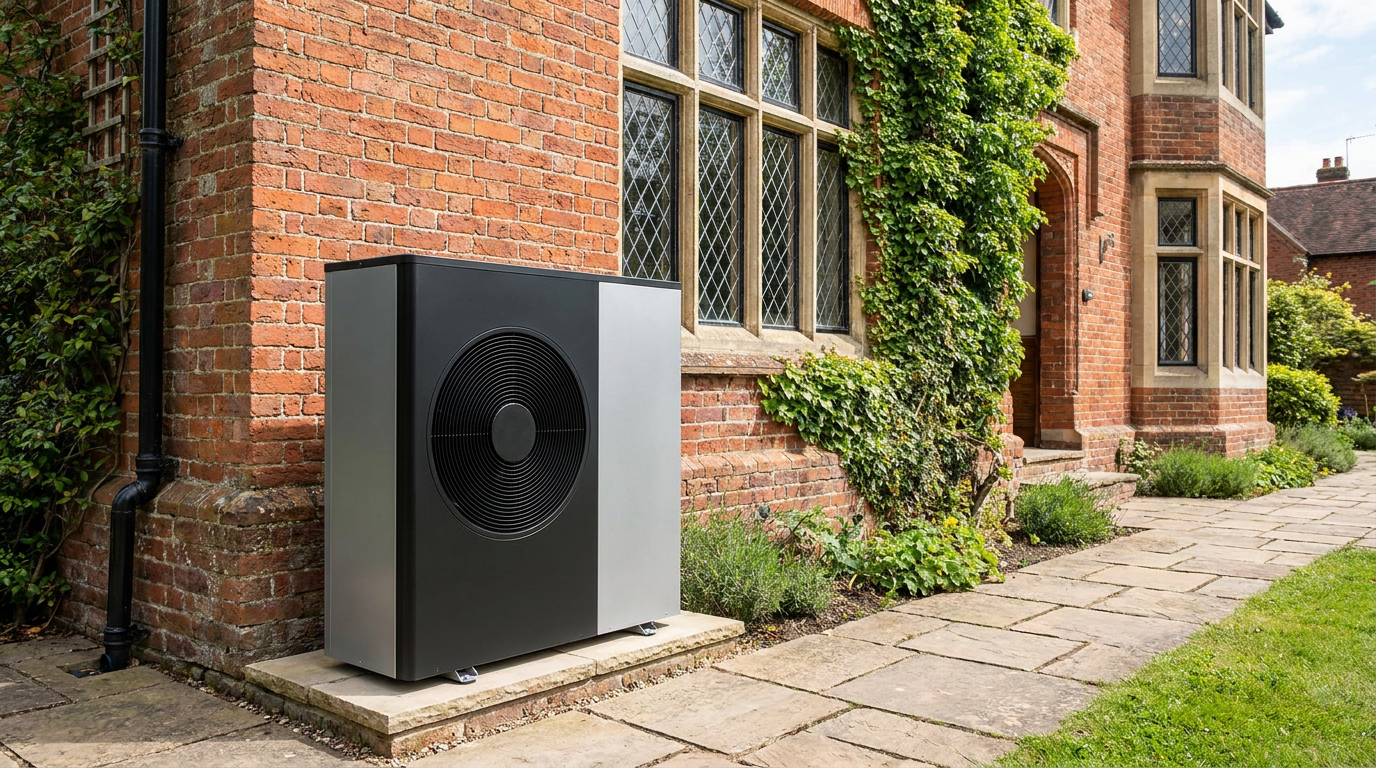
In 2025, heat pumps outsold traditional gas furnaces by a staggering 26 percent, marking an undeniable shift in how homes are heated and cooled. As 2026 unfolds, the transition from fossil-fuel combustion to electric heat transfer is accelerating, driven by maturing technology and unprecedented federal incentives. Yet, for homeowners living in older properties, the prospect of retrofitting a legacy heating system can feel daunting. The central question is no longer whether heat pumps work, but whether they can work efficiently within the architectural constraints of an existing home.[1][6]
To understand the retrofit revolution, one must first understand the mechanism. Traditional gas furnaces operate like a blowtorch, combusting fuel to generate intense bursts of heat at 150 degrees Fahrenheit or higher. Heat pumps, conversely, do not generate heat at all; they move it. Operating like a reversible refrigerator, they extract ambient thermal energy from the outside air—even in freezing conditions—and compress it to warm the indoors. In the summer, the cycle reverses, pulling heat out of the house to provide central air conditioning.[1][4]
This process of moving heat rather than creating it yields massive efficiency gains. Gas furnaces are measured by their Annual Fuel Utilization Efficiency (AFUE), which maxes out at around 96 percent—meaning 4 percent of the energy is lost as waste. Heat pumps are measured by their Coefficient of Performance (COP). A modern heat pump with a COP of 3.0 delivers three units of heat for every one unit of electricity it consumes, effectively operating at 300 percent efficiency.[3][6]

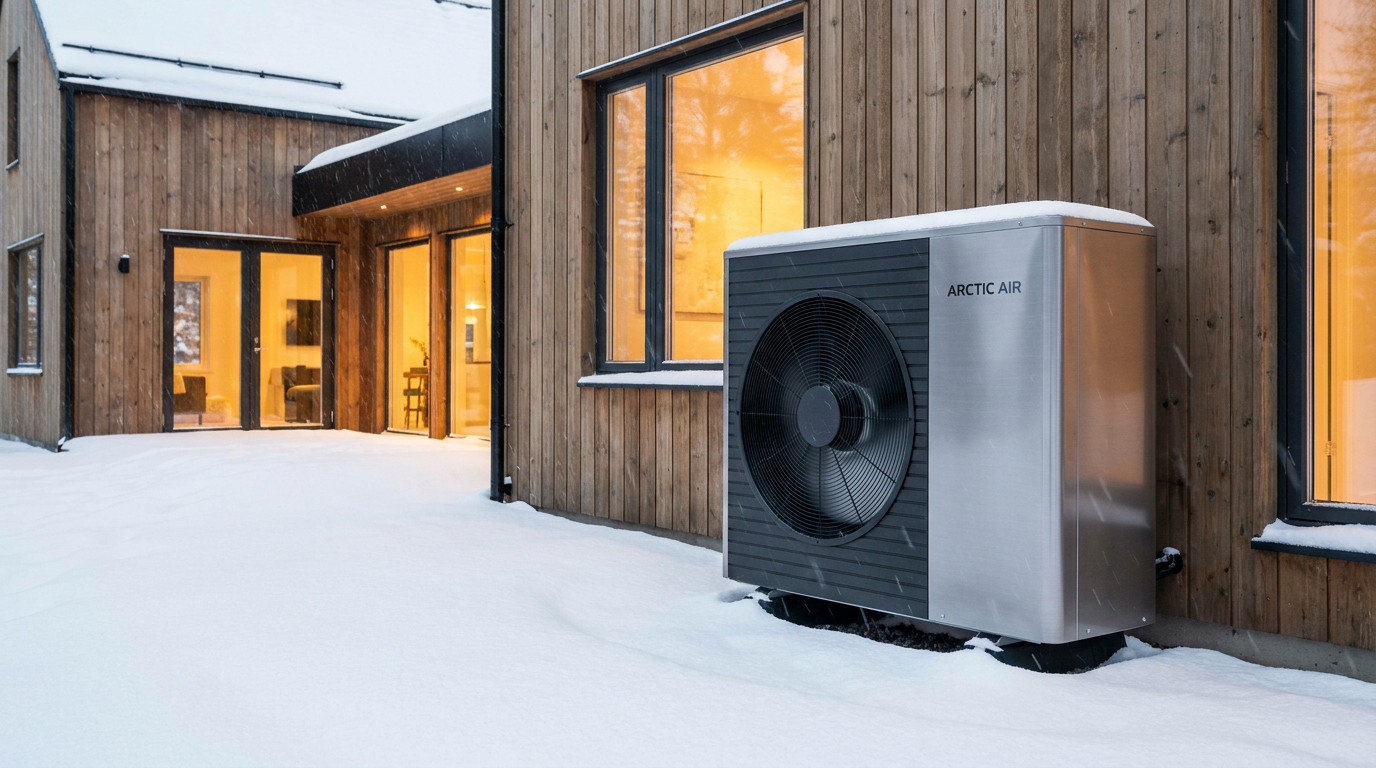
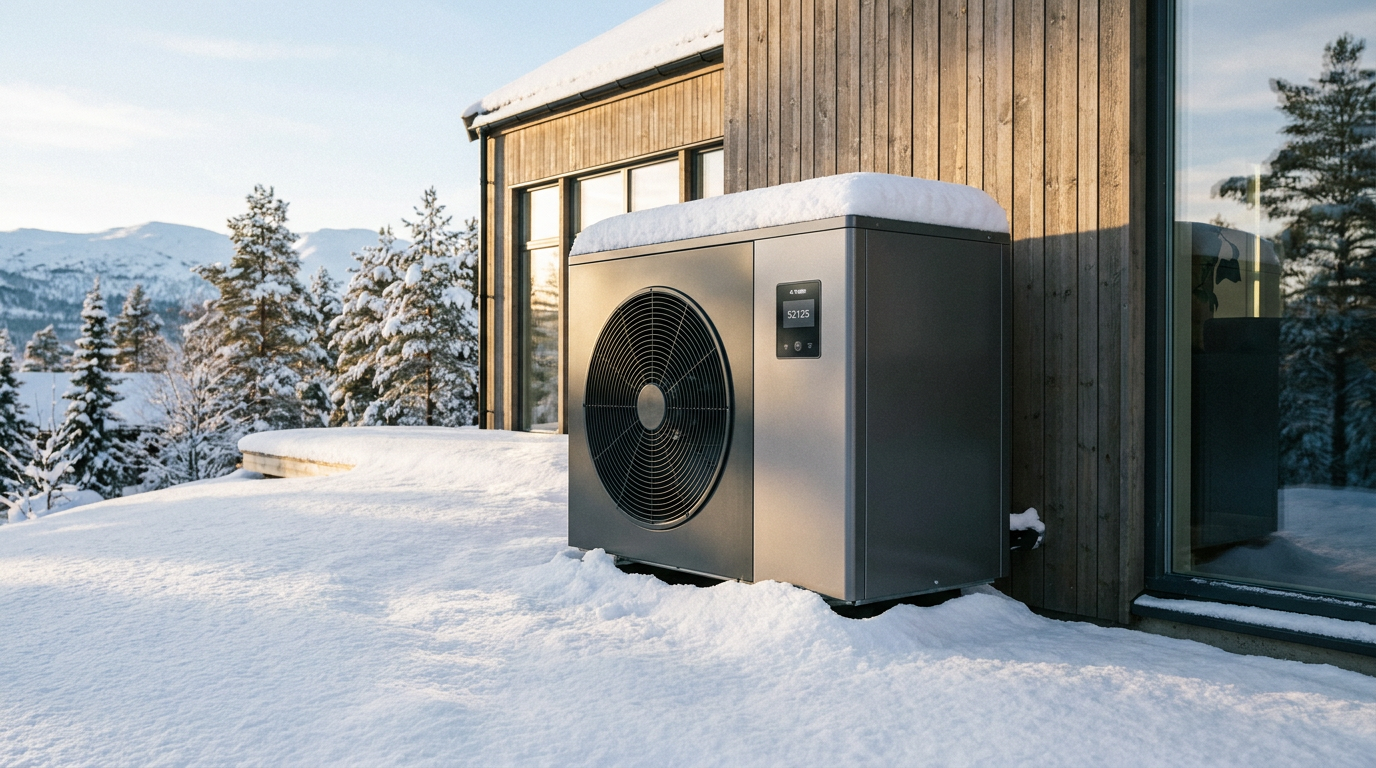
Historically, the primary argument against heat pumps was their performance in freezing temperatures. Early generations struggled when the thermometer dropped below freezing, relying on expensive and inefficient electric resistance backup strips. However, 2026 technology has largely eradicated this limitation. Modern cold-climate air source heat pumps utilize variable-speed, inverter-driven compressors that can modulate their output in one-percent increments.[1][5]
These advanced compressors allow the systems to maintain 100 percent of their heating capacity down to 5 degrees Fahrenheit, and continue operating efficiently at temperatures as low as -22 degrees Fahrenheit. The Department of Energy’s Cold Climate Heat Pump Challenge has verified these metrics across dozens of test sites, proving that modern units can maintain a COP of 2.0 even in sub-zero conditions.[1][6]
A critical breakthrough for 2026 retrofits is the industry's transition to low-Global Warming Potential refrigerants, particularly R-290, which is highly refined propane. Because R-290 can achieve significantly higher flow temperatures—up to 167 degrees Fahrenheit (75 degrees Celsius)—these new heat pumps can serve as direct replacements for gas boilers in older homes.[1][4]
This high-flow capability debunks a persistent myth: that older homes with traditional radiators or narrow microbore piping cannot support a heat pump. Previously, the "low and slow" thermal delivery of a heat pump required massive radiator upgrades or extensive underfloor heating to warm a room adequately. Today, high-temperature units can integrate seamlessly with existing 15mm copper pipework and standard radiators, preserving the historic fabric of older homes while eliminating carbon emissions.[4][6]

This high-flow capability debunks a persistent myth: that older homes with traditional radiators or narrow microbore piping cannot support a heat pump.
Despite the technological readiness, a successful retrofit requires rigorous preparation. HVAC professionals emphasize that simply swapping a furnace for a heat pump without assessing the home's infrastructure is a recipe for underperformance. The process must begin with a Manual J load calculation to determine the exact heating and cooling requirements of the space, followed by a Manual D assessment of existing ductwork.[5][6]
Installers frequently discover that older homes suffer from 10 to 30 percent duct leakage, particularly in unconditioned attics or basements. Sealing these leaks and ensuring adequate return airflow is mandatory before a high-efficiency system can hit its performance targets. Electrically, homes may also require panel upgrades to support the dedicated 240-volt circuits needed for the outdoor compressor and indoor air handler.[5]
The financial calculus of retrofitting has also shifted dramatically. On paper, the upfront cost of a heat pump remains higher than a basic gas furnace. A standard gas furnace installation utilizing existing ductwork typically runs between $3,500 and $7,500. A comparable heat pump system generally costs between $5,000 and $12,000, with specialized cold-climate models reaching $18,000.[3][6]
However, this sticker price is offset by two major factors. First, a heat pump replaces both the furnace and the central air conditioning unit in a single installation. Second, the Inflation Reduction Act has fundamentally altered the consumer math. Under Section 25C, homeowners can claim a federal tax credit of 30 percent of the installation cost, capped at $2,000 annually for qualifying heat pumps that meet top-tier Consortium for Energy Efficiency standards.[2][5]
Beyond the tax credit, low-to-moderate-income households can access substantial point-of-sale discounts through the federal HOMES and HEAR rebate programs, which are rolling out state-by-state in 2026. These performance-based rebates can cover up to $8,000 of the project cost, depending on the household's income relative to the area median and the total energy savings achieved by the retrofit. When combined with utility-level incentives, the net cost of a premium heat pump often drops below that of a standard fossil-fuel replacement.[2][3]

Operating costs further tilt the scale. In moderate to cold-mixed climates, a heat pump costs approximately $800 to $1,400 per year to run, compared to $1,200 to $2,200 for a gas furnace. This 25 to 45 percent reduction in annual heating bills allows most homeowners to recover any upfront cost premium within five to eight years.[3][6]
Yet, uncertainty remains in specific edge cases. The operating cost advantage of a heat pump is highly dependent on the local electricity-to-gas price ratio. In regions with exceptionally high electricity rates and historically cheap natural gas—such as parts of New England or the Midwest—the financial benefit narrows during the coldest months.[3][6]
For homes in these extreme environments, energy analysts often recommend a hybrid, or dual-fuel, system. In this configuration, the heat pump handles all cooling and provides highly efficient heating for 85 percent of the winter. During rare, extreme cold snaps where the heat pump's efficiency drops, a backup gas furnace automatically kicks in, ensuring uninterrupted comfort while optimizing utility costs.[1][3]
Ultimately, the 2026 landscape dictates that the residential gas furnace is no longer the default choice. By combining high-efficiency inverter technology, modern refrigerants, and substantial federal backing, heat pumps offer a financially viable, cash-flow-positive path to decarbonizing the American home. For homeowners willing to navigate the initial load calculations and rebate paperwork, the electric retrofit is not just an environmental statement—it is a definitive upgrade in home comfort.[1][6]
How we got here
August 2022
The Inflation Reduction Act is signed, authorizing billions in tax credits and rebates for home electrification.
Late 2025
Heat pumps officially outsell traditional gas furnaces in the U.S. by 26 percent.
January 2026
New EPA regulations mandate the transition to low-GWP refrigerants, bringing high-temperature R-290 heat pumps to the residential market.
Viewpoints in depth
Electrification Advocates
Argue that the transition away from gas is an urgent climate necessity and that modern heat pumps are ready for mass deployment.
Proponents of rapid home electrification point to the 300 percent efficiency gains of heat pumps as proof that the technology has matured past any previous limitations. They argue that with the introduction of low-GWP refrigerants like R-290, there are no longer any valid technical excuses to install new fossil-fuel infrastructure in residential homes. For this camp, the combination of lower operating costs and massive federal incentives makes the heat pump the only logical financial and environmental choice.
Retrofit Specialists
Focus on the practical realities of installation, warning against treating heat pumps as simple drop-in replacements.
HVAC professionals emphasize that while the hardware is highly capable, older homes require meticulous preparation. They caution that skipping Manual J load calculations, ignoring duct leakage, or failing to upgrade electrical panels will result in underperforming systems and frustrated homeowners. This camp advocates for a 'fabric-first' approach, ensuring the home's insulation and air sealing are addressed before installing high-efficiency equipment.
Grid Reliability Skeptics
Raise concerns about the electrical grid's capacity to handle millions of homes switching to electric heating simultaneously.
Energy analysts and grid operators point out that widespread heat pump adoption shifts peak energy demand from the summer to the winter. They worry that during extreme winter cold snaps—when heat pumps draw the most power and renewable generation like solar is low—local grids could face unprecedented strain. This camp often advocates for dual-fuel systems in colder climates to provide a natural gas buffer during peak electrical demand periods.
What we don't know
- How quickly the electrical grid will adapt to the increased winter demand as millions of homes switch to electric heating.
- Whether the federal HOMES and HEAR rebate programs will receive extended funding beyond their current legislative mandates.
Key terms
- COP (Coefficient of Performance)
- A measurement of a heat pump's efficiency, representing the ratio of heat output to electrical energy input.
- AFUE (Annual Fuel Utilization Efficiency)
- The standard measurement of a gas furnace's efficiency, representing the percentage of fuel converted into usable heat.
- Manual J Calculation
- A detailed engineering assessment used to determine a home's exact heating and cooling loads to properly size HVAC equipment.
- Dual-Fuel System
- A hybrid HVAC setup that uses an electric heat pump for primary heating and cooling, with a gas furnace as a backup for extreme cold.
Frequently asked
Do heat pumps work in freezing weather?
Yes. Modern cold-climate heat pumps use inverter-driven compressors that maintain 100% heating capacity down to 5°F and operate efficiently at -22°F.
Will I need to replace my old radiators?
Not necessarily. New 2026 models using R-290 refrigerant can achieve flow temperatures up to 167°F, allowing them to work with existing traditional radiators.
How much does a heat pump cost to run compared to gas?
In most climates, a heat pump costs $800 to $1,400 annually to operate, compared to $1,200 to $2,200 for a gas furnace, yielding a 25% to 45% savings.
What federal rebates are available for heat pumps?
The Inflation Reduction Act provides a 30% tax credit up to $2,000, plus performance-based HOMES and HEAR rebates that can cover up to $8,000 for qualifying households.
Sources
Source coverage
6 outlets
4 viewpoints surfaced






[1]EcohomeElectrification Advocates
2026 Heat Pump Buyers Guide: A Homeowner's and Pro's Guide
Read on Ecohome →[2]Internal Revenue ServiceFederal Regulators
Energy Efficient Home Improvement Credit
Read on Internal Revenue Service →[3]NuWatt EnergyElectrification Advocates
Heat Pump vs Gas Furnace: Annual Running Cost Comparison 2026
Read on NuWatt Energy →[4]Qualis EnergyRetrofit Specialists
Is My Old House Suitable for a Heat Pump?
Read on Qualis Energy →[5]Budget HeatingRetrofit Specialists
2026 Heat Pump Retrofitting Guide
Read on Budget Heating →[6]Factlen Editorial TeamEditorial Synthesis
Synthesis by Factlen editorial team
Read on Factlen Editorial Team →
Every angle. Every day.
Get home stories with full source coverage and perspective breakdowns delivered to your inbox.