
The 2026 Smartphone Buyer's Guide: On-Device vs. Cloud AI Explained
As artificial intelligence becomes the defining feature of modern smartphones, understanding the difference between local processing and cloud computing is essential for privacy, speed, and battery life.
By Factlen Editorial Team
- Privacy Advocates
- This camp argues that personal data should never leave the device, making on-device AI a critical requirement for modern tech.
- Hardware Enthusiasts
- This viewpoint focuses on the raw computational power and technical specifications driving the AI revolution.
- Everyday Consumers
- General users are often frustrated by the rapid pace of hardware obsolescence and confusing technical jargon.
What's not represented
- · App Developers
- · Environmental Sustainability Advocates
Why this matters
Smartphones in 2026 are being marketed heavily on their AI capabilities, but not all AI is created equal. Knowing whether a phone processes data locally or relies the cloud dictates how private your data is, how fast the features work, and whether your device will support next-generation software updates.
Key points
- The 2026 smartphone market is defined by the shift from cloud-based AI to on-device local processing.
- On-device AI utilizes a Neural Processing Unit (NPU) to execute tasks instantly, securely, and offline.
- Advanced local AI models require significant memory, making 12GB of RAM a new baseline for flagship phones.
- Google's strict hardware requirements for Gemini Intelligence mean many 2025 premium phones will miss out on new features.
- Apple employs a hybrid approach, using local processing for personal data and secure cloud servers for complex requests.
The smartphone market in 2026 is no longer defined by megapixel counts, screen refresh rates, or titanium chassis designs. Instead, the industry's entire focus has shifted to artificial intelligence, with every major manufacturer promising a smarter, more proactive device.[1][2]
For consumers, however, this marketing blitz has created a maze of confusing jargon. Terms like "Gemini Intelligence," "Apple Intelligence," "NPUs," and "TOPS" now dominate spec sheets, making it difficult to know what actually matters when upgrading a device.[3][7]
At the heart of this technological shift is a fundamental architectural divide: Cloud AI versus On-Device AI. Understanding the difference between these two approaches is the single most important factor for anyone shopping for a smartphone this year.[6]
For years, artificial intelligence lived almost exclusively in the cloud. When a user asked a voice assistant a question or requested a language translation, the phone simply acted as a microphone. It recorded the audio, beamed it to a remote server farm hundreds of miles away, processed it using massive data center GPUs, and sent the answer back.[6]

Cloud AI remains incredibly powerful because it leverages massive, multimodal models that can reason through complex problems and generate high-fidelity media. However, this architecture has three inherent flaws: it introduces network latency, it requires a constant internet connection, and it forces users to transmit personal data to corporate servers.[6]
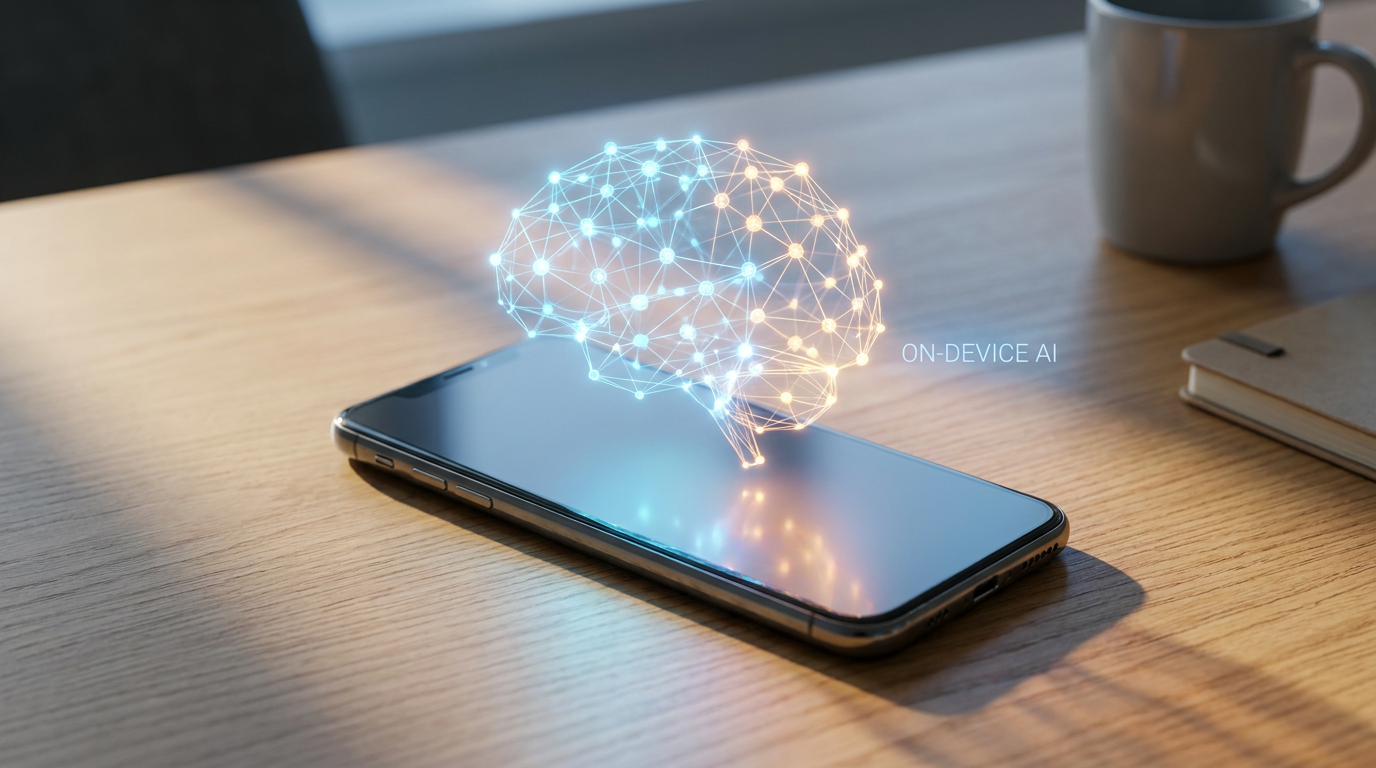
Enter On-Device AI, frequently referred to as Edge AI. This approach flips the traditional model by running machine learning algorithms directly on the smartphone's local hardware, entirely bypassing the internet.[6]
When an application utilizes on-device AI, the data never leaves the user's pocket. The processing happens instantly, eliminating network lag, and functions perfectly even when the phone is in airplane mode or deep in a subway tunnel.[6]
This local processing revolution is made possible by a specialized piece of silicon called a Neural Processing Unit, or NPU. While a phone's CPU handles general computing tasks and its GPU renders graphics, the NPU is purpose-built to execute the specific mathematical operations required by artificial intelligence with extreme efficiency.[7]
Chipmakers are currently engaged in an arms race to boost NPU performance, which is measured in TOPS (Trillion Operations Per Second). The latest 2026 mobile processors, such as Qualcomm's Snapdragon 8 Elite Gen 5, boast NPUs capable of an astonishing 80 TOPS—a massive leap over previous generations.[5][8]

Chipmakers are currently engaged in an arms race to boost NPU performance, which is measured in TOPS (Trillion Operations Per Second).
This immense local computing power allows modern smartphones to run Large Language Models (LLMs) natively. Qualcomm's newest silicon can process up to 20 tokens per second for a 20-billion parameter model directly on the device, enabling real-time, conversational AI without a Wi-Fi connection.[5]
However, bringing generative AI to the edge has exposed a new hardware bottleneck: memory. AI models have a voracious appetite for RAM, as the neural network's weights and parameters must be loaded into active memory to function quickly.[1][2]
This memory requirement has created a hard dividing line in the 2026 smartphone market. Google recently published the official hardware requirements for its new "Gemini Intelligence" suite, and the specifications are remarkably steep.[1][3]
To run Google's latest on-device AI features, a smartphone must have a minimum of 12GB of RAM, a current-generation flagship processor, and support for the Gemini Nano v3 model running on Android 17.[3]

These strict requirements effectively obsolete the advanced AI capabilities of many premium phones released just a year ago. Devices like the Pixel 9 series and the Galaxy S25, which typically feature older NPUs or less RAM, will not receive the full Gemini Intelligence suite, forcing users to upgrade if they want the latest tools.[1][2][3]
Apple has taken a slightly different path with its "Apple Intelligence" ecosystem, heavily emphasizing a hybrid approach that blends local power with secure cloud computing.[4]
The cornerstone of Apple's strategy is on-device processing for everyday, highly personal tasks—like summarizing emails, organizing photos, or prioritizing notifications. Because these tasks run locally, the iPhone remains aware of the user's personal context without ever collecting or transmitting that data.[4]
For complex requests that exceed the iPhone's local NPU capabilities, Apple routes the task to "Private Cloud Compute" (PCC). These Apple silicon-based servers process the data statelessly, meaning the information is used exclusively to fulfill the request and is immediately destroyed, with independent experts allowed to verify the code.[4]

Beyond privacy and speed, the shift toward on-device AI offers a massive benefit to battery life. Constantly transmitting data to the cloud via 5G radios drains power rapidly, whereas processing that same data locally on a highly efficient NPU consumes a fraction of the energy.[6][7]
How we got here
Late 2023
The first generation of mobile processors capable of running generative AI locally is introduced.
June 2024
Apple announces Apple Intelligence, debuting a hybrid model of on-device processing and secure cloud computing.
May 2026
Google publishes strict hardware requirements for its Gemini Intelligence suite, setting a new baseline for Android devices.
Summer 2026
The first wave of fully compliant AI smartphones, featuring 12GB of RAM and advanced NPUs, hits the consumer market.
Viewpoints in depth
Privacy Advocates
This camp argues that personal data should never leave the device, making on-device AI a critical requirement for modern tech.
Privacy advocates emphasize that cloud-based AI, no matter how secure, inherently introduces vulnerabilities by transmitting sensitive data across networks. They champion on-device AI because it processes information locally, ensuring that personal photos, messages, and voice commands remain strictly on the user's hardware. For this group, the transition to edge computing is less about speed and entirely about reclaiming digital sovereignty from massive server farms.
Hardware Enthusiasts
This viewpoint focuses on the raw computational power and technical specifications driving the AI revolution.
Hardware enthusiasts and benchmark chasers view the shift to on-device AI as an exciting era of silicon innovation. They closely track NPU TOPS (Trillion Operations Per Second), memory bandwidth, and thermal efficiency. For this camp, the true measure of a 2026 smartphone is its ability to run massive, multi-billion parameter language models locally without throttling, pushing the boundaries of what mobile processors can achieve.
Everyday Consumers
General users are often frustrated by the rapid pace of hardware obsolescence and confusing technical jargon.
For the average smartphone buyer, the sudden pivot to AI-centric hardware requirements is a source of friction. Many consumers who purchased premium devices in 2024 or 2025 are discovering that their phones lack the RAM or NPU power to support 2026's flagship software features. This camp advocates for clear, plain-language marketing and longer support cycles, arguing that users shouldn't have to decipher spec sheets just to know if their phone will receive the latest updates.
What we don't know
- How quickly developers will optimize third-party applications to take full advantage of local NPUs.
- Whether mid-range smartphones will receive scaled-down versions of on-device AI, or remain reliant on the cloud.
- The long-term impact of running heavy local AI models on smartphone battery degradation over several years.
Key terms
- NPU
- A dedicated processor optimized for artificial intelligence and machine learning tasks.
- TOPS
- Trillion Operations Per Second, a metric used to measure the raw computational horsepower of an AI chip.
- LLM
- Large Language Model, an AI system trained on vast amounts of text to understand and generate human language.
- Edge AI
- Artificial intelligence algorithms that are processed locally on a hardware device rather than in a remote data center.
- Private Cloud Compute
- Apple's secure server architecture designed to process complex AI requests statelessly without storing user data.
Frequently asked
What is an NPU?
A Neural Processing Unit is a specialized chip designed specifically to handle the complex mathematical operations required by artificial intelligence.
Why does on-device AI require so much RAM?
Large Language Models (LLMs) consist of billions of parameters, which must be loaded into the phone's active memory to generate responses quickly.
Will my 2024 or 2025 phone get the latest AI features?
Most older devices will miss out on the full suite of 2026 AI features because they lack the required 12GB of RAM and advanced NPUs.
Is cloud AI less secure than on-device AI?
Cloud AI requires transmitting data over the internet, which introduces potential vulnerabilities, whereas on-device AI keeps data strictly on your personal hardware.
Sources
Source coverage
8 outlets
3 viewpoints surfaced








[1]TechRadarEveryday Consumers
Gemini Intelligence hardware requirements revealed — here's which Samsung, Google, and other Android phones can run Create My Widget, Rambler, and more
Read on TechRadar →[2]Android AuthorityEveryday Consumers
Gemini Intelligence's requirements are higher than you might realize
Read on Android Authority →[3]Tech-ishEveryday Consumers
Google's eight requirements, translated into plain English
Read on Tech-ish →[4]ApplePrivacy Advocates
Apple Intelligence and privacy on iPhone
Read on Apple →[5]QualcommHardware Enthusiasts
Built for Generative AI at the Edge
Read on Qualcomm →[6]CodeGrantedPrivacy Advocates
On-Device vs Cloud AI: The 2025-2026 Turning Point
Read on CodeGranted →[7]EFTMHardware Enthusiasts
What is an AI PC, and do you actually need one?
Read on EFTM →[8]ABI ResearchHardware Enthusiasts
Silicon Upgrades: Performance Boosts Across PC and Smartphone
Read on ABI Research →


Every angle. Every day.
Get shopping stories with full source coverage and perspective breakdowns delivered to your inbox.